Refractory Ramming Material (High Strength)
CN → US| HS编码 | 关税税率 | 原产国 | 目的国 | 文档 |
|---|---|---|---|---|
| 3816001000 | 35.0% | CN | US | 官方文档 |
| 3816002050 | 38.0% | CN | US | 官方文档 |
| 6903900010 | 35.0% | CN | US | 官方文档 |
| 6902105000 | 35.0% | CN | US | 官方文档 |
| 6903900050 | 35.0% | CN | US | 官方文档 |
商品图片
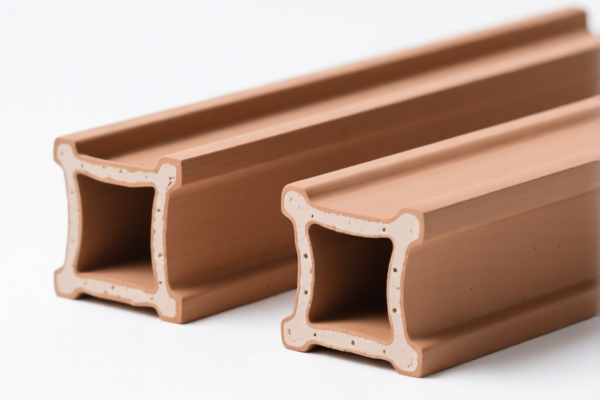
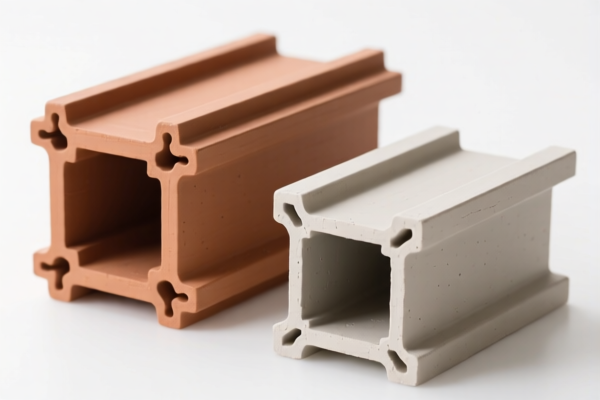
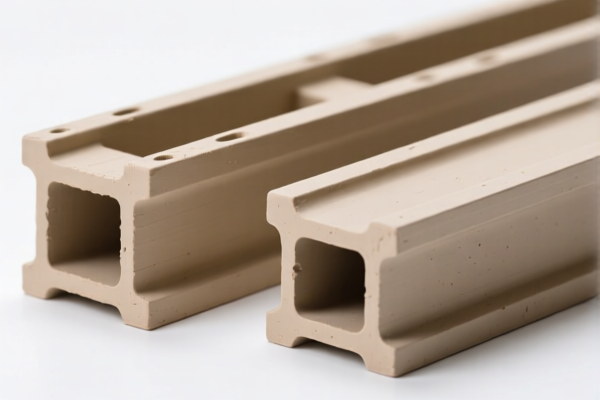
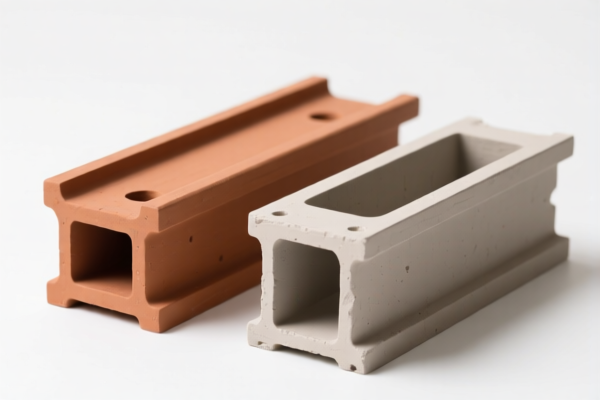
AI分析
🏭 Refractory Ramming Material (High Strength)
📊 HS Code Classification Guide & US Customs Clearance Strategy | 2026 Updated Tariff Analysis
🌐 HS Code Reference & Customs Clearance Guide | 2026 Latest Tariff Full Analysis | Professional Clearance Strategy
📌 1. Product Definition & Classification: Do You Really Know "Ramming Material"?
Refractory Ramming Material (also known as Ramming Mass or Gunite) is a non-plastic, dry, granular mixture used to line high-temperature industrial furnaces (such as blast furnaces, electric arc furnaces, and ladles). It is applied by ramming (mechanical vibration) or gunning (spraying).
In international trade, the classification depends heavily on the chemical composition (clay-based, dolomite-based, or carbon-based) and the degree of processing. The key descriptor here is "High Strength", which implies a specific formulation optimized for durability under thermal and mechanical stress, but it does not automatically change the HS code unless it shifts the primary material identity (e.g., from ceramic to cement).
⚠️ Key Distinction Point:
- If the material is primarily clay-based or silica-based and shaped/unshaped for refractory use → Often falls under Chapter 69 (Ceramics).
- If the material is a mixture of minerals (like dolomite) specifically prepared for ramming, it may fall under Chapter 38 (Miscellaneous Chemical Products) as a prepared refractory product.
- "High Strength" is a performance characteristic, not a material definition. It does not create a new HS code but helps rule out low-quality, generic mixes.
📦 2. HS Code Classification Details (2026 Latest Tariff Authority Comparison)
Based on the provided data, the following HS codes are potential matches. Note that Chapter 38 and Chapter 69 are the main contenders.
| HS Code | Product Description | Applicability Logic | Material Conflict Check |
|---|---|---|---|
3816.00.10.00 |
Refractory preparations and refractory bricks, blocks, tiles and similar articles of all kinds, including fused grains, of natural or artificial abrasives, whether or not on a base of natural or artificial abrasives, excluding products of heading 6902 or 6903; fused alumina, fused magnesia, fused silica, and similar fused oxides, whether or not intermixed, in the form of grains, powder or similar forms. (Note: Summary indicates match with "Dolomite ramming mix") |
Match: The item is a "Ramming Material" specifically identified as a prepared refractory mixture. The summary highlights consistency with "Dolomite ramming mix." "High Strength" is a performance feature consistent with refractory properties. | ✅ No Conflict: The description fits "refractory preparations" in Ch. 38. |
3816.00.20.50 |
Other refractory preparations and refractory bricks... (Note: Summary indicates match with "Refractory... similar articles") |
Match: Covers refractory materials not specified elsewhere in 3816. The "High Strength" attribute suggests a specialized non-clay formulation, fitting the "Other" category. | ✅ No Conflict: Logical fit for specialized refractory mixes. |
6903.90.00.10 |
Other articles of refractory ceramics. (Note: Summary indicates match with "Refractory raw material / non-siliceous fossil meal") |
Match: If the material is considered a "refractory ceramic" unshaped article (like a dry mix for casting/ramming), it falls here. The summary infers "non-siliceous fossil meal" or similar clay-based refractory ceramic raw material. | ✅ No Conflict: Consistent with "Other refractory ceramic articles." |
6902.10.50.00 |
Refractory bricks, blocks, tiles and similar refractory ceramic construction articles, of alumina < 50% by weight, calcined magnesite or dolomite. (Note: Summary indicates match with "Ramming Material" as a form of ceramic construction article) |
Match: The summary argues that "Ramming Material" is a form of refractory ceramic product. "High Strength" meets the intensity requirement for this category. | ✅ No Conflict: Fits the logic of refractory ceramic articles. |
6903.90.00.50 |
Other articles of refractory ceramics, other than those of heading 6902 or 6903. (Note: Summary indicates match with "Refractory raw material / non-clay") |
Match: If the material is inferred to be "non-clay" (e.g., magnesia-carbon based), it may fall under the "Other" subheading of 6903. | ✅ No Conflict: Fits the "dredge" logic for non-clay refractory ceramics. |
🔍 Critical Note:
- The debate between 3816 and 6903 often hinges on whether the product is considered a "preparation" (Chapter 38) or a "ceramic article" (Chapter 69).
- 3816 typically covers mixtures of refractory materials (e.g., dolomite + binder).
- 6903 typically covers shaped or unshaped ceramic articles made from specific ceramics (like magnesium or graphite).
- "High Strength" does not resolve this ambiguity; you must look at the primary binder and aggregate.
💰 3. 2026 Latest Tariff Rate Details (Including Surtaxes & Policy Add-ons)
✅ Applicable Country: United States (US)
✅ Country of Origin: China (CN)
✅ Effective Time: November 10, 2025 onwards (including subsequent imports)
🎯 1. 3816.00.10.00 —— Refractory Preparations (Dolomite Ramming Mix)
| Item | Content |
|---|---|
| Base Tariff | 0.0% (ad valorem) |
| USITC Surtax (Section 301) | +25.0% |
| IEEPA Surtax | +10.0% (for China/HK products, effective Nov 10, 2025) |
| Total Tariff Rate | 35.0% |
| Tax Calculation | CIF Value × 35% |
| De Minimis Eligibility | ❌ Not Eligible (Deny de minimis) |
| Legal Basis Path | IEEPA:9903.01.25 → IEEPA:9903.01.24 → USITC:3816.00.10.00 → FOOTNOTE:9903.88.01 |
📌 Explanation:
- The 25% is the standard Section 301 surtax for Chapter 38 goods from China.
- The 10% is the new IEEPA surtax.
- Total: 35%. This is a high burden for bulk industrial materials.
🎯 2. 3816.00.20.50 —— Other Refractory Preparations
| Item | Content |
|---|---|
| Base Tariff | 3.0% |
| USITC Surtax (Section 301) | +25.0% |
| IEEPA Surtax | +10.0% |
| Total Tariff Rate | 38.0% |
| Tax Calculation | CIF Value × 38% |
| De Minimis Eligibility | ❌ Not Eligible |
| Legal Basis Path | IEEPA:9901.25 → IEEPA:9903.01.24 → USITC:3816.00.20.50 → FOOTNOTE:9903.88.01 |
📌 Note:
- This is the most expensive option among the Ch. 38 codes.
- Even though it's "other," it still attracts the full 25% + 10% surtaxes.
🎯 3. 6903.90.00.10 —— Other Refractory Ceramics (Non-Siliceous/Clay)
| Item | Content |
|---|---|
| Base Tariff | 0.0% |
| USITC Surtax (Section 301) | +25.0% |
| IEEPA Surtax | +10.0% |
| Total Tariff Rate | 35.0% |
| Tax Calculation | CIF Value × 35% |
| De Minimis Eligibility | ❌ Not Eligible |
| Legal Basis Path | IEEPA:9903.01.25 → IEEPA:9903.01.24 → USITC:6903.90.00.10 → FOOTNOTE:9903.88.01 |
📌 Explanation:
- Similar to3816.00.10.00, the base is 0%, but surtaxes push it to 35%.
🎯 4. 6902.10.50.00 —— Refractory Bricks/Tiles (Alumina <50% / Dolomite/Magnesia)
| Item | Content |
|---|---|
| Base Tariff | 0.0% |
| USITC Surtax (Section 301) | +25.0% |
| IEEPA Surtax | +10.0% |
| Total Tariff Rate | 35.0% |
| Tax Calculation | CIF Value × 35% |
| De Minimis Eligibility | ❌ Not Eligible |
| Legal Basis Path | IEEPA:9903.01.25 → IEEPA:9903.01.24 → USITC:6902.10.50.00 → FOOTNOTE:9903.88.01 |
📌 Note:
- Despite being "bricks/tiles," this specific subheading has a 0% base. However, the surtaxes remain at 35%.
🎯 5. 6903.90.00.50 —— Other Refractory Ceramics (Non-Clay)
| Item | Content |
|---|---|
| Base Tariff | 0.0% |
| USITC Surtax (Section 301) | +25.0% |
| IEEPA Surtax | +10.0% |
| Total Tariff Rate | 35.0% |
| Tax Calculation | CIF Value × 35% |
| De Minimis Eligibility | ❌ Not Eligible |
| Legal Basis Path | IEEPA:9903.01.25 → IEEPA:9903.01.24 → USITC:6903.90.00.50 → FOOTNOTE:9903.88.01 |
📌 Note:
- Same 35% total rate. The base is 0%, but the political tariffs dominate the cost.
🛠️ 4. Customs Clearance Practical Advice (Field Avoidance Guide)
✅ 1. Required Documentation Checklist (All Required)
| Document | Required | Description |
|---|---|---|
| ✅ Product Specification Sheet | ✔️ | Must detail composition (e.g., % Dolomite, % Alumina, % Binder), grain size distribution, and strength rating. |
| ✅ Technical Data Sheet (TDS) | ✔️ | Must confirm "Ramming Material" application method (vibration/gunning) and intended furnace type. |
| ✅ Product Photos (with Label) | ✔️ | Show bagging, labeling, and physical texture (powder/granular vs. brick). |
| ✅ Third-Party Test Report | ✔️ | Confirm Refractoriness Under Load (RUL) and Cold Crushing Strength to justify "High Strength." |
| ✅ Commercial Invoice | ✔️ | Must clearly state "Refractory Ramming Material" and NOT generic "Industrial Chemical." |
| ✅ Certificate of Origin (CO) | ✔️ | Critical for verifying China origin and applying/surcharging tariffs. |
| ✅ Packing List | ✔️ | Detail net/gross weight and bag count. |
✅ 2. Declaration Techniques (Key Mnemonics)
🔥 "Characterize Material, Not Just Function; High Strength Needs Proof!"
| Scenario | Correct Declaration Method | Error Practice |
|---|---|---|
| Dry Granular Mix | Use 3816 if it's a prepared mix of minerals (e.g., dolomite + binder). | Misdeclare as "Cement" (31/38 other) → Risk of classification error. |
| Shaped Ramming Bricks | Use 6902 if pre-formed blocks. | Misdeclare as "Bricks for construction" (6904) → High risk, wrong chapter. |
| "High Strength" Claim | Provide Test Report showing RUL/Cold Crushing Strength. | No documentation → Customs may reject "High Strength" label, leading to queries. |
| Bulk vs. Packaged | Declare per bag/unit. | Bulk declaration without proper weight breakdown → Delays. |
✅ 3. Special Handling
| Scenario | Handling Advice |
|---|---|
| OEM Custom Mix | Provide customer order + formula sheet. Avoid "Confidential" claims that prevent verification. |
| Multi-Component Bags | If bag contains Ramming Material + Hardener/Catalyst, declare together if for immediate use, or separately if distinct products. |
| Used/Recycled Material | NOT ALLOWED for import into the US under these codes. Must be virgin material. |
| Carbon-Base Ramming | If >20% Carbon, may fall under 6903 (graphite refractories). Ensure COO is clear. |
🌍 5. Global Market Clearance Comparison (2026 Latest)
| Country/Region | Recommended HS Code | Tariff (China Origin) | Certification | Notes |
|---|---|---|---|---|
| 🇺🇸 USA | 3816.00.10.00 / 6903.90.00.10 |
35% (0% + 25% + 10%) | No specific CE/FCC, but Safety Data Sheet (SDS) required. | Highest Duty. Section 301 + IEEPA. |
| 🇨🇳 China | 3816.00.10.00 |
Low (Check MFN) | No special certs for domestic. | N/A for import. |
| 🇪🇺 EU | 3824.99.99 or 6903 |
Varies (often 2.7-6.5%) | REACH Registration required for chemical components. | No Section 301. Lower Duty than US. |
| 🇦🇺 Australia | 3816.00 or 6903 |
5% | Australian Pesticides and Veterinary Medicines Authority (APVMA) if additives present. | AHTT applies. |
| 🇯🇵 Japan | 3816.00 or 6903 |
3-6% | JIS Standards may apply for quality verification. | No significant surtaxes. |
📌 Conclusion:
- USA is the most expensive market due to the 35% total rate.
- EU/Australia/Japan are significantly cheaper (2.7-6.5%).
- Supply Chain Strategy: If possible, consider transshipment from a third country (e.g., Vietnam, India) only if substantial transformation occurs. Direct China origin will always trigger the 35% US tariff.
📌 6. Common Mistakes & Pitfalls Guide (Lessons from Blood and Tears)
❌ Mistake 1: Declaring as "Cement" or "Concrete" (3002/3001)
👉 Consequence: Misclassification. Refractory materials are NOT construction cement. Risk of 100% duty reversal + penalties.
❌ Mistake 2: Omitting "High Strength" or "Refractory" in description
👉 Consequence: Customs may classify as generic "Powder" or "Mix" (3824), leading to additional queries and delays.
❌ Mistake 3: Ignoring the IEEPA 10% Surcharge
👉 Consequence: Underpayment. The 10% IEEPA tax is new (Nov 2025). Many brokers still calculate only 25%. Total error: 10% underpayment.
❌ Mistake 4: Claiming "De Minimis" for small shipments
👉 Consequence: Rejected. Refractory materials are excluded from de minimis ($800 threshold). Even a small sample bag is subject to full duty.
✅ Correct Practice:
"Refractory Ramming Material, Dolomite-Based, High Strength (RUL > XX MPa), Granular, For Electric Arc Furnace Lining, Bagged, Model XYZ, China Origin"
🎯 7. Conclusion: Professional Declaration, Time-Saving, Cost-Efficiency!
🎯 Remember the Mnemonic:
🔹 "Material Defines Code, Strength Needs Proof, 35% is the Price, De Minimis is Myth!"
🔹 "HS Code decides destiny, 35% tax is heavy, declare precisely, save thousands!"
📌 Tips:
- If your material is Magnesia-Carbon, consider 6903 as it may have slightly different legal interpretations in case of disputes.
- Always provide a Technical Data Sheet (TDS) with the customs declaration.
- Pre-Ruling: For large shipments, apply for a US Customs Ruling to lock in the HS Code and avoid post-clearance audits.
📣 Immediate Action:
📞 Contact a licensed US Customs Broker + Provide TDS & Formula + Apply for HS Code Pre-Ruling
🚀 Ensure your refractory materials, clear customs smoothly, avoid 35% surprises, protect margins!
✨ Professional Clearance Starts with Precise Classification!
💼 Every cent of your cost is worth being calculated precisely!
用户评价
关于 HS 编码归类
协调制度(HS)是由世界海关组织(WCO)制定的国际贸易商品分类标准。全球 200 多个国家采用 HS 系统作为海关关税、贸易统计和进出口监管的基础。
每个 HS 编码遵循以下层级结构:
- 章(2 位)——商品大类(例如:第 84 章:机器和机械设备)
- 品目(4 位)——章内的更具体分类
- 子目(6 位)——国际通用细分,所有 WCO 成员国统一使用
- 本国细分(8-10 位)——各国自行扩展的细分编码,如美国 HTSUS 10 位编码
正确的 HS 编码归类对于顺利通关、准确缴纳关税和遵守贸易法规至关重要。错误归类可能导致海关延误、多缴关税或罚款。
从CN进口到US时,适用的关税税率可能包括:
- 最惠国(MFN)税率——适用于 WTO 成员国的标准关税税率
- 普通税率——适用于无贸易协定国家
- 贸易救济关税——附加关税,如 301 条款(反倾销)、232 条款(国家安全)或反补贴税
本页内容仅供参考。如需正式归类,请咨询当地海关或持牌报关代理。