Refractory Ramming Mix Pre wetted
CN → US| HS编码 | 关税税率 | 原产国 | 目的国 | 文档 |
|---|---|---|---|---|
| 6810110010 | 38.2% | CN | US | 官方文档 |
| 2836995050 | 10.0% | CN | US | 官方文档 |
| 6810990080 | 35.0% | CN | US | 官方文档 |
| 3824992900 | 41.5% | CN | US | 官方文档 |
| 3824992100 | 35.0% | CN | US | 官方文档 |
商品图片
AI分析
🧱 Reframing the "Refractory Ramming Mix (Pre-wetted)": A Strategic Tariff Breakdown
🌐 HS Code Reference & Customs Clearance Guide | 2026 Latest Tariff Analysis | Professional Entry Strategy
📌 I. Product Definition & Classification: Decoding "Pre-Wetted Ramming Mix"
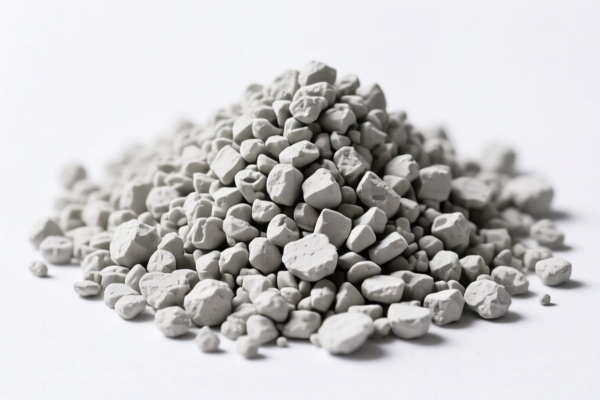
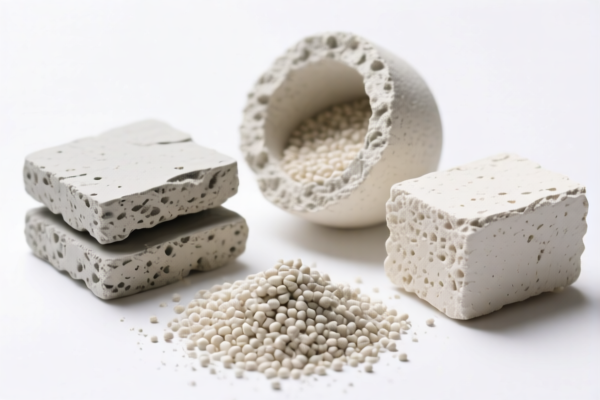
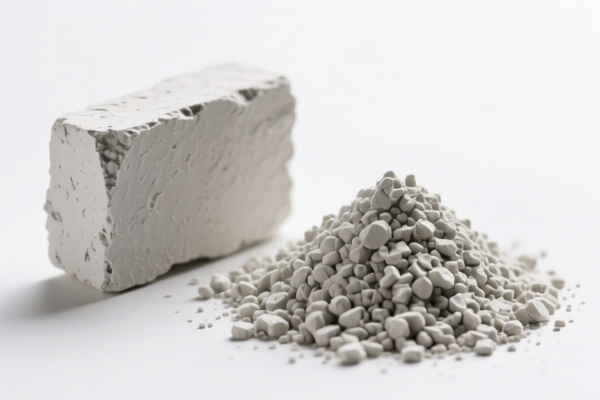
Refractory Ramming Mixes are unshaped refractory materials composed of graded aggregates (such as magnesia, alumina, silica, or carbon) mixed with binders (clay, phosphate, or chemical additives). They are installed by manual or mechanical ramming into the furnace lining.
The term "Pre-wetted" is the critical differentiator. It implies that water or a liquid binder solution has been added to the dry mix before shipment to: 1. Prevent segregation of aggregates during transit; 2. Facilitate immediate installation without on-site mixing; 3. Reduce dust during handling.
However, from a customs perspective, the chemical nature and state of this "pre-wetted" mix dictate whether it is classified as a refractory article (Chapter 68) or a chemical preparation (Chapter 38). This distinction drastically alters your tariff liability.
⚠️ Critical Distinction:
- If the material is primarily defined by its refractory physical properties (high heat resistance, structural integrity) and the "wet" component is merely a temporary installation aid → Chapter 68 (6810).
- If the material is primarily a chemical mixture (e.g., high binder content, specific chemical reactions involved in setting) → Chapter 38 (3824).
- If it is a carbonate precursor or raw chemical component → Chapter 28 (2836).
📦 II. HS Code Classification Matrix (2026 US HTSUS Alignment)
Based on the provided data, here are the five potential classifications for "Refractory Ramming Mix (Pre-wetted)," categorized by material composition and regulatory intent.
| HS Code | Product Description & Logic | Material Basis | Tax Burden |
|---|---|---|---|
6810.11.00.10 |
Refractory Ramming Mix (MgO/Al₂O₃ Based) Classified as refractory ceramic articles. The "pre-wetted" state is considered a temporary installation aid for oxide-based refractories. |
Magnesia (MgO), Alumina (Al₂O₃), or other oxide refractories. | 38.2% |
2836.99.50.50 |
Carbonate-Based Refractory Chemicals Classified as inorganic chemicals. The mix is viewed as a raw chemical precursor (carbonate) rather than a finished refractory structure. |
Carbonates or related refractory chemicals. | +10.0% |
6810.99.00.80 |
Generic Refractory Ramming Mix (Cementitious) Classified under other refractory ceramic articles, often grouped with cement/concrete analogs for non-oxide refractories. |
Cement, concrete, or artificial stone-like refractory bases. | 35.0% |
3824.99.29.00 |
Chemical Preparation (High Duty) Classified as a chemical mixture where the refractory function is secondary to the chemical formulation or additives. |
Chemical preparations, binders, or complex mixtures. | 41.5% |
3824.99.21.00 |
Chemical Preparation (Low Base) Classified as a specific chemical mixture with zero base duty, but still subject to high trade remedies. |
Industrial chemical mixtures or proprietary binders. | 35.0% |
🔍 Key Insight:
- The "Pre-wetted" aspect does not automatically disqualify the product from Chapter 68. However, if the wetting agent introduces significant chemical reactivity or if the product is sold as a "chemical kit," Customs may shift classification to Chapter 38 (3824).
- Magnesia/Alumina mixes are safest under6810.
- Carbonate mixes are safest under2836(lowest duty).
- Unknown/Complex Binders risk falling into3824(highest duty).
💰 III. 2026 Tariff Rate Detailed Breakdown (China Origin → USA)
✅ Applicable Country: United States (US)
✅ Origin: China (CN)
✅ Effective Date: Post-2025 Policies (Includes Section 301 & IEEPA Measures)
🎯 1. 6810.11.00.10 — Magnesia/Alumina Ramming Mix (Oxide-Based)
The most common classification for high-quality oxide refractories.
| Component | Rate | Legal Basis |
|---|---|---|
| Base MFN Duty | 3.2% | General US Harmonized Tariff Schedule |
| Section 301 Duty | +25.0% | USITC Footnote 9903.88.01 (China-specific) |
| IEEPA Duty (122) | +10.0% | Executive Order 14257 (China-specific) |
| Total Effective Rate | 38.2% | Sum of all applicable duties |
| De Minimis Eligibility | ❌ NO | Denied under current trade remedies |
📌 Why 38.2%?
Even though it’s a "refractory ceramic," the Section 301 tariff applies heavily to industrial refractories from China. The IEEPA 10% is a new layer of scrutiny on Chinese chemical/industrial inputs.
🎯 2. 2836.99.50.50 — Carbonate-Based Refractory Chemicals
Applicable if the mix is primarily magnesium carbonate or similar raw salts.
| Component | Rate | Legal Basis |
|---|---|---|
| Base MFN Duty | 0% | Many carbonate chemicals have 0% base duty |
| Section 301 Duty | 0.0% | Not subject to the standard 301 list in this subheading |
| IEEPA Duty (122) | +10.0% | Applies to specific chemical precursors from China |
| Total Effective Rate | +10.0% | Lowest tariff option among refractories |
| De Minimis Eligibility | ❌ NO | Still subject to trade remedy scrutiny |
📌 Why Only 10%?
This classification treats the product as a raw chemical rather than a manufactured refractory good. If your product is indeed a carbonate-based mix (e.g., for magnesium furnace lining), this is the optimal tariff path.
🎯 3. 6810.99.00.80 — Generic Cementitious Refractory Mix
For mixes that resemble concrete or cement-based refractories (e.g., silica-based).
| Component | Rate | Legal Basis |
|---|---|---|
| Base MFN Duty | 0.0% | Often zero for certain "other" refractory articles |
| Section 301 Duty | +25.0% | Standard 301 rate for Chinese ceramics |
| IEEPA Duty (122) | +10.0% | New IEEPA surcharge |
| Total Effective Rate | 35.0% | Slightly lower than oxide-based due to 0% base |
| De Minimis Eligibility | ❌ NO |
📌 Why 35.0%?
The lack of a base duty helps, but the 35% total is still significant. This classification is risky if the product is clearly oxide-based, as it may be reclassified to6810.11with a 3.2% base duty (totaling 38.2%).
🎯 4. 3824.99.29.00 — Chemical Preparation (High Base)
If Customs views the "pre-wetted" mix as a chemical binder preparation.
| Component | Rate | Legal Basis |
|---|---|---|
| Base MFN Duty | 6.5% | For other prepared binders/chemicals |
| Section 301 Duty | +25.0% | Broad applicability to chemical imports |
| IEEPA Duty (122) | +10.0% | New IEEPA surcharge |
| Total Effective Rate | 41.5% | Highest Risk Category |
| De Minimis Eligibility | ❌ NO |
📌 Why 41.5%?
This is the punitive classification. It implies the product is not a "refractory" but a "chemical mixture." Avoid this unless the product is purely a chemical binder with negligible refractory aggregate content.
🎯 5. 3824.99.21.00 — Chemical Preparation (Zero Base)
Specific chemical mixtures with zero base duty.
| Component | Rate | Legal Basis |
|---|---|---|
| Base MFN Duty | 0.0% | Specific chemical subheadings |
| Section 301 Duty | +25.0% | Trade remedy still applies |
| IEEPA Duty (122) | +10.0% | New IEEPA surcharge |
| Total Effective Rate | 35.0% | Same as 6810.99 but risky classification |
| De Minimis Eligibility | ❌ NO |
📌 Why 35.0%?
Similar to6810.99, but the legal basis is different. Misclassifying a refractory as a chemical here can lead to audits and back duties if the product's refractory nature is proven.
🛠️ IV. Customs Clearance Practical Advice (Avoiding Pitfalls)
✅ 1. Documentation Requirements (Non-Negotiable)
| Document | Purpose | Key Detail to Include |
|---|---|---|
| Product Specification Sheet | Proves chemical composition | List % of MgO, Al₂O₃, Carbonates, Binders |
| Material Safety Data Sheet (MSDS) | Safety & Chemical Nature | Highlight "Non-Hazardous" if possible; list wetting agent |
| Technical Data Sheet (TDS) | Proves Refractory Function | Show Cold Crushing Strength, Refractoriness Under Load, Expansion |
| Commercial Invoice | Valuation & Description | Use precise language: "Refractory Ramming Mix, Oxide-Based, Pre-wetted for Installation" |
| Certificate of Analysis (COA) | Quality Control | Confirm batch consistency |
⚠️ Critical: If the wetting agent is water, state "Wetting Agent: Water". If it’s a chemical binder solution, disclose the chemical composition. Hiding the "pre-wetted" nature can lead to fraud allegations.
✅ 2. Classification Strategy (The "Pre-Wetted" Dilemma)
| Scenario | Recommended HS Code | Rationale |
|---|---|---|
| Oxide Mix (MgO/Al₂O₃) + Water | 6810.11.00.10 |
Water is temporary; primary function is refractory. |
| Carbonate Mix (MgCO₃) + Binder | 2836.99.50.50 |
Primary component is a carbonate chemical. |
| Silica/Cement-Based Mix | 6810.99.00.80 |
Resembles cementitious refractories. |
| High Binder/Chemical Additive Mix | 3824.99.29.00 or 3824.99.21.00 |
Only if chemical properties dominate. |
🔥 Pro Tip:
If you claim6810(Refractory) but the product is clearly a chemical preparation, Customs may reclassify to3824and assess higher duties + penalties.
If you claim3824(Chemical) but the product is clearly a refractory, you may be paying higher base duties unnecessarily.
Solution: Use Pre-Ruling (Ruling Letter) from CBP to lock in the classification.
✅ 3. Common Mistakes & Penalties
❌ Mistake 1: Declaring "Pre-wetted" as "Dry Ramming Mix"
👉 Consequence: Misdeclaration. If detected, CBP may assess fraud penalties (up to 3x the duty owed) for false statements.
❌ Mistake 2: Using 3824 for a standard MgO Ramming Mix
👉 Consequence: Overpaying duties (41.5% vs 38.2%). While small in %, it sets a bad precedent for future audits.
❌ Mistake 3: Ignoring the "Wetting Agent" Composition
👉 Consequence: If the wetting agent is a hazardous chemical, you may face EPA/TSCA violations, not just customs penalties.
🌍 V. Global Market Comparison (2026)
| Region | Recommended HS Code | Est. Total Duty (China Origin) | Key Certification |
|---|---|---|---|
| 🇺🇸 USA | 6810.11.00.10 (if oxide) |
38.2% | FCC (if electronic furnace), OSHA Safety Data |
| 🇪🇺 EU | 6810.99 (Ceramic Refractories) |
~6.5% + Anti-Dumping | REACH Compliance (for wetting agent) |
| 🇨🇳 China | 6810.11 |
0-5% | CCC (if applicable) |
| 🇮🇳 India | 6810.99 |
~10-15% + Basic Customs Duty | BIS Certification |
📌 Note: The US is the most punitive market for refractory imports from China due to Section 301 and IEEPA. The EU may impose anti-dumping duties on specific refractory products, so always check the latest EU trade defense measures.
📌 VI. Final Clearance Checklist
- Identify Primary Component: Is it Oxide (
6810), Carbonate (2836), or Chemical (3824)? - Disclose Wetting Agent: List % and type of liquid added.
- Select HS Code: Match component to the matrix above.
- Calculate Total Duty: Include Base + 301 (25%) + IEEPA (10%).
- Prepare Documentation: TDS, MSDS, Invoice, Packing List.
- Apply for Ruling: If uncertain, submit a Binding Ruling Request to CBP before shipment.
🎯 Final Advice:
"Don't let 'Pre-wetted' become 'Pre-Taxed'!"
Accurate classification saves 3-6% in duties. In high-volume refractory shipments, this is a significant margin saver.
📣 Immediate Action:
📞 Consult a Customs Broker: Provide your Technical Data Sheet and MSDS for a pre-filing review.
📝 Draft Description: "Refractory Ramming Mix, [Material Type], Pre-wetted with [Agent Type], for Industrial Furnace Lining, HS Code [XXXX]"
🚀 Secure Your Margin: Get the ruling before the cargo departs!
✨ Precision in Classification, Profit in Clearance!
💼 Your Refractory Supply Chain Deserves Zero Surprises!
用户评价
关于 HS 编码归类
协调制度(HS)是由世界海关组织(WCO)制定的国际贸易商品分类标准。全球 200 多个国家采用 HS 系统作为海关关税、贸易统计和进出口监管的基础。
每个 HS 编码遵循以下层级结构:
- 章(2 位)——商品大类(例如:第 84 章:机器和机械设备)
- 品目(4 位)——章内的更具体分类
- 子目(6 位)——国际通用细分,所有 WCO 成员国统一使用
- 本国细分(8-10 位)——各国自行扩展的细分编码,如美国 HTSUS 10 位编码
正确的 HS 编码归类对于顺利通关、准确缴纳关税和遵守贸易法规至关重要。错误归类可能导致海关延误、多缴关税或罚款。
从CN进口到US时,适用的关税税率可能包括:
- 最惠国(MFN)税率——适用于 WTO 成员国的标准关税税率
- 普通税率——适用于无贸易协定国家
- 贸易救济关税——附加关税,如 301 条款(反倾销)、232 条款(国家安全)或反补贴税
本页内容仅供参考。如需正式归类,请咨询当地海关或持牌报关代理。