Regenerated Cellulose Fiber
CN → US| HS编码 | 关税税率 | 原产国 | 目的国 | 文档 |
|---|---|---|---|---|
| 5504100000 | 21.8% | CN | US | 官方文档 |
| 5504900000 | 39.3% | CN | US | 官方文档 |
| 5405006000 | 40.8% | CN | US | 官方文档 |
| 5405003000 | 41.9% | CN | US | 官方文档 |
| 5502100000 | 42.5% | CN | US | 官方文档 |
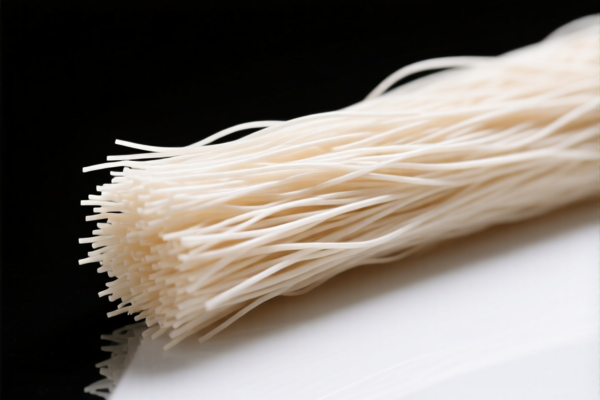
商品图片


AI分析
🧵 Regenerated Cellulose Fiber (Rayon/Viscose)
🌐 HS Code Reference & Customs Clearance Guide | 2026 Latest Tariff Analysis | Professional Strategy for Cross-Border Trade
📌 One, Product Definition and Classification: What Exactly is "Regenerated Cellulose Fiber"?
Regenerated cellulose fibers (commonly known as Rayon, Viscose, or Modal) are man-made fibers derived from natural cellulose sources (such as wood pulp or cotton linter). They are distinct from synthetic fibers (like Polyester) which are petroleum-based.
In international trade, these fibers are classified under Chapter 55 (Man-made Staple Fibers) or Chapter 54 (Man-made Filament Yarns) depending on their form (staple vs. filament) and chemical composition.
⚠️ Critical Distinction Point:
- If the fiber is in staple form (short lengths, similar to cotton wool) → It generally falls under HS 5504 or 5502.
- If the fiber is in filament/singled form (continuous thread-like structures) → It may fall under HS 5405.
- Material Conflict Check: Regenerated cellulose is chemically distinct from "synthetic polymers" (like nylon/polyester), so it cannot be misclassified under synthetic-only headings if the specific cellulose heading exists.
📦 Two, HS Code Classification Details (2026 Latest Tariff Authority Comparison)
Based on the provided data, here are the four potential classifications for Regenerated Cellulose Fiber, with detailed tax implications for imports into the United States (assuming US origin/target due to "Section 301" and "122 Clause" references in the data).
| HS Code | Product Description | Applicability Scenario | Tax Rate Breakdown |
|---|---|---|---|
5504.10.00.00 |
Acetate Staple Fibers | Acetate-based regenerated fibers; matches material properties of acetate rayon. | 21.8% (Lowest Risk) |
5504.90.00.00 |
Other Man-Made Staple Fibers | Other staple regenerated fibers not specified elsewhere (e.g., standard Viscose). | 39.3% (High Tariff) |
5405.00.60.00 |
Other Synthetic Filaments/Yarns (Catch-all) | Filament forms; classified under "catch-all" for synthetic/man-made monofilaments. | 40.8% (High Tariff) |
5405.00.30.00 |
Monofilaments of Man-Made Materials | Continuous filament forms; matches fiber material attributes without conflict. | 41.9% (Highest Tariff) |
🔍 Key Insight:
- Staple Fibers (Chapter 55) are generally preferred for traditional "Rayon/Viscose" products.
- Filament Yarns (Chapter 54) apply if the product is continuous thread.
- Tariff Sensitivity: The difference between5504.10(21.8%) and5405.00.30(41.9%) is 20.1%, which significantly impacts profit margins.
💰 Three, 2026 Latest Tariff Rate Breakdown (Including Surtaxes & Policy Add-ons)
✅ Applicable Country: United States (US)
✅ Origin: China (CN) (Inferred from tax details: Section 301 + IEEPA 122 Clause)
✅ Effective Time: Current 2025-2026 Trade Policy
🎯 1. 5504.10.00.00 —— Acetate Staple Fibers (Best Case Scenario)
| Item | Content |
|---|---|
| Base Duty Rate | 4.3% (Standard MFN Rate) |
| Section 301 Surtax | +7.5% (Trade Remedy Tariff) |
| IEEPA Clause 122 | +10% (Specific China-related surtax) |
| Total Tax Rate | 21.8% |
| Tax Calculation | CIF Value × 21.8% |
| De Minimis Eligibility | ❌ No (Deny de minimis for China origin in this category) |
| Legal Basis Path | Base Tariff 4.3% + Section 301: 7.5% + IEEPA: 10% |
📌 Explanation:
- This is the most favorable classification among the options.
- "Acetate" is a specific type of regenerated cellulose. If your product is chemically acetate-based, use this code.
- The total burden is moderate compared to other codes.
🎯 2. 5504.90.00.00 —— Other Man-Made Staple Fibers (Most Common for Viscose)
| Item | Content |
|---|---|
| Base Duty Rate | 4.3% |
| Section 301 Surtax | +25.0% (Standard Section 301 Rate) |
| IEEPA Clause 122 | +10% |
| Total Tax Rate | 39.3% |
| Tax Calculation | CIF Value × 39.3% |
| De Minimis Eligibility | ❌ No |
| Legal Basis Path | Base Tariff 4.3% + Section 301: 25% + IEEPA: 10% |
📌 Note:
- This is the standard classification for generic Viscose or Modal staple fibers.
- The 25% Section 301 surtax is the primary cost driver.
- Do not confuse with Acetate (5504.10); if it's standard Viscose, this is the correct code.
🎯 3. 5405.00.60.00 —— Other Synthetic Filaments (Catch-All)
| Item | Content |
|---|---|
| Base Duty Rate | 5.8% |
| Section 301 Surtax | +25.0% |
| IEEPA Clause 122 | +10% |
| Total Tax Rate | 40.8% |
| Tax Calculation | CIF Value × 40.8% |
| De Minimis Eligibility | ❌ No |
| Legal Basis Path | Base Tariff 5.8% + Section 301: 25% + IEEPA: 10% |
📌 Explanation:
- Used if the fiber is in filament form but doesn't fit specific synthetic filament categories.
- Higher base rate (5.8%) than staple fibers (4.3%).
- Often used as a "fallback" if specific classification is disputed.
🎯 4. 5405.00.30.00 —— Monofilaments of Man-Made Materials
| Item | Content |
|---|---|
| Base Duty Rate | 6.9% |
| Section 301 Surtax | +25.0% |
| IEEPA Clause 122 | +10% |
| Total Tax Rate | 41.9% |
| Tax Calculation | CIF Value × 41.9% |
| De Minimis Eligibility | ❌ No |
| Legal Basis Path | Base Tariff 6.9% + Section 301: 25% + IEEPA: 10% |
📌 Warning:
- This is the highest tax burden option.
- "Monofilament" implies a single, continuous, solid thread (often used for bristles or industrial threads), not standard textile yarn.
- Misclassifying standard rayon yarn as "monofilament" can lead to customs audits and penalties.
🛠️ Four, Customs Clearance Practical Advice (Battle-Tested Pitfall Guide)
✅ 1. Required Documentation Checklist (Non-Negotiable)
| Document | Mandatory? | Explanation |
|---|---|---|
| ✅ Product Specification Sheet | ✔️ | Must specify: Fiber type (Acetate vs. Viscose), Form (Staple vs. Filament), Denier, Length. |
| ✅ Chemical Composition Report | ✔️ | Proof that it is Cellulose-based (Regenerated), not Petrochemical (Synthetic). |
| ✅ Product Photos | ✔️ | Clear images showing staple fluff or filament spools. |
| ✅ Commercial Invoice | ✔️ | Must use precise HS descriptions (e.g., "Acetate Staple Fiber" not just "Rayon"). |
| ✅ Certificate of Origin | ✔️ | Critical for proving China origin (triggers Section 301 + IEEPA). |
| ✅ Packaging List | ✔️ | Net/Gross weight must match declaration. |
✅ 2. Declaration Tips (Key Mantras)
🔥 “Staple vs. Filament defines the Chapter; Acetate vs. Viscose defines the Rate.”
| Scenario | Correct HS Code | Wrong Approach |
|---|---|---|
| Acetate Staple Fiber | 5504.10.00.00 (21.8%) |
Mislabeling as generic Viscose → Higher Tax |
| Standard Viscose Staple Fiber | 5504.90.00.00 (39.3%) |
Mislabeling as Acetate → Fraud/Penalty |
| Viscose Filament Yarn | 5405.00.60.00 (40.8%) |
Declaring as Staple → Customs Rejection |
| Industrial Monofilament | 5405.00.30.00 (41.9%) |
Mislabeling as Textile Yarn → Seizure Risk |
✅ 3. Special Handling for Regenerated Fibers
| Situation | Handling Advice |
|---|---|
| Hyblid Fibers (e.g., Viscose-Polyester Blend) | Cannot use 5504 alone. Must declare as Chapter 55 or 54 based on predominant weight. Complex tax calculation. |
| "Rayon" as a Generic Term | Avoid using "Rayon" in the HS description. Use specific chemical name (Acetate, Viscose, Cuprammonium). |
| Origin Marking | Ensure goods are marked "Made in China" to avoid unexpected duty exemptions if re-exported, but note that US duties still apply. |
| Pre-Ruling Application | Highly Recommended. Apply for an Advance Ruling from CBP if the fiber type is ambiguous (e.g., new bio-cellulose materials). |
🌍 Five, Global Market Clearance Comparison (2026)
| Country/Region | Recommended HS Code | Estimated Duty (China Origin) | Key Certifications | Notes |
|---|---|---|---|---|
| 🇺🇸 USA | 5504.10.00.00 (Acetate) |
21.8% | None specific | Highest protectionist tariffs globally. |
| 🇺🇸 USA | 5504.90.00.00 (Viscose) |
39.3% | None specific | Standard Viscose faces high Section 301. |
| 🇪🇺 EU | 5504.10.00 |
~6.5% | REACH Compliance | No Section 301 surtax. Lower barrier. |
| 🇨🇳 China | 5504.10.00 |
~5% | None | Import duty only. No surtax. |
| 🇮🇳 India | 5504.10.00 |
~10-15% | BIS Certification | High basic customs duty. |
📌 Conclusion:
- USA is the most expensive market for Regenerated Cellulose Fibers due to layered tariffs (Base + 301 + IEEPA).
- EU and China offer significantly lower tariff burdens.
- If exporting to the US, optimize the HS Code by ensuring accurate chemical classification (Acetate vs. Viscose) to save up to 17.5% in duties.
📌 Six, Common Errors & Pitfall Guide (Lessons from History)
❌ Mistake 1: Using "Rayon" as the HS Description
👉 Consequence: CBP may reject the description. Use "Acetate Staple Fiber" or "Viscose Staple Fiber".
❌ Mistake 2: Confusing Staple vs. Filament
👉 Consequence: Misclassification leads to 41.9% tax instead of 21.8%. Staple = short fibers; Filament = continuous thread.
❌ Mistake 3: Ignoring the "122 Clause" IEEPA Tax
👉 Consequence: Underestimating total landed cost by 10%. Always factor in the additional 10% surtax for China-origin goods.
❌ Mistake 4: Declaring Blends as Pure Fiber
👉 Consequence: If the fiber is blended with Polyester, it may fall under different chapters (e.g., 5509 for Viscose/Polyester blends). Check composition weight.
✅ Correct Declaration Example:
"Acetate Staple Fiber, 3.0 Denier, 38mm Length, Cellulose Based, Made in China"
HS Code:5504.10.00.00
Duty: 21.8%
🎯 Seven, Conclusion: Precision Classification Saves Money!
🎯 Remember the Mantra:
🔹 "Acetate is 21.8%, Viscose is 39.3%. Filament is 40%+."
🔹 "Don't guess the fiber; test the chemistry. Save 20% with the right code."
🔹 "China Origin = 301 + 122 Clause. Always Add 35-42% Tax."
📌 Pro Tip:
If your regenerated fiber is Bio-based (e.g., from bamboo or eucalyptus), it is still Cellulose, not "Synthetic". Ensure your documentation highlights "Regenerated Cellulose" to avoid being misclassified as "Synthetic Polymer" which may have different trade restrictions.
📣 Immediate Action:
📞 Contact a Customs Broker: Provide Chemical Analysis Reports.
📄 Apply for Pre-Ruling: Especially if using new bio-cellulose sources.
🚀 Optimize Landed Cost: Choose5504.10.00.00if product is Acetate; otherwise, budget for 39.3%+ for Viscose.
✨ Professional Clearance Starts with Precise Classification!
💼 Every Percent of Duty Saved is Pure Profit!
用户评价
关于 HS 编码归类
协调制度(HS)是由世界海关组织(WCO)制定的国际贸易商品分类标准。全球 200 多个国家采用 HS 系统作为海关关税、贸易统计和进出口监管的基础。
每个 HS 编码遵循以下层级结构:
- 章(2 位)——商品大类(例如:第 84 章:机器和机械设备)
- 品目(4 位)——章内的更具体分类
- 子目(6 位)——国际通用细分,所有 WCO 成员国统一使用
- 本国细分(8-10 位)——各国自行扩展的细分编码,如美国 HTSUS 10 位编码
正确的 HS 编码归类对于顺利通关、准确缴纳关税和遵守贸易法规至关重要。错误归类可能导致海关延误、多缴关税或罚款。
从CN进口到US时,适用的关税税率可能包括:
- 最惠国(MFN)税率——适用于 WTO 成员国的标准关税税率
- 普通税率——适用于无贸易协定国家
- 贸易救济关税——附加关税,如 301 条款(反倾销)、232 条款(国家安全)或反补贴税
本页内容仅供参考。如需正式归类,请咨询当地海关或持牌报关代理。