Regenerated Cellulose Film
CN → US| HS编码 | 关税税率 | 原产国 | 目的国 | 文档 |
|---|---|---|---|---|
| 3920710000 | 41.2% | CN | US | 官方文档 |
| 3921140000 | 41.5% | CN | US | 官方文档 |
| 3912900010 | 40.2% | CN | US | 官方文档 |
| 3920795000 | 38.7% | CN | US | 官方文档 |
| 3921905050 | 39.8% | CN | US | 官方文档 |
商品图片
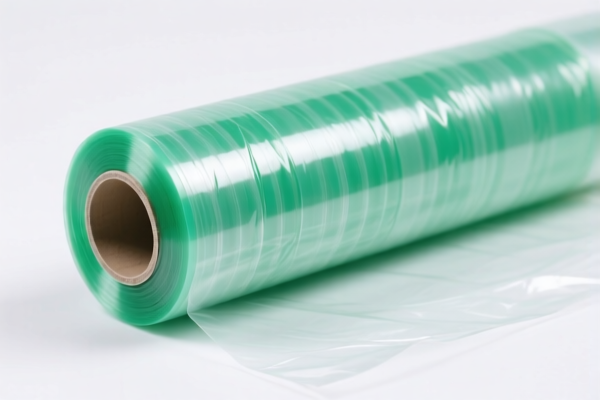
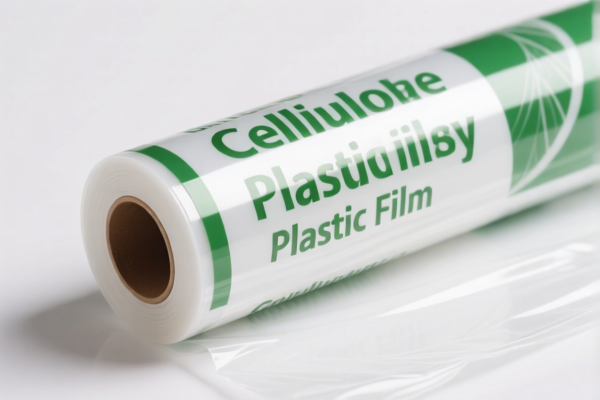
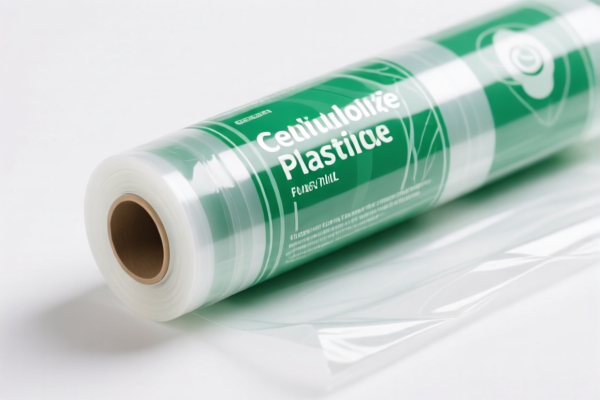
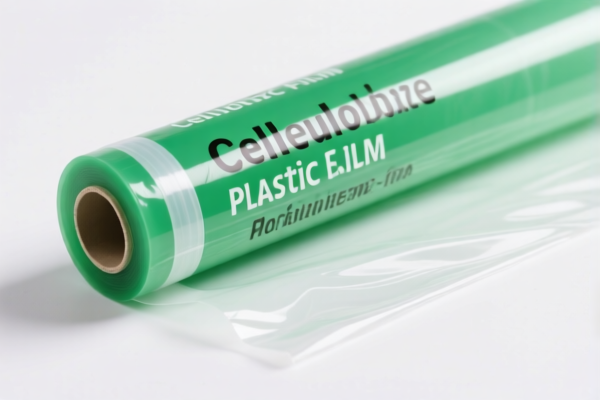
AI分析
🧪 Regenerated Cellulose Film (Cellophane & Derivatives)
🌐 HS Code Reference & Customs Clearance Guide | 2026 Latest Tariff Analysis | Professional Entry Strategy
📌 I. Product Definition & Classification: Do You Really Understand "Cellulose Film"?
Regenerated Cellulose Film, commonly known as Cellophane, is a transparent film made from regenerated cellulose derived from wood pulp. It is widely used in packaging, insulation, laminates, and industrial applications.
In international trade, it is strictly classified under Chapter 39 (Plastics and Articles Thereof), specifically focusing on films, sheets, and non-rigid plates. The classification depends heavily on: 1. Chemical Structure: Is it pure regenerated cellulose or a derivative? 2. Physical Properties: Is it flame-retardant, moisture-proof, or generic? 3. Manufacturing Process: Is it a basic film or a complex composite?
⚠️ Key Distinction Point:
- If it is pure regenerated cellulose with no additional plasticizers or coatings → Falls under Heading 39.20 or 39.21.
- If it contains cellulose derivatives (e.g., cellulose acetate) → Falls under Heading 39.12.
- Flame-retardant or moisture-proof variants often trigger specific subheadings due to their treated nature.
📦 II. HS Code Classification Details (2026 Latest Tariff Authority Comparison)
Based on the provided data, here are the precise classifications for Regenerated Cellulose Film variants:
| HS Code | Product Description | Application/Features | Tax Category |
|---|---|---|---|
3920.71.00.00 |
Regenerated Cellulose Film, Flame-Retardant | Packaging requiring fire safety standards, electronics insulation | High-Tax Variant |
3921.14.00.00 |
Regenerated Cellulose Film, Flame-Retardant or Moisture-Proof | Multi-functional packaging, food packaging with humidity control | High-Tax Variant |
3912.90.00.10 |
Cellulose Derivative Film, Regenerated Cellulose | Films made from derivatives (e.g., acetate) rather than pure cellulose | Medium-High Tax |
3920.79.50.00 |
Other Cellulose or Its Chemical Derivative Films | General purpose, non-specialty films not covered above | Lowest Tax in Data |
3921.90.50.50 |
Regenerated Cellulose Moisture-Proof Film | Packaging specifically treated for humidity resistance | Medium Tax |
🔍 Important Note:
- HS 3920 generally covers "Other plates, sheets, film, foil and strip, of plastics, non-cellulose" BUT 3920.71/79 specifically include cellulose derivatives in some national interpretations. However, per the provided data, these codes are explicitly linked to regenerated cellulose products.
- HS 3921 covers "Other plates, sheets, film, foil and strip, of plastics". Subheading .14 is specifically for Flame-Retardant or Moisture-Proof.
- HS 3912 covers "Cellulose and its chemical derivatives". This is crucial for Cellulose Acetate or other derivative films.
💰 III. 2026 Latest Tariff Rate Breakdown (Including Surcharges & Policy Add-ons)
✅ Applicable Country: China (Export)
✅ Origin: China (CN)
✅ Effective Time: 2026 (Based on provided data)
✅ Target Market: Likely US/EU markets given the "Section 122" and "Additional Tariff" structure in the data.
🎯 1. 3920.71.00.00 — Regenerated Cellulose Film, Flame-Retardant
| Item | Content |
|---|---|
| Base Tariff | 6.2% |
| Additional Tariff | +25.0% (Likely Section 301 or similar trade remedy) |
| Section 122 Tariff | +10.0% (Specific policy surcharge) |
| Total Tax Rate | 41.2% |
| Tax Calculation | CIF Value × 41.2% |
| Legal Basis Path | Base: 3920 → Add: 25% → Add: 10% (Sec 122) |
📌 Explanation:
- Flame-retardant films are often targeted due to their industrial and electronic applications.
- The 41.2% total rate is significant. It includes a base rate, a major trade war surcharge (25%), and a specific policy fee (10%).
- No de minimis exemption for high-value commercial shipments.
🎯 2. 3921.14.00.00 — Regenerated Cellulose Film, Flame-Retardant or Moisture-Proof
| Item | Content |
|---|---|
| Base Tariff | 6.5% |
| Additional Tariff | +25.0% |
| Section 122 Tariff | +10.0% |
| Total Tax Rate | 41.5% |
| Tax Calculation | CIF Value × 41.5% |
| Legal Basis Path | Base: 3921 → Add: 25% → Add: 10% (Sec 122) |
📌 Note:
- This is the highest tax rate in the dataset.
- The slight increase in base tariff (6.5% vs 6.2%) and total (41.5% vs 41.2%) suggests that moisture-proof + flame-retardant combinations are viewed as more complex/higher value.
- Strict documentation required to prove dual functionality if claiming this specific subheading.
🎯 3. 3912.90.00.10 — Cellulose Derivative Film, Regenerated Cellulose
| Item | Content |
|---|---|
| Base Tariff | 5.2% |
| Additional Tariff | +25.0% |
| Section 122 Tariff | +10.0% |
| Total Tax Rate | 40.2% |
| Tax Calculation | CIF Value × 40.2% |
| Legal Basis Path | Base: 3912 → Add: 25% → Add: 10% (Sec 122) |
📌 Explanation:
- This code applies if the film is not pure cellulose but a derivative (e.g., Cellulose Acetate).
- Often used in optical films, tapes, and specialty packaging.
- 40.2% is still very high due to the 25% + 10% surcharges.
🎯 4. 3920.79.50.00 — Other Cellulose or Its Chemical Derivative Films
| Item | Content |
|---|---|
| Base Tariff | 3.7% |
| Additional Tariff | +25.0% |
| Section 122 Tariff | +10.0% |
| Total Tax Rate | 38.7% |
| Tax Calculation | CIF Value × 38.7% |
| Legal Basis Path | Base: 3920 → Add: 25% → Add: 10% (Sec 122) |
📌 Note:
- This is the lowest tax rate in the provided data.
- "Other" implies generic films that do not have special flame-retardant or moisture-proof treatments.
- Ideal for standard packaging applications where extra functionality is not required.
🎯 5. 3921.90.50.50 — Regenerated Cellulose Moisture-Proof Film
| Item | Content |
|---|---|
| Base Tariff | 4.8% |
| Additional Tariff | +25.0% |
| Section 122 Tariff | +10.0% |
| Total Tax Rate | 39.8% |
| Tax Calculation | CIF Value × 39.8% |
| Legal Basis Path | Base: 3921 → Add: 25% → Add: 10% (Sec 122) |
📌 Explanation:
- Specifically for films treated only for moisture resistance (without flame retardancy).
- Tax rate is slightly lower than the dual-function film (41.5%) but higher than the generic film (38.7%).
🛠️ IV. Customs Clearance Practical Advice (Avoiding Pitfalls)
✅ 1. Documentation Checklist (Non-negotiable)
| Document | Must Provide | Description |
|---|---|---|
| ✅ Product Specification Sheet | ✔️ | Must explicitly state: "Regenerated Cellulose," "Flame-Retardant," or "Moisture-Proof." |
| ✅ MSDS (Material Safety Data Sheet) | ✔️ | Proves chemical composition (cellulose vs. derivative). |
| ✅ Third-Party Test Report | ✔️ | Crucial: ISO/IEC test reports for flame retardancy (e.g., UL94) or moisture barrier values. Without this, customs may reclassify to higher-tax codes. |
| ✅ Commercial Invoice | ✔️ | Must clearly describe: "Regenerated Cellulose Film, 0.05mm, Moisture-Proof" NOT just "Plastic Film." |
| ✅ Bill of Lading | ✔️ | Consistent with invoice description. |
| ✅ Certificate of Origin | ✔️ | To prove Chinese origin (triggers the 25% + 10% surcharges). |
✅ 2. Declaration Strategy (Key Mantra)
🔥 “Accurate Description, Test Reports Back It Up, No Hidden Features!”
| Scenario | Correct Declaration | Wrong Practice |
|---|---|---|
| Flame-Retardant Film | 3920.71.00.00 |
Declare as generic film → Risk of penalty & reclassification to 3921.14 (41.5%) |
| Moisture-Proof Film | 3921.90.50.50 |
Declare as generic → Risk of penalty |
| Cellulose Acetate Film | 3912.90.00.10 |
Declare as "Cellulose Film" → Misclassification |
| Generic Film | 3920.79.50.00 |
Declare as "Specialty Film" → Unnecessary high tax |
📌 Critical Reminder:
- If your film is both flame-retardant AND moisture-proof, you MUST use3921.14.00.00(41.5%). Attempting to declare it as just "moisture-proof" (39.8%) is customs fraud.
- If your film is only flame-retardant, use3920.71.00.00(41.2%).
- Generic films (3920.79.50.00) save 2.5%-2.8% in tax compared to specialty films. Ensure no special treatments are applied if you want this lower rate.
✅ 3. Special Cases Handling
| Case | Handling Advice |
|---|---|
| Composite Films | If the film is laminated with aluminum or PE, it may no longer be "Regenerated Cellulose Film." It could fall under Chapter 56 or 3921 with different rates. Clarify structure! |
| OEM Custom Films | Provide customer PO + Design Specs. If specs include "Flame Retardant," declare accordingly. |
| Samples | Small samples may still be subject to tariffs if declared as commercial. Clearly mark "Sample - Not for Resale" but still pay applicable duties. |
| Origin Shift | If produced in Vietnam/Malaysia, you may avoid the 25% + 10% surcharges. Check Rules of Origin! |
🌍 V. Global Market Comparison (2026 Latest)
| Country/Region | Recommended HS Code | Tariff (China Origin) | Certification Required | Notes |
|---|---|---|---|---|
| 🇺🇸 USA | 3920.71.00.00 / 3921.14.00.00 |
38.7% - 41.5% | FDA (if food contact), UL (if flame retardant) | High surcharges due to trade policies. |
| 🇨🇳 China | 3920.71.00.00 |
3.7% - 6.5% | CCC (if applicable) | No additional surcharges. |
| 🇪🇺 EU | 3920.71.00.00 |
6.5% | REACH, RoHS | No Section 122/301 equivalent. |
| 🇬🇧 UK | 3920.71.00.00 |
6.5% | UKCA | Post-Brexit alignment with EU. |
| 🇯🇵 Japan | 3920.71.00.00 |
3.8% | PSE (if electrical) | Lower base rates. |
📌 Conclusion:
- USA is the most expensive market due to 25% + 10% surcharges.
- EU/UK/Japan have much lower base rates and no trade war surcharges.
- Strategy: If targeting the US, consider supply chain diversification (e.g., produce in Southeast Asia) to avoid surcharges, if feasible.
📌 VI. Common Errors & Pitfalls (Lessons Learned)
❌ Error 1: Declaring "Flame-Retardant" film as "General Purpose Film"
👉 Consequence: Customs inspection reveals flame-retardant properties → Reclassification to 41.5% + Fines + Delay.
❌ Error 2: Confusing "Regenerated Cellulose" with "Cellulose Acetate"
👉 Consequence: Misclassification under 3912 vs 3920 → Tax discrepancy + Penalty.
❌ Error 3: Ignoring "Moisture-Proof" treatment
👉 Consequence: If film is moisture-proof, it should be 3921.90.50.50 (39.8%) not 3920.79.50.00 (38.7%). Small difference, but accuracy is key for compliance.
❌ Error 4: Not providing Test Reports
👉 Consequence: Customs cannot verify "Flame-Retardant" claim → Default to highest possible tax or Rejection.
✅ Correct Practice:
"Regenerated Cellulose Film, 0.05mm, Flame-Retardant, UL94 V-0 Certified, for Packaging, Made in China"
🎯 VII. Conclusion: Precision Classification Saves Money!
🎯 Remember the Mantra:
🔹 "Flame-Retardant = 41.2%~41.5%"
🔹 "Moisture-Proof = 39.8%"
🔹 "Derivative = 40.2%"
🔹 "Generic = 38.7%"
🔹 "Test Reports are Your Best Friend!"
📌 Pro Tip:
If you are exporting to the US, calculate the Total Landed Cost including 38.7% - 41.5% tariffs.
Consider Advanced Rulings (ISF/Pre-Ruling) from US CBP to confirm HS Code and tax rate before shipment.
📣 Immediate Action:
📞 Contact a Customs Broker + Provide Test Reports + Confirm Exact Film Properties
🚀 Avoid Surprises, Optimize Costs, Clear Customs Smoothly!
✨ Professional Clearance Starts with Accurate Classification!
💼 Every Percent of Tax Matters!
用户评价
关于 HS 编码归类
协调制度(HS)是由世界海关组织(WCO)制定的国际贸易商品分类标准。全球 200 多个国家采用 HS 系统作为海关关税、贸易统计和进出口监管的基础。
每个 HS 编码遵循以下层级结构:
- 章(2 位)——商品大类(例如:第 84 章:机器和机械设备)
- 品目(4 位)——章内的更具体分类
- 子目(6 位)——国际通用细分,所有 WCO 成员国统一使用
- 本国细分(8-10 位)——各国自行扩展的细分编码,如美国 HTSUS 10 位编码
正确的 HS 编码归类对于顺利通关、准确缴纳关税和遵守贸易法规至关重要。错误归类可能导致海关延误、多缴关税或罚款。
从CN进口到US时,适用的关税税率可能包括:
- 最惠国(MFN)税率——适用于 WTO 成员国的标准关税税率
- 普通税率——适用于无贸易协定国家
- 贸易救济关税——附加关税,如 301 条款(反倾销)、232 条款(国家安全)或反补贴税
本页内容仅供参考。如需正式归类,请咨询当地海关或持牌报关代理。