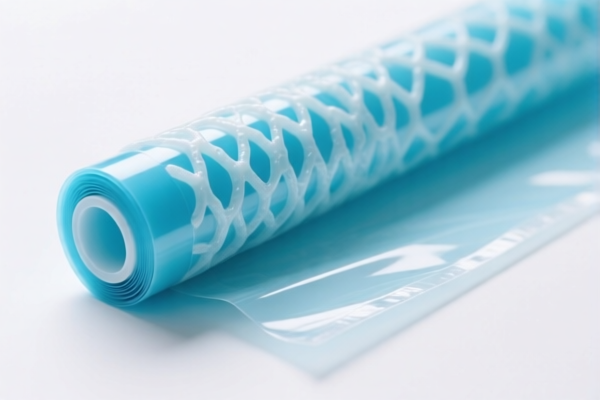
Regenerated Cellulose Medical Plastic Film
CN → US| HS编码 | 关税税率 | 原产国 | 目的国 | 文档 |
|---|---|---|---|---|
| 3921190090 | 41.5% | CN | US | 官方文档 |
| 3921905050 | 39.8% | CN | US | 官方文档 |
| 3005901000 | 10.0% | CN | US | 官方文档 |
| 3920591000 | 41.0% | CN | US | 官方文档 |
| 3005905090 | 10.0% | CN | US | 官方文档 |
商品图片



AI分析
🏥 Regenerated Cellulose Medical Plastic Film
🌐 HS Code Reference & Customs Clearance Guide | 2026 Latest Tariff Analysis | Professional Compliance Strategy
📌 I. Product Definition & Classification: What Exactly Is "Regenerated Cellulose Medical Film"?
Regenerated Cellulose (often known by brand names like Cellophane or specific medical-grade films) is a semi-synthetic polymer derived from natural cellulose. In the context of medical trade, it is rarely sold as a raw industrial plastic sheet. Instead, it is almost exclusively processed into medical dressings, wound care wraps, or sterile barrier systems.
The classification hinges on functionality and treatment: * Raw/Unprocessed Film: If it is just a plain sheet of regenerated cellulose used for non-medical packaging or general industrial use, it falls under Chapter 39 (Plastics). * Medical Dressing/Treated Film: If the film is impregnated with pharmaceuticals, coated with antiseptics, or specifically cut/formatted for use as a sterile dressing or medical bandage, it falls under Chapter 30 (Pharmaceutical Products).
⚠️ Key Distinction Point:
- If the product is impregnated with medication, coated with therapeutic agents, or packaged as a ready-to-use sterile dressing →归入 3005.90 (Medical dressings).
- If the product is plain, uncoated, unimpregnated film used as a raw material or for general medical packaging (not a dressing itself) →归入 3921.19 or 3920.59 (Plastic films).
📦 II. HS Code Classification Details (2026 Latest Tariff Authority Alignment)
Based on the provided data, here are the specific classifications for Regenerated Cellulose Medical Plastic Film. Note that Regenerated Cellulose is technically a plastic derivative, but its medical application drives the classification shift to Chapter 30.
| HS Code | Product Description | Application Scenario | Total Tax Rate |
|---|---|---|---|
3005.90.10.00 |
Medical Dressing/Film: Implied to be impregnated with drugs or coated; fits the definition of medical dressings | Sterile wound covers, medicated film dressings, gauze with film backing | 10.0% |
3005.90.50.90 |
Other Medical Dressings: Plastic film for medical use, classified under other dressing categories | Unmedicated sterile barrier films, specialized medical wraps | 10.0% |
3921.19.00.90 |
Plastic Film: General plastic film/board/sheet/foil definition | Raw regenerated cellulose film, non-medical packaging, general industrial use | 41.5% |
3920.59.10.00 |
Plastic Film (Acrylic/Other Polymer): Film in the form of sheets/films of other plastics | If misidentified as acrylic or other generic plastic film without medical treatment | 41.0% |
3921.90.50.50 |
Other Plastic Films: General category for plastic films not elsewhere specified | Unspecified plastic films, general purpose medical packaging material | 39.8% |
🔍 Critical Insight:
- Why Chapter 30? Regenerated cellulose films used in healthcare are typically classified as "dressings" if they are intended to come into contact with wounds or body tissues for therapeutic or protective purposes, especially if sterile or packaged for direct medical use. The tariff burden drops dramatically from ~41% to 10%. - Why Chapter 39? Only if the film is not a dressing, not impregnated, and not specifically manufactured as a medical device component (e.g., it's just a raw sheet for factory use) does it fall under plastics. This incurs heavy "Section 301" and "122" tariffs.
💰 III. 2026 Latest Tariff Rate Breakdown (Including Surtaxes & Policy Add-ons)
✅ Applicable Country: United States (US)
✅ Origin: China (CN)
✅ Effective Time: 2025/2026 Period
🎯 1. 3005.90.10.00 & 3005.90.50.90 —— Medical Dressings (Chapter 30)
| Item | Content |
|---|---|
| Base Rate | 0.0% |
| USITC Surtax | 0.0% |
| 122 Section Tax | +10.0% |
| Total Tax Rate | 10.0% |
| Tax Calculation | CIF Value × 10% |
| De Minimis Eligibility | ✅ Possible (Check current $800 threshold rules) |
| Legal Basis | Chapter 30 Note 1; 122 Section Tariff List |
📌 Explanation:
- Medical dressings (3005) are strategically classified to reduce tariffs.
- The 10% surtax applies to most Chinese-origin goods under current trade policies, but the base rate is 0%, and there is no additional 25% Section 301 tariff on these specific medical sub-headings.
- Total cost impact: Low (10%).
🎯 2. 3921.19.00.90 —— Plastic Film, Other (Chapter 39)
| Item | Content |
|---|---|
| Base Rate | 6.5% |
| USITC Surtax | +25.0% (Section 301) |
| 122 Section Tax | +10.0% |
| Total Tax Rate | 41.5% |
| Tax Calculation | CIF Value × 41.5% |
| De Minimis Eligibility | ❌ No (Deny de_minimis for this category) |
| Legal Basis | USITC:3921.19.00.90 → FOOTNOTE:9903.88.01 → IEEPA:9903.01.25 |
📌 Explanation:
- This is the "penalty" classification for treating a medical dressing as a generic plastic sheet.
- You pay the 6.5% base + 25% trade war tariff + 10% 122 tariff.
- Total cost impact: High (41.5%).
🎯 3. 3921.90.50.50 & 3920.59.10.00 —— Other Plastic Films
| Item | Content |
|---|---|
| Base Rate | 4.8% (3921.90) / 6.0% (3920.59) |
| USITC Surtax | +25.0% |
| 122 Section Tax | +10.0% |
| Total Tax Rate | 39.8% / 41.0% |
| Tax Calculation | CIF Value × Total Rate |
| De Minimis Eligibility | ❌ No |
📌 Explanation:
- Similar to3921.19, these general plastic film codes attract the full brunt of punitive tariffs.
- Even if the film is "regenerated cellulose," if it doesn't meet the strict definition of a "dressing" in Chapter 30, it defaults to Chapter 39 plastics.
🛠️ IV. Customs Clearance Practical Advice (Pitfall Avoidance Guide)
✅ 1. Documentation Checklist (Essential for Chapter 30 Classification)
| Document | Required? | Description |
|---|---|---|
| ✅ Product Specification Sheet | ✔️ | Must explicitly state: "Regenerated Cellulose," "Medical Grade," "Sterile," "Intended for Wound Care." |
| ✅ Composition Analysis | ✔️ | Confirm it is Regenerated Cellulose (Cellulose Acetate/Viscose), not PET or PE. |
| ✅ Intended Use Declaration | ✔️ | Crucial: State clearly if it is a "Dressing," "Barrier," or "Packaging Material." |
| ✅ Sterilization Certificate | ✔️ | If claiming Chapter 30, proof of sterilization (EO, Gamma) strengthens the "Medical" argument. |
| ✅ Commercial Invoice | ✔️ | Description should match HS Code rationale (e.g., "Sterile Regenerated Cellulose Dressing Film"). |
✅ 2. Classification Strategy (Key Rules)
🔥 “Medical Function First, Plastic Form Second!”
| Scenario | Correct HS Code | Risk |
|---|---|---|
| Impregnated with antiseptic/medication | 3005.90.10.00 |
Low Tax (10%) |
| Sterile, unmedicated wound wrap | 3005.90.50.90 |
Low Tax (10%) |
| Raw sheet for factory manufacturing | 3921.19.00.90 |
HIGH TAX (41.5%) |
| Packaging film for medical devices (not a dressing itself) | 3921.90.50.50 |
HIGH TAX (39.8%) |
| Coated with acrylic adhesive | 3920.59.10.00 |
HIGH TAX (41.0%) |
📌 Note:
- If the film is not a dressing but is used to package medical devices, it remains Chapter 39.
- If the film is applied directly to the patient as a dressing/barrier, it is Chapter 30.
✅ 3. Special Handling for Regenerated Cellulose
- Material Identification: Customs may confuse regenerated cellulose with synthetic plastics (PET, PE). Ensure your HS Code description emphasizes "Regenerated Cellulose" or "Cellophane-type" to avoid being lumped into generic plastic categories if it qualifies for Chapter 30.
- Sterility: If you claim
3005, the product must be intended for medical use. If it’s not sterile or intended for wound contact, customs will reclassify it to Chapter 39, resulting in a 30%+ tax increase.
🌍 V. Global Market Comparison (2026 Latest)
| Country/Region | Recommended HS Code | Estimated Tax | Key Requirements |
|---|---|---|---|
| 🇺🇸 USA | 3005.90.10.00 / 3005.90.50.90 |
10.0% | FDA Registration (if Class I/II device), Sterilization Proof |
| 🇨🇳 China | 3005.90.10.00 |
~5-10% | CFDA/NMPA Registration |
| 🇪🇺 EU | 3005.40.00 |
~6.5% | CE Marking (MDR) |
| 🇯🇵 Japan | 3005.90.00 |
~5% | PMDA Notification |
📌 Conclusion:
- USA is the most critical market due to the high punitive tariffs on Chapter 39 plastics.
- Correct classification into Chapter 30 (Medical Dressings) saves ~30-31% in taxes compared to Chapter 39.
- Do not under-declare medical films as generic plastic to save costs; the risk of audits and back-taxes is high.
📌 VI. Common Errors & Pitfalls (Lessons Learned)
❌ Error 1: Classifying sterile medical wound film as 3921.19 (Plastic Film)
👉 Consequence: Pay 41.5% tax instead of 10%.
👉 Fix: Provide medical device documentation and intended use as a dressing.
❌ Error 2: Claiming Chapter 30 for non-sterile, raw cellulose sheets
👉 Consequence: Customs rejects Chapter 30 claim, reclassifies to 3921.90, assesses 39.8% + penalties.
👉 Fix: Ensure the product is explicitly marketed and packaged for medical/dressing use.
❌ Error 3: Ignoring the "122 Section" Tax
👉 Consequence: Even with 0% base tax in Chapter 30, the 10% 122 tariff still applies.
👉 Fix: Budget for the 10% surtax; it is unavoidable for Chinese origin.
✅ Correct Approach:
"Sterile Regenerated Cellulose Film Dressing, 10x10cm, Unmedicated, for Wound Care" → HS 3005.90.50.90 (10% Tax)
🎯 VII. Conclusion: Precision Classification Saves 30%
🎯 Key Takeaway:
🔹 "If it touches the wound, it’s a dressing (10%). If it’s just plastic, it’s a tariff victim (41%)."
🔹 "Regenerated Cellulose" is the material, but "Medical Use" is the classification driver.
📌 Action Items:
📞 Verify Medical Device Status: Is your film classified as a medical device in your home market?
📄 Update Descriptions: Ensure invoices and packing lists reflect "Medical Dressing" or "Wound Care Film."
🚀 Apply for Pre-Ruling: If volume is high, apply for a US CBP Binding Ruling to lock in the 10% tax rate.
✨ Professional Customs Clearance Starts with Accurate Classification!
💼 Your margin depends on the correct HS Code.
用户评价
关于 HS 编码归类
协调制度(HS)是由世界海关组织(WCO)制定的国际贸易商品分类标准。全球 200 多个国家采用 HS 系统作为海关关税、贸易统计和进出口监管的基础。
每个 HS 编码遵循以下层级结构:
- 章(2 位)——商品大类(例如:第 84 章:机器和机械设备)
- 品目(4 位)——章内的更具体分类
- 子目(6 位)——国际通用细分,所有 WCO 成员国统一使用
- 本国细分(8-10 位)——各国自行扩展的细分编码,如美国 HTSUS 10 位编码
正确的 HS 编码归类对于顺利通关、准确缴纳关税和遵守贸易法规至关重要。错误归类可能导致海关延误、多缴关税或罚款。
从CN进口到US时,适用的关税税率可能包括:
- 最惠国(MFN)税率——适用于 WTO 成员国的标准关税税率
- 普通税率——适用于无贸易协定国家
- 贸易救济关税——附加关税,如 301 条款(反倾销)、232 条款(国家安全)或反补贴税
本页内容仅供参考。如需正式归类,请咨询当地海关或持牌报关代理。