Regenerated Cellulose Medical Plastic Films
CN → US| HS编码 | 关税税率 | 原产国 | 目的国 | 文档 |
|---|---|---|---|---|
| 3921905050 | 39.8% | CN | US | 官方文档 |
| 3921140000 | 41.5% | CN | US | 官方文档 |
| 3913902090 | 40.8% | CN | US | 官方文档 |
| 3913905000 | 41.5% | CN | US | 官方文档 |
| 3916905000 | 40.8% | CN | US | 官方文档 |
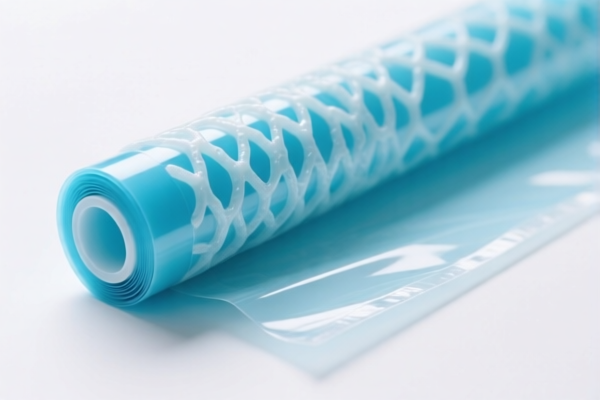
商品图片



AI分析
🧬 Regenerated Cellulose Medical Plastic Films (Cellophane-Type Films)
🌐 HS Code Reference & Customs Clearance Guide | 2026 Latest Tariff Analysis | Professional Compliance Strategy
📌 I. Product Definition & Classification: What Exactly Is "Regenerated Cellulose"?
Regenerated Cellulose Films (often commonly referred to as Cellophane in industrial contexts, though distinct from modern synthetic plastics) are transparent, flexible sheets derived from natural cellulose (usually wood pulp) that has been chemically dissolved and regenerated into a film format.
In international trade, the critical distinction lies in the chemical nature vs. physical form: * Not Synthetic Plastic: Unlike Polyethylene (PE) or Polypropylene (PP), these are polymer-based derivatives of natural cellulose. * Barrier Properties: Known for high oxygen barrier, moisture resistance (when coated), and biodegradability. * Medical Use: Often used for sterile packaging, blister packs, or protective barriers in medical device packaging due to clarity and non-toxicity.
⚠️ Key Classification Trap:
- If the film is pure regenerated cellulose → It falls under Chapter 39, Heading 3913 (Polymers in primary forms) or 3921 (Plates, sheets, etc.).
- Do NOT classify under synthetic plastic chapters (like 3901-3914) unless chemically modified beyond recognition, which is rare for standard medical cellophane.
📦 II. HS Code Classification Details (2026 Authoritative Reference)
Based on the provided data, here are the 5 possible HS Codes for Regenerated Cellulose Medical Plastic Films, along with their specific tax implications under US import rules (assuming China origin as per tax details):
| HS Code | Product Description & Justification | Form Factor | Total Tax Rate |
|---|---|---|---|
3921.90.50.50 |
Regenerated Cellulose Moisture-Barrier Film: Material is regenerated cellulose; form is film. Fits the scope of plastic/high-polymer materials under Chapter 39. | Film (Sheet) | 39.8% |
3921.14.00.00 |
Regenerated Cellulose Moisture-Barrier Film: Material and shape strictly meet the code requirements; specific sub-category within this heading. | Film (Sheet) | 41.5% |
3913.90.20.90 |
Regenerated Cellulose Film: Material is cellulose (polysaccharide derivative); form is film. Matches characteristics of heading 3913.90. | Film (Sheet) | 40.8% |
3913.90.50.00 |
Regenerated Cellulose Film: Material is regenerated cellulose (natural polymer modified derivative); form is film. Meets code requirements. | Film (Sheet) | 41.5% |
3916.90.50.00 |
Regenerated Cellulose Plastic Strips: Material is regenerated cellulose; form is strip. Fits the characteristics of "plastic strips." | Strip (Rod/Wire) | 40.8% |
🔍 Critical Distinction:
- Film vs. Strip: If your product is a roll or sheet, use3921.xor3913.x. If it is a thread, rod, or strip, use3916.90.50.00.
- 3913 vs. 3921:
-3913: Polymers in primary forms (often powders, granules, or specific viscous forms, but includes films if not further worked).
- `3921: Plates, sheets, film, foil, and strip, of plastics.
- Note: Customs may debate whether "Regenerated Cellulose Film" is a "plastic" (3921) or a "polymer in primary form" (3913). The tax difference is small (~1.7%), but the legal description must match.
💰 III. 2026 Latest Tariff Rate Breakdown (Including Surcharges & Policy Add-ons)
✅ Applicable Country: United States (US)
✅ Origin: China (CN)
✅ Effective Date: November 10, 2025 (and subsequent imports)
🎯 1. General Tax Structure for All Codes Above
All the HS codes listed in the <DATA> share a similar tax structure due to US-China trade tensions:
| Component | Rate | Description |
|---|---|---|
| Base Tariff | 4.8% – 6.5% | Standard MFN (Most Favored Nation) rate for plastic/polymer films. |
| Section 301 Tariff (Added) | +25.0% | Additional duty on Chinese goods under US Trade Act Section 301. |
| IEEPA Tariff (Added) | +10.0% | Additional duty under International Emergency Economic Powers Act (122 Clause). |
| TOTAL DUTY | 39.8% – 41.5% | Sum of all above rates. |
📌 Detailed Explanation:
- Base Tariff: Varies slightly based on the exact subheading (e.g.,3913.90.50.00has a 6.5% base, while3921.90.50.50has 4.8%).
- 25% Section 301: A fixed add-on for most plastic/polymer products from China.
- 10% IEEPA: A specific surcharge targeting Chinese imports under current emergency powers.
- NO De Minimis Exemption: These goods cannot use the $800 de minimis exemption (Section 321) if they are subject to Section 301 or IEEPA duties. They MUST be formally entered and duties paid.
🛠️ IV. Customs Clearance Practical Advice (Real-World Pitfall Avoidance)
✅ 1. Required Documentation Checklist (Non-Negotiable)
| Document | Mandatory? | Purpose |
|---|---|---|
| ✅ Product Specification Sheet | ✔️ | Must explicitly state "Regenerated Cellulose" (NOT "Cellophane" if legally ambiguous), "Medical Grade," and "Moisture Barrier Coating" (if any). |
| ✅ Chemical Composition Statement | ✔️ | Confirm the material is not PVC, PE, or PP. Must prove it is cellulose-based to avoid misclassification as synthetic plastic. |
| ✅ Certificate of Analysis (COA) | ✔️ | For medical use, proves sterility, non-toxicity, and compliance with USP/EP standards. |
| ✅ Commercial Invoice | ✔️ | Must clearly state: "Regenerated Cellulose Film, Medical Grade, HS Code [Selected Code], Origin: China" |
| ✅ Bill of Lading / Air Waybill | ✔️ | Standard shipping documents. |
| ✅ FDA Registration Proof | ✔️ | Since it's a medical plastic film, the importer must have FDA compliance documentation for medical device packaging materials. |
✅ 2. Declaration Tips (Key Mantras)
🔥 “Material First, Form Second, Medical Purpose Third!”
| Scenario | Correct Declaration | Wrong Practice |
|---|---|---|
| Medical Packaging Film | 3921.90.50.50 or 3913.90.20.90 |
Misdeclare as "General Purpose Plastic Film" → Risk of audit. |
| Strip/Rod Form | 3916.90.50.00 |
Declare as "Film" → Wrong form factor, customs rejection. |
| Coated vs. Uncoated | Specify "Coated with Paraffin" if applicable | Omit coating info → May be taxed at higher base rate if coating changes classification. |
| Medical vs. Industrial | Label as "For Medical Device Packaging" | Label as "Industrial Film" → May trigger different FDA scrutiny. |
📌 Note: Even if used for medical purposes, the HS Code is determined by material and form, not end-use. However, end-use affects FDA requirements.
✅ 3. Special Cases & Handling
| Situation | Recommendation |
|---|---|
| Sterile Packaged Film | Declare as "Sterile Regenerated Cellulose Film." Provide sterilization method (EtO, Gamma, etc.). |
| Multi-Layer Film | If it has a plastic layer (e.g., PE coating for moisture resistance), the classification may shift to 3921 (Plastic) if plastic is the primary material. Check the % composition. |
| Biodegradable Claims | Do NOT claim "Biodegradable" on customs forms unless certified. It does not reduce tariffs. |
| Re-export from Third Country | If processed in Vietnam/Malaysia, do not assume origin changes. If "substantial transformation" doesn't occur, origin remains China → Tariffs still apply. |
🌍 V. Global Market Clearance Comparison (2026 Latest)
| Country/Region | Recommended HS Code | Tariff (China Origin) | Key Requirements | Notes |
|---|---|---|---|---|
| 🇺🇸 USA | 3921.90.50.50 / 3913.90.20.90 |
39.8% - 41.5% | FDA 510(k) or Premarket Notification | Highest cost. No de minimis exemption. |
| 🇨🇳 China | 3921.90.50.50 |
4.8% - 6.5% | CCC (if applicable), NMPA | No Section 301/IEEPA. Low cost. |
| 🇪🇺 EU | 3920.62.00 (approx.) |
0% - 4.5% | CE Mark, REACH, USP | No Section 301. Lower cost than US. |
| 🇯🇵 Japan | 3920.62.00 |
0% - 6.0% | PSE, ISO 13485 | Moderate cost. Strict purity standards. |
📌 Conclusion:
- USA is the most expensive market for Regenerated Cellulose Films from China due to 35-36% in surcharges.
- EU and Japan offer significantly lower duties (~0-6%), but have stricter biocompatibility and purity standards (REACH, ISO 10993).
- Strategy: If targeting the US, ensure your FOB price absorbs the 40%+ duty, or consider third-country processing (only if substantial transformation occurs).
📌 VI. Common Errors & Pitfalls (Lessons Learned)
❌ Error 1: Classifying as "General Plastic Film" (3920.10...)
👉 Consequence: Misdeclaration. Customs may reassess to 3921.90 or 3913, leading to back taxes + penalties.
👉 Fix: Clearly state "Regenerated Cellulose" on the invoice.
❌ Error 2: Assuming "Medical Use" lowers Tariff
👉 Consequence: No tariff reduction for medical use in the US.
👉 Fix: Focus on material composition for HS Code, and FDA compliance for legality.
❌ Error 3: Ignoring the "Strip" vs. "Film" distinction
👉 Consequence: Using 3916.90.50.00 for a roll of film is incorrect.
👉 Fix: If it’s a roll/sheet, use 3921 or 3913. If it’s a thread/rod, use 3916.
❌ Error 4: Missing the IEEPA 10% Surcharge in Cost Calculation
👉 Consequence: Under-quoting the landed cost.
👉 Fix: Always add Base + 25% + 10% = ~40% for landed cost calculations.
✅ Correct Declaration Example:
"Regenerated Cellulose Film, Medical Grade, 50 microns, uncoated, for sterile packaging, HS 3921.90.50.50, Origin: China, Subject to IEEPA & Section 301 Duties."
🎯 VII. Conclusion: Professional Declaration, Cost Control, Compliance!
🎯 Remember the Mantra:
🔹 "Cellulose ≠ Synthetic Plastic; Film ≠ Strip; Medical ≠ Tariff Discount."
🔹 "US Tariff = Base + 25% + 10% = ~40%; Plan your price accordingly!"
🔹 "HS Code determines duty, FDA determines legality."
📌 Pro Tip:
If your film is coated with a synthetic polymer (e.g., PE, PVDC), the classification may shift to 3921 (Plastic Sheets) if the plastic layer dominates. Always check the chemical composition percentage.
For US imports, consider Advance Ruling from CBP to lock in the HS Code and avoid disputes.
📣 Immediate Action:
📞 Contact your customs broker + Provide Chemical Composition Report + Verify FDA Status
🚀 Ensure your Regenerated Cellulose Films clear US customs smoothly, avoiding 40%+ surprise costs!
✨ Professional Customs Clearance Starts with Precise Classification!
💼 Every cent of your duty is worth calculating precisely!
用户评价
关于 HS 编码归类
协调制度(HS)是由世界海关组织(WCO)制定的国际贸易商品分类标准。全球 200 多个国家采用 HS 系统作为海关关税、贸易统计和进出口监管的基础。
每个 HS 编码遵循以下层级结构:
- 章(2 位)——商品大类(例如:第 84 章:机器和机械设备)
- 品目(4 位)——章内的更具体分类
- 子目(6 位)——国际通用细分,所有 WCO 成员国统一使用
- 本国细分(8-10 位)——各国自行扩展的细分编码,如美国 HTSUS 10 位编码
正确的 HS 编码归类对于顺利通关、准确缴纳关税和遵守贸易法规至关重要。错误归类可能导致海关延误、多缴关税或罚款。
从CN进口到US时,适用的关税税率可能包括:
- 最惠国(MFN)税率——适用于 WTO 成员国的标准关税税率
- 普通税率——适用于无贸易协定国家
- 贸易救济关税——附加关税,如 301 条款(反倾销)、232 条款(国家安全)或反补贴税
本页内容仅供参考。如需正式归类,请咨询当地海关或持牌报关代理。