Regenerated Cellulose Metallized Film
CN → US| HS编码 | 关税税率 | 原产国 | 目的国 | 文档 |
|---|---|---|---|---|
| 4823908680 | 35.0% | CN | US | 官方文档 |
商品图片


AI分析
📦 Regenerated Cellulose Metallized Film
🌐 HS Code Reference & Clearance Guide | 2026 Latest Tariff Analysis | Professional Entry Strategy
📌 I. Product Definition & Classification: Understanding "Metallized Film"
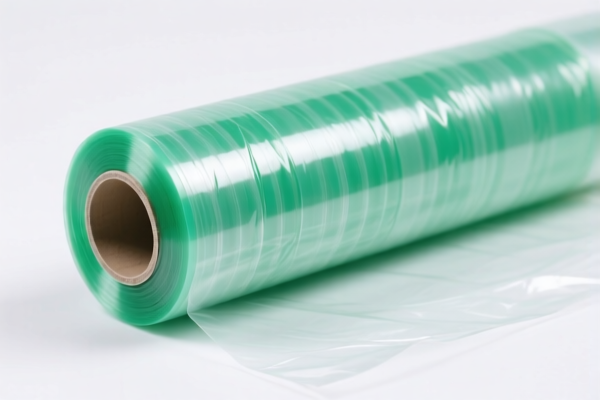
Regenerated Cellulose Metallized Film (often referred to as cellophane with metal coating) is a flexible packaging material produced by coating a regenerated cellulose substrate (derived from wood pulp) with a thin layer of metal (typically aluminum) or metal oxide. It is widely used in food packaging, cigarette packaging, and decorative applications due to its barrier properties and aesthetic appeal.
In international trade, the critical distinction lies in whether the film is treated as a plastic/film product (Chapter 39) or a paper/board product (Chapter 48). While metallized films are often confused with plastics, the base material here is cellulose. However, simple metallization does not automatically classify it under paper articles unless it loses its fundamental film character or is cut/processed into specific paper-like articles.
⚠️ Key Classification Logic:
- Regenerated Cellulose Film: Usually falls under Chapter 39 (Plastics and Articles Thereof) if it retains its film characteristics.
- Paper/Paperboard Articles: If the film is cut to specific shapes, used as gaskets, filters, or other "other articles," it may fall under Chapter 48.
- The "Other" Catch-All: The provided data points to HS Code 4823.90.86.80, which is the residual "Other" category for paper, paperboard, cellulose wadding, and webs of cellulose fibers, cut to size or shape, or other articles. This implies that for this specific dataset, the item is treated as a processed cellulose article rather than a raw plastic film.
📦 II. HS Code Classification Details (2026 Latest Tariff Reference)
Based on the provided data, the specific classification is:
| HS Code | Product Description | Application Scenario | Material Basis |
|---|---|---|---|
| 4823.90.86.80 | Other paper, paperboard, cellulose wadding and webs of cellulose fibers, cut to size or shape; other articles of paper pulp, paper, paperboard, cellulose wadding or webs of cellulose fibers: Other: Other: Other: Other: Other | Generic cellulose-based articles, including metallized films if classified as cellulose webs/articles rather than plastic films | Regenerated Cellulose (Wood Pulp Derivative) |
🔍 Critical Note:
- This HS Code is the most generic "Other" code available in the reference for items not specifically listed (such as films, trays, filters, gaskets, etc.).
- It does NOT explicitly cover "films" in the standard plastic sense (which would be Chapter 39).
- Why this code? If the customs authority considers the metallized layer to transform the item into a "web of cellulose fibers" with specific processing (metallization) or if it is cut to shape, it falls into this residual category under Chapter 48.
- Warning: Misclassification as a plastic film (e.g., HS 3920) could lead to significant discrepancies if the base material is strictly regenerated cellulose.
💰 III. 2026 Latest Tariff Rate Details (Including Surtaxes & Policy Add-ons)
✅ Applicable Country: United States (US)
✅ Country of Origin: China (CN)
✅ Effective Date: From November 10, 2025 (including subsequent imports)
🎯 1. 4823.90.86.80 —— Other Articles of Cellulose Webs/Paper
| Item | Content |
|---|---|
| Base Tariff Rate | 0.0% (ad valorem) |
| Section 301 Surtax | +25.0% (China-origin specific) |
| Total Tax Rate | 25.0% |
| Tax Calculation | CIF Value × 25.0% |
| De Minimis Eligibility | ❌ No (Deny de minimis for Section 301 items) |
| Legal Basis Path | USITC:4823.90.86.80 → FOOTNOTE:301.9903.01.25 (Implied for Chinese goods) |
📌 Explanation:
- Base Tariff 0%: Paper and paperboard products often enjoy low base tariffs.
- 25% Surtax: This is the critical cost driver. Under the Section 301 Trade Act, many Chinese-origin goods, including certain cellulose and paper-related articles, are subject to an additional 25% tariff.
- No Exemptions: Unlike some consumer electronics, this generic "Other" code is not typically exempt from the 301 surtax unless specifically excluded (which is rare for generic packaging materials).
- High Risk Category: Because this is a residual code, customs may scrutinize the classification. If they determine it should be classified as a plastic film (Chapter 39), the tariff might differ, but the 25% surtax for Chinese goods remains a strong possibility under broader manufacturing categories.
🛠️ IV. Clearance Practical Advice (Real-World Pitfall Avoidance Guide)
✅ 1. Documentation Checklist (All Must Be Provided)
| Document | Mandatory? | Description |
|---|---|---|
| ✅ Product Specifications | ✔️ | Must detail: Substrate (Regenerated Cellulose), Metallization Type (Aluminum/Oxide), Thickness, Width, Roll Length. |
| ✅ Material Composition Statement | ✔️ | Explicitly state "100% Regenerated Cellulose" and describe the metallized layer (e.g., "Vacuum-deposited aluminum layer"). |
| ✅ Commercial Invoice | ✔️ | Must clearly describe item as "Regenerated Cellulose Metallized Film" or "Metallized Cellophane." Avoid vague terms like "Packaging Material." |
| ✅ Bill of Lading/Air Waybill | ✔️ | Consistent description with invoice. |
| ✅ Country of Origin Certificate | ✔️ | Proof of China origin triggers the 25% surtax. |
| ✅ HS Code Pre-ruling | ⭐ Highly Recommended | Due to the ambiguity between Chapter 39 (Plastics) and Chapter 48 (Paper), obtain a binding ruling from US CBP to avoid misclassification penalties. |
✅ 2. Declaration Tips (Key Mantras)
🔥 "Cellulose Base, Not Plastic; Cut Shape, Not Raw Roll; Be Specific, Avoid 'Other' Traps!"
| Scenario | Correct Declaration Approach | Wrong Approach |
|---|---|---|
| Metallized Film (Raw Roll) | Declare as Regenerated Cellulose Web/Film. Check if HS 4811 or 4823 applies based on processing. | Calling it "Plastic Film" → Risk of penalty for misclassification. |
| Cut-to-Shape Metallized Film | Declare under 4823.90.86.80 as "Other articles... cut to size or shape." | Declaring as "Raw Roll" to avoid surtax → Customs will detect and penalize. |
| Packaging Bags Made from Film | Declare as Finished Articles. May still fall under 4823.90. | Declaring as "Film" when sold as bags → Misclassification. |
✅ 3. Special Considerations
| Situation | Handling Advice |
|---|---|
| Is it Plastic or Paper? | If the base is regenerated cellulose, it is not plastic (Chapter 39). Stick to Chapter 48. |
| Metallization Impact | Does metallization change the classification? Usually, no, unless it creates a new essential character. Here, it remains a cellulose web. |
| Section 301 Exemptions | Check if the specific product type has been exempted from the 25% tariff in recent years. If not, budget for the full 25%. |
| Customs Scrutiny | Generic codes like 4823.90.86.80 are high-risk for audits. Ensure your commercial invoice has robust product descriptions. |
🌍 V. Global Market Clearance Comparison (2026 Latest)
| Country/Region | Recommended HS Code | Tariff Rate (China Origin) | Certification Requirements | Remarks |
|---|---|---|---|---|
| 🇺🇸 USA | 4823.90.86.80 |
25% (Total) | None specific, but FDA may apply for food contact | High scrutiny on "Other" codes. |
| 🇪🇺 EU | 4823.90.00 |
0% - 2.5% | REACH, FDA equivalent for food contact | No Section 301 surtax. |
| 🇨🇳 China | 4823.90.00 |
0% - 5% | CCC (if applicable) | Export from China may face different duties. |
| 🇬🇧 UK | 4823.90.00 |
0% - 5% | UKCA, REACH | Post-Brexit rules apply. |
📌 Conclusion:
- The US is the most expensive market due to the 25% Section 301 surtax.
- Europe and Asia offer significantly lower tariff barriers for similar cellulose-based products.
- Strategic Advice: For US-bound shipments, consider duty drawback programs if the film is re-exported, or explore foreign trade zones to defer duty payments.
📌 VI. Common Mistakes & Pitfall Guide (Lessons Learned)
❌ Mistake 1: Classifying as 3920.99.00 (Plastic Film)
👉 Consequence: Customs may reject if the base is cellulose, leading to reclassification + penalties. The correct chapter is 48, not 39.
❌ Mistake 2: Omitting "Metallized" in the description
👉 Consequence: Customs may view it as unprocessed paper, leading to discrepancies in value or quality inspections.
❌ Mistake 3: Assuming "Other" code means "Low Risk"
👉 Consequence: Generic codes are high-risk for audits. Always provide detailed specs and photos.
✅ Correct Practice:
"Regenerated Cellulose Film, Metallized with Aluminum, 12 micron, 1000mm width, for packaging, China Origin"
🎯 VII. Conclusion: Precise Classification, Cost Control
🎯 Key Takeaways:
🔹 "Cellulose is Paper, Not Plastic" → Use Chapter 48, not 39.
🔹 "25% Surcharge is Inevitable" → For China-origin goods under HS 4823.90.86.80, budget for 25% total tax.
🔹 "Specificity Avoids Audits" → Never use vague descriptions like "Packaging Film."
📌 Pro Tip:
If you are importing this into the US, consider HS Code Pre-Ruling from US CBP to confirm if 4823.90.86.80 is the most accurate code or if a more specific code (e.g., for metallized paper) exists with different tariff implications. This can save thousands in potential penalties or overpayments.
📣 Immediate Action:
📞 Consult with a licensed customs broker.
📄 Prepare detailed product specs and metallization certificates.
🚀 Secure your supply chain with accurate classification and budgeted duties!
✨ Professional Clearance Starts with Accurate Classification!
💼 Every Percentage Point of Tax Matters!
用户评价
关于 HS 编码归类
协调制度(HS)是由世界海关组织(WCO)制定的国际贸易商品分类标准。全球 200 多个国家采用 HS 系统作为海关关税、贸易统计和进出口监管的基础。
每个 HS 编码遵循以下层级结构:
- 章(2 位)——商品大类(例如:第 84 章:机器和机械设备)
- 品目(4 位)——章内的更具体分类
- 子目(6 位)——国际通用细分,所有 WCO 成员国统一使用
- 本国细分(8-10 位)——各国自行扩展的细分编码,如美国 HTSUS 10 位编码
正确的 HS 编码归类对于顺利通关、准确缴纳关税和遵守贸易法规至关重要。错误归类可能导致海关延误、多缴关税或罚款。
从CN进口到US时,适用的关税税率可能包括:
- 最惠国(MFN)税率——适用于 WTO 成员国的标准关税税率
- 普通税率——适用于无贸易协定国家
- 贸易救济关税——附加关税,如 301 条款(反倾销)、232 条款(国家安全)或反补贴税
本页内容仅供参考。如需正式归类,请咨询当地海关或持牌报关代理。