Regenerated Cellulose Plastic Honeycomb Board
CN → US| HS编码 | 关税税率 | 原产国 | 目的国 | 文档 |
|---|---|---|---|---|
| 4823908000 | 35.0% | CN | US | 官方文档 |
| 4823908620 | 35.0% | CN | US | 官方文档 |
| 9403993010 | 35.0% | CN | US | 官方文档 |
| 9403993005 | 35.0% | CN | US | 官方文档 |
商品图片
AI分析
📦 Regenerated Cellulose Plastic Honeycomb Board
🌐 HS Code Reference & Clearance Guide | 2026 Latest Tariff Analysis | Professional Clearance Strategy
📌 I. Product Definition & Classification: What is "Regenerated Cellulose Plastic Honeycomb Board"?
This product is a composite material often used in packaging, furniture, and lightweight structural applications. However, in the context of U.S. customs classification and the provided data, it is critical to distinguish between pure paper-based products and plastic-composite furniture parts.
Based on the provided <DATA>, the classification depends heavily on the final use and material composition:
1. Paper/Paperboard Category: If the board is primarily made of cellulose fibers (paper pulp) and acts as a packaging material, filler, or general paper product.
2. Furniture Category: If the board is specifically designed as a component for children's play yards or toddler beds/cribs.
⚠️ Key Distinction:
- If used for packaging, general paper goods, or industrial seals → It falls under Chapter 48 (Paper/Paperboard).
- If used as a part for children's furniture (like play yards or cribs) → It falls under Chapter 94 (Furniture).
📦 II. HS Code Classification Details (Based on Provided Data)
The provided data contains two distinct categories for this type of product. You must select the one that matches your actual end-use.
| HS Code | Product Description | Applicable Scenario | Material/Use |
|---|---|---|---|
4823.90.80.00 |
Other articles of paper pulp, paper, paperboard, cellulose wadding or webs of cellulose fibers | General Use: Gaskets, washers, seals, or other paper-based articles not specifically named. | Paper/Cellulose |
4823.90.86.20 |
Other Shoe Covers (booties) of a kind described in statistical note 2 | Specific Use: Only if the product is actually Shoe Covers/Booties made of paper/plastic. | Paper/Plastic Composite |
9403.99.30.10 |
Parts of other furniture: Of reinforced or laminated plastics | Furniture Use: Specifically for Play Yards and other enclosures for confining children. | Plastic-Reinforced |
9403.99.30.05 |
Parts of other furniture: Of reinforced or laminated plastics | Furniture Use: Specifically for Toddler Beds, Cribs, Bassinets, and Cradles. | Plastic-Reinforced |
🔍 Critical Note:
- The term "Regenerated Cellulose" suggests a paper-based core, but if it is laminated with plastic and used in children's furniture, it MUST be classified under 9403.99.30.xx.
- If it is not for children's furniture, and is a general paper product, it falls under 4823.90.80.00.
- Shoe Covers are a specific edge case under4823.90.86.20only if the product is literally booties.
💰 III. 2026 Latest Tariff Rate Details (Including Additional Taxes)
✅ Applicable Country: United States (US)
✅ Origin: China (CN)
✅ Effective Time: 2025+ (Current Policy)
All items in the provided data carry the same tax structure:
🎯 1. 4823.90.80.00 & 4823.90.86.20 (Paper/Paperboard Articles)
| Item | Content |
|---|---|
| Base Tariff | 0.0% |
| Additional Tariff (Section 301) | +25.0% |
| Total Tax Rate | 25.0% |
| Tax Calculation | CIF Value × 25% |
| De Minimis Exemption | ❌ Not Applicable (High-value commercial shipments) |
| Legal Basis | USITC Footnote for Chapter 48, Section 301 Action List |
📌 Explanation:
- The base duty is 0%, meaning there is no standard MFN tariff for most paper articles.
- However, 25% additional duty applies due to U.S. trade actions against Chinese goods (Section 301).
- Total cost impact: 25% of the customs value.
🎯 2. 9403.99.30.10 & 9403.99.30.05 (Furniture Parts)
| Item | Content |
|---|---|
| Base Tariff | 0.0% |
| Additional Tariff (Section 301) | +25.0% |
| Total Tax Rate | 25.0% |
| Tax Calculation | CIF Value × 25% |
| De Minimis Exemption | ❌ Not Applicable |
| Legal Basis | USITC Footnote for Chapter 94, Section 301 Action List |
📌 Explanation:
- Furniture parts also enjoy 0% base duty but are subject to the 25% additional tariff.
- Total cost impact: 25% of the customs value.⚠️ Summary:
Regardless of whether it is classified under Chapter 48 (Paper) or Chapter 94 (Furniture), the total effective tariff is 25%. However, misclassification can lead to penalties, delays, or incorrect duty payments.
🛠️ IV. Clearance Practical Advice (Battle-Tested Pitfall Guide)
✅ 1. Preparation Checklist (Essential Documents)
| Document | Required? | Purpose |
|---|---|---|
| ✅ Product Specification Sheet | ✔️ | Must state: Material composition (e.g., "70% cellulose, 30% plastic film"), dimensions, weight. |
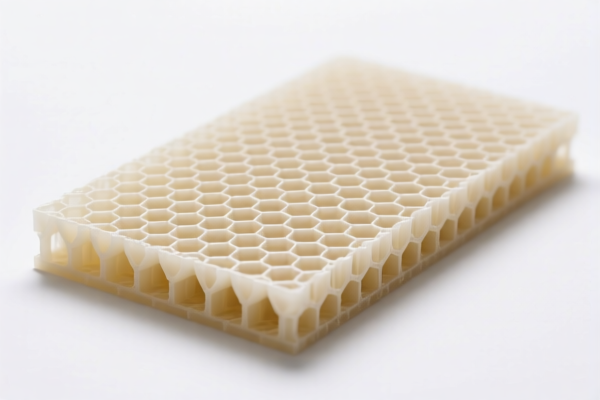
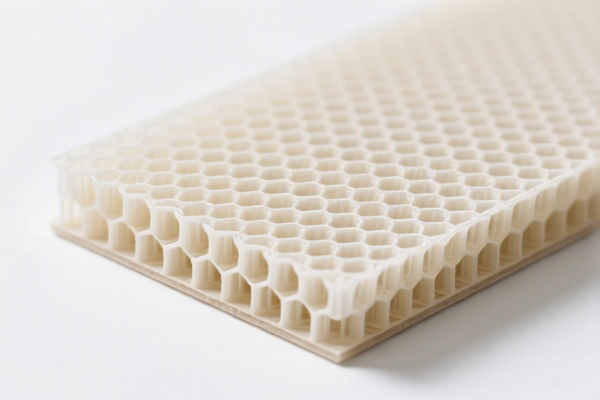
| ✅ Product Photographs | ✔️ | Show honeycomb structure, surface finish (plastic laminate?), and intended use. |
| ✅ Commercial Invoice | ✔️ | Clearly describe the item. Avoid vague terms like "Board." Use: "Regenerated Cellulose Honeycomb Board for [Use]." |
| ✅ Bill of Lading (BOL) | ✔️ | Ensure HS Code matches the invoice description. |
| ✅ End-Use Declaration | ✔️ | Crucial! Declare if used for "Children's Furniture" (Play Yards/Cribs) or "General Packaging." This determines Chapter 48 vs. 94. |
| ✅ FCC/CE Certificates | ❌ (Usually) | Only if the product contains electronic components (unlikely for honeycomb board). |
✅ 2. Declaration Strategy (Key Tips)
| Scenario | Correct Declaration | Wrong Declaration |
|---|---|---|
| For Children's Furniture | "Plastic-Laminated Cellulose Honeycomb Board, Part for Toddler Bed, HS: 9403.99.30.05" | "Paper Board" → Risk of penalty for misclassification. |
| For General Packaging | "Paper Honeycomb Board for Packaging, HS: 4823.90.80.00" | "Furniture Part" → Risk of duty rate error or unnecessary scrutiny. |
| Shoe Covers | "Paper/Plastic Shoe Covers, HS: 4823.90.86.20" | "Honeycomb Board" → Total mismatch, leads to inspection. |
🔥 Golden Rule:
"End Use Determines Chapter. Furniture = Ch94. General Paper = Ch48."
Do not mix these. If you declare a furniture part as a paper product, you may face fraud allegations or retroactive duty assessments.
✅ 3. Special Cases & Handling
| Situation | Handling Advice |
|---|---|
| Mixed Materials | If the board is >50% plastic by weight, it might be classified under Chapter 39 (Plastics). However, based on the provided data, we assume it falls under Ch48 or Ch94. Consult a customs broker if plastic content is high. |
| Children's Safety | If classified as furniture parts for children (9403.99.30.xx), ensure compliance with CPSIA (Consumer Product Safety Improvement Act) regulations. |
| Plastic Lamination | If the honeycomb core is cellulose but the surface is plastic, it is still often classified under Ch48 or Ch94 depending on essential character. Provide material breakdown. |
🌍 V. Global Market Clearance Comparison (2026)
| Country/Region | Recommended HS Code (Based on Data) | Tariff Rate | Certification Required | Notes |
|---|---|---|---|---|
| 🇺🇸 USA | 4823.90.80.00 or 9403.99.30.xx |
25% | CPSIA (if for children) | High tariff. Section 301 applies. |
| 🇨🇳 China | 4823.90.80.00 or 9403.99.30.xx |
0% - 5% | CCC (if for children) | No Section 301 tax. |
| 🇪🇺 EU | 4823.90.80.00 or 9403.99.30.xx |
0% - 6% | CE (if for children) | Generally lower tariffs. |
| 🇬🇧 UK | 4823.90.80.00 or 9403.99.30.xx |
0% - 6% | UKCA (if for children) | Post-Brexit rules apply. |
📌 Conclusion:
- USA is the most expensive market due to the 25% additional tariff.
- Children's furniture parts require stricter safety compliance (CPSIA) in addition to tariff payment.
📌 VI. Common Errors & Pitfalls (Lessons Learned)
❌ Error 1: Declaring "Honeycomb Board" without specifying end-use.
👉 Consequence: CBP may request clarification, causing 3-7 day delays or reclassification.
❌ Error 2: Misclassifying children's furniture parts as general paper products.
👉 Consequence: Audit risk. If it's for a crib, it's Ch94. Misclassification can lead to penalties for violating consumer product safety laws.
❌ Error 3: Ignoring the plastic laminate component.
👉 Consequence: If the plastic content is significant, it might be classified under Chapter 39, not Ch48. This could change the tariff code (though tax rate might remain similar, the legal description changes).
✅ Correct Practice:
"Regenerated Cellulose Honeycomb Board, Plastic-Laminated, for Use in Toddler Beds, Model: XYZ, Compliant with CPSIA."
🎯 VII. Conclusion: Professional Clearance, Minimize Risk
🎯 Remember the Rules:
🔹 "Furniture Parts → Ch94. General Paper → Ch48. Always 25% Tax (US)."
🔹 "End Use is King. If it's for kids, it's Furniture. If not, it's Paper."
🔹 "Declare accurately to avoid delays. 25% is fixed, but penalties are not."
📌 Pro Tip:
- If your honeycomb board is used in non-furniture applications (e.g., packaging), use 4823.90.80.00.
- If it is used in children's enclosures or beds, use 9403.99.30.10 or 9403.99.30.05.
- Do not guess. Provide product specs to your customs broker for Pre-Ruling if the value is high.
📣 Immediate Action:
📞 Contact your customs broker with product photos and end-use declaration.
🚀 Ensure CPSIA compliance if classified as furniture parts for children.
💼 Pay the 25% duty accurately to avoid hold-ups at U.S. ports.
✨ Accurate Classification Saves Money!
💼 Every duty dollar should be accounted for!
用户评价
关于 HS 编码归类
协调制度(HS)是由世界海关组织(WCO)制定的国际贸易商品分类标准。全球 200 多个国家采用 HS 系统作为海关关税、贸易统计和进出口监管的基础。
每个 HS 编码遵循以下层级结构:
- 章(2 位)——商品大类(例如:第 84 章:机器和机械设备)
- 品目(4 位)——章内的更具体分类
- 子目(6 位)——国际通用细分,所有 WCO 成员国统一使用
- 本国细分(8-10 位)——各国自行扩展的细分编码,如美国 HTSUS 10 位编码
正确的 HS 编码归类对于顺利通关、准确缴纳关税和遵守贸易法规至关重要。错误归类可能导致海关延误、多缴关税或罚款。
从CN进口到US时,适用的关税税率可能包括:
- 最惠国(MFN)税率——适用于 WTO 成员国的标准关税税率
- 普通税率——适用于无贸易协定国家
- 贸易救济关税——附加关税,如 301 条款(反倾销)、232 条款(国家安全)或反补贴税
本页内容仅供参考。如需正式归类,请咨询当地海关或持牌报关代理。