Regenerated Cellulose Printing Film
CN → US| HS编码 | 关税税率 | 原产国 | 目的国 | 文档 |
|---|---|---|---|---|
| 3921905050 | 39.8% | CN | US | 官方文档 |
| 3921140000 | 41.5% | CN | US | 官方文档 |
| 3913902090 | 40.8% | CN | US | 官方文档 |
| 3913905000 | 41.5% | CN | US | 官方文档 |
| 3921140000 | 41.5% | CN | US | 官方文档 |
商品图片
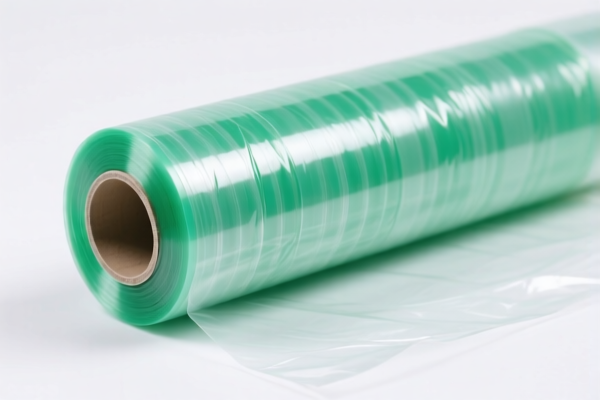
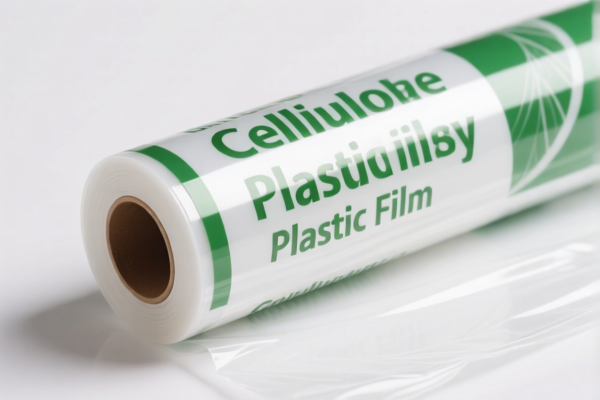
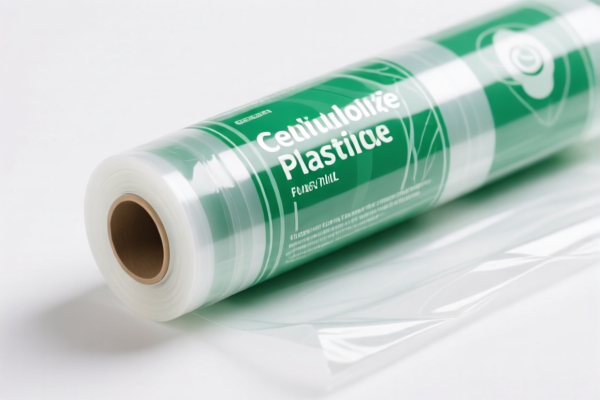
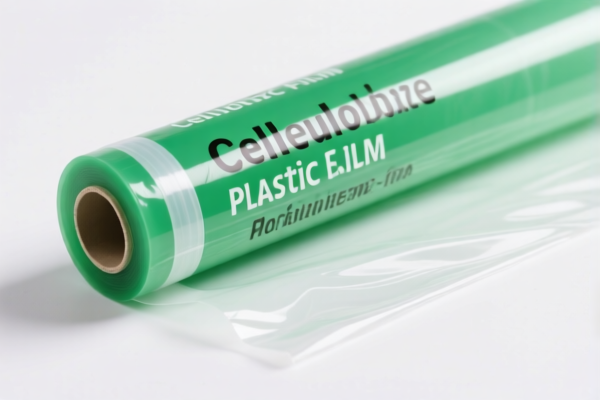
AI分析
🎨 Regenerated Cellulose Printing Film (再生纤维素印刷薄膜)
🌐 HS Code Reference & Customs Clearance Guide | 2026 Latest Tariff Analysis | Professional Clearance Strategy
📌 I. Product Definition & Classification: Do You Truly Understand "Regenerated Cellulose Film"?
Regenerated cellulose film (often known by brand names like cellophane) is a transparent, biodegradable, and breathable packaging material widely used in food, tobacco, pharmaceutical, and luxury goods sectors. In international trade, its classification hinges strictly on its chemical structure, processing method, and functional additives (e.g., moisture barrier vs. flame retardant).
⚠️ Key Distinction Points:
- Base Material: Must be "Regenerated Cellulose" (derived from wood pulp via viscose/rayon process), not standard plastic polymers like PET or PP.
- Functional Treatment: Is it a general film, a moisture-barrier film, or a flame-retardant film?
- HS Code Nuance: Different functional treatments lead to different sub-headings under Chapter 39 (Plastics and Articles Thereof).
📦 II. HS Code Classification Details (Based on Provided Data)
The following HS codes are derived directly from the provided dataset. Note that all entries involve significant additional tariffs due to specific trade policies.
| HS Code | Product Description (Summary) | Material & Form | Total Tax Rate | Key Characteristics |
|---|---|---|---|---|
3921.90.50.50 |
Regenerated cellulose moisture-proof film | Regenerated cellulose; Film form | 39.8% | Specifically treated for moisture resistance. |
3921.14.00.00 |
Regenerated cellulose moisture-proof OR flame-retardant film | Regenerated cellulose; Film form | 41.5% | Covers both moisture-proof and flame-retardant variants. |
3913.90.20.90 |
Regenerated cellulose film (Polysaccharide derivative) | Cellulose (Polysaccharide derivative); Film form | 40.8% | General regenerated cellulose film, chemically defined as polysaccharide derivative. |
3913.90.50.00 |
Regenerated cellulose film (Natural polymer modified derivative) | Regenerated cellulose (Natural polymer modified derivative); Film form | 41.5% | General film, chemically defined as modified natural polymer. |
3921.14.00.00 |
Regenerated cellulose flame-retardant film | Regenerated cellulose; Film form | 41.5% | Specifically treated for flame retardancy. |
🔍 Critical Insight:
-3913.xxxxSeries: Generally refers to primary forms or unworked/plasticized cellulose derivatives. If your film is a basic regenerated cellulose sheet without specific functional coatings (like heavy moisture barriers or flame retardants), it often falls here.
-3921.xxxxSeries: Refers to other plates, sheets, film, block, etc. of plastics. This category is typically used when the film has been further processed, coated, or compounded with specific functional agents (like moisture-proof or flame-retardant layers).
- Why so many codes? The distinction depends on the exact chemical definition and functional treatment declared in your commercial invoice and product specs. Misclassification leads to severe penalty risks.
💰 III. 2026 Latest Tariff Rate Breakdown (Including Surtaxes)
✅ Applicable Country: United States (US)
✅ Origin: China (CN) (Assumed based on "122 Clause" and typical surtax structures)
✅ Effective Time: Current regime (Subject to 2026 updates)
🎯 1. 3921.90.50.50 – Regenerated Cellulose Moisture-Proof Film
| Item | Content |
|---|---|
| Base Duty | 4.8% |
| Section 301 Surtax | +25.0% |
| Section 122 Surtax | +10.0% |
| Total Tax Rate | 39.8% |
| Calculation Basis | CIF Value × 39.8% |
| De Minimis Eligibility | ❌ Not Eligible (High tariff rate usually excludes low-value shipments from exemption) |
| Legal Basis | Base Rate + USITC 301 List + Section 122 Action |
📌 Explanation:
- Section 301 (25%): Standard retaliatory tariff on Chinese plastics/packaging materials.
- Section 122 (10%): Additional tariff under Section 122 of the Trade Expansion Act of 1962 (often applied to specific industrial inputs or strategic materials).
- Total: 39.8%. This is a high-cost entry for moisture-barrier packaging.
🎯 2. 3921.14.00.00 – Moisture-Proof OR Flame-Retardant Film
| Item | Content |
|---|---|
| Base Duty | 6.5% |
| Section 301 Surtax | +25.0% |
| Section 122 Surtax | +10.0% |
| Total Tax Rate | 41.5% |
| Calculation Basis | CIF Value × 41.5% |
| De Minimis Eligibility | ❌ Not Eligible |
| Legal Basis | Base Rate + USITC 301 List + Section 122 Action |
📌 Explanation:
- Higher base duty (6.5%) compared to3921.90.50.50.
- Applies to both moisture-proof and flame-retardant variants under this subheading.
- Total: 41.5%. The highest cost category in the dataset.
🎯 3. 3913.90.20.90 – Regenerated Cellulose Film (Polysaccharide Derivative)
| Item | Content |
|---|---|
| Base Duty | 5.8% |
| Section 301 Surtax | +25.0% |
| Section 122 Surtax | +10.0% |
| Total Tax Rate | 40.8% |
| Calculation Basis | CIF Value × 40.8% |
| De Minimis Eligibility | ❌ Not Eligible |
| Legal Basis | Base Rate + USITC 301 List + Section 122 Action |
📌 Explanation:
- Classified under Chapter 3913 (Polysaccharides and their derivatives).
- Requires strict documentation proving the material is a "polysaccharide derivative" and not a synthetic plastic.
- Total: 40.8%. Slightly cheaper than3921series but still very high.
🎯 4. 3913.90.50.00 – Regenerated Cellulose Film (Natural Polymer Modified)
| Item | Content |
|---|---|
| Base Duty | 6.5% |
| Section 301 Surtax | +25.0% |
| Section 122 Surtax | +10.0% |
| Total Tax Rate | 41.5% |
| Calculation Basis | CIF Value × 41.5% |
| De Minimis Eligibility | ❌ Not Eligible |
| Legal Basis | Base Rate + USITC 301 List + Section 122 Action |
📌 Explanation:
- Another subheading under 3913, defined by "Natural polymer modified derivative."
- Often overlaps with3913.90.20.90in practice. The key is the chemical definition in your MSDS/Technical Sheet.
- Total: 41.5%. Same high-cost tier.
🎯 5. 3921.14.00.00 – Regenerated Cellulose Flame-Retardant Film
| Item | Content |
|---|---|
| Base Duty | 6.5% |
| Section 301 Surtax | +25.0% |
| Section 122 Surtax | +10.0% |
| Total Tax Rate | 41.5% |
| Calculation Basis | CIF Value × 41.5% |
| De Minimis Eligibility | ❌ Not Eligible |
| Legal Basis | Base Rate + USITC 301 List + Section 122 Action |
📌 Explanation:
- Explicitly for flame-retardant applications.
- Total: 41.5%. Highest rate in the dataset. Flame-retardant chemicals may trigger additional environmental or safety inspections.
🛠️ IV. Customs Clearance Practical Advice (Pitfall Avoidance Guide)
✅ 1. Document Preparation Checklist (Non-Negotiable)
| Document | Required? | Description |
|---|---|---|
| ✅ Product Specification Sheet | ✔️ | Must detail: Material (Regenerated Cellulose), Thickness, Width, Functional Treatment (Moisture-proof/Flame-retardant). |
| ✅ MSDS (Material Safety Data Sheet) | ✔️ | Critical for proving it is not a synthetic plastic. Must show "Cellulose" as the primary component. |
| ✅ Commercial Invoice | ✔️ | Must clearly state: "Regenerated Cellulose Film" + Specific Type (e.g., Moisture-Proof). Avoid vague terms like "Plastic Film." |
| ✅ Certificate of Origin (CO) | ✔️ | Essential for verifying country of origin (China) to apply correct surtaxes. |
| ✅ Flame Retardancy Test Report | ✔️ | If claiming HS 3921.14.00.00 for flame-retardant film: Provide third-party lab test results (e.g., UL94, ASTM D3801). |
| ✅ Moisture Barrier Test Report | ✔️ | If claiming HS 3921.90.50.50: Provide WVTR (Water Vapor Transmission Rate) data. |
✅ 2. Declaration Strategy (Key Mantras)
🔥 "Material First, Function Second, Name Specific!"
| Scenario | Correct Declaration | Wrong Declaration | Risk |
|---|---|---|---|
| General Regenerated Cellulose | 3913.90.20.90 or 3913.90.50.00 |
"Cellophane Film" | Ambiguity → Delays |
| Moisture-Proof Film | 3921.90.50.50 |
"Plastic Wrap" | Misclassification → Penalty |
| Flame-Retardant Film | 3921.14.00.00 |
"Fireproof Paper" | High tax risk → 41.5% vs potential lower |
| Mixed Functions | 3921.14.00.00 |
"Multi-functional Film" | Must choose the most dominant feature |
📌 Note:
- If your film is both moisture-proof AND flame-retardant, consult a customs broker.3921.14.00.00may cover both, but the primary function determines the exact subheading.
- Do not declare as "Paper" (Chapter 48). Regenerated cellulose is classified under Plastics (Chapter 39) despite its biodegradability.
✅ 3. Special Cases & Handling
| Situation | Handling Advice |
|---|---|
| OEM Custom Printing | If the film is printed with ink, ensure the base material (cellulose) is still declared. Printing does not change the HS code unless it becomes a "printed document" (unlikely). |
| Small Samples | De Minimis Risk: Due to high tariffs (39-41%), low-value shipments may not qualify for de minimis exemption (usually < $800). Verify current CBP rules. |
| Environmental Claims | If marketing as "Biodegradable," provide certification (e.g., OK Compost). This does not change HS code but helps with marketing and potential ESG-related customs incentives in some jurisdictions. |
| Chemical Additives | If flame-retardant chemicals are added, ensure they do not exceed thresholds that would change the chemical classification (e.g., if >50% chemical by weight, it might no longer be "regenerated cellulose"). |
🌍 V. Global Market Comparison (2026 Outlook)
| Market | Recommended HS Code | Est. Tariff (China Origin) | Certification/Remarks |
|---|---|---|---|
| 🇺🇸 USA | 3921.14.00.00 / 3913.90.20.90 |
39.8% - 41.5% | Section 301 + 122 Surtaxes apply. High cost. |
| 🇪🇺 EU | 3920.63.00 / 3913.90 |
6.5% | No Section 301 surtax. Standard MFN rate. |
| 🇨🇳 China | 3921.14.00 / 3913.90 |
4.8% - 6.5% | Low base duty. No surtaxes. |
| 🇯🇵 Japan | 3921.14.00 / 3913.90 |
4.0% | Low tariff. FTA benefits may apply. |
📌 Conclusion:
- USA is the most expensive market due to Section 301 and 122 tariffs.
- EU/Asia markets offer significantly lower duty costs.
- Consider supply chain diversification if targeting the US market heavily.
📌 VI. Common Errors & Pitfall Guide (Lessons Learned)
❌ Error 1: Declaring as "Paper" (HS 4805)
👉 Consequence: Misclassification. Regenerated cellulose is a plastic derivative (Chapter 39). Customs may reclassify and impose penalties.
❌ Error 2: Ignoring "Functional Treatment"
👉 Consequence: Using a general HS code (3921.90) for a specialized film (e.g., flame-retardant) may lead to denial of entry if specific safety data is not provided.
❌ Error 3: Vague Description "Cellophane"
👉 Consequence: Ambiguity. Customs may choose the worst-case scenario or request excessive documentation, causing shipment delays.
❌ Error 4: Assuming "Biodegradable" = Lower Tariff
👉 Consequence: Tariff rates are based on material type and function, not environmental impact. No tax benefit for biodegradability in the US dataset.
✅ Correct Practice:
"Regenerated Cellulose Film, 50μm, Moisture-Proof Treated, Width 300mm, HS 3921.90.50.50"
🎯 VII. Conclusion: Professional Declaration, Cost Efficiency
🎯 Key Takeaways:
🔹 "Cellulose is Plastic (HS 39)": Don't confuse it with paper.
🔹 "Function Dictates Code": Moisture-proof vs. Flame-retardant changes the HS code and tax rate.
🔹 "USA Surtaxes are High": Expect 39-41% total duty. Budget accordingly.
🔹 "Documentation is King": MSDS and test reports are mandatory.
📌 Pro Tip:
If your film is exporting from Vietnam or Thailand, check if USMCA or ASEAN-US FTA benefits apply. Origin shifts can significantly reduce the Section 301 surtax.
Consider Advance Rulings from CBP to lock in the correct HS code and avoid post-clearance audits.
📣 Immediate Action:
📞 Consult a licensed customs broker.
📄 Prepare detailed technical specs (MSDS, WVTR, Flame Test).
🚀 Ensure smooth clearance, avoid penalties, and protect your margins!
✨ Precision in Classification, Confidence in Clearance!
💼 Your Supply Chain Deserves Accuracy!
用户评价
关于 HS 编码归类
协调制度(HS)是由世界海关组织(WCO)制定的国际贸易商品分类标准。全球 200 多个国家采用 HS 系统作为海关关税、贸易统计和进出口监管的基础。
每个 HS 编码遵循以下层级结构:
- 章(2 位)——商品大类(例如:第 84 章:机器和机械设备)
- 品目(4 位)——章内的更具体分类
- 子目(6 位)——国际通用细分,所有 WCO 成员国统一使用
- 本国细分(8-10 位)——各国自行扩展的细分编码,如美国 HTSUS 10 位编码
正确的 HS 编码归类对于顺利通关、准确缴纳关税和遵守贸易法规至关重要。错误归类可能导致海关延误、多缴关税或罚款。
从CN进口到US时,适用的关税税率可能包括:
- 最惠国(MFN)税率——适用于 WTO 成员国的标准关税税率
- 普通税率——适用于无贸易协定国家
- 贸易救济关税——附加关税,如 301 条款(反倾销)、232 条款(国家安全)或反补贴税
本页内容仅供参考。如需正式归类,请咨询当地海关或持牌报关代理。