Resin Bubble Removal Agent
CN → US| HS编码 | 关税税率 | 原产国 | 目的国 | 文档 |
|---|---|---|---|---|
| 8479820080 | 35.0% | CN | US | 官方文档 |
| 8422309110 | 35.0% | CN | US | 官方文档 |
| 8419899585 | 39.2% | CN | US | 官方文档 |
| 8419891000 | 35.0% | CN | US | 官方文档 |
商品图片
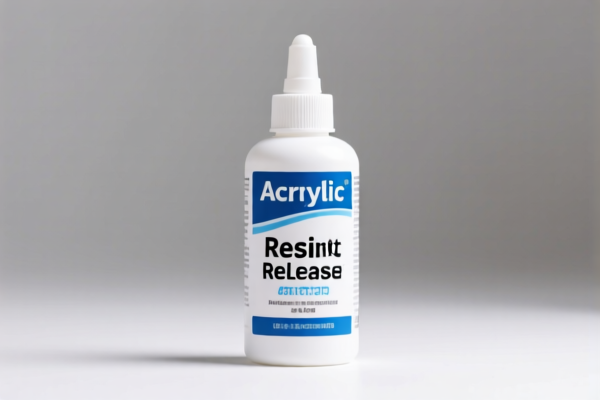
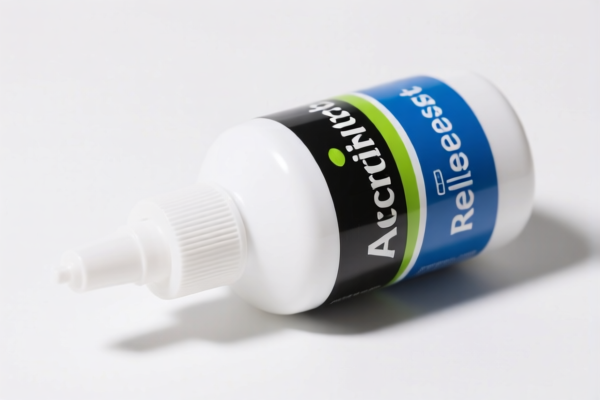


AI分析
🧪 Resin Bubble Removal Agent / Vacuum Degassing Machine
(Note: Based on the provided DATA, the classification logic applies to "Equipment/Machines" rather than chemical agents. If the input refers to a Chemical Agent, the provided data is inapplicable. If it refers to the Mechanical Equipment for degassing, see below.)
🌐 HS Code Reference & Customs Clearance Guide | 2026 Latest Tariff Analysis | Professional Clearance Strategy
📌 I. Product Definition & Classification: What is "Resin Bubble Removal"?
In industrial manufacturing, "Resin Bubble Removal" typically refers to the process of eliminating air bubbles from resin materials (epoxy, silicone, polyurethane, etc.) before curing. This is achieved using specific mechanical equipment, most commonly Vacuum Degassing Chambers or Vacuum Pumps.
According to the provided <DATA>, the classification depends on the functional attribute and the type of machine used. It is crucial to distinguish whether the item is a chemical agent (not covered in DATA) or the physical machinery (covered in DATA). The following analysis assumes the input refers to the Mechanical Equipment for resin degassing.
⚠️ Key Distinction:
- If the product is a liquid chemical additive → Not Covered by the provided HS codes.
- If the product is a Vacuum Chamber/Pump Machine → Classified under Chapter 84 (Nuclear reactors, boilers, machinery).
📦 II. HS Code Classification Details (Based on Provided DATA)
The provided data offers four potential classifications for "Resin Bubble Removal Equipment." The correct choice depends on the machine's specific design and primary function.
| HS Code | Product Description (Summary) | Primary Function Logic | Total Tax Rate |
|---|---|---|---|
8479.82.00.80 |
Vacuum/Pressure Machinery | Utilizes vacuum or pressure to remove bubbles. Classified as a machine with an independent function. | 35.0% |
8422.30.91.10 |
Resin Processing Machinery | Processes resin raw materials. Functional attribute aligns with mechanized handling/processing functions. | 35.0% |
8419.89.95.85 |
Material Processing Machinery | For treating other materials. Resin is considered a plastic/organic material processing category. | 39.2% |
8419.89.10.00 |
Physical/Chemical Process Machinery | Treats semi-finished goods/raw materials via physical/chemical processes. | 35.0% |
🔍 Critical Note:
- 8479.82.00.80 is the most precise fit for a Vacuum Degasser because it explicitly mentions "utilizes vacuum or pressure."
- 8419.89.95.85 results in a higher tax rate (39.2%) due to a higher base duty (4.2% vs 0%).
- 8422 and 8419 are broader categories. Use these only if the machine cannot be strictly defined as a generic vacuum/pressure machine or a specific material treatment machine under 8419.
💰 III. 2026 Latest Tariff Rate Breakdown (Including Surcharges)
✅ Applicable Country: United States (US)
✅ Origin: China (CN)
✅ Effective Time: From November 10, 2025 (including subsequent imports)
🎯 1. Common Scenario: 35.0% Total Tax Rate
(Applies to HS Codes: 8479.82.00.80, 8422.30.91.10, 8419.89.10.00)
| Item | Content |
|---|---|
| Base Duty | 0.0% (Most machinery of this type often has 0% MFN duty) |
| Section 301 Duty (25%) | +25.0% (USITC Footnote related to Chinese goods) |
| IEEPA Duty (Section 122) | +10.0% (China-specific surcharge) |
| Total Tax Rate | 35.0% |
| Tax Calculation | CIF Value × 35% |
| De Minimis Exemption | ❌ Not Applicable (High tax rate denies de minimis clearance) |
| Legal Basis Path | IEEPA:9903.01.25 → Section 301 → USITC:8479/8422/8419 |
📌 Explanation:
- The 0% base duty makes these items attractive compared to electronics, but the 35% total effective rate is significant.
- The 10% IEEPA and 25% Section 301 are additive and non-negotiable for Chinese origin goods.
🎯 2. Higher Scenario: 39.2% Total Tax Rate
(Applies to HS Code: 8419.89.95.85)
| Item | Content |
|---|---|
| Base Duty | 4.2% |
| Section 301 Duty (25%) | +25.0% |
| IEEPA Duty (Section 122) | +10.0% |
| Total Tax Rate | 39.2% |
| Tax Calculation | CIF Value × 39.2% |
| De Minimis Exemption | ❌ Not Applicable |
📌 Explanation:
- This classification incurs a 4.2% base tariff, leading to a higher total cost.
- Avoid this classification unless the machine is explicitly defined as a "material treatment machine" under 8419 and cannot be classified under 8479 (Vacuum/Pressure machinery).
🛠️ IV. Customs Clearance Practical Advice (Operational Pitfall Guide)
✅ 1. Preparation Checklist (Essential Documents)
| Document | Required? | Description |
|---|---|---|
| ✅ Product Specification Sheet | ✔️ | Must specify: Vacuum pressure level, chamber volume, heating capacity (if any), power requirements. |
| ✅ Function Description | ✔️ | Explicitly state: "Vacuum Degassing Machine for Resin." Do NOT use vague terms like "Laboratory Equipment." |
| ✅ Technical Diagrams | ✔️ | Show the vacuum chamber, pump connection, and control panel. Proves it is a machine, not a chemical. |
| ✅ Commercial Invoice | ✔️ | Value must include machine, shipping, and insurance (CIF). |
| ✅ Bill of Lading | ✔️ | Clear description of goods. |
| ✅ Origin Certificate | ✔️ | Required to verify Chinese origin for surcharge calculation. |
✅ 2. Declaration Tips (Key Mantra)
🔥 "Describe the Function, Not Just the Name!"
| Situation | Correct Declaration Strategy | Wrong Approach |
|---|---|---|
| Vacuum Degasser | Declare as "Vacuum Degassing Machine for Resin" → 8479.82.00.80 (35%) | Declare as "Lab Instrument" → Risk of misclassification |
| Machine + Accessories | Declare as one set (Main machine + hoses + trays) | Separate declaration for hoses → High duty on parts |
| Chemical Agent vs. Machine | If sending liquid resin, declare as "Chemical Product" (Different HS) | Mixing machine and liquid in one declaration → Customs hold |
✅ 3. Special Cases & Handling
| Scenario | Recommendation |
|---|---|
| Heating Degasser | If the machine has a heating function, it might fall under 8419. However, 8479 (Vacuum/Pressure) is often preferred if vacuum is the primary function. Consult a customs broker. |
| Small Handheld Vacuums | If it's a small, non-industrial tool, it might be classified differently. Ensure it's an industrial/commercial unit for the codes above. |
| Used Equipment | Used machinery may face additional scrutiny. Provide maintenance logs and clear "Used" status on invoice. |
🌍 V. Global Market Comparison (2026 Latest)
| Country/Region | Recommended HS Code | Est. Total Duty (China Origin) | Notes |
|---|---|---|---|
| 🇺🇸 USA | 8479.82.00.80 |
35.0% | Highest barrier due to 301 + IEEPA. |
| 🇨🇳 China | 8479.82.00.80 |
5.0% | Standard MFN rate (approx). |
| 🇪🇺 EU | 8479.82.00 |
0% - 2% | No Section 301/IEEPA equivalents. |
| 🇦🇺 Australia | 8479.82.00 |
5.0% | Standard FTA rate if applicable. |
📌 Conclusion:
- The US market is the most challenging due to the 35% effective tariff.
- Exporters should consider supply chain diversification (e.g., assembling in Vietnam or Mexico) if targeting the US, to potentially mitigate Section 301 tariffs (though IEEPA may still apply depending on rules of origin).
📌 VI. Common Errors & Pitfalls (Lessons Learned)
❌ Error 1: Declaring "Resin Degasser" as "Laboratory Glassware"
👉 Consequence: Misclassification. Glassware has different duties. Customs may assess penalties for undervaluation of duties.
❌ Error 2: Omitting the "Vacuum" function in description
👉 Consequence: Customs may classify under a generic "Other Machinery" with higher base duty (like 8419.89.95.85 at 39.2%).
❌ Error 3: Confusing "Bubble Removal Agent" (Chemical) with "Degassing Machine" (Equipment)
👉 Consequence: If you are importing a chemical, these HS codes are incorrect. Chemicals have different HS codes (e.g., Chapter 38). Using machine codes for chemicals leads to seizure.
✅ Correct Declaration Example:
"Vacuum Degassing Machine for Industrial Resin Processing, Model XYZ, 120V/60Hz, Including Vacuum Pump and Heating Chamber, Made in China"
🎯 VII. Conclusion: Precision in Classification Saves Money!
🎯 Remember the Mantra:
🔹 "Vacuum Function First → 8479 (35%)"
🔹 "Material Treatment Only → 8419 (39.2%)"
🔹 "Chemical Not Machine → Different HS Code!"
🔹 "China Origin = 35% Tax in US → Plan Ahead!"
📌 Pro Tip:
- If your product is not a machine (e.g., a chemical additive to remove bubbles), please consult a customs broker for Chapter 38 (Chemical Products) classification. The provided DATA does not cover chemical agents.
- For machines, apply for an Advance Ruling from US Customs and Border Protection (CBP) to lock in the 35% rate and avoid disputes.
📣 Immediate Action:
📞 Contact your customs broker with technical specs.
📄 Prepare CIF Invoice with accurate HS Code8479.82.00.80.
🚀 Ensure smooth clearance by avoiding misclassification!
✨ Professional clearance starts with accurate classification!
💼 Every percent of tax saved is pure profit!
用户评价
关于 HS 编码归类
协调制度(HS)是由世界海关组织(WCO)制定的国际贸易商品分类标准。全球 200 多个国家采用 HS 系统作为海关关税、贸易统计和进出口监管的基础。
每个 HS 编码遵循以下层级结构:
- 章(2 位)——商品大类(例如:第 84 章:机器和机械设备)
- 品目(4 位)——章内的更具体分类
- 子目(6 位)——国际通用细分,所有 WCO 成员国统一使用
- 本国细分(8-10 位)——各国自行扩展的细分编码,如美国 HTSUS 10 位编码
正确的 HS 编码归类对于顺利通关、准确缴纳关税和遵守贸易法规至关重要。错误归类可能导致海关延误、多缴关税或罚款。
从CN进口到US时,适用的关税税率可能包括:
- 最惠国(MFN)税率——适用于 WTO 成员国的标准关税税率
- 普通税率——适用于无贸易协定国家
- 贸易救济关税——附加关税,如 301 条款(反倾销)、232 条款(国家安全)或反补贴税
本页内容仅供参考。如需正式归类,请咨询当地海关或持牌报关代理。