Resin with Chemically Modified Natural Polymers
CN → US| HS编码 | 关税税率 | 原产国 | 目的国 | 文档 |
|---|---|---|---|---|
| 1302390090 | 20.7% | CN | US | 官方文档 |
| 1302320020 | 17.5% | CN | US | 官方文档 |
| 3824100000 | 41.0% | CN | US | 官方文档 |
| 3824992100 | 35.0% | CN | US | 官方文档 |
| 3907400000 | 40.8% | CN | US | 官方文档 |
商品图片
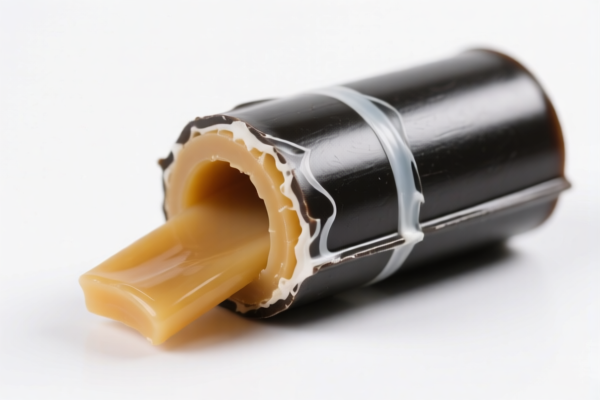

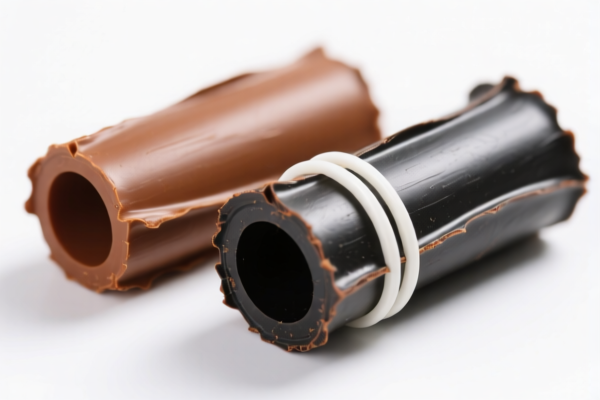

AI分析
🧪 Resin with Chemically Modified Natural Polymers (Powdered Form)
🌐 HS Code Classification & Clearance Guide | 2026 Latest Tariff Analysis | Professional Entry Strategy
📌 I. Product Definition & Classification: What Are "Chemically Modified Natural Polymers"?
These products are powdered resins derived from natural polymers (such as cellulose, starch, or proteins) that have undergone chemical modification to alter their physical or chemical properties (e.g., solubility, viscosity, stability). In international trade, the classification depends heavily on the primary nature of the modification and the final application.
⚠️ Key Distinction Points:
- If the product retains the identity of a natural polymer (like a thickener or mucilage) → Classify under Chapter 13.
- If it is a preliminary form or considered a natural adhesive/thickener without complex chemical blending → Classify under Chapter 13.
- If it is a compounded chemical product, a mold/core binder, or a mixed chemical preparation → Classify under Chapter 38.
- If the modification results in a synthetic-like resin structure (e.g., modified polycarbonate-like properties from natural sources, though rare for pure natural polymers, sometimes misclassified or specific derivatives are grouped here) → Potential misclassification risk under Chapter 39.
📦 II. HS Code Classification Matrix (2026 Latest Tariff Authority Cross-Reference)
| HS Code | Product Description | Application Scenario | Classification Logic |
|---|---|---|---|
1302.39.00.90 |
Modified natural polymer powder; vegetable mucilage/thickener; powder form; other than agar-agar | Food additives, pharmaceutical excipients, general thickening agents | ✅ Primary Nature: Retains "vegetable mucilage" character; powder form. |
1302.32.00.20 |
Modified natural polymer; primary form; consistent with plant adhesives/thickeners | Industrial adhesives, basic thickening agents | ✅ Primary Nature: Treated as "primary form" natural polymer/adhesive. |
3824.10.00.00 |
Compounded chemical product; binder for molds or cores; synthetic/compounded resin | Foundry sand binders, mold-making, industrial casting | ✅ Chemical Nature: Viewed as a "compounded binder" for industrial molding. |
3824.99.21.00 |
Chemical products/preparations; mixed from natural products; other chemicals | Industrial cleaning agents, additives, mixed chemical preparations | ✅ Chemical Nature: Classified as a "mixed chemical preparation" distinct from pure natural gums. |
3907.40.00.00 |
Primary form resin; polycarbonate-like material; consistent with coding requirements | High Risk/Misclassification Check: Only if the modification creates a synthetic polycarbonate structure (rare for "natural" polymers). | ⚠️ Note: Often used if the "natural" aspect is fully chemically transformed into a synthetic-equivalent resin. |
🔍 Critical Reminder:
- Chapter 13 items (1302.xx) are generally for natural gums, mucilages, and thickeners. If the chemical modification is mild and doesn't change the fundamental identity, use Chapter 13.
- Chapter 38 items (3824.xx) are for compounded chemicals. If the polymer is chemically altered to serve as a specific industrial binder or mixed chemical agent, use Chapter 38.
- Chapter 39 (3907.xx) is typically for synthetic polymers (like polycarbonates). Using this for natural polymers is risky unless the legal definition of the modified substance is legally treated as a synthetic resin equivalent.
💰 III. 2026 Latest Tariff Rate Breakdown (Including Surtaxes, Policy Surcharges)
✅ Applicable Country: United States (US)
✅ Origin: China (CN)
✅ Effective Date: From November 10, 2025 (including subsequent imports)
🎯 1. 1302.39.00.90 —— Modified Natural Polymer Powder (Vegetable Mucilage/Thickener)
| Item | Content |
|---|---|
| Base Tariff | 3.2% (ad valorem) |
| Section 301 Surtax | +7.5% (List 4B / Section 301) |
| IEEPA Surtax | +10% (China/HK products, effective Nov 10, 2025) |
| Total Rate | 20.7% |
| Calculation | CIF Value × 20.7% |
| De Minimis Eligibility | ❌ No (deny_de_minimis) |
| Legal Authority Path | IEEPA:9903.01.24 → USITC:1302.39.00.90 → USITC:301:7.5% |
📌 Explanation:
- This is the lowest tariff option among the candidates.
- Applicable if the product is clearly defined as a thickener or mucilage (e.g., modified starch, guar gum derivatives) without complex chemical compounding that moves it to Chapter 38.
🎯 2. 1302.32.00.20 —— Modified Natural Polymer (Primary Form/Adhesive)
| Item | Content |
|---|---|
| Base Tariff | 0.0% |
| Section 301 Surtax | +7.5% |
| IEEPA Surtax | +10% |
| Total Rate | 17.5% |
| Calculation | CIF Value × 17.5% |
| De Minimis Eligibility | ❌ No (deny_de_minimis) |
| Legal Authority Path | IEEPA:9903.01.24 → USITC:1302.32.00.20 → USITC:301:7.5% |
📌 Note:
- This is the absolute lowest total tax rate (17.5%).
- Applicable only if the product is considered a primary form natural polymer or plant-based adhesive. Misclassification here can lead to severe penalties if the product is clearly a compounded chemical.
🎯 3. 3824.10.00.00 —— Compounded Chemical Binder (Mold/Core)
| Item | Content |
|---|---|
| Base Tariff | 6.0% |
| Section 301 Surtax | +25.0% (List 4A / Section 301) |
| IEEPA Surtax | +10% |
| Total Rate | 41.0% |
| Calculation | CIF Value × 41.0% |
| De Minimis Eligibility | ❌ No (deny_de_minimis) |
| Legal Authority Path | IEEPA:9903.01.24 → USITC:3824.10.00.00 → USITC:301:25% |
📌 Warning:
- High tax rate due to 25% Section 301 surtax.
- Applies if the powder is used as a binder for molds or cores in casting/foundry industries. The chemical nature is "compounded."
🎯 4. 3824.99.21.00 —— Other Mixed Chemical Preparations
| Item | Content |
|---|---|
| Base Tariff | 0.0% |
| Section 301 Surtax | +25.0% |
| IEEPA Surtax | +10% |
| Total Rate | 35.0% |
| Calculation | CIF Value × 35.0% |
| De Minimis Eligibility | ❌ No (deny_de_minimis) |
| Legal Authority Path | IEEPA:9903.01.24 → USITC:3824.99.21.00 → USITC:301:25% |
📌 Note:
- Base rate is 0%, but the 25% Section 301 surtax drives the total to 35%.
- Applies to mixed chemical products that don’t fit other specific Chapter 38 headings (e.g., industrial additives, cleaning preparations).
🎯 5. 3907.40.00.00 —— Primary Form Resin (Polycarbonate-Type)
| Item | Content |
|---|---|
| Base Tariff | 5.8% |
| Section 301 Surtax | +25.0% |
| IEEPA Surtax | +10% |
| Total Rate | 40.8% |
| Calculation | CIF Value × 40.8% |
| De Minimis Eligibility | ❌ No (deny_de_minimis) |
| Legal Authority Path | IEEPA:9903.01.24 → USITC:3907.40.00.00 → USITC:301:25% |
📌 Risk Alert:
- Very high tax rate (40.8%).
- Only use if the product is legally recognized as a synthetic resin equivalent (e.g., highly modified natural polymer treated as polycarbonate under customs law). For most "natural polymer" powders, this is a misclassification and carries high audit risk.
🛠️ IV. Clearance Operational Advice (Practical Pitfall Avoidance)
✅ 1. Preparation Checklist (Mandatory)
| Document | Required | Description |
|---|---|---|
| ✅ Certificate of Origin (CO) | ✔️ | Essential for determining origin (China). |
| ✅ Product Specification Sheet | ✔️ | Must detail: Chemical composition, modification type, molecular weight, physical form (powder). |
| ✅ Formula/Ingredient List | ✔️ | Critical for distinguishing between Chapter 13 (Natural) and Chapter 38/39 (Compounded/Synthetic). |
| ✅ Third-Party Test Report | ✔️ | SGS/BV report confirming "Natural Polymer Basis" vs. "Synthetic Resin". |
| ✅ Commercial Invoice | ✔️ | Clearly state: "Modified Natural Polymer Powder" + HS Code. |
| ✅ Usage Declaration | ✔️ | Is it a food thickener? A foundry binder? A general chemical additive? |
✅ 2. Declaration Strategy (Key Mnemonic)
🔥 "Natural is Chapter 13, Mixed is Chapter 38, Synthetic is Chapter 39. Get the formula right, or pay the price!"
| Scenario | Correct Declaration | Wrong Practice |
|---|---|---|
| Food/Pharma Thickener | 1302.39.00.90 (20.7%) |
Declaring as 3824 (41%) → Overpay 20%+ |
| Industrial Adhesive (Primary) | 1302.32.00.20 (17.5%) |
Declaring as 3907 (40.8%) → Overpay 23%+ |
| Foundry Binder (Compounded) | 3824.10.00.00 (41.0%) |
Declaring as 1302 (17.5%) → High Audit Risk & Penalty |
| General Chemical Additive | 3824.99.21.00 (35.0%) |
Declaring as 1302 (17.5%) → Audit Risk |
✅ 3. Special Case Handling
| Situation | Handling Advice |
|---|---|
| OEM/Custom Modification | Provide the client’s technical agreement showing the degree of modification. If <50% chemical change, favor Chapter 13. |
| Mixed with Synthetic Binders | If mixed with synthetic resins, Chapter 13 is likely invalid. Use Chapter 38. |
| Pre-Clearance Ruling | Strongly Recommended: Apply for an Advance Ruling (Ruling Letter) from US CBP if the chemical nature is borderline. |
| Packaging | If packed in bulk vs. retail, ensure the description matches the unit of trade. |
🌍 V. Global Market Comparison (2026 Latest)
| Country/Region | Recommended HS Code | Tariff (China Origin) | Key Certification | Notes |
|---|---|---|---|---|
| 🇺🇸 USA | 1302.32.00.20 |
17.5% | FDA (if food/pharma) | Lowest US Rate. Best for natural polymers. |
| 🇪🇺 EU | 1302.39 |
5-10% (Varies) | REACH, RoHS | No Section 301/IEEPA taxes. |
| 🇨🇳 China | 1302.32 |
0-5% | CCC (if applicable) | Low import duty, focus on VAT. |
| 🇬🇧 UK | 1302.39 |
5-10% | UKCA | Post-Brexit rules apply. |
| 🇯🇵 Japan | 1302.39 |
5-8% | JIS | No surtaxes. |
📌 Conclusion:
- USA imposes the highest barriers due to Section 301 + IEEPA.
- Chapter 13 (1302.xx) is the golden key for minimizing US duties (17.5% - 20.7%) vs. Chapter 38/39 (35% - 41%).
- EU/Asia markets are significantly cheaper but require strict REACH/JIS compliance for chemical imports.
📌 VI. Common Errors & Pitfall Guide (Blood & Tears Lessons)
❌ Error 1: Declaring "Compounded Chemical Binder" as "Natural Gum" (1302)
👉 Consequence: CBP audit → Back taxes + Penalty + Delay.
✅ Fix: Provide chemical analysis proving "Natural Origin".
❌ Error 2: Using 3907 (Synthetic Resin) for Natural Polymer Powder
👉 Consequence: 40.8% Tax + Potential Misclassification Fraud Allegation.
✅ Fix: Prove the polymer backbone is natural (e.g., Cellulose, Starch).
❌ Error 3: Ignoring the "Powder" Form Specification
👉 Consequence: HS Code may differ for liquid vs. powder forms in some chapters.
✅ Fix: Explicitly state "Powder" in the description.
✅ Correct Declaration Example:
"Modified Natural Polymer Powder (Cellulose Derivative), Primary Form, Used as Industrial Thickener, Chemical Formula: C6H10O5, HS Code: 1302.32.00.20"
🎯 VII. Conclusion: Professional Classification Saves Money
🎯 Remember the Mnemonic:
🔹 "Natural is 13 (17-20%), Mixed is 38 (35-41%), Synthetic is 39 (40%).
🔹 "Formula dictates Code, Code dictates Cost!"
📌 Pro Tip:
If your product is 100% Natural Polymer with mild modification, fight for 1302.32.00.20. It offers the lowest 17.5% total rate.
If it is chemically compounded for specific industrial use, prepare for Chapter 38 (35-41%).
Always apply for a CBP Advance Ruling before the first shipment to avoid costly disputes.
📣 Immediate Action:
📞 Contact a Certified Customs Broker
📤 Submit Technical Data Sheet for Pre-Assessment
🚀 Secure the 17.5% Rate, Not the 41% Trap!
✨ Professional Clearance Starts with Precise Classification!
💼 Every Percentage Point of Tax is a Point of Profit!
用户评价
关于 HS 编码归类
协调制度(HS)是由世界海关组织(WCO)制定的国际贸易商品分类标准。全球 200 多个国家采用 HS 系统作为海关关税、贸易统计和进出口监管的基础。
每个 HS 编码遵循以下层级结构:
- 章(2 位)——商品大类(例如:第 84 章:机器和机械设备)
- 品目(4 位)——章内的更具体分类
- 子目(6 位)——国际通用细分,所有 WCO 成员国统一使用
- 本国细分(8-10 位)——各国自行扩展的细分编码,如美国 HTSUS 10 位编码
正确的 HS 编码归类对于顺利通关、准确缴纳关税和遵守贸易法规至关重要。错误归类可能导致海关延误、多缴关税或罚款。
从CN进口到US时,适用的关税税率可能包括:
- 最惠国(MFN)税率——适用于 WTO 成员国的标准关税税率
- 普通税率——适用于无贸易协定国家
- 贸易救济关税——附加关税,如 301 条款(反倾销)、232 条款(国家安全)或反补贴税
本页内容仅供参考。如需正式归类,请咨询当地海关或持牌报关代理。