Respirator
CN → US| HS编码 | 关税税率 | 原产国 | 目的国 | 文档 |
|---|---|---|---|---|
| 9020009000 | 12.5% | CN | US | 官方文档 |
| 9020006000 | 12.5% | CN | US | 官方文档 |
| 4016990500 | 20.9% | CN | US | 官方文档 |
| 4016996050 | 37.5% | CN | US | 官方文档 |
| 6307909870 | 24.5% | CN | US | 官方文档 |
商品图片

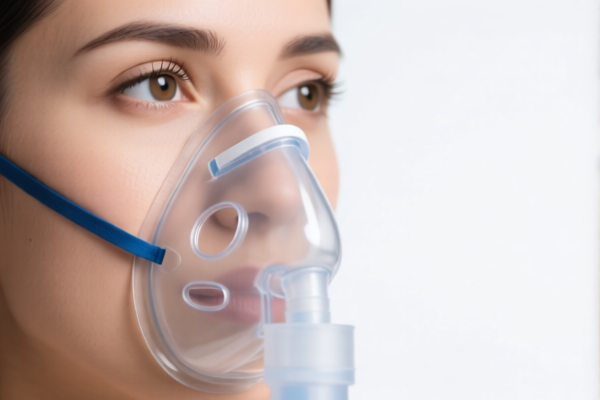
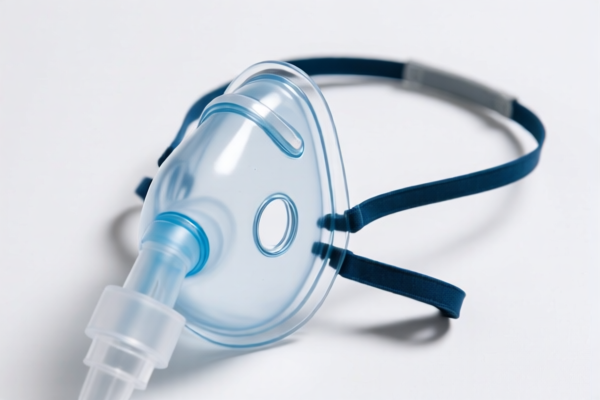

AI分析
😷 Respirators (Face Masks / Respiratory Protection Devices)
🌐 HS Code Reference & Clearance Guide | 2026 Latest Tariff Analysis | Professional Customs Strategy
📌 Part 1: Product Definition & Classification: Do You Truly Understand "Respirators"?
Respirators are critical personal protective equipment (PPE) used to protect users from inhaling harmful substances such as gases, vapors, mists, particulates, or oxygen-deficient atmospheres. In international trade, they are strictly categorized based on their function, material, and technical complexity.
Key Distinction:
- Medical/Surgical Masks vs. Industrial/Respirator Masks: Medical masks are often classified under textile or medical device chapters, while Respirators (especially those with filters or complex sealing mechanisms) often fall under Chapter 90 (Optical/Medical Instruments) or Chapter 40 (Rubber Products).
- Material Matters: A simple silicone mask might be classified as rubber, while a complex half-face respirator with replaceable filter cartridges is classified as a "Respirator."
⚠️ Critical Classification Point:
- If it is a complex respiratory protection device (e.g., half-mask, full-face mask with filter ports) → Likely Chapter 90 (Medical/Technical Instruments).
- If it is a simple rubber/silicone face covering without complex filtration mechanics → Likely Chapter 40 (Rubber Products) or Chapter 63 (Other Made-up Textiles/Articles).
📦 Part 2: HS Code Classification Details (Based on Provided Data)
The following table outlines the possible HS codes for "Respirators" based on the provided dataset. Note that US Import Tariffs (China Origin) vary significantly based on the specific classification.
| HS Code | Product Description | Applicability Summary | Total Tax Rate (China Origin) |
|---|---|---|---|
9020.00.90.00 |
Respirators / Gas Masks (General/Residual) | Classified under "Respiratory Appliances," falling into residual categories. Best fit for complex respirators not specifically listed elsewhere. | 12.5% |
9020.00.60.00 |
Respirators / Gas Masks (Specific Sub-category) | Specifically matches "Respiratory Appliances" or "Gas Masks." High compatibility with functional respiratory protection. | 12.5% |
4016.99.05.00 |
Other Rubber Articles (Not Elsewhere Specified) | Classified as "Vulcanized Rubber Articles" for household/ppe use. Applies if no specific respiratory code is deemed accurate. | 20.9% |
6307.90.98.70 |
Other Made-up Articles (Textile/Fabric based) | Matches target classification for mask shape/usage where material conflict exists. Often used for textile-based face coverings. | 24.5% |
4016.99.60.50 |
Other Vulcanized Rubber Articles | Applied to rubber masks as a "catch-all" for rubber products. Highest tariff risk due to heavy Section 301 duties. | 37.5% |
🔍 Key Insight:
- Chapter 90 (9020...) is generally the most accurate for functional respirators/gas masks, carrying the lowest total tax (12.5%).
- Chapter 40 (4016...) and Chapter 63 (6307...) are alternative classifications if the product is deemed a simple material object (e.g., a plain rubber face shield) rather than a technical respiratory device.
💰 Part 3: Detailed Tariff Breakdown (2026 Latest Rules)
✅ Applicable Country: United States (US)
✅ Origin: China (CN)
✅ Effective Date: Tariffs apply to imports post-2025 regulations (including 122 Section and IEEPA provisions).
🎯 1. 9020.00.90.00 & 9020.00.60.00 — Respiratory Appliances / Gas Masks
(Recommended Classification for Functional Respirators)
| Item | Content |
|---|---|
| Base Tariff | 2.5% (General Rate) |
| Section 301 / Additional Tariff | 0.0% (Note: Some listings show 0%, but verify current IEEPA status. Data suggests 0% base + 122 clause) |
| Section 122 Tariff | +10% (Specific trade remedy) |
| Total Effective Rate | 12.5% |
| Tax Calculation | CIF Value × 12.5% |
| De Minimis Exemption | ❌ Not Applicable (Section 321 de minimis does not apply to tariffs >$800 if subject to Section 301/IEEPA restrictions in many cases, though currently $800 is exempt from most duties, verify specific enforcement on PPE). |
| Legal Basis | HTSUS:9020.00 → Section 122 Provisions |
📌 Explanation:
- These codes fall under Chapter 90 (Medical/Technical Instruments).
- The 12.5% rate is significantly lower than rubber/textile classifications.
- Critical: Ensure the product is clearly described as a "Respirator" or "Gas Mask" with technical specifications (filter types, sealing efficiency) to justify Chapter 90.
🎯 2. 4016.99.05.00 — Other Vulcanized Rubber Articles
(Alternative Classification for Rubber-Based Masks)
| Item | Content |
|---|---|
| Base Tariff | 3.4% |
| Section 301 / Additional Tariff | +7.5% |
| Section 122 Tariff | +10% |
| Total Effective Rate | 20.9% |
| Tax Calculation | CIF Value × 20.9% |
| Legal Basis | HTSUS:4016.99 → Section 301 Footnotes |
📌 Explanation:
- If customs determines the mask is primarily a "rubber article" rather than a "medical instrument," this code may apply.
- Higher than Chapter 90 due to additional tariffs.
🎯 3. 6307.90.98.70 — Other Made-up Articles (Textile/Fabric)
(For Textile-Based or Mixed Material Masks)
| Item | Content |
|---|---|
| Base Tariff | 7.0% |
| Section 301 / Additional Tariff | +7.5% |
| Section 122 Tariff | +10% |
| Total Effective Rate | 24.5% |
| Tax Calculation | CIF Value × 24.5% |
| Legal Basis | HTSUS:6307.90 → Section 301 |
📌 Explanation:
- Applies if the mask is predominantly fabric/textile and does not meet the technical definition of a Chapter 90 respirator.
🎯 4. 4016.99.60.50 — Other Rubber Articles (High Risk)
(Lowest Cost Classification, Highest Tariff Risk)
| Item | Content |
|---|---|
| Base Tariff | 2.5% |
| Section 301 / Additional Tariff | +25.0% (Heavy Section 301 Duty) |
| Section 122 Tariff | +10% |
| Total Effective Rate | 37.5% |
| Tax Calculation | CIF Value × 37.5% |
| Legal Basis | HTSUS:4016.99 → Section 301 (Footnote 9903.88.01) |
📌 Explanation:
- This code carries the highest total tax (37.5%).
- Only use if the product is strictly a simple rubber item and no better classification applies. Avoid if possible due to cost.
🛠️ Part 4: Customs Clearance Practical Advice
✅ 1. Documentation Checklist (Essential for Clearance)
| Document | Requirement | Purpose |
|---|---|---|
| ✅ Product Specification Sheet | ✔️ Mandatory | Detail material composition (e.g., Silicone, Nitrile, Fabric), filter type (P100, N95), and sealing mechanism. |
| ✅ Technical Data Sheet (TDS) | ✔️ Mandatory | Prove functional attributes (e.g., filtration efficiency, breathability) to justify Chapter 90 classification. |
| ✅ Commercial Invoice | ✔️ Mandatory | Clearly state: "Respirator" or "Gas Mask," not just "Face Mask." Include HS Code. |
| ✅ Packing List | ✔️ Mandatory | Ensure quantities match invoice. Include packaging details (individual units vs. bulk). |
| ✅ Certifications | ✔️ If Available | NIOSH approval (US), CE (EU), FDA registration (if medical). Helps validate "technical instrument" status. |
| ✅ Origin Certificate | ✔️ If Applicable | To verify Country of Origin (China). |
✅ 2. Declaration Tips (Key Strategy)
🔥 "Define Function, Not Just Form!"
| Scenario | Correct Declaration | Incorrect Declaration | Consequence |
|---|---|---|---|
| Industrial Respirator | "Half-face Respirator, Silicone, with P100 Filter Port" | "Silicone Face Covering" | Avoids 37.5% tariff; secures 12.5% under Ch. 90. |
| Simple Rubber Mask | "Vulcanized Rubber Face Shield" | "Respirator" | May trigger audit; ensure description matches material. |
| Textile Mask | "Non-woven Fabric Face Mask" | "Rubber Respirator" | Prevents classification as rubber (37.5%). |
📌 Pro Tip:
- Use keywords like "Respiratory Protection," "Gas Mask," "Filtration Efficiency," and "Technical Specifications" in your product description.
- Avoid vague terms like "Face Mask" which can be interpreted as simple textiles or rubber goods.
✅ 3. Special Considerations
| Issue | Handling Advice |
|---|---|
| NIOSH Approval | If the product is NIOSH-approved, it strongly supports Chapter 90 classification. Provide approval number on invoice. |
| Mixed Materials | If a mask has both rubber and fabric parts, classify based on essential character (usually the rubber/mask body). |
| Filter Cartridges | Sold separately, filters are often classified under 3926.90 or 6307.90. Sold together, the set may follow the respirator's classification. |
| Medical vs. Industrial | If intended for medical use, ensure it meets FDA/CE standards. Medical devices may have different duty rates, but "Respirator" under Ch. 90 is a safe technical baseline. |
🌍 Part 5: Global Market Comparison (2026 Overview)
| Market | Recommended HS Code | Approx. Tariff (China Origin) | Key Requirements |
|---|---|---|---|
| 🇺🇸 USA | 9020.00.60.00 / 9020.00.90.00 |
12.5% (Best Case) | NIOSH/FDA compliance, clear "Respirator" description. |
| 🇨🇳 China | 9020.00 |
Low/Zero (Domestic Trade) | CCC Certification (if applicable). |
| 🇪🇺 EU | 9020.30 |
0% - 6% (Standard) | CE Marking, PPE Regulation (EU) 2016/425. |
| 🇬🇧 UK | 9020.30 |
0% - 6% | UKCA Marking, PPE Regulations. |
📌 Conclusion:
- The USA imposes higher tariffs on Chinese PPE compared to EU/UK.
- Chapter 90 is the most tariff-efficient classification for functional respirators in the US market.
📌 Part 6: Common Mistakes & Pitfalls (Lessons Learned)
❌ Mistake 1: Declaring "Respirators" as "Face Masks" (Textile/Rubber)
👉 Result: Customs may reclassify to 4016.99.60.50 (37.5% tariff) or 6307.90.98.70 (24.5%), leading to additional duties + penalties.
❌ Mistake 2: Omitting Technical Specifications
👉 Result: Lack of proof for "Respiratory Appliance" status → Delayed clearance or forced reclassification.
❌ Mistake 3: Ignoring Section 122 Tariffs
👉 Result: Underestimating total cost by 10%. Always include Section 122 in cost calculations.
✅ Correct Practice:
"NIOSH-Approved Half-Face Respirator, Silicone Body, P100 Filter Compatible, Model XYZ, For Industrial Dust Protection"
🎯 Part 7: Conclusion: Strategic Classification for Cost Efficiency
🎯 Remember the Strategy:
🔹 "Function Over Form: Use Chapter 90 for Respirators!"
🔹 "12.5% vs. 37.5%: The Difference is in the Details."
🔹 "Technical Specs Save Dollars!"
📌 Tips:
- If your product is a simple rubber face shield without filtration, 4016.99.05.00 (20.9%) may be the only option.
- Always pre-classify with a licensed customs broker and request an ACE Pre-Ruling if the value is high.
📣 Immediate Action:
📞 Contact Your Customs Broker with full technical specs.
🚀 Ensure NIOSH/CE Compliance is documented on the invoice.
💡 Choose9020.00.xx.xxto maximize tax efficiency!
✨ Professional Customs Clearance Starts with Precise Classification!
💼 Your Bottom Line Depends on the Right HS Code!
用户评价
关于 HS 编码归类
协调制度(HS)是由世界海关组织(WCO)制定的国际贸易商品分类标准。全球 200 多个国家采用 HS 系统作为海关关税、贸易统计和进出口监管的基础。
每个 HS 编码遵循以下层级结构:
- 章(2 位)——商品大类(例如:第 84 章:机器和机械设备)
- 品目(4 位)——章内的更具体分类
- 子目(6 位)——国际通用细分,所有 WCO 成员国统一使用
- 本国细分(8-10 位)——各国自行扩展的细分编码,如美国 HTSUS 10 位编码
正确的 HS 编码归类对于顺利通关、准确缴纳关税和遵守贸易法规至关重要。错误归类可能导致海关延误、多缴关税或罚款。
从CN进口到US时,适用的关税税率可能包括:
- 最惠国(MFN)税率——适用于 WTO 成员国的标准关税税率
- 普通税率——适用于无贸易协定国家
- 贸易救济关税——附加关税,如 301 条款(反倾销)、232 条款(国家安全)或反补贴税
本页内容仅供参考。如需正式归类,请咨询当地海关或持牌报关代理。