Retreaded City Bus Tires
CN → US| HS编码 | 关税税率 | 原产国 | 目的国 | 文档 |
|---|---|---|---|---|
| 4011201015 | 39.0% | CN | US | 官方文档 |
| 4011205020 | 38.4% | CN | US | 官方文档 |
| 4012124035 | 39.0% | CN | US | 官方文档 |
| 4012124025 | 39.0% | CN | US | 官方文档 |
| 4012128029 | 38.4% | CN | US | 官方文档 |
商品图片
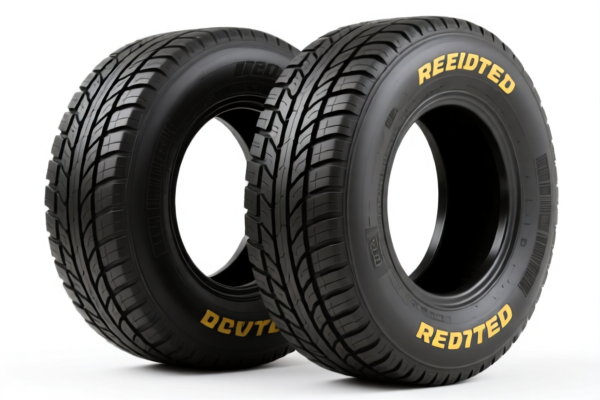
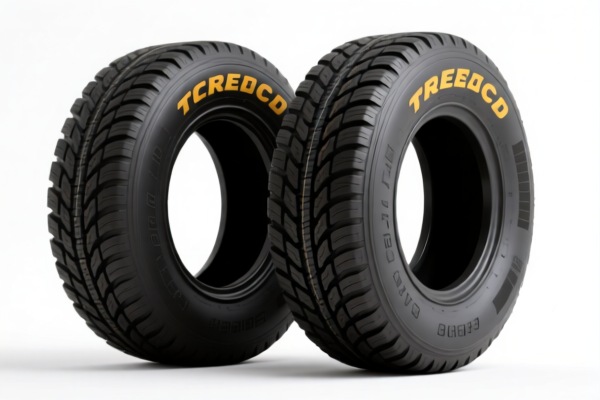
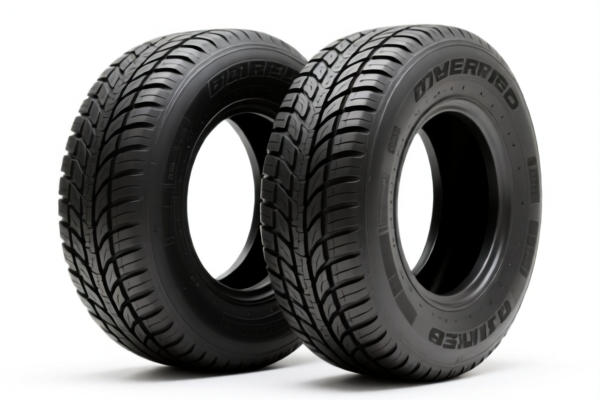
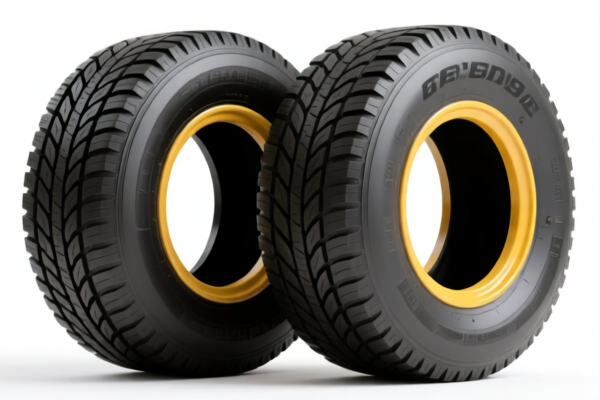
AI分析
🚛 Retreaded City Bus Tires (Public Transport Tyres)
🌐 HS Code Reference & Clearance Guide | 2026 Latest Tariff Analysis | Professional Clearance Strategy
📌 I. Product Definition & Classification: What Are "Retreaded City Bus Tires"?
Retreaded city bus tires are used tire casings that have been reconstructed with new treads. They are specifically designed for public transportation vehicles, including buses and trucks. In international trade, their classification hinges on two critical factors: 1. Condition: They are "retreaded" (remounted/reconstructed), not new. 2. Application: Used for "public transport" (buses/trucks), falling under heavy-duty vehicle categories.
⚠️ Key Distinction:
- Unlike passenger car tires (HS 4011.10), bus/truck tires fall under HS 4011.20 (Tyres of a kind used on buses or trucks).
- Unlike new tires, retreaded tires often attract higher punitive tariffs (Section 301 & IEEPA) due to their origin and nature.
📦 II. HS Code Classification Details (2026 Latest Tariff Authority Comparison)
Based on the provided data, there are five potential HS Codes for retreaded city bus tires. While they share similar tax rates, their specific subheadings reflect slight variations in classification logic (e.g., specific vs. residual categories).
| HS Code | Product Summary | Classification Logic | Total Tax Rate |
|---|---|---|---|
4011.20.10.15 |
Retreaded public transport tyres, matching bus/truck use. | Primary Fit: Specifically matches the logic for "public transport" usage classification. | 39.0% |
4011.20.50.20 |
Retreaded public transport tyres, inferred for bus/truck use. | Residual Fit: Based on the "other" category fallback principle for other classifications. | 38.4% |
4012.12.40.35 |
Retreaded public transport tyres, fits rubber retreaded tyre category. | Material Fit: Emphasizes "rubber material" and "retreaded" nature covering bus/truck use. | 39.0% |
4012.12.40.25 |
Retreaded public transport tyres, form fits retreaded requirements. | Form Fit: Highlights the physical "retreaded" shape and rubber material for bus/truck use. | 39.0% |
4012.12.80.29 |
Retreaded public transport tyres, fits bus/truck retreaded tyre features. | General Fit: Generic "other" retreaded tyre category for bus/truck characteristics. | 38.4% |
🔍 Critical Insight:
- Codes Ending in .15, .35, .25 (39.0%): These are more specific classifications under Chapter 4012 (Retreaded tyres) or specific 4011.20 subgroups.
- Codes Ending in .20, .29 (38.4%): These often fall under "Other" residual categories in 4011.20 or 4012.80, resulting in a slightly lower base tariff (3.4% vs 4.0%).
- All Codes: Subject to heavy US trade barriers (301 & IEEPA).
💰 III. 2026 Latest Tariff Rate Breakdown (Including Surcharges & Policy Add-ons)
✅ Applicable Country: USA (US)
✅ Origin: China (CN)
✅ Effective Time: 2025 Nov 10 onwards (including subsequent imports)
🎯 1. Standard Tariff Structure for Retreaded Bus Tires
| Item | Content |
|---|---|
| Base Tariff (MFN) | 3.4% - 4.0% (Ad Valorem) - 3.4% for residual "Other" codes (e.g., ...50.20, ...80.29) - 4.0% for specific codes (e.g., ...10.15, ...40.35, ...40.25) |
| USITC Additional Tariff (Section 301) | +25.0% Imposed on Chinese-origin goods under Trade Act Section 301. |
| 122 Clause Tariff (IEEPA) | +10.0% Additional levy under International Emergency Economic Powers Act. |
| Total Effective Tariff | 38.4% or 39.0% |
| Tax Calculation | CIF Value × Total Tax Rate |
| De Minimis Exemption | ❌ NOT AVAILABLE Denied for retreaded tyres from China. |
| Legal Basis Path | USITC:4011.20.xx.xx / USITC:4012.12.xx.xx → FOOTNOTE:301 → IEEPA:122 |
📌 Detailed Tax Explanation:
- Why 39.0%? For codes like4011.20.10.15, the base tariff is higher (4.0%). $4.0\% + 25\% + 10\% = 39.0\%$.
- Why 38.4%? For codes like4011.20.50.20, the base tariff is slightly lower (3.4%). $3.4\% + 25\% + 10\% = 38.4\%$.
- The 35% Surcharge is Non-Negotiable: The combination of Section 301 (25%) and IEEPA (10%) adds 35% on top of the base rate. This makes Chinese retreaded bus tires extremely costly to import into the US.
🛠️ IV. Clearance Practical Advice (Battle-Tested Pitfall Avoidance Guide)
✅ 1. Required Documentation Checklist (No Exceptions)
| Document | Must Provide | Purpose |
|---|---|---|
| ✅ Product Specification Sheet | ✔️ | Must explicitly state: "Retreaded," "Bus/Truck Use," "Rubber Material." |
| ✅ Retreading Process Certificate | ✔️ | Proof that the tire was retreaded (not new) to avoid misclassification as "New Tyres" (which may have different 301 rates). |
| ✅ Commercial Invoice | ✔️ | Clear description: "Retreaded Tyres for City Buses, Model XYZ." |
| ✅ Packing List | ✔️ | Detail quantity, weight, and dimensions. |
| ✅ Certificate of Origin (CO) | ✔️ | Critical for confirming Chinese origin (triggers 301/IEEPA). |
| ✅ FDA/USDOT Compliance Docs | ✔️ | If applicable for safety standards (though tyres are DOT regulated). |
✅ 2. Declaration Tips (Key Mantras)
🔥 "Be Specific on 'Retreaded', 'Bus/Truck', and 'Rubber'!"
| Scenario | Correct Declaration | Wrong Practice |
|---|---|---|
| Retreaded Bus Tyres | 4011.20.10.15 or 4012.12.40.35 |
Vague: "Tyres" → Risk of detention & audit. |
| Mixed Shipments (Cars + Buses) | Split Declaration | Combine: "Tyres" → Higher risk of penalty for misclassification. |
| New vs. Retreaded | Clearly label as "Retreaded" | Label as "New" → Customs seizure + fraud charges. |
| Origin | Declare "Made in China" | Hide origin → Severe penalties, deportation. |
✅ 3. Special Circumstances
| Situation | Handling Advice |
|---|---|
| OEM Retreaded Tires | Provide manufacturer’s retreading certificate. Avoid misclassification as "Used Tyres" (HS 4012.12 might still apply, but verify). |
| Damaged Casings | If not fit for retreading, classify as Scrap/Rubber Waste (HS 4004/4001), not tyres. Different tariff! |
| Transshipment | Do NOT try to disguise Chinese origin via transshipment. USCBP tracks supply chains aggressively. |
| High Value Shipments | Consider Advance Ruling from CBP to lock in the HS Code and tax rate before shipping. |
🌍 V. Global Market Clearance Comparison (2026 Latest)
| Country/Region | Recommended HS Code | Tariff (China Origin) | Certification Required | Notes |
|---|---|---|---|---|
| 🇺🇸 USA | 4011.20.10.15 / 4012.12.40.35 |
38.4% - 39.0% | DOT Labeling | Extremely High Due to 301+IEEPA |
| 🇨🇳 China | 4011.20.10 / 4012.12.40 |
5% - 8% | CCC (if applicable) | Lower tariff, but domestic competition is fierce. |
| 🇪🇺 EU | 4012.12.00 |
0% - 4% | E-Mark (ECE R108/109) | No major trade war tariffs, but strict environmental rules. |
| 🇦🇺 Australia | 4012.12.00 |
5% - 10% | ADR Compliance | Moderate tariffs. |
| 🇯🇵 Japan | 4012.12.00 |
5% - 8% | JIS Standard | Moderate tariffs. |
📌 Conclusion:
- USA is the most difficult market for Chinese retreaded bus tires due to the 35% punitive surcharge.
- EU, Australia, and Japan are more accessible, with standard MFN tariffs and no Section 301/IEEPA surcharges.
📌 VI. Common Mistakes & Pitfall Guide (Blood-Teaching Lessons)
❌ Mistake 1: Classifying "Retreaded" tyres as "New" tyres (HS 4011.20.10.00 without "retreaded" tag)
👉 Consequence: Customs detects the physical difference → Seizure + Fine + Possible fraud investigation.
❌ Mistake 2: Using generic "Tyre" description in invoice
👉 Consequence: Customs cannot determine 301 applicability → Delays, storage fees, and forced reclassification.
❌ Mistake 3: Ignoring the "Public Transport" distinction
👉 Consequence: If classified as "Passenger Car" (4011.10), you may face higher 301 rates or rejection if the product doesn't match the spec.
❌ Mistake 4: Not declaring "China Origin" clearly
👉 Consequence: 100% Penalty + Deportation of goods if origin is found to be Chinese.
✅ Correct Declaration Example:
"Retreaded Pneumatic Tyres for City Buses, Rubber Tread, Size 315/80R22.5, Made in China, DOT Certified"
🎯 VII. Conclusion: Professional Declaration, Save Costs & Time!
🎯 Remember the Mantra:
🔹 "Retreaded + Bus/Truck = HS 4011.20 or 4012.12"
🔹 "China Origin = 35% Punitive Tariff (25% 301 + 10% IEEPA)"
🔹 "Base Rate + 35% = 38.4% or 39.0%"
🔹 "Vague Description = Customs Nightmare"
📌 Pro Tip:
If your retreaded bus tires are originally from Vietnam, Malaysia, or Thailand, you may be eligible for IEEPA Exemptions (reduced or 0% additional tariff).
👉 Recommendation: Apply for a Customs Ruling before shipment to confirm the exact HS Code and tax rate.
📣 Immediate Action:
📞 Contact a Licensed Customs Broker + Provide Product Photos + Apply for HS Code Advance Ruling
🚀 Ensure your Retreaded Bus Tires clear customs smoothly, avoiding huge penalties!
✨ Professional Clearance Starts with Accurate Classification!
💼 Every Percent of Tax Saved is Pure Profit!
用户评价
关于 HS 编码归类
协调制度(HS)是由世界海关组织(WCO)制定的国际贸易商品分类标准。全球 200 多个国家采用 HS 系统作为海关关税、贸易统计和进出口监管的基础。
每个 HS 编码遵循以下层级结构:
- 章(2 位)——商品大类(例如:第 84 章:机器和机械设备)
- 品目(4 位)——章内的更具体分类
- 子目(6 位)——国际通用细分,所有 WCO 成员国统一使用
- 本国细分(8-10 位)——各国自行扩展的细分编码,如美国 HTSUS 10 位编码
正确的 HS 编码归类对于顺利通关、准确缴纳关税和遵守贸易法规至关重要。错误归类可能导致海关延误、多缴关税或罚款。
从CN进口到US时,适用的关税税率可能包括:
- 最惠国(MFN)税率——适用于 WTO 成员国的标准关税税率
- 普通税率——适用于无贸易协定国家
- 贸易救济关税——附加关税,如 301 条款(反倾销)、232 条款(国家安全)或反补贴税
本页内容仅供参考。如需正式归类,请咨询当地海关或持牌报关代理。