Reverse Radar Sensor
CN → US| HS编码 | 关税税率 | 原产国 | 目的国 | 文档 |
|---|---|---|---|---|
| 8526910040 | 35.0% | CN | US | 官方文档 |
| 8526100040 | 35.0% | CN | US | 官方文档 |
| 8543706000 | 35.0% | CN | US | 官方文档 |
| 8543709860 | 37.6% | CN | US | 官方文档 |
| 8526925000 | 35.0% | CN | US | 官方文档 |
商品图片
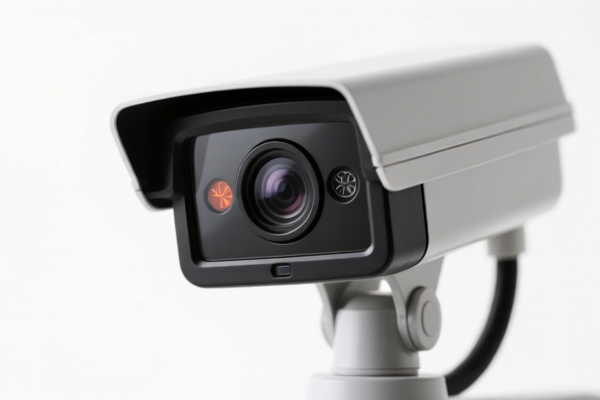
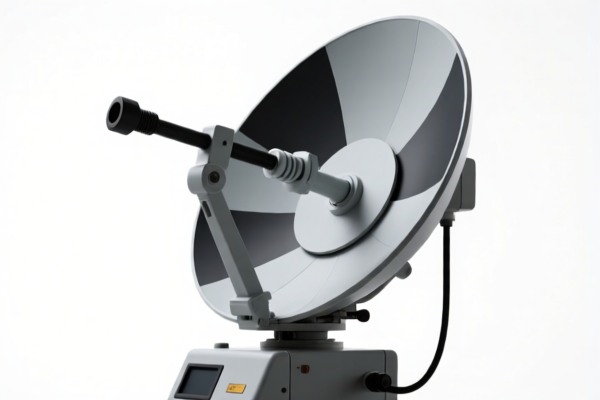
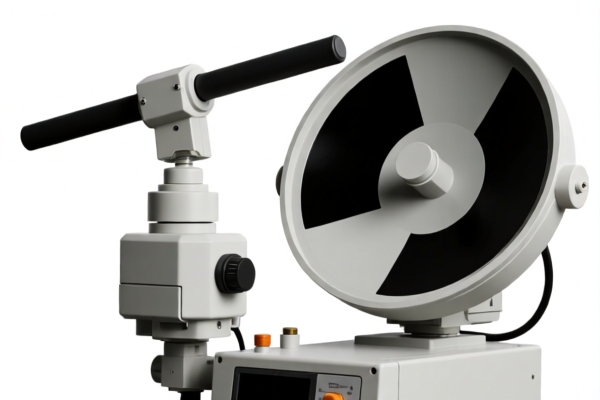
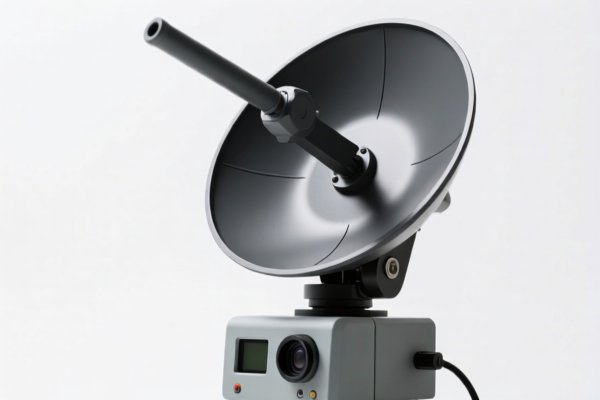
AI分析
🚗 Reverse Radar Sensor (Parking Assistance System)
🌐 HS Code Reference & Customs Clearance Guide | 2026 Latest Tariff Analysis | Professional Strategy for US Imports
📌 I. Product Definition: What Exactly is a "Reverse Radar"?
The "Reverse Radar Sensor" (also known as Parking Sensor or Parking Aid System) is a critical automotive safety component designed to detect obstacles when a vehicle is reversing. It typically consists of ultrasonic or electromagnetic sensors mounted on the bumper, a control unit (ECU), and speakers or visual displays for the driver.
In international trade classification, the key distinction lies in its primary function and integration level: * Navigation Aid: If it acts as an auxiliary device for guiding the vehicle (similar to GPS but for parking), it may fall under radio navigation aids. * Radar Device: If it explicitly uses radar technology (electromagnetic waves) for distance measurement, it is classified as a radar apparatus. * Electronic Device: If it is a generic detection device that integrates into the vehicle’s electronic network without specific navigation or radar definitions, it falls under "Other Machines and Apparatus."
⚠️ Key Classification Logic:
- If the device is primarily for radio navigation assistance → 8526.91.00.40
- If the device is explicitly a Radar Apparatus → 8526.10.00.40 or 8526.92.50.00
- If it is an Electronic Detection Device connected to vehicle networks → 8543.70.60.00 or 8543.70.98.60
📦 II. HS Code Classification Details (2026 Latest Tariff Authority Comparison)
Based on the provided data, here are the five possible classifications and the reasoning for each.
| HS Code | Product Description | Reason for Classification (Based on Data) | Total Tax Rate |
|---|---|---|---|
8526.91.00.40 |
Radio Navigation Aid (Other) | Classified as a "Radio Navigation Auxiliary Device." It fits the "Other" category within radio navigation aids due to its guidance function. | 35.0% |
8526.10.00.40 |
Radar Apparatus (Other) | Classified as a "Radar Device." Since no specific installation environment is specified, it fits the "Other" radar apparatus definition. | 35.0% |
8543.70.60.00 |
Electronic Detection Device (Network Connected) | Inferred as an "Electronic Detection Device." Its function involves connecting to/interacting with vehicle electronic networks or sensor systems. | 35.0% |
8543.70.98.60 |
Other Machines/Apparatus (Independent Function) | Classified as an "Electronic Detection Device with Independent Function." Fits the definition of "Other Machines and Apparatus." | 37.6% |
8526.92.50.00 |
Radio Remote Control Apparatus (Part of Radar) | Named explicitly as a "Radar Device." Classified under "Other" as part of radio remote control apparatus based on common inference. | 35.0% |
🔍 Critical Note:
- Four out of five codes carry a 35% total tax rate.
- Only8543.70.98.60carries a higher rate of 37.6% due to a non-zero base tariff.
- Misclassification as the wrong code could lead to underpayment or overpayment, attracting Customs scrutiny.
💰 III. 2026 Latest Tariff Rate Breakdown (Including Surcharges & Policy Add-ons)
✅ Applicable Country: United States (US)
✅ Origin: China (CN)
✅ Effective Date: From 2025 onwards (Including subsequent imports)
🎯 1. Standard Codes (8526.91.00.40, 8526.10.00.40, 8543.70.60.00, 8526.92.50.00)
Total Tax Rate: 35.0%
| Item | Content |
|---|---|
| Base Tariff (MFN) | 0.0% (Ad Valorem) |
| Section 301 Tariff (USITC) | +25.0% (Additional Duty for Chinese Origin) |
| Section 122 Tariff (IEEPA) | +10.0% (Additional Duty for Chinese Origin, effective Nov 10, 2025) |
| Total Rate | 35.0% |
| Tax Calculation | CIF Value × 35% |
| De Minimis Exemption? | ❌ Not Available (High tax rate category) |
📌 Explanation:
- The 25% is the longstanding Section 301 tariff on many Chinese electronics.
- The 10% is the new Section 122 tariff (often linked to IEEPA authorities) targeting specific electronic and automotive components.
- Base is 0%, so the total is simply 25% + 10%.
🎯 2. Specific Code (8543.70.98.60)
Total Tax Rate: 37.6%
| Item | Content |
|---|---|
| Base Tariff (MFN) | 2.6% (Ad Valorem) |
| Section 301 Tariff (USITC) | +25.0% |
| Section 122 Tariff (IEEPA) | +10.0% |
| Total Rate | 37.6% |
| Tax Calculation | CIF Value × 37.6% |
| De Minimis Exemption? | ❌ Not Available |
📌 Explanation:
- This code has a base tariff of 2.6%, which is why the total is higher than the other four codes (35% vs 37.6%).
- It is strictly an "Other Machine/Apparatus" without the specific "Radar" or "Navigation Aid" designation, leading to a less favorable base rate.
🛠️ IV. Customs Clearance Practical Advice (Pitfall Avoidance Guide)
✅ 1. Documentation Checklist (All are Mandatory)
| Document | Mandatory? | Notes |
|---|---|---|
| ✅ Product Specification Sheet | ✔️ | Must detail technology type (Ultrasonic vs. Radar), range, frequency, and voltage. |
| ✅ Function Description | ✔️ | Explicitly state if it is a "Navigation Aid," "Radar Device," or "Electronic Sensor." |
| ✅ Photos (Front/Rear/Internal) | ✔️ | Show connectors, sensors, and any branding/model numbers. |
| ✅ Commercial Invoice | ✔️ | Must clearly describe the item, e.g., "Automotive Reverse Radar Sensor." |
| ✅ Bill of Lading / Air Waybill | ✔️ | Standard shipping documents. |
| ✅ FCC Certification (if applicable) | ✔️ | If it emits radio frequencies, FCC ID is required for clearance. |
✅ 2. Declaration Strategy (Key Rules)
🔥 "Declare by Function, Not Just Name!"
| Scenario | Recommended HS Code | Risk if Incorrect |
|---|---|---|
| Primary Function: Guidance | 8526.91.00.40 |
Under-declaration of tax if classified as general electronics. |
| Primary Function: Radar Tech | 8526.10.00.40 |
Misclassification if declared as generic sensor. |
| Network Integration | 8543.70.60.00 |
Risk of delay if "Navigation" or "Radar" is not proven. |
| Independent Detection Unit | 8543.70.98.60 |
Higher tax (37.6%). Avoid if other codes are valid. |
📌 Tip:
- If the device uses Ultrasonic waves, customs may challenge "Radar" codes (which usually imply EM waves). In such cases,8543codes might be more technically accurate, but8526is often accepted for "Radio/Navigational" functions by interpretation.
- Best Practice: Use8526.91.00.40(35%) as it is a common interpretation for "Navigation Aids" and avoids the higher base tariff of8543.70.98.60.
✅ 3. Special Cases
| Situation | Handling Advice |
|---|---|
| OEM Parts for Car Manufacturers | Provide end-user invoice. May qualify for different treatment if bundled with vehicle, but generally taxed as part. |
| Aftermarket Accessories | Declared as standard goods. High risk of inspection. Ensure FCC/CE marks are clear. |
| Mixed Containers (Radar + Other Goods) | Separate line items. Do not lump under cheapest HS code; CBP will audit. |
| Chinese Origin | No De Minimis Exemption. Tariffs apply from the first dollar. |
🌍 V. Global Market Comparison (2026 Update)
| Country/Region | Recommended HS Code | Est. Tariff (China Origin) | Key Certification | Notes |
|---|---|---|---|---|
| 🇺🇸 USA | 8526.91.00.40 |
35.0% | FCC | High tax burden. Section 301 + 122 apply. |
| 🇨🇳 China | 8526.91.00.40 |
~5-10% | CCC | Lower import tariffs, but high domestic competition. |
| 🇪🇺 EU | 8526.91.00.40 |
0% (if compliant) | CE / E-Mark | No retaliatory tariffs, but strict EMV standards. |
| 🇲🇽 Mexico | 8526.91.00.40 |
0% (USMCA benefit*) | NOM | If manufactured in US/Canada/Mexico. |
📌 Conclusion:
- The US market is the most expensive for importing reverse radar sensors from China due to the 35% effective tariff.
- No de minimis (Section 321) exemption applies.
- Consider supply chain diversification (e.g., Vietnam, Mexico) if volume is high to avoid US tariffs.
📌 VI. Common Mistakes & Pitfalls (Lessons Learned)
❌ Mistake 1: Declaring as "Auto Parts" (Generic)
👉 Consequence: CBP may reclassify to a higher duty code or deny entry for lack of specific description.
👉 Result: Delay + Penalty.
❌ Mistake 2: Ignoring the "10% Section 122" Tariff
👉 Consequence: Underpayment by 10%.
👉 Result: Back taxes + Interest upon audit.
❌ Mistake 3: Claiming "De Minimis" (Under $800)
👉 Consequence: Rejected. China-origin goods under Section 301/122 are not exempt from de minimis.
👉 Result: Full 35% tax + Customs fees.
❌ Mistake 4: Mislabeling Technology (Ultrasonic vs. Radar)
👉 Consequence: If it's ultrasonic but declared as "Radar," CBP may dispute the 8526 code.
👉 Result: Re-classification to 8543 or penalty.
✅ Correct Approach:
"Ultrasonic Reverse Parking Sensor, Automotive, Model XYZ, FCC Certified, Origin China"
HS Code:8526.91.00.40
Duty: 35%
🎯 VII. Conclusion: Professional Clearance Saves Money
🎯 Remember:
🔹 "For China Origin, Expect 35% Tax."
🔹 "No De Minimis for Section 301/122 Goods."
🔹 "Precise Description = Fast Clearance."
📌 Pro Tip:
If you are importing large volumes, consider applying for a Tariff Class Exclusion or exploring Foreign Trade Zones (FTZ) to defer duties. Also, verify if your product qualifies for Section 301 Exclusions (though less likely for automotive sensors in 2026).
📣 Immediate Action Required:
📞 Contact a Licensed Customs Broker
📄 Prepare FCC Documents & Product Specs
🚀 Calculate Landed Cost: (CIF + 35% Duty + Broker Fees)
Ensure your profit margin can absorb the 35% tariff!
✨ Accurate Classification is the Key to Smooth Customs!
💼 Don't let hidden tariffs eat your profits!
用户评价
关于 HS 编码归类
协调制度(HS)是由世界海关组织(WCO)制定的国际贸易商品分类标准。全球 200 多个国家采用 HS 系统作为海关关税、贸易统计和进出口监管的基础。
每个 HS 编码遵循以下层级结构:
- 章(2 位)——商品大类(例如:第 84 章:机器和机械设备)
- 品目(4 位)——章内的更具体分类
- 子目(6 位)——国际通用细分,所有 WCO 成员国统一使用
- 本国细分(8-10 位)——各国自行扩展的细分编码,如美国 HTSUS 10 位编码
正确的 HS 编码归类对于顺利通关、准确缴纳关税和遵守贸易法规至关重要。错误归类可能导致海关延误、多缴关税或罚款。
从CN进口到US时,适用的关税税率可能包括:
- 最惠国(MFN)税率——适用于 WTO 成员国的标准关税税率
- 普通税率——适用于无贸易协定国家
- 贸易救济关税——附加关税,如 301 条款(反倾销)、232 条款(国家安全)或反补贴税
本页内容仅供参考。如需正式归类,请咨询当地海关或持牌报关代理。