Rigid PVC Resin
CN → US| HS编码 | 关税税率 | 原产国 | 目的国 | 文档 |
|---|---|---|---|---|
| 3904100000 | 41.5% | CN | US | 官方文档 |
| 3904210000 | 41.5% | CN | US | 官方文档 |
| 3920490000 | 40.8% | CN | US | 官方文档 |
| 3921125000 | 41.5% | CN | US | 官方文档 |
商品图片


AI分析
🧪 Rigid PVC Resin (Polyvinyl Chloride)
🌐 HS Code Reference & Customs Clearance Guide | 2026 Latest Tariff Analysis | Professional Clearance Strategy
📌 I. Product Definition & Classification: Do You Really Understand "Rigid PVC"?
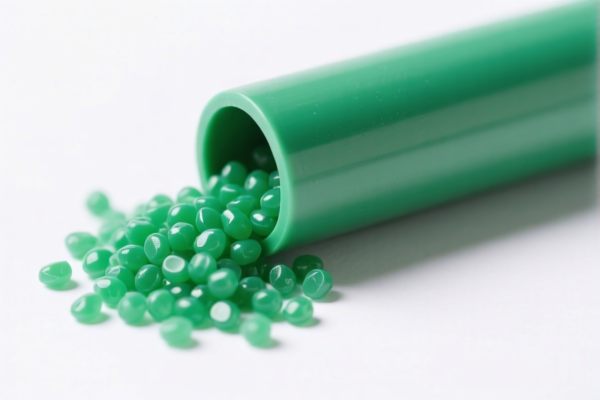
Rigid PVC Resin is the foundational raw material for a vast array of industrial and consumer goods. It is characterized by its durability, chemical resistance, and structural strength. In international trade, it is strictly classified based on its physical form and processing state.
The core distinction lies in whether the material is in its primary shape (raw resin/granules) or already processed into sheets/films. This distinction dictates the HS Code and, consequently, the tariff burden.
⚠️ Critical Distinction Point:
- If the material is granules, powder, or pellets intended for further manufacturing (extrusion, molding) → Classified as Resin (Chapter 3904).
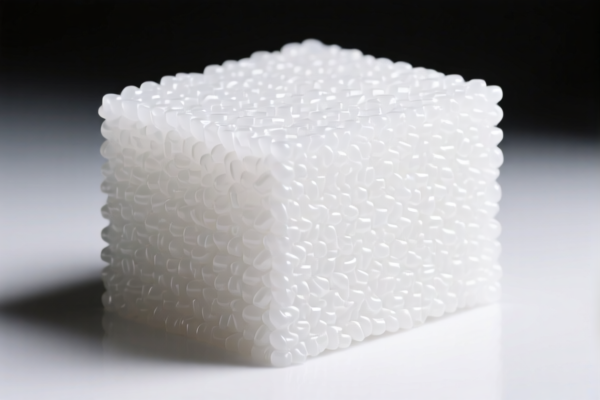
- If the material is already formed into solid sheets, plates, or film (ready for cutting/secondary fabrication) → Classified as Plates/Sheets/Film (Chapter 3920/3921).
📦 II. HS Code Classification Details (2026 Latest Tariff Authoritative Comparison)
Based on the provided data, Rigid PVC is divided into two main categories: Raw Resin and Processed Sheets.
| HS Code | Product Description | Application Scenario | Form Factor |
|---|---|---|---|
3904.10.00.00 |
PVC Hard Resin, Polyvinyl Chloride, Primary Shape | Raw material for pipes, profiles, injection molding | 🟢 Resin (Primary Form) |
3904.21.00.00 |
PVC Hard Resin, Chlorine Polymer, Resin (Primary Form/Original) | Raw material for industrial profiles, construction materials | 🟢 Resin (Primary Form) |
3920.49.00.00 |
PVC Rigid Sheets, Polyvinyl Chloride, Sheet Form | Pre-cut sheets for packaging, signage, display stands | 🔵 Sheet |
3921.12.50.00 |
PVC Rigid Sheets, Chlorine Polymer, Sheet Form | High-grade sheets for chemical-resistant linings, tableware | 🔵 Sheet |
🔍 Key Reminder:
- Do NOT confuse "Resin" with "Sheet".
- If you import granules/powder, use 3904.xx.
- If you import flat sheets/plates, use 3920.xx or 3921.xx.
- Misclassification leads to significant tariff discrepancies and customs delays.
💰 III. 2026 Latest Tariff Rate Breakdown (Including Surtaxes & Policy Add-ons)
✅ Applicable Country: United States (US)
✅ Origin: China (CN)
✅ Effective Time: Current (Includes Section 301 & Section 232 implications)
🎯 1. 3904.10.00.00 & 3904.21.00.00 —— PVC Hard Resin (Primary Shape)
| Item | Detail |
|---|---|
| Base Tariff Rate | 6.5% (Most Favored Nation Rate) |
| Section 301 Surcharge | +25.0% (Additional duty on Chinese imports) |
| Section 122 Clause | +10.0% (Specific trade remedy duty) |
| Total Tariff Rate | 41.5% |
| Tax Calculation | CIF Value × 41.5% |
| De Minimis Exemption | ❌ Not Eligible (High tariffs prevent de minimis benefits) |
| Legal Basis Path | HTS:3904.10.00.00 / 3904.21.00.00 → Section 301: Footnote 9903.88.01 → Section 122: 19 CFR 122 |
📌 Explanation:
- "Base 6.5%": The standard MFN duty for PVC resin.
- "Section 301 25%": The massive tariff added due to US-China trade tensions, targeting specific polymer imports.
- "Section 122 10%": An additional duty often applied to protect domestic chemical industries from dumped/subsidized imports.
- Total 41.5%: This is a high-cost entry. Profit margins must account for this significant tax burden.
🎯 2. 3920.49.00.00 —— PVC Rigid Sheets (Specific Subheading)
| Item | Detail |
|---|---|
| Base Tariff Rate | 5.8% |
| Section 301 Surcharge | +25.0% |
| Section 122 Clause | +10.0% |
| Total Tariff Rate | 40.8% |
| Tax Calculation | CIF Value × 40.8% |
| De Minimis Exemption | ❌ Not Eligible |
| Legal Basis Path | HTS:3920.49.00.00 → Section 301: Footnote 9903.88.01 → Section 122 |
📌 Note:
- Slightly lower base rate than resin (5.8% vs 6.5%), but the surcharges remain identical.
- Total tax is 40.8%, still extremely high.
🎯 3. 3921.12.50.00 —— PVC Rigid Sheets (Chlorine Polymer)
| Item | Detail |
|---|---|
| Base Tariff Rate | 6.5% |
| Section 301 Surcharge | +25.0% |
| Section 122 Clause | +10.0% |
| Total Tariff Rate | 41.5% |
| Tax Calculation | CIF Value × 41.5% |
| De Minimis Exemption | ❌ Not Eligible |
| Legal Basis Path | HTS:3921.12.50.00 → Section 301: Footnote 9903.88.01 → Section 122 |
📌 Note:
- This code often applies to higher-grade or specific chemical polymer sheets.
- Tax rate is identical to the resin codes (41.5%).
🛠️ IV. Customs Clearance Operational Advice (Practical Pitfall Guide)
✅ 1. Required Documentation Checklist (Non-negotiable)
| Document | Must Provide | Explanation |
|---|---|---|
| ✅ Product Specification Sheet | ✔️ | Must clearly state "Rigid PVC," "Unplasticized PVC," or "uPVC." |
| ✅ Chemical Composition Report | ✔️ | Confirm 100% Vinyl Chloride Monomer polymer. No plasticizers (which would change it to "Flexible PVC"). |
| ✅ Physical Form Declaration | ✔️ | Explicitly state: "Granules," "Powder," or "Sheets." Do not use vague terms like "PVC Material." |
| ✅ Commercial Invoice | ✔️ | Must match the HS Code exactly. Include CIF value. |
| ✅ Bill of Lading/Air Waybill | ✔️ | Ensure weight and volume match the invoice. |
| ✅ Certificate of Origin (CO) | ✔️ | Crucial for verifying China origin (triggers 301/122 duties). |
✅ 2. Declaration Tips (Key Mnemonics)
🔥 “Form Determines Code, Origin Determines Tax!”
| Situation | Correct Declaration | Wrong Practice |
|---|---|---|
| PVC Granules/Powder | 3904.10.00.00 or 3904.21.00.00 |
Misdeclare as "Sheets" to save taxes → Audit Risk |
| PVC Sheets/Plates | 3920.49.00.00 or 3921.12.50.00 |
Misdeclare as "Resin" → Customs Rejection |
| Flexible PVC (Soft) | ❌ Do NOT use these codes | These codes are for Rigid PVC. Soft PVC has different HS codes (e.g., 3904.30). |
| Recycled PVC | ❌ Different HS | These codes are for Virgin Primary Shape Resin. Recycled PVC has different classifications. |
✅ 3. Special Case Handling
| Situation | Handling Advice |
|---|---|
| Mixed Containers | If a container has both Resin and Sheets, declare separately. Do not combine. Mixed declarations will trigger full audits. |
| "PVC Compound" | If the product is PVC mixed with other polymers or additives >10%, it may not be "Primary Shape PVC Resin." Consult a customs broker. |
| Sample Shipments | Even small samples are subject to the 41.5% tax. Do not declare as "Gift" or "Free Sample" to evade tax; this is fraud. |
| Section 122 Dispute | If you believe you are not subject to Section 122 (e.g., specific exemptions), file a Form 19 protest immediately. |
🌍 V. Global Market Comparison (2026 Latest)
| Country/Region | Recommended HS Code | Tariff (China Origin) | Certification | Remarks |
|---|---|---|---|---|
| 🇺🇸 USA | 3904.10.00.00 / 3920.49.00.00 |
40.8% - 41.5% | N/A | Highest Tariff Market. Heavy Surtaxes. |
| 🇨🇳 China | 3904.10.00.00 / 3920.49.00.00 |
5.0% - 6.5% | CCC (if final product) | No Surtaxes. Low import duty. |
| 🇪🇺 EU | 3904.10 / 3920.49 |
6.5% | REACH + RoHS | No Section 301/122. Lower cost. |
| 🇬🇧 UK | 3904.10 / 3920.49 |
6.5% | UKCA | Post-Brexit, similar to EU but separate certs. |
| 🇮🇳 India | 3904.10 / 3920.49 |
10.0% - 15% | BIS | High anti-dumping duties possible. |
📌 Conclusion:
- The USA is the most expensive market for Rigid PVC due to the 41.5% effective tariff.
- Profit Margins: You must factor in ~40% tax. If your margin is <15%, importing Rigid PVC from China to the US is not viable.
- Alternative: Consider sourcing from Vietnam, Thailand, or Mexico (if rules of origin allow) to potentially avoid Section 301/122 duties.
📌 VI. Common Errors & Pitfall Guide (Lessons Learned)
❌ Error 1: Declaring "PVC Sheets" as "PVC Resin" to get a lower tax.
👉 Consequence: Customs will seize goods, impose fines, and potentially ban future imports.
👉 Reality: Sheets are physically different; Customs inspectors can tell by sight.
❌ Error 2: Ignoring the "Section 122" 10% duty.
👉 Consequence: Underpayment. You will owe back-taxes + penalties after clearance.
👉 Reality: Section 122 is often overlooked but is mandatory for many Chinese chemical imports.
❌ Error 3: Confusing "Rigid PVC" with "Flexible PVC."
👉 Consequence: Wrong HS Code. Flexible PVC has different rates and restrictions.
👉 Reality: Rigid PVC = No plasticizers. Flexible PVC = Contains plasticizers. Check the TDS (Technical Data Sheet).
❌ Error 4: Not declaring the "Primary Form."
👉 Consequence: Customs may classify as "Other Plastics" with higher or ambiguous duties.
👉 Reality: Always specify "Primary Form" or "Granules/Sheets" in the description.
✅ Correct Practice:
"Rigid Polyvinyl Chloride (PVC) Resin, Primary Form, Granules, Virgin Material, No Plasticizers, Model: PVC-HD-100, Origin: China"
🎯 VII. Conclusion: Professional Declaration, Cost Control, Efficiency!
🎯 Remember Mnemonics:
🔹 "Resin vs. Sheet, Form is Key."
🔹 "China to USA, 41.5% Tax is Reality."
🔹 "Section 301 + 122 = 35% Extra Cost."
🔹 "Flexible PVC ≠ Rigid PVC, Don't Mix Up."
📌 Pro Tip:
If your PVC originates from Vietnam, Indonesia, or Malaysia, and you have a Certificate of Origin proving substantial transformation, you may avoid Section 301 and 122 duties.
Recommendation:
1. Apply for a Pre-Ruling from US Customs (CBP) if the classification is ambiguous.
2. Audit your Supply Chain: Can you source rigid PVC from non-China regions to save ~35% in taxes?
3. Negotiate with Suppliers: Who pays the tariff? (FOB vs. CIF terms).
📣 Immediate Action:
📞 Contact a Licensed Customs Broker + Provide Product TDS + Verify Origin
🚀 Let Your Rigid PVC, Clear Smoothly, Profitably, and Compliantly!
✨ Professional Clearance Starts with Accurate Classification!
💼 Every Penny of Tax Saved is Pure Profit!
用户评价
关于 HS 编码归类
协调制度(HS)是由世界海关组织(WCO)制定的国际贸易商品分类标准。全球 200 多个国家采用 HS 系统作为海关关税、贸易统计和进出口监管的基础。
每个 HS 编码遵循以下层级结构:
- 章(2 位)——商品大类(例如:第 84 章:机器和机械设备)
- 品目(4 位)——章内的更具体分类
- 子目(6 位)——国际通用细分,所有 WCO 成员国统一使用
- 本国细分(8-10 位)——各国自行扩展的细分编码,如美国 HTSUS 10 位编码
正确的 HS 编码归类对于顺利通关、准确缴纳关税和遵守贸易法规至关重要。错误归类可能导致海关延误、多缴关税或罚款。
从CN进口到US时,适用的关税税率可能包括:
- 最惠国(MFN)税率——适用于 WTO 成员国的标准关税税率
- 普通税率——适用于无贸易协定国家
- 贸易救济关税——附加关税,如 301 条款(反倾销)、232 条款(国家安全)或反补贴税
本页内容仅供参考。如需正式归类,请咨询当地海关或持牌报关代理。