Robot
CN → US| HS编码 | 关税税率 | 原产国 | 目的国 | 文档 |
|---|---|---|---|---|
| 8543708900 | 17.5% | CN | US | 官方文档 |
| 8543709860 | 37.6% | CN | US | 官方文档 |
| 8479500000 | 37.5% | CN | US | 官方文档 |
商品图片
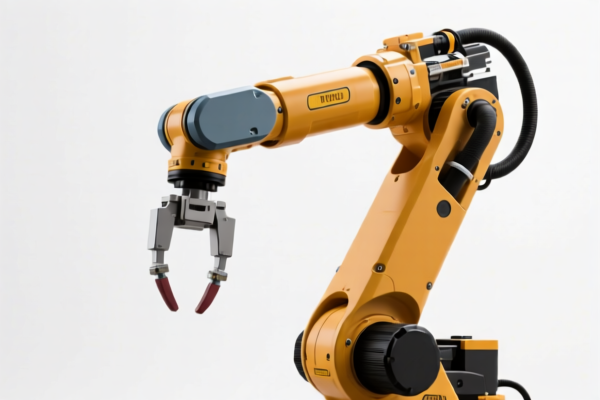
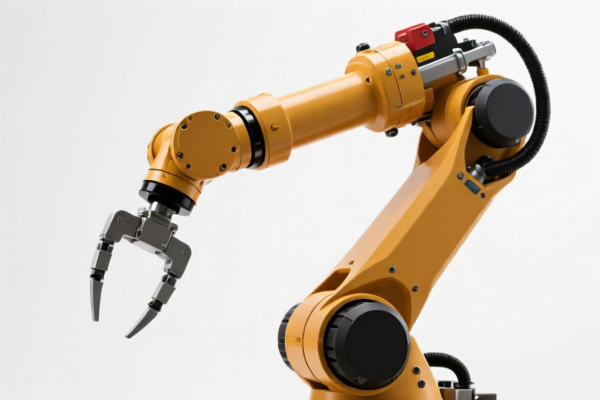
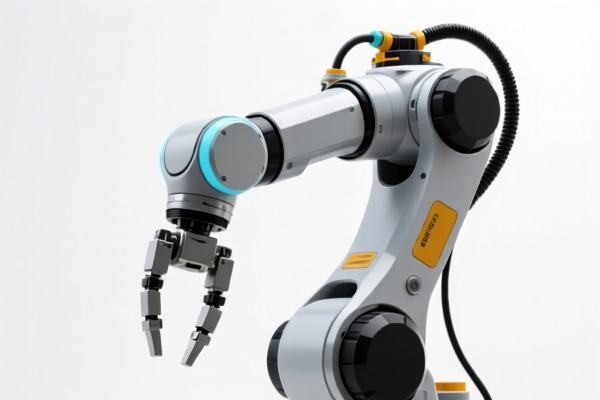
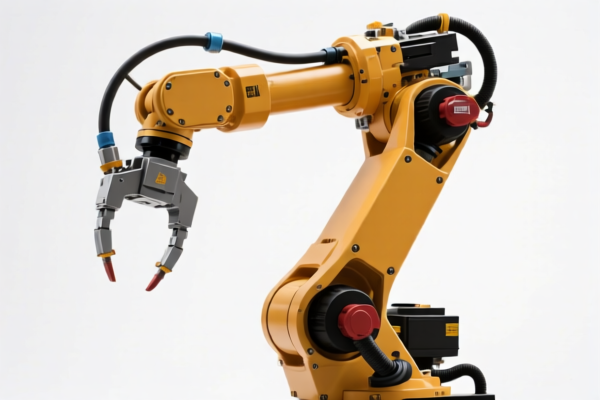
AI分析
🤖 Robot (Industrial & General Purpose Automation Devices)
🌐 HS Code Reference & Customs Clearance Guide | 2026 Latest Tariff Analysis | Professional Entry Strategy
📌 I. Product Definition & Classification: What Exactly Is a "Robot"?
The term "Robot" in international trade is broad. It encompasses anything from industrial arms to autonomous service bots. Classification hinges on function, independence, and intended use. In the Harmonized System (HS), robots are not a single entry but are scattered across Chapters 84 and 85 depending on their technical nature.
Key Distinction Criteria: * Industrial Robots: Programmable, multi-purpose manipulators used in manufacturing (e.g., welding, painting, assembly). → Chapter 84. * Special Purpose Machines: Robots with dedicated functions not covered elsewhere (e.g., cleaning, packaging). → Chapter 84. * General Purpose Electronic Machines: Devices with independent functions, often processing data or providing signals, which don't fit specific mechanical categories. → Chapter 85.
⚠️ Critical Classification Point:
- If the robot is a multi-purpose manipulator for industrial use → 8479.50.00.00
- If it is a standalone electronic device/system with independent function → 8543.70.89.00
- If it is a special-purpose machine not specified in Chapter 84, heading 8479 is the catch-all.
📦 II. HS Code Classification Details (2026 Latest Tariff Authority Comparison)
| HS Code | Product Description | Application Scenario | Functional Basis |
|---|---|---|---|
8543.70.89.00 |
Electrical machines and apparatus, having individual functions, not specified or included elsewhere in this chapter | General-purpose electronic robots, service bots with independent computing/control logic, non-industrial autonomous devices. | Based on fallback logic: Robots as independent electronic devices fall under this residual category. |
8543.70.98.60 |
Other electrical machines and apparatus, having individual functions, not specified or included elsewhere | Special-purpose electronic robots inferred by use; devices with specific functions not covered by other headings. | Based on use inference: Independent function machines falling under "other" categories. |
8479.50.00.00 |
Machines and mechanical appliances having individual functions, not specified or included elsewhere in this chapter | Industrial Robots: Fully matched with industrial robot usage; no material or form conflict. | Best Fit for Manufacturing: Robotic arms, manipulators, and automated assembly units. |
🔍 Key Insight:
-8479.50.00.00is the standard for industrial automation. If your robot is used for manufacturing, welding, or assembly, this is the primary candidate. -8543.70.89.00is the electronic fallback. If the robot is essentially a computer-controlled device without specific mechanical classification, it lands here. -8543.70.98.60is a rare residual. Use only if the device’s specific function doesn’t align with the broader 8543.70.89.00 or 8479.50.00.00 definitions.
💰 III. 2026 Latest Tariff Rate Breakdown (Including Surcharge & Policy Surcharges)
✅ Applicable Country: United States (US)
✅ Origin: China (CN)
✅ Effective Date: November 10, 2025 onwards (including subsequent imports)
🎯 1. 8479.50.00.00 —— Industrial Robots (Primary Classification for Manufacturing)
| Item | Details |
|---|---|
| Base Tariff | 2.5% (ad valorem) |
| Section 301 Surcharge | +25.0% (USITC Footnote for Chinese imports) |
| Section 122 Tariff | +10.0% (Specific duty for certain Chinese goods) |
| Total Tax Rate | 37.5% |
| Tax Calculation | CIF Value × 37.5% |
| De Minimis Exemption | ❌ Not Available (deny_de_minimis) |
| Legal Authority Path | USITC:8479.50.00.00 → Section 301: 25% → Section 122: 10% |
📌 Explanation:
- This is the standard classification for industrial robots. - The 25% Section 301 tariff is the most significant burden. - Total 37.5% is high but typically justified for industrial capital equipment.
🎯 2. 8543.70.98.60 —— Other Electrical Machines (Residual Electronic Category)
| Item | Details |
|---|---|
| Base Tariff | 2.6% (ad valorem) |
| Section 301 Surcharge | +25.0% (USITC Footnote for Chinese imports) |
| Section 122 Tariff | +10.0% (Specific duty for certain Chinese goods) |
| Total Tax Rate | 37.6% |
| Tax Calculation | CIF Value × 37.6% |
| De Minimis Exemption | ❌ Not Available (deny_de_minimis) |
| Legal Authority Path | USITC:8543.70.98.60 → Section 301: 25% → Section 122: 10% |
📌 Note:
- Slightly higher than industrial robots due to a marginally higher base rate (2.6% vs 2.5%). - Use only if the device cannot be classified as an industrial manipulator (8479.50.00.00).
🎯 3. 8543.70.89.00 —— Electrical Machines (Electronic Fallback)
| Item | Details |
|---|---|
| Base Tariff | 0.0% (ad valorem) |
| Section 301 Surcharge | +7.5% (USITC Footnote for Chinese imports) |
| Section 122 Tariff | +10.0% (Specific duty for certain Chinese goods) |
| Total Tax Rate | 17.5% |
| Tax Calculation | CIF Value × 17.5% |
| De Minimis Exemption | ❌ Not Available (deny_de_minimis) |
| Legal Authority Path | USITC:8543.70.89.00 → Section 301: 7.5% → Section 122: 10% |
📌 Crucial Insight:
- LOWEST TAX OPTION: Only 17.5%! - Why?: The Section 301 surcharge is only 7.5% for this specific subheading, compared to 25% for others. - Risk: This classification applies only if the robot is deemed a general electronic device rather than an industrial machine. Misclassification here can lead to severe penalties if customs determines it’s an industrial robot.
🛠️ IV. Customs Clearance Practical Advice (Battle-Tested Pitfall Guide)
✅ 1. Documentation Checklist (All Required)
| Document | Required? | Description |
|---|---|---|
| ✅ Product Specification Sheet | ✔️ | Must detail: Function, Power Supply, Control System, End Effector |
| ✅ Technical Diagram / Schematic | ✔️ | To prove if it’s a mechanical manipulator (Ch 84) or electronic device (Ch 85) |
| ✅ Product Photos (with Nameplate) | ✔️ | Clear view of model number, voltage, and brand |
| ✅ Third-Party Test Reports | ✔️ | FCC, CE, RoHS, UL (if applicable for electronics) |
| ✅ Commercial Invoice | ✔️ | Must state: "Robot, Model XYZ, Function: [Specific Use]" |
| ✅ Certificate of Origin (CO) | ✔️ | Essential for determining origin and potential exemptions |
| ✅ Packing List | ✔️ | Detailing robot unit + accessories (cables, controllers, grippers) |
✅ 2. Declaration Tips (Key Mnemonics)
🔥 "Function Defines HS, Industrial is 84, Electronic is 85, Don't Split Parts!"
| Scenario | Correct Declaration | Wrong Practice |
|---|---|---|
| Industrial Arm (Welding/Assembly) | 8479.50.00.00 |
Declaring as "Electronic Device" → Risk of penalty |
| Service Robot (Cleaning/Delivery) | 8543.70.89.00 (if electronic) or 8479.50.00.00 (if mechanical) |
Ambiguous description "Robot" |
| Robot + Controller + Cables | Declare as One Unit | Splitting declaration → Higher total tax |
| Educational/Toy Robot | Check if "Toy" HS applies, else 8543.70.89.00 |
Declaring as industrial robot → Overpaying tax |
✅ 3. Special Case Handling
| Scenario | Handling Advice |
|---|---|
| OEM Custom Robots | Provide client order + design drawings. Proves specific industrial function. |
| Robots with Touchscreens | If the screen is for control, still classifies by main function. Don't separate screen. |
| Robots for Medical Use | If specialized, may require FDA documentation. Classification may shift to Ch 90 if purely diagnostic. |
| Dual-Use Robots (Industrial + Educational) | Declare based on primary intended use. If sold to factories, use 8479.50.00.00. |
🌍 V. Global Market Comparison for Robots (2026 Latest)
| Country/Region | Recommended HS Code | Tariff (China Origin) | Certification | Notes |
|---|---|---|---|---|
| 🇺🇸 USA | 8479.50.00.00 |
37.5% | FCC + RoHS | High tariff due to Section 301. |
| 🇺🇸 USA | 8543.70.89.00 |
17.5% | FCC + RoHS | Lower rate, but stricter scrutiny on "electronic" vs "industrial". |
| 🇨🇳 China | 8479.50.00.00 |
5% | CCC | Low import duty for Chinese manufacturers importing components. |
| 🇪🇺 EU | 8479.50.00.00 |
0% (if CE) | CE + RoHS | No major surcharges for industrial robots in EU. |
| 🇦🇺 Australia | 8479.50.00.00 |
5% | RCM | Moderate tariff, no major surcharges. |
📌 Conclusion:
- USA has the highest barrier due to Section 301 and Section 122 tariffs. - Choice of HS Code is critical:8543.70.89.00offers significant savings (17.5% vs 37.5%), but only if legally defensible as an electronic device. - EU and Australia are more favorable with lower or zero tariffs.
📌 VI. Common Mistakes & Pitfall Guide (Lessons Learned)
❌ Mistake 1: Declaring an Industrial Robot as "Electronic Component" to avoid 25% tariff
👉 Consequence: Customs audit → Re-classification to 8479.50.00.00 → Back taxes + Penalties!
❌ Mistake 2: Splitting Robot + Controller + Gripper into separate line items
👉 Consequence: Each item taxed separately, potentially at higher rates or triggering additional duties. Total tax can exceed 50%.
❌ Mistake 3: Vague Description "Robot for House"
👉 Consequence: Customs rejects declaration. Requires detailed technical info → Delay in clearance.
❌ Mistake 4: Using 8543.70.98.60 without justification
👉 Consequence: This code is for "other" uses. If it’s a standard industrial robot, it should be 8479.50.00.00. Incorrect use leads to 37.6% instead of potentially 17.5% or 37.5%.
✅ Correct Declaration Example:
"Industrial Robotic Arm, Model XYZ, 6-Axis, Electrically Powered, for Assembly Line Automation, FCC Certified, Origin: China"
🎯 VII. Conclusion: Precise Classification Saves Money!
🎯 Remember the Mantra:
🔹 "Industrial is 84 (37.5%), Electronic is 85 (17.5%), Don't Guess, Just Check!"
🔹 "HS Code decides fate, 20% difference is huge, wrong declaration costs big!"
📌 Pro Tip:
If your robot has dual functionality (e.g., educational + light industrial), consider if it can be legally classified under 8543.70.89.00 (17.5%) by emphasizing its electronic control system and non-heavy-industrial nature.
Recommendation: Apply for an Advance Ruling from US Customs and Border Protection (CBP) before shipping to lock in the 17.5% rate if applicable.
📣 Immediate Action:
📞 Contact a Licensed Customs Broker + Provide Technical Specs + Request HS Code Advance Ruling
🚀 Ensure your robots clear customs smoothly, save on tariffs, and boost profits!
✨ Professional Clearance Starts with Accurate Classification!
💼 Every Cent Saved is Pure Profit!
用户评价
关于 HS 编码归类
协调制度(HS)是由世界海关组织(WCO)制定的国际贸易商品分类标准。全球 200 多个国家采用 HS 系统作为海关关税、贸易统计和进出口监管的基础。
每个 HS 编码遵循以下层级结构:
- 章(2 位)——商品大类(例如:第 84 章:机器和机械设备)
- 品目(4 位)——章内的更具体分类
- 子目(6 位)——国际通用细分,所有 WCO 成员国统一使用
- 本国细分(8-10 位)——各国自行扩展的细分编码,如美国 HTSUS 10 位编码
正确的 HS 编码归类对于顺利通关、准确缴纳关税和遵守贸易法规至关重要。错误归类可能导致海关延误、多缴关税或罚款。
从CN进口到US时,适用的关税税率可能包括:
- 最惠国(MFN)税率——适用于 WTO 成员国的标准关税税率
- 普通税率——适用于无贸易协定国家
- 贸易救济关税——附加关税,如 301 条款(反倾销)、232 条款(国家安全)或反补贴税
本页内容仅供参考。如需正式归类,请咨询当地海关或持牌报关代理。