Roll Packaging Material for Food
CN → US| HS编码 | 关税税率 | 原产国 | 目的国 | 文档 |
|---|---|---|---|---|
| 3923290000 | 38.0% | CN | US | 官方文档 |
| 4819300040 | 35.0% | CN | US | 官方文档 |
| 4819400040 | 35.0% | CN | US | 官方文档 |
商品图片


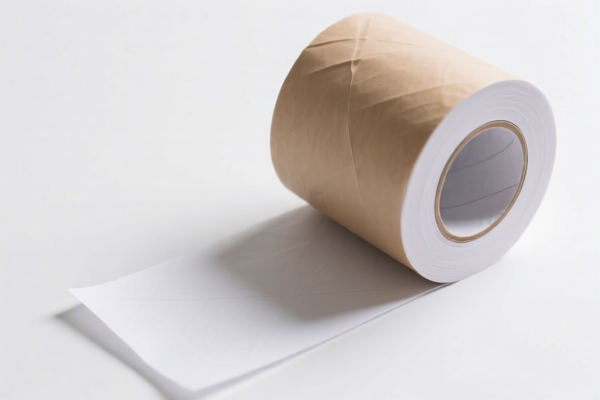

AI分析
📦 Roll Packaging Material for Food
🌐 HS Code Reference & Customs Clearance Guide | 2026 Latest Tariff Analysis | Professional Entry Strategy
📌 I. Product Definition & Classification: Do You Really Understand "Roll Packaging Material"?
"Roll Packaging Material for Food" is a broad term in international trade, typically referring to flexible packaging used for wrapping, sealing, or containing food products. The classification depends heavily on the material composition and form.
Based on common industry standards, these materials are usually classified into two main categories: 1. Plastic-based Flexible Packaging: Plastic films, bags, or rolls used for food preservation. 2. Paper/Cellulose-based Flexible Packaging: Paper rolls, kraft paper, or cellulose films used for wrapping or lining.
⚠️ Critical Distinction Point:
- If the material is plastic (e.g., PE, PP, PET films) without specific structural features like valves or spouts, it generally falls under HS 3923.
- If the material is paper or paperboard (even if coated), in the form of rolls or folded bags, it generally falls under HS 4819.
- Misclassification Risk: Declaring paper as plastic (or vice versa) triggers customs inspections, delays, and potential penalties due to differing tariff rates.
📦 II. HS Code Classification Details (2026 Latest Tariff Authority Comparison)
| HS Code | Product Description | Application Scenario | Material Type |
|---|---|---|---|
3923.29.00.00 |
Sacks and bags (including cones), for the conveyance or packaging of goods | Flexible plastic films, shrink wrap, food storage rolls | ✅ Plastic |
4819.30.00.40 |
Boxes, bags, and wrappers, of paper, paperboard, cellulose wadding or webs of cellulose fiber | Paper rolls, coated paper packaging, food-grade paper wraps | ✅ Paper/Cellulose |
4819.40.00.40 |
Other sacks and bags, including cones, of paper or paperboard | Rolled paper packaging, other paper bags not specified elsewhere | ✅ Paper/Cellulose |
🔍 Key Reminder:
- Plastic Packaging: Must be declared as plastic-based. Even if transparent, if it’s not glass or ceramic, it’s likely plastic.
- Paper Packaging: Includes paper that may have plastic coatings or laminates, but the base material is paper.
- "Roll" Form: Both plastic films and paper rolls can fall under these codes if they are flexible packaging items.
💰 III. 2026 Latest Tariff Rate Details (Including Surcharges, Policy Add-ons)
✅ Applicable Country: United States (US)
✅ Country of Origin: China (CN)
✅ Effective Date: From November 10, 2025 (including subsequent imports)
🎯 1. 3923.29.00.00 —— Plastic Packaging Material (Sacks, Bags, Cones)
| Item | Content |
|---|---|
| Base Tariff Rate | 3.0% (ad valorem) |
| USITC Additional Tariff | +25% (under Section 301, USITC Footnote) |
| IEEPA Additional Tariff | +10% (Targeting Chinese/HK products, effective Nov 10, 2025) |
| Total Tariff Rate | 38.0% |
| Tax Calculation | CIF Value × 38.0% |
| De Minimis Exemption Eligible? | ❌ No (deny_de_minimis) |
| Legal Basis Path | IEEPA:9903.01.25 → IEEPA:9903.01.24 → USITC:3923.29.00.00 |
📌 Explanation:
- 3.0% Base: Standard MFN rate for plastic packaging articles.
- 25% Section 301 Tariff: Applies to specific plastic products from China.
- 10% IEEPA Tariff: New additional levy on Chinese goods.
- Total 38%: This is a high-cost category. Importers must factor this into their pricing strategy.
🎯 2. 4819.30.00.40 —— Paper Packaging Material (Rolls/Wrappers)
| Item | Content |
|---|---|
| Base Tariff Rate | 0.0% (ad valorem) |
| USITC Additional Tariff | +25% (Under Section 301, USITC Footnote) |
| IEEPA Additional Tariff | +10% (Targeting Chinese/HK products, effective Nov 10, 2025) |
| Total Tariff Rate | 35.0% |
| Tax Calculation | CIF Value × 35.0% |
| De Minimis Exemption Eligible? | ❌ No (deny_de_minimis) |
| Legal Basis Path | IEEPA:9903.01.25 → IEEPA:9903.01.24 → USITC:4819.30.00.40 |
📌 Explanation:
- 0% Base: Paper packaging often enjoys lower base tariffs.
- 35% Total: Still a significant burden due to the 25% + 10% surcharges.
- Why 35% vs 38%? The 3% difference comes from the 3% base tariff on plastic vs. 0% on paper.
🎯 3. 4819.40.00.40 —— Other Paper Sacks/Bags (Rolls)
| Item | Content |
|---|---|
| Base Tariff Rate | 0.0% (ad valorem) |
| USITC Additional Tariff | +25% (Under Section 301, USITC Footnote) |
| IEEPA Additional Tariff | +10% (Targeting Chinese/HK products, effective Nov 10, 2025) |
| Total Tariff Rate | 35.0% |
| Tax Calculation | CIF Value × 35.0% |
| De Minimis Exemption Eligible? | ❌ No (deny_de_minimis) |
| Legal Basis Path | IEEPA:9903.01.25 → IEEPA:9903.01.24 → USITC:4819.40.00.40 |
📌 Explanation:
- Similar to4819.30.00.40, this is a catch-all for other paper packaging.
- Key Point: Even if the paper is food-grade or coated, the base material determines the HS code, not the usage (food).
🛠️ IV. Customs Clearance Practical Advice (Expert Pitfall Avoidance Guide)
✅ 1. Preparation Checklist (All documents required)
| Document | Mandatory | Explanation |
|---|---|---|
| ✅ Product Specification Sheet | ✔️ | Must specify material (e.g., "Polyethylene Film" vs. "Kraft Paper"), thickness, width, length. |
| ✅ Material Safety Data Sheet (MSDS) | ✔️ | For plastic packaging, confirm no prohibited substances. |
| ✅ Food Contact Compliance Certificate | ✔️ | FDA or equivalent certification proving the material is safe for direct/indirect food contact. |
| ✅ Commercial Invoice | ✔️ | Must clearly state: "Roll Packaging Material for Food, Made of [Plastic/Paper]". |
| ✅ Packing List | ✔️ | Show roll dimensions, core size, and packaging type. |
| ✅ Certificate of Origin (CO) | ✔️ | Essential for verifying Chinese origin and applying surcharges. |
✅ 2. Declaration Tips (Key Mantras)
🔥 "Material First, Form Second. Plastic or Paper? Know Your Base!"
| Scenario | Correct Declaration | Wrong Action |
|---|---|---|
| Plastic Roll Film | HS 3923.29.00.00 |
Misdeclare as paper → 35% (But if caught, penalty for false declaration) |
| Paper Roll Wrap | HS 4819.30.00.40 or 4819.40.00.40 |
Misdeclare as plastic → 38% (Overpaying, but less risky than under-declaring material) |
| Laminated Packaging (Paper + Plastic) | Primary Material Rule | Usually classified by the outermost or principal material. If paper is dominant, use 4819. If plastic is dominant, use 3923. |
| Rolls vs. Cut Bags | Rolls | If cut into bags, still flexible packaging, but check if it fits "bags" vs "rolls" definitions. HS codes above cover both. |
✅ 3. Special Case Handling
| Case | Handling Advice |
|---|---|
| Laminated Materials | Provide layer-by-layer composition. Customs will determine the principal material. |
| Food-Grade Coating | The coating does not change the base material classification. A plastic film coated with wax is still plastic (3923). |
| Customs Inspection Trigger | If unsure, provide photos of the material cross-section or a sample. |
| IEEPA Exemption | ❌ No Exemption for plastic or paper packaging from China under current policies. |
🌍 V. Global Major Market Customs Comparison (2026 Latest)
| Country/Region | Recommended HS Code | Tariff (China Origin) | Certification Requirements | Notes |
|---|---|---|---|---|
| 🇺🇸 USA | 3923.29.00.00 / 4819.30.00.40 |
35% - 38% | FDA + RoHS (if applicable) | High surcharges. De Minimis not available. |
| 🇨🇳 China | 3923.29.00.00 / 4819.30.00.40 |
0% - 5% | GB Standards | Low tariffs. No extra surcharges. |
| 🇪🇺 EU | 3923.29.00.00 / 4819.30.00.40 |
0% - 4% | CE + LFGB (Food Contact) | No Section 301/IEEPA equivalents. |
| 🇬🇧 UK | 3923.29.00.00 / 4819.30.00.40 |
0% - 4% | UKCA + Food Standards Agency | Post-Brexit rules apply. |
📌 Conclusion:
- USA is the most expensive market due to 35-38% total tariffs.
- EU/UK offer significant cost advantages if you can source or manufacture outside China.
- Food Compliance is the non-negotiable barrier in all markets.
📌 VI. Common Errors & Pitfall Guide (Lessons Learned)
❌ Error 1: Declaring "Plastic" as "Paper" to avoid 38% tariff
👉 Consequence: Customs inspection reveals plastic. Seizure, fines, and blacklisting.
❌ Error 2: Not specifying "Food Contact" in description
👉 Consequence: FDA may hold shipment for testing if intended for food, even if HS code is correct.
❌ Error 3: Ignoring Lamination Composition
👉 Consequence: Incorrect HS code assignment. If the primary material is misidentified, the entire shipment is at risk.
❌ Error 4: Assuming "Rolls" automatically qualify for De Minimis
👉 Consequence: ❌ De Minimis is denied for Chinese-origin goods under IEEPA and Section 301.
✅ Correct Approach:
"Food Grade Plastic Roll Packaging Material, Polyethylene, 0.05mm Thickness, Width 50cm, Length 1000m, FDA Compliant"
OR
"Food Grade Paper Roll Packaging, Kraft Paper, Coated, 100mic, Width 60cm"
🎯 VII. Conclusion: Precision Classification, Cost Efficiency, Risk Mitigation
🎯 Remember the Mantra:
🔹 "Plastic is 38%, Paper is 35%. Base material dictates fate!"
🔹 "Food grade certs are mandatory, no exceptions!"
🔹 "No De Minimis for China. Plan your supply chain accordingly."
📌 Pro Tip:
If your packaging is laminated, prioritize the primary structural layer. If it’s unclear, request a Pre-Ruling from US Customs (CBP) before shipping. This can save thousands in potential duties and delays.
📣 Immediate Action:
📞 Contact your customs broker with the material composition sheet.
🚀 Verify FDA compliance documents for each batch.
💼 Calculate landed cost including the 35-38% tariff to ensure profitability.
✨ Professional Customs Clearance Starts with Accurate Classification!
💼 Every percentage point in tariff matters—optimize your HS Code strategy!
用户评价
关于 HS 编码归类
协调制度(HS)是由世界海关组织(WCO)制定的国际贸易商品分类标准。全球 200 多个国家采用 HS 系统作为海关关税、贸易统计和进出口监管的基础。
每个 HS 编码遵循以下层级结构:
- 章(2 位)——商品大类(例如:第 84 章:机器和机械设备)
- 品目(4 位)——章内的更具体分类
- 子目(6 位)——国际通用细分,所有 WCO 成员国统一使用
- 本国细分(8-10 位)——各国自行扩展的细分编码,如美国 HTSUS 10 位编码
正确的 HS 编码归类对于顺利通关、准确缴纳关税和遵守贸易法规至关重要。错误归类可能导致海关延误、多缴关税或罚款。
从CN进口到US时,适用的关税税率可能包括:
- 最惠国(MFN)税率——适用于 WTO 成员国的标准关税税率
- 普通税率——适用于无贸易协定国家
- 贸易救济关税——附加关税,如 301 条款(反倾销)、232 条款(国家安全)或反补贴税
本页内容仅供参考。如需正式归类,请咨询当地海关或持牌报关代理。