Rosin Emulsion
CN → US| HS编码 | 关税税率 | 原产国 | 目的国 | 文档 |
|---|---|---|---|---|
| 3806100010 | 40.0% | CN | US | 官方文档 |
| 3806100050 | 40.0% | CN | US | 官方文档 |
| 1301904000 | 18.8% | CN | US | 官方文档 |
| 1301909190 | 17.5% | CN | US | 官方文档 |
| 3805100000 | 40.0% | CN | US | 官方文档 |
商品图片
AI分析
🧪 Rosin Emulsion: The Chemical Workhorse
🌐 HS Code Reference & Customs Clearance Guide | 2026 Latest Tariff Analysis | Professional通关 Strategy
📌 I. Product Definition & Classification: What is "Rosin Emulsion"?
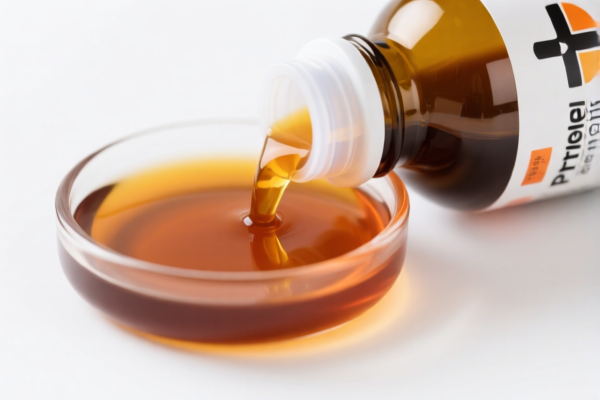
Rosin Emulsion is a water-dispersible form of rosin (also known as colophony), which is a solid form of resin obtained from pines and other plants. It is typically produced by neutralizing rosin acids with an alkali (like sodium hydroxide or potassium hydroxide) and dispersing them in water using emulsifiers or specific processing techniques.
In international trade, its classification depends heavily on its primary composition and chemical nature: * Derivatives of Rosin (Chemical Products): If processed into specific acidic forms or salts for industrial use (adhesives, sizing, varnishes). * Natural Resins: If it retains the character of a natural exudate with minimal chemical alteration. * Other Oleoresins: If it is considered a complex mixture of natural origin.
⚠️ Critical Distinction Point:
- If it is a neutralized salt (e.g., sodium rosinate) in solution → Often falls under Chapter 38 (Miscellaneous Chemical Products) or Chapter 13 (Lac, Gum, Resins).
- If it is a distilled or concentrated natural resin form → Often falls under Chapter 13 (Natural Resins).
- If it is a preparation of rosin with other additives → Often falls under Chapter 38.
📦 II. HS Code Classification Details (Based on Provided Data)
| HS Code | Product Description (Summary from Data) | Applicable Scenario | Tax Rate |
|---|---|---|---|
3806.10.00.10 |
Rosin Solvent/Derivative: Matches rosin & resin acid materials, conforms to chemical product form. | Industrial solvents, chemical preparations based on rosin acids. | 40.0% |
3806.10.00.50 |
Rosin Solvent/Derivative: Matches rosin & resin acid materials, common form of rosin derivatives. | General rosin derivative preparations, adhesives, sizing agents. | 40.0% |
1301.90.40.00 |
Rosin Solvent: Inferred main component is rosin, fits characteristics of oleoresins & derivatives. | Oleoresin preparations, specific chemical derivatives of natural rosin. | 18.8% |
1301.90.91.90 |
Rosin Solvent: Rosin belongs to natural resins, fits other "catch-all" category characteristics. | Unclassified natural resins, simple rosin preparations not fitting specific chemical codes. | 17.5% |
3805.10.00.00 |
Rosin Solvent: Fits resin/terpene derivatives, conforms to gum resin & distilled product attributes. | Distilled rosin products, terpene-based preparations, industrial rosin solutions. | 40.0% |
🔍 Key Insight:
- The highest tax burden (40%) applies to Chapter 38 codes (3806,3805), which are treated as chemical preparations.
- Lower tax burdens (17.5% - 18.8%) apply to Chapter 13 codes (1301), which are treated as natural resins or oleoresins.
- Strategy: Attempting to classify under 1301.90.91.90 (Natural Resin) offers the lowest tariff, but requires proving it is a "natural resin" rather than a "chemical preparation."
💰 III. Detailed Tariff Breakdown (2026 Latest)
✅ Applicable Country: United States (US)
✅ Country of Origin: China (CN)
✅ Effective Date: November 10, 2025 (including subsequent imports)
🎯 1. High-Tax Category: 3806.10.00.10 / 3806.10.00.50 / 3805.10.00.00
Total Tax: 40.0%
| Item | Content |
|---|---|
| Base Tariff | 5.0% (Most Favored Nation rate) |
| Section 301 Tariff | +25.0% (USITC Footnote, China-origin specific) |
| Section 122 Tariff | +10.0% (Specific statutory additional duty) |
| Total Tax Rate | 40.0% |
| Tax Calculation | CIF Value × 40% |
| De Minimis Eligibility | ❌ Not Eligible (High tax rate excludes small package exemption) |
| Legal Basis | USITC:3806.10.00.10 → SECTION 301 → SECTION 122 |
📌 Explanation:
- These codes classify rosin emulsion as a chemical preparation or distilled resin product.
- The 301 Tariff (25%) is a significant barrier, imposed to protect US chemical industries.
- The 122 Tariff (10%) is an additional layer often applied to specific chemical imports from China.
- Result: A $10,000 shipment incurs $4,000 in taxes.
🎯 2. Medium-Low Tax Category: 1301.90.40.00
Total Tax: 18.8%
| Item | Content |
|---|---|
| Base Tariff | 1.3% |
| Section 301 Tariff | +7.5% (Reduced rate for specific Chapter 13 items in some contexts, or specific HTS provision) |
| Section 122 Tariff | +10.0% |
| Total Tax Rate | 18.8% |
| Tax Calculation | CIF Value × 18.8% |
| De Minimis Eligibility | ❌ Not Eligible |
| Legal Basis | USITC:1301.90.40.00 → SECTION 301 → SECTION 122 |
📌 Explanation:
- This code treats the emulsion as an oleoresin derivative.
- The base tariff is significantly lower (1.3% vs 5.0%).
- The 301 rate is lower (7.5% vs 25%), indicating a strategic trade policy difference for "natural" vs "processed" chemicals.
- Result: A $10,000 shipment incurs $1,880 in taxes.
🎯 3. Lowest Tax Category: 1301.90.91.90
Total Tax: 17.5%
| Item | Content |
|---|---|
| Base Tariff | 0.0% |
| Section 301 Tariff | +7.5% |
| Section 122 Tariff | +10.0% |
| Total Tax Rate | 17.5% |
| Tax Calculation | CIF Value × 17.5% |
| De Minimis Eligibility | ❌ Not Eligible |
| Legal Basis | USITC:1301.90.91.90 → SECTION 301 → SECTION 122 |
📌 Explanation:
- This is the "Other" catch-all for natural resins.
- The base tariff is 0%, making it the most attractive for cost reduction.
- However, customs may challenge this if the product is deemed "processed" (chemical reaction) rather than "natural."
- Result: A $10,000 shipment incurs $1,750 in taxes.
🛠️ IV. Customs Clearance Practical Advice
✅ 1. Document Preparation Checklist
| Document | Mandatory? | Explanation |
|---|---|---|
| ✅ Product Specification Sheet | ✔️ | Must detail: % Rosin content, water content, pH, emulsifier type, viscosity. |
| ✅ Formula/Composition List | ✔️ | Critical for proving "Natural Resin" vs "Chemical Preparation." |
| ✅ Safety Data Sheet (SDS) | ✔️ | Classify as hazardous/non-hazardous. Check UN number for shipping. |
| ✅ Third-Party Lab Report | ✔️ | GC-MS or FTIR analysis to confirm chemical structure (Rosin Acid profile). |
| ✅ Commercial Invoice | ✔️ | Description: "Rosin Emulsion, Water-based, Industrial Grade." Avoid vague terms. |
| ✅ Certificate of Origin (CO) | ✔️ | Essential for verifying China origin to apply correct 301 rates. |
✅ 2. Declaration Strategy (Key Tips)
🔥 “Natural vs. Processed: The Classification Battle”
| Scenario | Recommended HS Code | Reasoning |
|---|---|---|
| Simple Neutralized Rosin (e.g., Sodium Rosinate in water) | 1301.90.91.90 |
Argue it is a natural resin derivative with minimal chemical change. |
| Complex Emulsion (with polymers, surfactants, binders) | 3806.10.00.50 |
It is a chemical preparation for specific industrial uses (adhesives, sizing). |
| Distilled Rosin Solution | 3805.10.00.00 |
Clearly a distilled product, falls under terpene/robin preparations. |
⚠️ Warning:
- If you declare as1301(Natural) but customs finds evidence of significant chemical synthesis (beyond neutralization), they will reclassify to3806(Chemical), triggering a 22.5% tax increase and potential penalties.
✅ 3. Special Handling
| Situation | Advice |
|---|---|
| Bursting/Spillage Risk | Ensure packaging is certified for liquid chemicals. Rosin emulsion can be corrosive or sticky. |
| Customs Examination | Have lab reports ready to prove the purity and origin of the rosin. |
| Section 301 Exclusion | Check if 1301.90.91.90 is currently excluded from 301 tariffs (as of 2026, it is likely not excluded, but verify annually). |
🌍 V. Global Market Comparison (2026)
| Region | Recommended HS Code | Est. Tax (China Origin) | Notes |
|---|---|---|---|
| 🇺🇸 USA | 1301.90.91.90 |
17.5% | Lowest possible; requires strong "natural" proof. |
| 🇨🇳 China | 1301.90.91.90 |
0% - 5% | Import duty low, but VAT 13% applies. |
| 🇪🇺 EU | 1301.90.91 |
0% - 5% | Generally lower duties for natural resins. |
| 🇮🇳 India | 1301.90.90 |
7.5% + GST | GST varies; check current state laws. |
📌 Conclusion:
- The US market is the most complex due to Section 301 and 122 tariffs.
- Classification is key: Moving from3806(40%) to1301(17.5%) saves 22.5% on every dollar.
- Documentation must be flawless to support the "Natural Resin" classification.
📌 VI. Common Mistakes & Pitfalls
❌ Mistake 1: Declaring as "Adhesive" without specifying base material.
👉 Consequence: Customs may default to 3806 (40%) because "adhesive" is a functional description, not a chemical one.
❌ Mistake 2: Ignoring the "Emulsifier" content.
👉 Consequence: If the emulsifier is a synthetic polymer, customs may classify as 3806 (Chemical) instead of 1301 (Natural).
❌ Mistake 3: Assuming "Emulsion" = "Chemical Preparation."
👉 Consequence: Not always true. Some natural resins are emulsified for ease of use. Prove the base resin is natural.
❌ Mistake 4: Failing to pay attention to Section 122 Tariff.
👉 Consequence: Even with low base tariff, the 10% Section 122 adds up. Total cost is higher than just Base + 301.
✅ Correct Approach:
"Rosin Emulsion, Water-based, Derived from Pine Sap, Neutralized with Sodium Hydroxide, for Use in Adhesives. Contains >90% Rosin Acids."
🎯 VII. Conclusion: Precision in Classification Saves Money
🎯 Remember:
🔹 "Natural Resin (1301) < Chemical Prep (3806)"
🔹 "40% vs 17.5%: A 22.5% Difference is Worth the Effort"
🔹 "Document the Formula, Defend the Nature"
📌 Pro Tip:
If your rosin emulsion contains specialized additives (e.g., biocides, thickening agents), it may be deemed a prepared chemical (3806). In that case, the higher tax is unavoidable. Consult a customs broker to analyze your specific INCI list or formula before shipping.
📣 Immediate Action:
📞 Engage a Customs Broker → 📄 Provide SDS & Formula → 🧪 Request Pre-Ruling if Value is High
🚀 Ensure Smooth Clearance, Avoid 40% Tax Shock!
✨ Professional Clearance Starts with Accurate Classification!
💼 Every percent of tax saved is pure profit!
用户评价
关于 HS 编码归类
协调制度(HS)是由世界海关组织(WCO)制定的国际贸易商品分类标准。全球 200 多个国家采用 HS 系统作为海关关税、贸易统计和进出口监管的基础。
每个 HS 编码遵循以下层级结构:
- 章(2 位)——商品大类(例如:第 84 章:机器和机械设备)
- 品目(4 位)——章内的更具体分类
- 子目(6 位)——国际通用细分,所有 WCO 成员国统一使用
- 本国细分(8-10 位)——各国自行扩展的细分编码,如美国 HTSUS 10 位编码
正确的 HS 编码归类对于顺利通关、准确缴纳关税和遵守贸易法规至关重要。错误归类可能导致海关延误、多缴关税或罚款。
从CN进口到US时,适用的关税税率可能包括:
- 最惠国(MFN)税率——适用于 WTO 成员国的标准关税税率
- 普通税率——适用于无贸易协定国家
- 贸易救济关税——附加关税,如 301 条款(反倾销)、232 条款(国家安全)或反补贴税
本页内容仅供参考。如需正式归类,请咨询当地海关或持牌报关代理。