Rosin Resin
CN → US| HS编码 | 关税税率 | 原产国 | 目的国 | 文档 |
|---|---|---|---|---|
| 1301909190 | 17.5% | CN | US | 官方文档 |
| 1301904000 | 18.8% | CN | US | 官方文档 |
| 3806200000 | 38.7% | CN | US | 官方文档 |
| 3907300000 | 41.1% | CN | US | 官方文档 |
| 3806900000 | 39.2% | CN | US | 官方文档 |
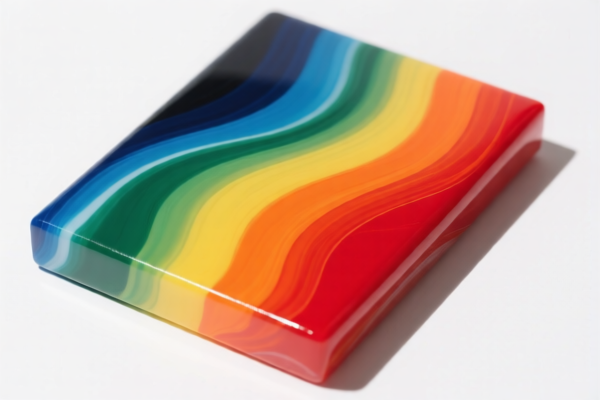
商品图片



AI分析
🌲 Rosin Resin (松香环氧树脂/天然树脂)
🌐 HS Code Reference & Customs Clearance Guide | 2026 Latest Tariff Analysis | Professional Clearance Strategy
📌 1. Product Definition & Classification: Understanding "Rosin Resin"
"Rosin Resin" in international trade often refers to a spectrum of materials ranging from natural rosin derivatives to synthetic epoxy resins modified with rosin. The classification depends heavily on the chemical nature and processing degree:
- Natural Rosin Derivatives: Classified under Chapter 13 or 38, depending on the specific derivative and base material.
- Synthetic Epoxy Resins: Classified under Chapter 39 (Plastics and Articles Thereof), specifically if they meet the definition of primary forms of polymers.
⚠️ Critical Distinction:
- If it is primarily a natural resin derivative (rosin, wood rosin) or a mixture dominated by natural characteristics → Refer to Chapter 13 or 38.
- If it is a synthetic polymer (epoxy) meeting the technical definition of plastic resins → Refer to Chapter 39.
- Misclassification Risk: Declaring a synthetic epoxy as a natural resin (or vice versa) can lead to significant tariff differences and customs delays.
📦 2. HS Code Classification Details (Based on Provided Data)
The following HS codes are derived directly from the provided <DATA> set. Each code represents a different interpretive angle for "Rosin Resin."
| HS Code | Product Description (Summary) | Total Tax Rate | Tax Composition Breakdown |
|---|---|---|---|
| 1301.90.91.90 | Rosin Epoxy Resin classified as Natural/Synthetic Resin; fits other material attributes | 17.5% | Base: 0.0% Additional: 7.5% Section 122: 10% |
| 1301.90.40.00 | Rosin falls under Natural Resin category; consistent with Oleoresin attributes | 18.8% | Base: 1.3% Additional: 7.5% Section 122: 10% |
| 3806.20.00.00 | Rosin and its derivatives fit the material definition of this code | 38.7% | Base: 3.7% Additional: 25.0% Section 122: 10% |
| 3907.30.00.00 | Epoxy Resin material fits the classification explanation requirements | 41.1% | Base: 6.1% Additional: 25.0% Section 122: 10% |
| 3806.90.00.00 | Rosin components/derivatives align with this category; Epoxy is classified as other chemical | 39.2% | Base: 4.2% Additional: 25.0% Section 122: 10% |
🔍 Key Observation:
- Codes under 1301 (Natural Resins) offer the lowest total tax rates (17.5% - 18.8%).
- Codes under 3806 (Rosin Derivatives/Chemicals) and 3907 (Epoxy Resins) carry significantly higher tariffs (38.7% - 41.1%) due to the 25% USITC Additional Duty and 10% Section 122 Duty.
💰 3. 2026 Latest Tariff Rate Breakdown (Including Additional Duties)
✅ Applicable Country: USA (US)
✅ Origin: China (CN) (Inferred from "Section 122" and "Additional Duty" structure typical of US-China trade context)
✅ Effective Time: Current tariffs apply as per 2025-2026 trade regulations.
🎯 1. 1301.90.91.90 & 1301.90.40.00 — Natural Resin Category (Lowest Tariff)
| Item | Content |
|---|---|
| Base Tariff | 0.0% (for .91.90) or 1.3% (for .40.00) |
| USITC Additional Duty (301) | +7.5% |
| Section 122 Duty | +10% |
| Total Rate | 17.5% (for .91.90) 18.8% (for .40.00) |
| Calculation | CIF Value × 17.5% / 18.8% |
| De Minimis Exemption | ❌ Not Applicable (High tax rate excludes small shipments from de minimis benefits in many cases, or requires full duty payment) |
| Legal Basis | USITC Section 1301; Section 122 Tariffs |
📌 Explanation:
- The 7.5% additional duty is specific to certain rosin-related items under recent trade rulings.
- The 10% Section 122 duty applies to specific Chinese-origin goods.
- Advantage: These codes avoid the steep 25% "301" tariffs applied to plastics and chemicals (Chapter 38/39).
🎯 2. 3806.20.00.00 & 3806.90.00.00 — Rosin Derivatives/Chemicals
| Item | Content |
|---|---|
| Base Tariff | 3.7% / 4.2% |
| USITC Additional Duty (301) | +25.0% |
| Section 122 Duty | +10% |
| Total Rate | 38.7% / 39.2% |
| Calculation | CIF Value × 38.7% / 39.2% |
| De Minimis Exemption | ❌ Not Applicable |
| Legal Basis | USITC Section 301; Section 122 Tariffs |
📌 Warning:
- The 25% additional duty is the standard "301 Tariff" for many chemical products.
- This results in a more than double tax burden compared to the natural resin classification.
🎯 3. 3907.30.00.00 — Epoxy Resin (Plastic Category)
| Item | Content |
|---|---|
| Base Tariff | 6.1% |
| USITC Additional Duty (301) | +25.0% |
| Section 122 Duty | +10% |
| Total Rate | 41.1% |
| Calculation | CIF Value × 41.1% |
| De Minimis Exemption | ❌ Not Applicable |
| Legal Basis | USITC Section 301; Section 122 Tariffs |
📌 High Cost Alert:
- This is the highest tax rate in the provided data.
- Epoxy resins are often viewed as processed plastics, triggering the full 25% 301 tariff.
🛠️ 4. Customs Clearance Practical Advice (Battle-Tested Pitfall Guide)
✅ 1. Prepare Documentation Checklist (Non-Negotiable)
| Document | Required | Notes |
|---|---|---|
| ✅ Technical Data Sheet (TDS) | ✔️ | Must explicitly state "Natural Rosin Derivative" vs. "Synthetic Epoxy" |
| ✅ Chemical Composition Analysis | ✔️ | Proof of percentage of natural rosin vs. synthetic resin |
| ✅ Product Photos | ✔️ | Clear view of label, packaging, and physical state |
| ✅ Certificate of Origin (CO) | ✔️ | Confirm Chinese origin to apply correct Section 122 duties |
| ✅ Commercial Invoice | ✔️ | Use precise HS Code descriptions; avoid generic "Resin" |
| ✅ Packaging List | ✔️ | Detail net/gross weight, quantity |
✅ 2. Classification Strategy (Critical Tips)
🔥 "Natural vs. Synthetic: Choose Wisely, Tax Savings Huge!"
| Scenario | Recommended HS Code | Tax Rate | Why? |
|---|---|---|---|
| Product is mostly natural rosin or derivative | 1301.90.91.90 or 1301.90.40.00 |
~18% | Lower additional duties (7.5% vs 25%) |
| Product is a chemical preparation of rosin | 3806.20.00.00 |
38.7% | Higher base and 301 tariffs |
| Product is synthetic epoxy resin | 3907.30.00.00 |
41.1% | Highest tariff; full 301 duty applies |
| Product is mixed/unknown | Risk! | Varies | Customs may reclassify to highest applicable rate |
✅ 3. Special Situations & Handling
| Situation | Handling Advice |
|---|---|
| OEM/Custom Formula | Provide detailed ingredient list. If <50% is synthetic, argue for Chapter 13 classification. |
| Mixed Shipments | Do not mix 1301 and 3907 items in one HS Code line. Declare separately to avoid scrutiny. |
| Labeling | Clearly mark "Natural Rosin" if applicable. Vague terms like "Resin" trigger manual review. |
| Pre-Ruling | Consider applying for an Advance Ruling from US CBP if the classification is ambiguous. Saves time and money. |
🌍 5. Global Market Comparison (2026 Update)
| Country/Region | Recommended HS Code | Est. Total Tariff | Key Certifications | Notes |
|---|---|---|---|---|
| 🇺🇸 USA | 1301.90.91.90 |
17.5% | No specific | Lowest duty for natural rosin derivatives |
| 🇨🇳 China | 1301.90.91.90 |
0% | N/A | No import duty for this code |
| 🇪🇺 EU | 3806.20.00 |
6.5% | REACH | Different tariff structure than US |
| 🇮🇳 India | 1301.90 |
7.5% | BIS | Moderate duty |
📌 Conclusion:
- USA is the most critical market due to Section 122 and 301 tariffs.
- Classification as Natural Resin (1301) vs. Chemical/Plastic (38/39) is the single biggest factor in cost control.
📌 6. Common Mistakes & Pitfalls (Lessons Learned)
❌ Mistake 1: Declaring "Epoxy Resin" as "Natural Rosin"
👉 Consequence: Customs detects synthetic components → Back taxes + Penalties.
✅ Fix: Be honest. If it's synthetic, use 3907 but ensure documentation is perfect.
❌ Mistake 2: Using generic "Resin" without HS Code specification
👉 Consequence: Customs applies highest possible duty (e.g., 41.1%) by default.
✅ Fix: Always provide specific HS Code and technical justification.
❌ Mistake 3: Ignoring Section 122 Duty
👉 Consequence: Underpayment of 10% on all listed codes.
✅ Fix: Factor in the 10% Section 122 duty for all Chinese-origin rosin products entering the US.
🎯 7. Conclusion: Professional Classification, Cost Optimization!
🎯 Key Takeaway:
🔹 "Natural Rosin (1301) saves ~20-23% in tariffs vs. Synthetic/Epoxy (38/39)."
🔹 "Check your chemical composition. If it's natural, fight for Chapter 13."
🔹 "Section 122 (10%) and 301 (7.5% or 25%) are mandatory. Plan accordingly."
📌 Pro Tip:
If your product is a blend, try to justify the primary characteristic as natural rosin to qualify for the 17.5% rate. If that's not possible, 3806 or 3907 will apply. Always consult a customs broker for pre-clearance advice.
📣 Immediate Action:
📞 Contact a licensed customs broker.
📄 Submit your Technical Data Sheet (TDS) for HS Code confirmation.
🚀 Optimize your classification to save thousands in duties!
✨ Precise classification starts with accurate product definition!
💼 Your bottom line depends on these two digits: 13 vs. 39!
用户评价
关于 HS 编码归类
协调制度(HS)是由世界海关组织(WCO)制定的国际贸易商品分类标准。全球 200 多个国家采用 HS 系统作为海关关税、贸易统计和进出口监管的基础。
每个 HS 编码遵循以下层级结构:
- 章(2 位)——商品大类(例如:第 84 章:机器和机械设备)
- 品目(4 位)——章内的更具体分类
- 子目(6 位)——国际通用细分,所有 WCO 成员国统一使用
- 本国细分(8-10 位)——各国自行扩展的细分编码,如美国 HTSUS 10 位编码
正确的 HS 编码归类对于顺利通关、准确缴纳关税和遵守贸易法规至关重要。错误归类可能导致海关延误、多缴关税或罚款。
从CN进口到US时,适用的关税税率可能包括:
- 最惠国(MFN)税率——适用于 WTO 成员国的标准关税税率
- 普通税率——适用于无贸易协定国家
- 贸易救济关税——附加关税,如 301 条款(反倾销)、232 条款(国家安全)或反补贴税
本页内容仅供参考。如需正式归类,请咨询当地海关或持牌报关代理。