Rough Coniferous Wood for Construction
CN → US| HS编码 | 关税税率 | 原产国 | 目的国 | 文档 |
|---|---|---|---|---|
| 4407110042 | 35.0% | CN | US | 官方文档 |
| 4407120017 | 35.0% | CN | US | 官方文档 |
| 4401110000 | 35.0% | CN | US | 官方文档 |
| 4407190066 | 35.0% | CN | US | 官方文档 |
| 4403210130 | 35.0% | CN | US | 官方文档 |
| 4407190092 | 35.0% | CN | US | 官方文档 |
商品图片
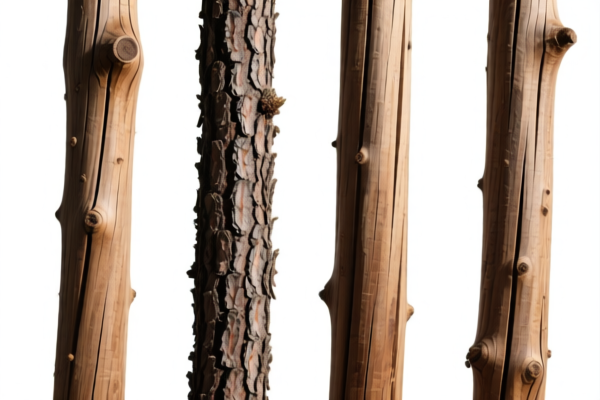
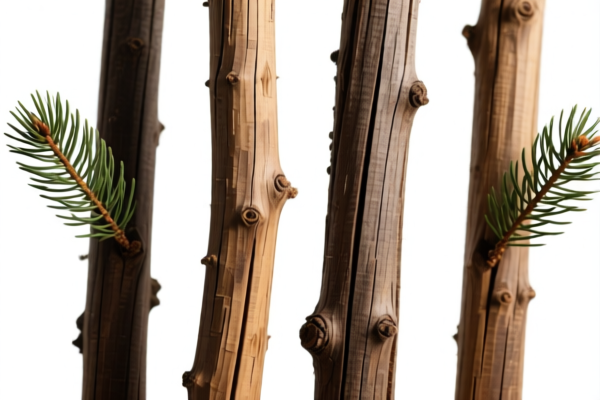
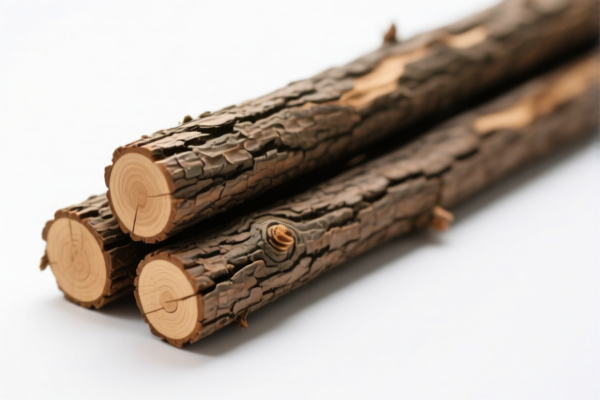
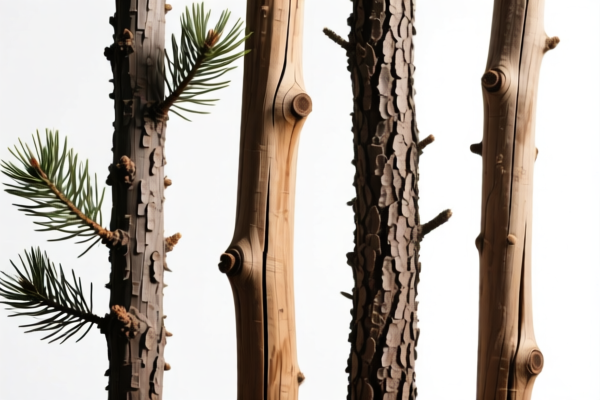
AI分析
🪵 Rough Coniferous Wood for Construction & Furniture
🌐 HS Code Reference & Customs Clearance Guide | 2026 Latest Tariff Structure | Professional Clearance Strategy
📌 1. Product Definition & Classification: What Exactly is "Rough Coniferous Wood"?
Rough coniferous wood refers to wood from coniferous trees (softwoods like pine, spruce, fir) that has been sawn or chipped lengthwise but has not been planed, sanded, or otherwise worked beyond sawing. It is primarily used for structural construction (beams, posts) or as raw material for further processing (such as furniture manufacturing or plywood production).
In international trade, the classification depends heavily on the specific use stated and the physical state of the wood. Under the provided data, these products are subject to strict scrutiny due to high tariff rates.
⚠️ Key Distinction Point:
- If the wood is described merely as "wood" without specifying "furniture manufacturing" or "construction logs," it may fall under general timber codes.
- However, the provided dataset explicitly links these HS codes to two main purposes: Furniture Manufacturing (using rough sawn wood) and Construction (using logs/round wood or rough sawn wood).
- Critical Note: All listed HS codes carry a 35% Total Tax Rate due to specific U.S. trade measures (Section 301 & 122).
📦 2. HS Code Classification Details (Based on Provided Data)
| HS Code | Product Description (Summary) | Material | Form | Primary Use | Total Tax |
|---|---|---|---|---|---|
| 4407.11.00.42 | Rough coniferous wood | Coniferous | Rough | Furniture Manufacturing | 35.0% |
| 4407.12.00.17 | Rough coniferous wood | Coniferous | Rough | Furniture Manufacturing | 35.0% |
| 4401.11.00.00 | Coniferous wood construction logs | Coniferous | Logs (Round) | Construction | 35.0% |
| 4407.19.00.66 | Coniferous wood construction logs | Coniferous | Logs/Rough | Construction | 35.0% |
| 4403.21.01.30 | Coniferous wood construction logs | Coniferous | Construction Logs | Construction | 35.0% |
| 4407.19.00.92 | Coniferous wood construction logs | Coniferous | Construction Logs/Rough | Construction | 35.0% |
🔍 Important Clarification:
- 4407 Series generally covers wood sawn or chipped lengthwise (planks, beams). Codes.42and.17are specifically noted for furniture manufacturing context in the data.
- 4401 Series (4401.11.00.00) covers wood in the form of logs, typically used for construction or pulp.
- 4403 Series covers wood treated with paint or stain, but in this specific dataset, it is linked to "construction logs."
- 4407.19 Series covers other sawn wood. Codes.66and.92are linked to construction applications in the provided summary.
💰 3. 2026 Latest Tariff Rate Breakdown (Including Surtaxes)
✅ Applicable Market: United States (US)
✅ Origin: China (CN) (Implied by the tariff structure)
✅ Total Tax Rate: 35.0%
✅ Effective Date: Current rates apply as per the provided data.
🎯 1. Universal Tariff Structure for All Listed HS Codes
| Item | Content |
|---|---|
| Base Tariff | 0.0% (Most MFN rates for wood are low, but see surcharges) |
| Section 301 Surcharge | +25.0% (Standard 301 tariff on many Chinese wood products) |
| Section 122 Tariff | +10.0% (Specific additional duty cited in the data) |
| Total Effective Rate | 35.0% |
| Calculation Basis | CIF Value × 35% |
| De Minimis Exemption? | ❌ Not Applicable for this volume/value; high scrutiny applies. |
| Legal Path | USITC:4407.xxxxxx → FOOTNOTE:301 (+25%) + IEEPA/Sec122 (+10%) |
📌 Explanation:
- The 25% surcharge is a result of the Trade Enhancement Act of 2018 (Section 301) targeting Chinese imports.
- The 10% additional tariff is attributed to "Section 122" in the provided text, which may refer to specific national security or economic emergency provisions.
- Combined Impact: A shipment worth $10,000 CIF will incur $3,500 in duties. This significantly impacts profit margins and requires precise cost modeling.
🛠️ 4. Customs Clearance Practical Advice (Risk Avoidance Guide)
✅ 1. Required Documentation Checklist
| Document | Mandatory? | Notes |
|---|---|---|
| ✅ Commercial Invoice | ✔️ | Must clearly state "Rough Coniferous Wood," HS Code, and Country of Origin. |
| ✅ Packing List | ✔️ | Specify dimensions, weight, and quantity. Distinguish between logs and sawn wood. |
| ✅ Phytosanitary Certificate | ✔️ | Crucial. Must confirm the wood is free from pests and fungi. |
| ✅ Fumigation Certificate | ✔️ | If applicable, prove treatment with methyl bromide or heat treatment. |
| ✅ Bill of Lading / Air Waybill | ✔️ | Verify carrier details and container numbers. |
| ✅ Proof of Use | ✔️ | If claiming specific HS codes (e.g., for furniture), provide end-user declarations or BOMs to justify classification if challenged. |
✅ 2. Classification Strategy (Key Tips)
🔥 "Define Form, Define Use, Pay the Price!"
| Scenario | Recommended HS Code | Risk Warning |
|---|---|---|
| Raw Logs for Building Structures | 4401.11.00.00 or 4403.21.01.30 |
Ensure description matches "Logs" not "Sawn Wood." Misclassification can lead to audits. |
| Sawn Planks for Furniture Makers | 4407.11.00.42 or 4407.12.00.17 |
Clearly state "Rough" (not planed). If planed, HS code changes, and so does duty. |
| Miscellaneous Rough Sawn Wood | 4407.19.00.66 or 4407.19.00.92 |
Use these for non-specific construction timber that doesn't fit the exact furniture codes. |
✅ 3. Special Handling & Pitfalls
| Issue | Handling Advice |
|---|---|
| Mislabeling "Rough" vs. "Planed" | If you declare "Rough" but send "Planed" wood, Customs may reclassify to a different code (potentially higher duty or different regulatory requirements). Always match physical reality. |
| Pest Control | Failure to provide a valid Phytosanitary Certificate will result in seizure or destruction of the cargo, regardless of duty payment. |
| Section 122 Specifics | Verify if the "+10%" is currently active for your specific port of entry. Some Section 122 tariffs have exclusions or time-limited applicability. Consult a licensed customs broker. |
| Volume Declaration | Declare accurate volume (board feet or cubic meters) as duty is ad valorem, but accuracy prevents secondary audits. |
🌍 5. Global Market Comparison (2026 Context)
| Country/Region | Recommended HS Code | Est. Tariff | Certification | Remarks |
|---|---|---|---|---|
| 🇺🇸 USA | 4407.11.00.42 etc. |
35% | Phytosanitary | High duty due to 301 + 122. |
| 🇨🇳 China | 4407 series |
~5-10% | Fumigation | Lower duty, but import quotas may apply. |
| 🇪🇺 EU | 4407 series |
~0-10% | ISPM 15 | Strict forestry compliance (FLEGT). |
| 🇯🇵 Japan | 4407 series |
~5-15% | Phytosanitary | Quality standards for "Kongou" (hardwood) vs "Sou" (softwood). |
📌 Conclusion:
- The US market is the most expensive for Chinese coniferous wood due to the 35% composite rate.
- Cost Efficiency: Consider sourcing from non-subject countries (e.g., Russia, Canada, USA domestic) if shipping to the US to avoid surcharges.
- Documentation is Key: The 35% duty is unavoidable if origin is China, so accurate documentation ensures smooth clearance and avoids demurrage fees.
📌 6. Common Errors & Pitfalls (Lessons Learned)
❌ Error 1: Declaring "Construction Wood" but providing invoices for "Furniture Components"
👉 Consequence: Customs may suspect evasion or misclassification. Ensure consistency between HS code, description, and invoice.
❌ Error 2: Ignoring the "Rough" specification
👉 Consequence: If the wood is planed/sanded, it may fall under 4409 (Moulded/Moulding), which has different duty rates and regulatory requirements. Check physical condition carefully.
❌ Error 3: Missing Phytosanitary Certificate
👉 Consequence: Immediate rejection/return of goods. Even with paid duties, biosecurity laws are non-negotiable.
❌ Error 4: Underestimating the 35% Total Cost
👉 Consequence: Profit margin erosion. Always calculate CIF + 35% duty in your FOB pricing model.
✅ Correct Practice:
"Rough Sawn Coniferous Timber, Pine Species, Unplaned, For Furniture Manufacturing, Origin: China, HS: 4407.11.00.42, Duty: 35%."
🎯 7. Conclusion: Professional Declaration, Cost Control, and Compliance
🎯 Key Takeaways:
🔹 "Form Matters: Rough vs. Planed determines the HS code.
🔹 "Use Matters: Furniture vs. Construction may shift the 4-digit/8-digit subheading.
🔹 "Duty is Fixed: 35% is the baseline for all listed codes from China to the US.
🔹 "Docs are Vital: Phytosanitary certificates are mandatory.
📌 Pro Tip:
If you are importing large volumes, consider applying for an HTS Exclusion (if available for wood products in the current cycle) or exploring transshipment strategies (though this carries legal risks). Always engage a licensed US Customs Broker to file the entry and verify the latest Section 122 applicability.
📣 Immediate Action:
📞 Contact a Customs Broker to pre-classify your shipment.
📄 Secure Phytosanitary Certificates before shipment departure.
💰 Budget for 35% Duty in your landed cost calculation.
✨ Precision in Classification Saves Money in Clearance!
💼 Don't let tariff errors eat your profit margin!
用户评价
关于 HS 编码归类
协调制度(HS)是由世界海关组织(WCO)制定的国际贸易商品分类标准。全球 200 多个国家采用 HS 系统作为海关关税、贸易统计和进出口监管的基础。
每个 HS 编码遵循以下层级结构:
- 章(2 位)——商品大类(例如:第 84 章:机器和机械设备)
- 品目(4 位)——章内的更具体分类
- 子目(6 位)——国际通用细分,所有 WCO 成员国统一使用
- 本国细分(8-10 位)——各国自行扩展的细分编码,如美国 HTSUS 10 位编码
正确的 HS 编码归类对于顺利通关、准确缴纳关税和遵守贸易法规至关重要。错误归类可能导致海关延误、多缴关税或罚款。
从CN进口到US时,适用的关税税率可能包括:
- 最惠国(MFN)税率——适用于 WTO 成员国的标准关税税率
- 普通税率——适用于无贸易协定国家
- 贸易救济关税——附加关税,如 301 条款(反倾销)、232 条款(国家安全)或反补贴税
本页内容仅供参考。如需正式归类,请咨询当地海关或持牌报关代理。