Rough Cork for Furniture Manufacturing
CN → US商品图片
AI分析
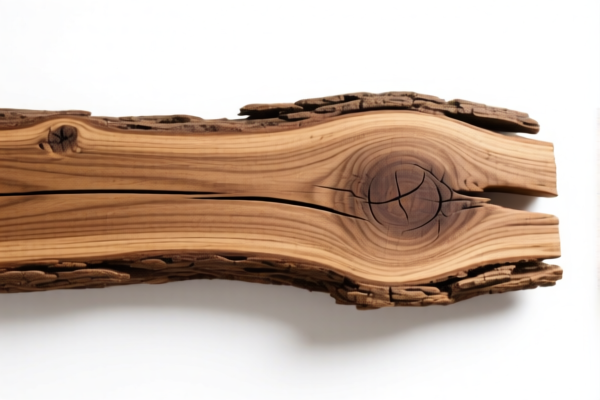
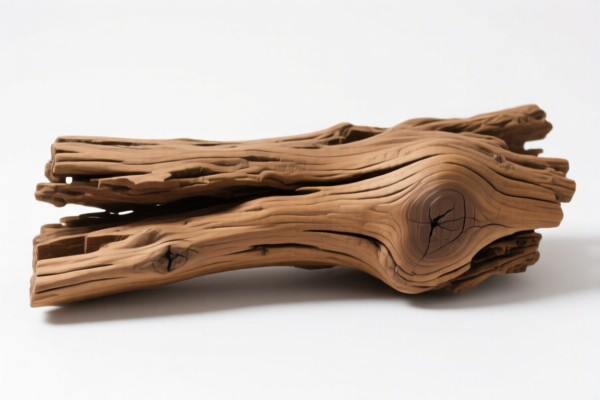
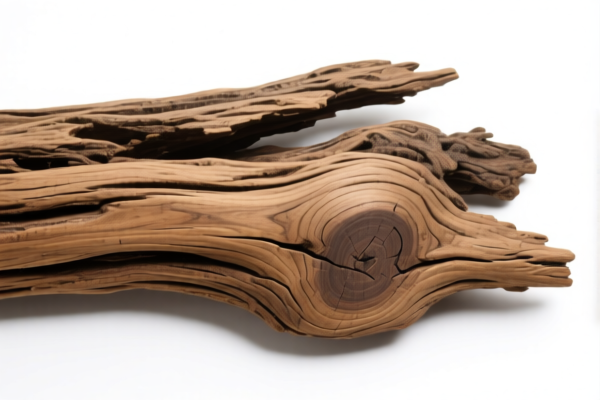
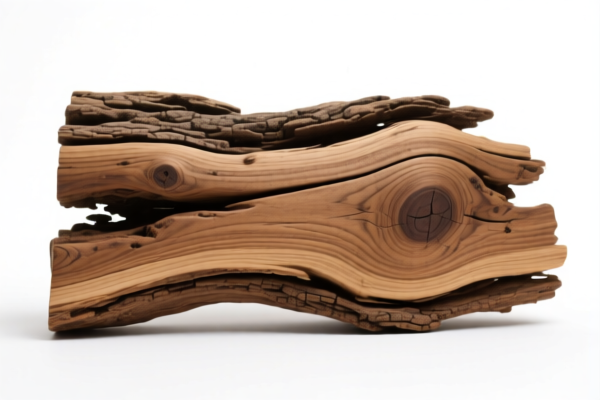
🌳 Rough Cork for Furniture Manufacturing (Raw Cork Planks/Blocks)
🌐 HS Code Reference & Customs Clearance Guide | 2026 Latest Tariff Analysis | Professional-Level Logistics Strategy
📌 I. Product Definition & Classification: What is "Rough Cork"?
Rough cork, used primarily for furniture manufacturing (such as cork tables, chairs, flooring, or decorative inlays), refers to the unprocessed or minimally processed bark of the Cork Oak tree (Quercus suber). In international trade, it is distinguished from finished cork products by its raw, natural state and lack of significant industrial processing.
It is typically categorized into two main forms in customs declarations: 1. Cork Logs/Planks (Raw Blocks): Thick slabs of cork bark, stripped from the tree but not yet cut into small tiles or granules. 2. Rough Cork Sheets/Planks: Processed to a certain thickness and surface smoothness for immediate furniture assembly, but not yet laminated, glued, or finished with varnish/paint.
⚠️ Key Distinction Point:
- If the cork is shredded, granulated, or recycled → Classified under Chapter 4504 (Agglomerated cork).
- If the cork is solid, natural blocks/planks intended for furniture → Classified under Chapter 4501 (Raw or simply prepared cork).
- If the cork is finished furniture (e.g., a completed cork chair) → Classified under Chapter 94 (Furniture).
📦 II. HS Code Classification Details (2026 Latest Tariff Authority Comparison)
| HS Code | Product Description | Application Scenario | Is it Raw/Natural? |
|---|---|---|---|
4501.10.00.00 |
Cork, raw or simply prepared (cleaned, cut, crushed, or ground) | Raw cork blocks, thick planks for furniture manufacturing | ✅ Yes (Raw) |
4501.90.00.00 |
Other cork (simply prepared but not further processed) | Cork sheets/rolls for upholstery, padding, or furniture components | ✅ Yes (Minimally processed) |
4504.10.00.00 |
Agglomerated cork, whether or not with a binding substance | Recycled cork tiles, agglomerated cork panels for flooring | ❌ No (Reprocessed) |
9403.89.00.00 |
Other furniture of vegetable materials | Finished furniture made of cork (e.g., tables, stools) | ❌ No (Finished Good) |
4503.90.00.00 |
Articles of cork | Cork stoppers, cork coasters, small cork crafts | ❌ No (Specific Article) |
🔍 Key Reminder:
- Raw Cork Blocks/Planks for furniture must be declared under4501.10.00.00or4501.90.00.00.
- Do not declare as "Furniture" (9403...) unless it is a finished, assembled piece.
- Do not declare as "Agglomerated Cork" (4504...) unless it is made from recycled cork granules.
💰 III. 2026 Latest Tariff Rate Details (Including Supplementary Taxes & Policy Add-ons)
✅ Applicable Country: United States (US)
✅ Origin: Portugal/Spain (Major Cork Producers) or China (Processed/Re-export)
✅ Effective Date: November 10, 2025 onwards (including subsequent imports)
🎯 1. 4501.10.00.00 —— Cork, Raw or Simply Prepared
| Item | Content |
|---|---|
| Base Tariff Rate | 0% (ad valorem) |
| USITC Supplementary Tax | +0% (Not subject to Section 301 duties for raw cork) |
| IEEPA Supplementary Tax | +0% (Cork is generally exempt from high-profile trade war tariffs) |
| Total Tariff Rate | 0% |
| Tax Calculation | CIF Value × 0% = $0 |
| De Minimis Eligibility | ✅ Yes (if value < $800, no duty or tax) |
| Legal Basis Path | USITC:4501.10.00.00 → FOOTNOTE:None |
📌 Explanation:
- Raw cork is considered a natural resource and is not subject to the heavy 25% Section 301 tariffs applied to many Chinese manufactured goods.
- However, if the cork is processed in China from imported raw cork and then re-exported to the US, customs may scrutinize the origin and processing level.
- If the product is agglomerated cork (4504.10.00.00), the tariff is still 0%, but documentation must prove it is agglomerated.
🎯 2. 4501.90.00.00 —— Other Cork (Simply Prepared)
| Item | Content |
|---|---|
| Base Tariff Rate | 0% |
| USITC Supplementary Tax | +0% |
| IEEPA Supplementary Tax | +0% |
| Total Tariff Rate | 0% |
| Tax Calculation | CIF Value × 0% = $0 |
| De Minimis Eligibility | ✅ Yes |
| Legal Basis Path | USITC:4501.90.00.00 → FOOTNOTE:None |
📌 Note:
- This code is for cork that has been sanded, smoothed, or cut but not glued or assembled into furniture.
- Crucial: If the cork is laminated with other materials (e.g., cork + wood), it may be classified as a "Composite Material" under different HS codes, potentially incurring tariffs.
🛠️ IV. Customs Clearance Practical Advice (Battle-Tested Pitfall Guide)
✅ 1. Documentation Checklist (Missing Any = Delay)
| Document | Required? | Description |
|---|---|---|
| ✅ Commercial Invoice | ✔️ | Must clearly state "Rough Cork Planks for Furniture Manufacturing" |
| ✅ Packing List | ✔️ | Detail weight, volume, and number of blocks |
| ✅ Certificate of Origin (CO) | ✔️ | Essential to prove non-Chinese origin (if applicable) to avoid potential scrutiny |
| ✅ Fumigation Certificate | ✔️ | Mandatory for all wood/cork products to prevent pest control issues |
| ✅ ISPM 15 Marking | ✔️ | If shipped in wooden pallets, pallets must be heat-treated and marked |
| ✅ Product Specifications | ✔️ | Include dimensions, moisture content, and whether it is natural or agglomerated |
✅ 2. Declaration Strategy (Key Mantra)
🔥 “Raw Cork is 0%, Agglomerated is 0%, But Finished Furniture is Not!”
| Scenario | Correct Declaration | Wrong Practice |
|---|---|---|
| Raw cork blocks/planks | 4501.10.00.00 |
Misdeclare as "Furniture" → 0-15% + extra scrutiny |
| Agglomerated cork tiles | 4504.10.00.00 |
Misdeclare as "Raw Cork" → Potential misclassification penalty |
| Finished cork table | 9403.89.00.00 |
Misdeclare as "Raw Cork" → High risk of seizure or back-tariffs |
| Cork + Wood Composite | Check specific composite rules | Assume 0% without verifying composite material rules |
✅ 3. Special Cases Handling
| Situation | Handling Advice |
|---|---|
| Cork from China | Even though tariff is 0%, customs may check if it is substantially transformed. Provide proof of raw material source. |
| Moisture Content | Ensure moisture content is <15% to prevent mold during shipping. Provide lab report if requested. |
| Mixed Shipments | If shipping cork with furniture, separate invoices are critical. Do not bundle raw cork under furniture HS code. |
| Fumigation | Cork is organic. Fumigation certificate is non-negotiable for US entry. Lack of it = Rejection at port. |
🌍 V. Global Market Customs Comparison (2026 Latest)
| Country/Region | Recommended HS Code | Tariff | Certification Requirements | Notes |
|---|---|---|---|---|
| 🇺🇸 USA | 4501.10.00.00 |
0% | Fumigation + ISPM 15 | No Section 301 duty for raw cork |
| 🇨🇳 China | 4501.10.00.00 |
0% | Fumigation | Major importer of raw cork |
| 🇪🇺 EU | 4501.10.00.00 |
0% | FSC/PEFC (Optional) | Sustainable sourcing encouraged |
| 🇬🇧 UK | 4501.10.00.00 |
0% | Fumigation | Post-Brexit rules align with EU for cork |
| 🇦🇺 Australia | 4501.10.00.00 |
0% | Biosecurity Clearance | Strict quarantine rules for organic materials |
📌 Conclusion:
- Raw cork is a 0% tariff commodity globally, making it a cost-effective material for furniture manufacturing.
- The biggest risk is not tariff, but biosecurity/quarantine (fungus, pests).
- Proper documentation (Fumigation CO) is more critical than tariff calculation.
📌 VI. Common Mistakes & Pitfall Guide (Blood & Tears Lessons)
❌ Mistake 1: Declaring "Rough Cork" as "Cork Stopper" (4503.90.00.00)
👉 Consequence: Customs may reject it because the use case (furniture vs. wine) is different, leading to delays.
❌ Mistake 2: Ignoring Fumigation Requirements
👉 Consequence: Shipment held at port, fumigation on-site (expensive) or returned/destructed.
❌ Mistake 3: Mixing Raw Cork and Finished Furniture in One HS Code
👉 Consequence: If mixed in one container, the entire shipment may be scrutinized under the higher-risk category (furniture), causing delays for the raw cork.
❌ Mistake 4: Not Providing Certificate of Origin for Non-Chinese Cork
👉 Consequence: Even with 0% tariff, lack of CO can cause administrative delays and higher handling fees.
✅ Correct Approach:
"Cork Blocks, Raw, for Furniture Manufacturing, Fumigated, Certified Origin: Portugal, HS Code: 4501.10.00.00"
🎯 VII. Conclusion: Professional Declaration, Save Time, Reduce Risk!
🎯 Remember the Mantra:
🔹 “Raw Cork is 0%, But Fumigation is 100% Mandatory!”
🔹 “Separate Raw from Finished, Keep Documentation Clean!”
📌 Pro Tip:
- If you are sourcing cork from Portugal or Spain, ensure the supplier provides FSC (Forest Stewardship Council) certification if selling to eco-conscious markets (EU/US).
- For de minimis shipments (<$800), you still need Fumigation Certificate for US entry, even if no duty is paid.
📣 Immediate Action:
📞 Confirm Fumigation Status + Verify HS Code
4501.10.00.00+ Prepare Certificate of Origin
🚀 Smooth Customs Clearance, Zero Tariff, On-Time Delivery!
✨ Professional Customs Clearance Starts with Accurate Classification!
💼 Your Cost Efficiency Depends on Proper Documentation!
用户评价
关于 HS 编码归类
协调制度(HS)是由世界海关组织(WCO)制定的国际贸易商品分类标准。全球 200 多个国家采用 HS 系统作为海关关税、贸易统计和进出口监管的基础。
每个 HS 编码遵循以下层级结构:
- 章(2 位)——商品大类(例如:第 84 章:机器和机械设备)
- 品目(4 位)——章内的更具体分类
- 子目(6 位)——国际通用细分,所有 WCO 成员国统一使用
- 本国细分(8-10 位)——各国自行扩展的细分编码,如美国 HTSUS 10 位编码
正确的 HS 编码归类对于顺利通关、准确缴纳关税和遵守贸易法规至关重要。错误归类可能导致海关延误、多缴关税或罚款。
从CN进口到US时,适用的关税税率可能包括:
- 最惠国(MFN)税率——适用于 WTO 成员国的标准关税税率
- 普通税率——适用于无贸易协定国家
- 贸易救济关税——附加关税,如 301 条款(反倾销)、232 条款(国家安全)或反补贴税
本页内容仅供参考。如需正式归类,请咨询当地海关或持牌报关代理。