Rough Fir Timber
CN → US| HS编码 | 关税税率 | 原产国 | 目的国 | 文档 |
|---|---|---|---|---|
| 4403230135 | 35.0% | CN | US | 官方文档 |
| 4403240135 | 35.0% | CN | US | 官方文档 |
| 4409109040 | 35.0% | CN | US | 官方文档 |
| 4407120020 | 35.0% | CN | US | 官方文档 |
| 4407120019 | 35.0% | CN | US | 官方文档 |
商品图片
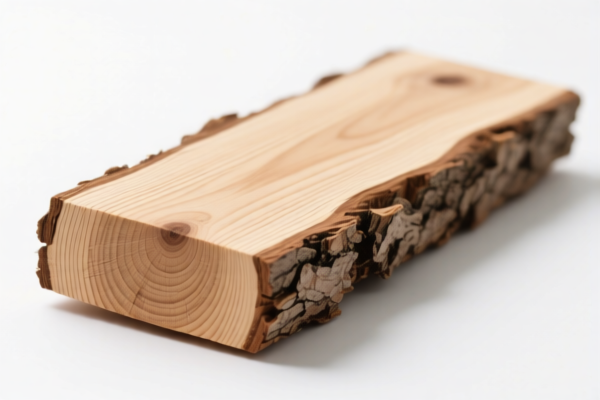
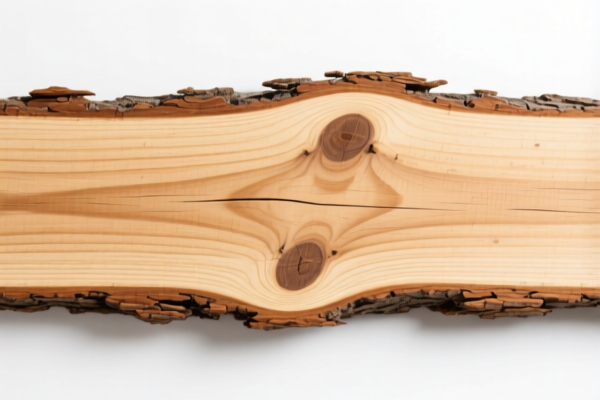
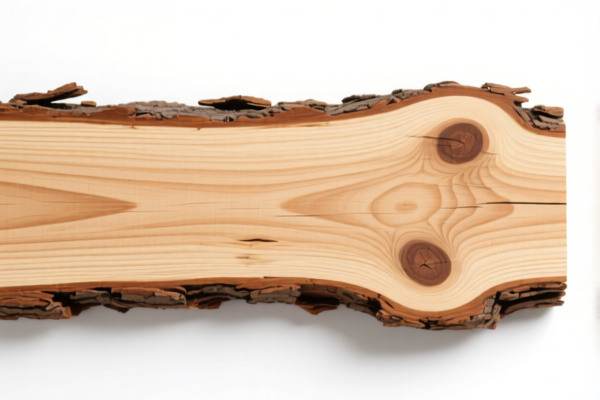
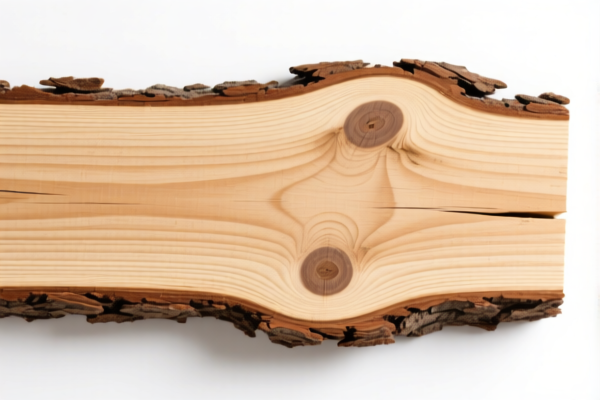
AI分析
🌲 Rough Fir Timber (冷杉锯材)
🌐 HS Code Reference & Customs Clearance Guide | 2026 Latest Tariff Analysis | Professional Compliance Strategy
📌 I. Product Definition & Classification: What Exactly is "Rough Fir Timber"?
Rough Fir Timber refers to sawn wood of the fir genus (Abies), primarily used in construction, pallets, furniture framing, and general carpentry. In international trade, the classification depends heavily on the processing level (log vs. sawn) and the specific wood genus.
Key Distinctions:
Logs/Unprocessed: If the wood is merely debarked or roughly trimmed but not sawn to length/width, it may fall under Chapter 44 Section I (Logs). However, the provided data specifically targets Sawn/Lumber categories.
* Sawn/Lumber: Wood cut longitudinally into boards, planks, beams, or joists.
* Species Specificity: The data distinguishes between Fir (Abies) and mixed conifers like Picea (Spruce) or Pseudotsuga* (Douglas Fir), though often grouped under "Coniferous."
⚠️ Critical Classification Point:
- If the timber is matched to specific species (e.g., Abies sibirica) and is roughly processed → Look at 4403.23.01.35.
- If it is Fir/Spruce genus and in log/raw form (despite the name "sawn" in some contexts, the summary implies raw state) → Look at 4403.24.01.35.
- If it is processed (planed, tongued, grooved) → Look at 4409.10.90.40.
- If it is sawn longitudinally (standard dimension lumber) → Look at 4407.12.00.20 or 4407.12.00.19.
📦 II. HS Code Classification Details (2026 Latest Tariff Authority)
Based on the provided data, here are the specific HS Codes for Rough Fir Timber, categorized by processing state and species:
| HS Code | Product Summary | Specific Characteristics | Processing Level |
|---|---|---|---|
4403.23.01.35 |
Fir Timber, matching specific species | Abies (Fir) genus; Rough-sawn or roughly shaped wood | Raw/Pre-sawn |
4403.24.01.35 |
Fir Timber, matching Spruce/Fir genus | Abies/Picea (Fir/Spruce); Log/Raw wood form | Log/Unprocessed |
4409.10.90.40 |
Fir Timber, Coniferous Class | Coniferous wood; Processed form (e.g., tongued, grooved, planed) | Fully Processed |
4407.12.00.20 |
Fir Timber, Sawn Longitudinally | Sawn longitudinally; Standard sawn timber | Sawn (Rough/Straight) |
4407.12.00.19 |
Fir Timber, Other Varieties | Sawn longitudinally; Catch-all for other fir/coniferous variants | Sawn (Other) |
🔍 Key Takeaway:
- 4403 vs. 4407: Code 4403 is for chemically treated or roughly prepared logs/timbers (often before final dimensioning). Code 4407 is for sawn wood (dimension lumber).
- 4409: Reserved for wood that has been continuously shaped along its length (e.g., tongue-and-groove flooring, window frames).
- Species Match: Ensure your invoice and packing list specify if the wood is Abies (Fir), Picea (Spruce), or mixed, as this affects the subheading.
💰 III. 2026 Latest Tariff Rate Breakdown (Including Surcharges & Policy Add-ons)
✅ Applicable Country: USA (US)
✅ Origin: China (CN)
✅ Effective Date: November 10, 2025 (and subsequent imports)
All listed HS Codes share the exact same tariff structure due to Section 301 and IEEPA regulations targeting Chinese wood products.
🎯 1. 4403.23.01.35 — Fir Timber (Specific Species)
| Item | Detail |
|---|---|
| Base Tariff | 0.0% (ad valorem) |
| Section 301 Surcharge | +25.0% (USITC Footnote 9903.88.01) |
| IEEPA Surcharge | +10.0% (Section 122 Tariff, targeting Chinese wood products) |
| Total Tariff Rate | 35.0% |
| Tax Calculation | CIF Value × 35% |
| De Minimis Exemption | ❌ NO (deny_de_minimis applies) |
| Legal Reference Path | IEEPA:9903.01.25 → USITC:4403.23.01.35 → SECTION_122:10% |
📌 Explanation:
- The 25% is the standard Section 301 tariff on Chinese wood products.
- The 10% is a specific additional duty under "Section 122" (often associated with national security or specific trade remedy actions against Chinese timber).
- Total: 35%. This is a high-cost item. Margin calculation must account for this entirely.
🎯 2. 4403.24.01.35 — Fir/Spruce Timber (Log/Raw Form)
| Item | Detail |
|---|---|
| Base Tariff | 0.0% |
| Section 301 Surcharge | +25.0% |
| IEEPA Surcharge | +10.0% |
| Total Tariff Rate | 35.0% |
| Tax Calculation | CIF Value × 35% |
| De Minimis Exemption | ❌ NO |
| Legal Reference Path | IEEPA:9903.01.25 → USITC:4403.24.01.35 → SECTION_122:10% |
📌 Note:
- Even if classified as "log" form, if it is imported as a finished timber product, it attracts the same penalties.
- Ensure the description matches "Raw/Log" vs. "Sawn" to avoid misclassification penalties.
🎯 3. 4409.10.90.40 — Processed Coniferous Timber
| Item | Detail |
|---|---|
| Base Tariff | 0.0% |
| Section 301 Surcharge | +25.0% |
| IEEPA Surcharge | +10.0% |
| Total Tariff Rate | 35.0% |
| Tax Calculation | CIF Value × 35% |
| De Minimis Exemption | ❌ NO |
| Legal Reference Path | IEEPA:9903.01.25 → USITC:4409.10.90.40 → SECTION_122:10% |
📌 Caution:
- Processed wood (e.g., pre-milled for windows) has a higher CIF value due to added labor.
- Applying 35% to a higher value increases absolute tax liability significantly.
🎯 4. 4407.12.00.20 & 4407.12.00.19 — Sawn Longitudinal Timber
| Item | Detail |
|---|---|
| Base Tariff | 0.0% |
| Section 301 Surcharge | +25.0% |
| IEEPA Surcharge | +10.0% |
| Total Tariff Rate | 35.0% |
| Tax Calculation | CIF Value × 35% |
| De Minimis Exemption | ❌ NO |
| Legal Reference Path | IEEPA:9903.01.25 → USITC:4407.12.00.20/19 → SECTION_122:10% |
📌 Note:
- These are the most common codes for standard construction lumber (2x4s, beams, etc.).
- Ensure the wood is not classified under "Chips" (4401) or "Plywood" (4412), which have different rules.
🛠️ IV. Customs Clearance Practical Advice (Battle-Tested Pitfall Guide)
✅ 1. Mandatory Documentation Checklist
| Document | Required? | Description |
|---|---|---|
| ✅ Commercial Invoice | ✔️ | Must explicitly state "Fir Timber," species (Abies/Picea), and dimensions. |
| ✅ Packing List | ✔️ | Detail quantity (board feet/cubic meters), weight, and pallet count. |
| ✅ Phytosanitary Certificate | ✔️ | CRITICAL for wood products. Issued by exporter’s national plant protection organization (NPPO). |
| ✅ Fumigation Certificate | ✔️ | Proof of ISPM 15 compliance (heat treatment or methyl bromide). |
| ✅ Bill of Lading/Air Waybill | ✔️ | Must match invoice weight and description. |
| ✅ Product Specification Sheet | ✔️ | Confirm if wood is "Rough Sawn," "Planed," or "Tongue & Groove." |
✅ 2. Declaration Tips (Key Mantras)
🔥 “Species Clear, Treatment Certified, Value Accurate, Tariff 35%”
| Scenario | Correct Declaration | Wrong Practice |
|---|---|---|
| Mixed Species | Specify dominant species (e.g., "Fir/Spruce Mix") | Vague terms like "Wood" → Risk of rejection |
| Processed Wood | Use "Planed Fir Lumber" | Call it "Rough Timber" → Misclassification |
| Origin Declaration | Explicitly state "Made in China" | Omitting origin → Seizure & penalties |
| Treatment Method | "HT (Heat Treated)" or "MB (Methyl Bromide)" | No mention → Port detention |
✅ 3. Special Cases Handling
| Situation | Recommendation |
|---|---|
| OEM Custom Sizes | Provide cut lists and specifications to prove it’s not a generic commodity. |
| Wood with Bark | Must declare as "Rough Timber" (4403/4407) and ensure ISPM 15 compliance for bark. |
| Chemical Treatment | If wood is painted/stained, declare as "Chemically Preserved" (may require additional SDS). |
| Small Samples | No De Minimis Exemption! Even small samples are subject to 35% tax. |
🌍 V. Global Market Comparison (2026 Latest)
| Country/Region | Recommended HS Code | Tariff (China Origin) | Certification Required | Notes |
|---|---|---|---|---|
| 🇺🇸 USA | 4407.12.00.20 |
35% (25% Sec 301 + 10% Sec 122) | ISPM 15 + Phytosanitary | Highest tariff impact; margins squeezed. |
| 🇨🇳 China | 4407.12.00.20 |
5% (Import Duty) | None | Low tariff for import into China. |
| 🇪🇺 EU | 4407.12.00.20 |
0% (if FLEGT licensed) | FLEGT/EUTR Compliance | Strict legality verification required. |
| 🇦🇺 Australia | 4407.12.00.20 |
5% | Biosecurity Approval | Strict quarantine rules. |
| 🇯🇵 Japan | 4407.12.00.20 |
0-3% | IPPC Mark | Moderate compliance. |
📌 Conclusion:
- USA is the most challenging market for Chinese Fir Timber due to the 35% cumulative tariff.
- Consider supply chain diversification (e.g., sourcing from Russia, Canada, or Southeast Asia) to mitigate US tariffs.
- Ensure strict ISPM 15 compliance to avoid port rejection regardless of tariff.
📌 VI. Common Errors & Pitfalls (Lessons Learned)
❌ Error 1: Using "Wood" instead of "Fir Timber"
👉 Consequence: Customs cannot verify species → Delayed release, potential fines.
❌ Error 2: Forgetting ISPM 15 Mark on Pallets/Planks
👉 Consequence: Entire shipment rejected or destroyed at port.
❌ Error 3: Misclassifying "Sawn" as "Processed"
👉 Consequence: Incorrect HS Code → 35% vs. potential lower/highest rate mismatch → Audit.
❌ Error 4: Assuming Small Shipments are Exempt
👉 Consequence: 35% tax applies even to small parcels. No de minimis for Section 122/301 wood products.
✅ Correct Practice:
“Fir Timber (Abies spp.), Rough Sawn, Heat Treated (HT), ISPM 15 Marked, Dimension: 2x4x8ft, Made in China, CIF Value: $X,XXX”
🎯 VII. Conclusion: Precision in Classification, Protection of Margin!
🎯 Remember the Mantra:
🔹 “Species Specific, Treatment Certified, 35% Tax Reality, De Minimis Dead!”
🔹 “HS Code Dictates Fate, 35% Tariff Gap, Declaration Step One, Save Your Profit!”
📌 Pro Tip:
If your Fir Timber is sourced from Vietnam, Canada, Russia, or EU, you may avoid the 35% US tariff.
- Canada/EU: Usually 0-5% base tariff, no Section 301.
- Vietnam: May have lower tariffs, but ensure no "transshipment" fraud.
- Recommendation: Apply for a Pre-Ruling from CBP if importing large volumes to confirm HS Code and tariff liability.
📣 Immediate Action:
📞 Contact a licensed customs broker + Provide Fumigation Cert + Verify ISPM 15 Mark
🚀 Ensure your Fir Timber clears US Customs smoothly, avoids destruction, and protects your margins!
✨ Professional Clearance Starts with Accurate Classification!
💼 Every Percent of Tariff Counts in the Timber Trade!
用户评价
关于 HS 编码归类
协调制度(HS)是由世界海关组织(WCO)制定的国际贸易商品分类标准。全球 200 多个国家采用 HS 系统作为海关关税、贸易统计和进出口监管的基础。
每个 HS 编码遵循以下层级结构:
- 章(2 位)——商品大类(例如:第 84 章:机器和机械设备)
- 品目(4 位)——章内的更具体分类
- 子目(6 位)——国际通用细分,所有 WCO 成员国统一使用
- 本国细分(8-10 位)——各国自行扩展的细分编码,如美国 HTSUS 10 位编码
正确的 HS 编码归类对于顺利通关、准确缴纳关税和遵守贸易法规至关重要。错误归类可能导致海关延误、多缴关税或罚款。
从CN进口到US时,适用的关税税率可能包括:
- 最惠国(MFN)税率——适用于 WTO 成员国的标准关税税率
- 普通税率——适用于无贸易协定国家
- 贸易救济关税——附加关税,如 301 条款(反倾销)、232 条款(国家安全)或反补贴税
本页内容仅供参考。如需正式归类,请咨询当地海关或持牌报关代理。