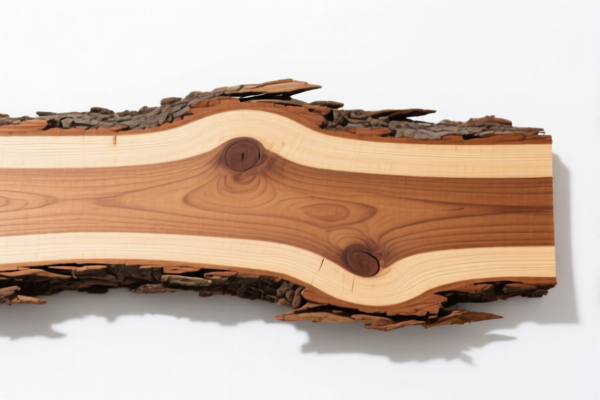
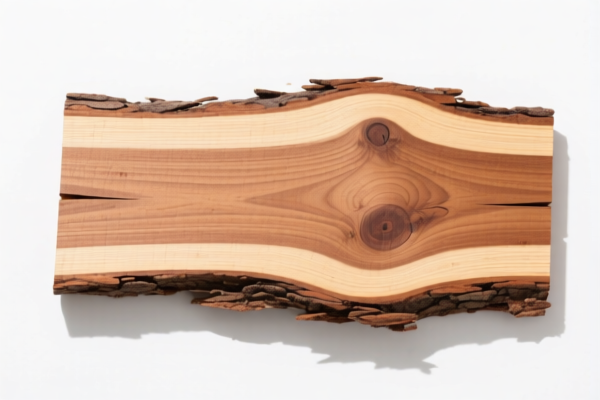
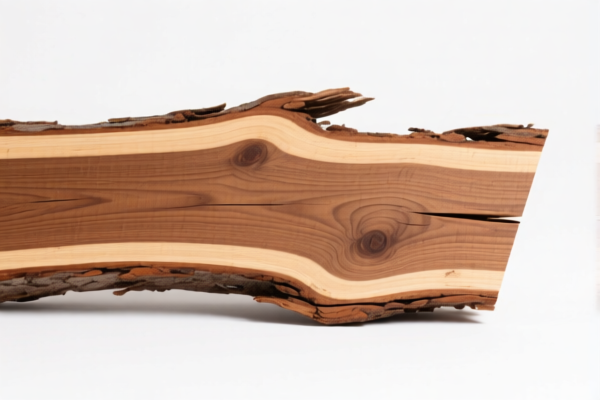
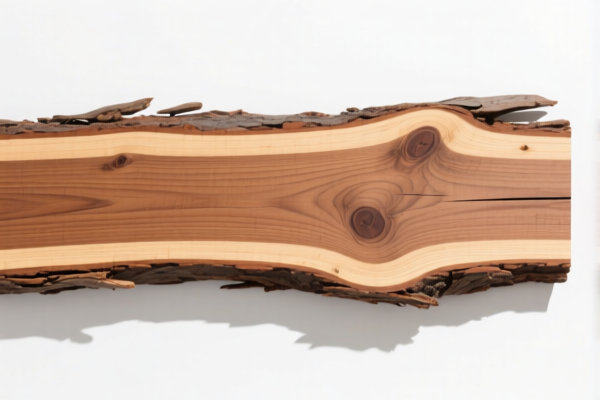
Rough Square Eucalyptus Wood
CN → US| HS编码 | 关税税率 | 原产国 | 目的国 | 文档 |
|---|---|---|---|---|
| 4403980028 | 35.0% | CN | US | 官方文档 |
| 4403980023 | 35.0% | CN | US | 官方文档 |
商品图片
AI分析
🪵 Rough Square Eucalyptus Wood (Unprocessed Timber)
🌐 HS Code Reference & Customs Clearance Guide | 2026 Latest Tariff Analysis | Professional Entry Strategy
📌 I. Product Definition & Classification: Understanding "Rough Eucalyptus Wood"
Eucalyptus Wood (Rough Square), scientifically known as Eucalyptus spp., falls under the category of "Wood in the rough, whether or not stripped of bark or sap-wood, or roughly squared." In international trade, this raw material is primarily used for:
- Construction & Structural Use: Poles, piles, and posts for fencing, landscaping, or structural supports.
- Raw Material for Processing: Pulpwood for paper manufacturing or raw timber for further sawing into planks.
⚠️ Key Distinction Point:
- If the wood is squared off (even roughly) but retains its bark or sapwood, and is intended for structural posts/poles → Classified under 4403.98.00.28.
- If the wood is in rough form (not squared) or is specifically designated as pulpwood (intended for chemical/mechanical pulping) → Classified under 4403.98.00.23.
- Crucial Note: The term "Rough Square" in the user input implies it has been squared but not planed or finished. However, HS codes often distinguish based on the primary intended use (Poles/Piles vs. Pulpwood).
📦 II. HS Code Classification Details (2026 Latest Tariff Authority)
| HS Code | Product Description | Application Scenario | Key Feature |
|---|---|---|---|
4403.98.00.28 |
Of eucalyptus spp.: Poles, piles and posts | Fencing, landscaping posts, construction piles, rough-squared timber for structural use | ✅ Squared/Structural Use |
4403.98.00.23 |
Of eucalyptus spp.: Pulpwood | Paper mills, biomass energy, raw material for pulp processing | ✅ Raw/Chemical Processing Use |
🔍 Important Reminder:
- "Rough Square" typically implies a shape suitable for posts/poles, leaning towards 4403.98.00.28.
- If the wood is intended for pulp, even if slightly squared, it may fall under 4403.98.00.23.
- Do not mix classifications: Misdeclaring pulpwood as poles (or vice versa) can lead to customs delays or penalties.
💰 III. 2026 Latest Tariff Rate Breakdown (Including Surtaxes)
✅ Applicable Country: United States (US)
✅ Origin: China (CN) (Note: Tariff rates vary by country of origin; this analysis assumes Chinese origin for surtax applicability)
✅ Effective Time: Current trade policy (Subject to 301 Section & IEEPA regulations)
🎯 1. 4403.98.00.28 —— Eucalyptus Wood: Poles, Piles, and Posts
| Item | Content |
|---|---|
| Base Tariff Rate | 0.0% (ad valorem) |
| Additional Surcharge | +25.0% (Section 301 Tariff) |
| Total Tax Rate | 25.0% |
| Tax Calculation | CIF Value × 25% |
| De Minimis Exemption | ❌ Not Applicable (Subject to full assessment) |
| Legal Basis Path | HTSUS: 4403.98.00.28 → USITC Footnote: Section 301 |
📌 Explanation:
- Although the base tariff for many wood products is 0%, Section 301 tariffs impose an additional 25% on many Chinese-origin goods, including certain wood products.
- This is a high-cost import scenario compared to non-China origins.
🎯 2. 4403.98.00.23 —— Eucalyptus Wood: Pulpwood
| Item | Content |
|---|---|
| Base Tariff Rate | 0.0% (ad valorem) |
| Additional Surcharge | +25.0% (Section 301 Tariff) |
| Total Tax Rate | 25.0% |
| Tax Calculation | CIF Value × 25% |
| De Minimis Exemption | ❌ Not Applicable |
| Legal Basis Path | HTSUS: 4403.98.00.23 → USITC Footnote: Section 301 |
📌 Note:
- Both subheadings carry the same 25% total tax rate under current US-China trade policies.
- The distinction lies in the end-use description during customs declaration, not the tax burden.
🛠️ IV. Customs Clearance Practical Advice (Pitfall Avoidance Guide)
✅ 1. Required Documentation Checklist
| Document | Must Provide | Description |
|---|---|---|
| ✅ Commercial Invoice | ✔️ | Clearly state "Eucalyptus Wood, Rough Square, For [Poles/Pulp]" |
| ✅ Packing List | ✔️ | Detail dimensions, quantity, weight, and packaging type |
| ✅ Phytosanitary Certificate | ✔️ | Mandatory for wood products to prevent pest introduction |
| ✅ Wood Treatment Certificate | ✔️ | 证明木材经过熏蒸或热处理(如适用) |
| ✅ Certificate of Origin | ✔️ | To verify country of origin (critical for surtax application) |
| ✅ Bill of Lading | ✔️ | Standard shipping document |
✅ 2. Declaration Tips (Key Mantras)
🔥 "Shape & Use Determine Code, Phytosanitary is King!"
| Scenario | Correct Declaration | Wrong Practice |
|---|---|---|
| Wood squared for fencing/posts | 4403.98.00.28 with "Poles, Piles, Posts" |
Declaring as "Pulpwood" → Potential misclassification |
| Wood for paper pulp | 4403.98.00.23 with "Pulpwood" |
Declaring as "Poles" → Risk of rejection if end-use doesn't match |
| Wood with bark attached | Must specify "Bark Attached" or "Bark Removed" | Hiding bark status → Customs may reclassify and fine |
| Roughly Squared | Use term "Roughly Squared" in description | Using "Planed" or "Finished" → Wrong HS code entirely |
✅ 3. Special Handling for Wood Products
| Issue | Handling Advice |
|---|---|
| ISPM 15 Compliance | Ensure wood packaging (pallets, crates) is heat-treated and marked with ISPM 15 logo. Raw wood itself may require phytosanitary measures. |
| Fungi/Pest Control | Provide valid Phytosanitary Certificate from the country of origin. US Customs and Border Protection (CBP) strictly enforces this. |
| Origin Verification | Ensure the Certificate of Origin matches the actual country. If sourced from Vietnam/Thailand, surtaxes may not apply (check latest trade agreements). |
| Value Assessment | Declare accurate CIF value. Wood tariffs are ad valorem; under-declaring value triggers audits and penalties. |
🌍 V. Global Market Comparison (2026 Update)
| Country/Region | Recommended HS Code | Tariff (China Origin) | Certification Required | Notes |
|---|---|---|---|---|
| 🇺🇸 USA | 4403.98.00.28 / .23 |
25.0% (Total) | Phytosanitary + ISPM 15 | High surtax due to Section 301 |
| 🇨🇳 China | 4403.98.00.28 / .23 |
Varies (Import Duty) | Phytosanitary | Lower surtax, but import duties may apply |
| 🇪🇺 EU | 4403.98.00.28 / .23 |
0% - 6.5% | FLEGT / Due Diligence | Strict timber regulations (EUTR) |
| 🇦🇺 Australia | 4403.98.00.28 / .23 |
Varies | Biosecurity Permit | Very strict biosecurity rules |
📌 Conclusion:
- The US market imposes a 25% additional tariff on Chinese-origin eucalyptus wood.
- Phytosanitary compliance is the biggest hurdle. Failure to provide valid certificates will result in cargo rejection or destruction.
- Origin Diversification: Consider sourcing from non-China origins (e.g., Brazil, Australia) to avoid the 25% surtax if market access allows.
📌 VI. Common Errors & Pitfalls (Lessons Learned)
❌ Error 1: Missing Phytosanitary Certificate
👉 Consequence: Cargo held at port, potential destruction → Loss of cargo value!
❌ Error 2: Misdeclaring Pulpwood as Poles
👉 Consequence: Customs may suspect undervaluation or false declaration → Audits and fines
❌ Error 3: Ignoring Section 301 Surtax
👉 Consequence: Underpaying duties → Back taxes + Penalties
❌ Error 4: Using vague descriptions like "Wood"
👉 Consequence: Customs may assign a higher default duty rate → Unnecessary cost
✅ Correct Practice:
"Eucalyptus Wood, Roughly Squared, Stripped of Bark, For Use as Landscape Poles, Origin: China, Phytosanitary Cert No: XXX"
🎯 VII. Conclusion: Precision in Classification, Savings in Costs!
🎯 Remember the Mantra:
🔹 "Rough Square, Use Determines Code; 25% Tax Hits Hard, Origin Checks Well."
🔹 "Phytosanitary is Key, No Cert = No Entry, Avoid Delays, Be Ready!"
📌 Pro Tip:
- If your wood is sourced from non-China countries (e.g., Brazil, Indonesia), check for FTAs (Free Trade Agreements) that may reduce or eliminate the 25% surtax.
- Always apply for a Binding Ruling from US Customs if unsure about classification, to secure clarity and avoid post-import audits.
📣 Take Action Now:
📞 Consult a Licensed Customs Broker + Ensure Phytosanitary Docs are Ready
🚀 Smooth Clearance, Timely Delivery, Profit Maximization!
✨ Professional Clearance Starts with Accurate Classification!
💼 Every Percent of Tariff Matters in Wood Trade!
用户评价
关于 HS 编码归类
协调制度(HS)是由世界海关组织(WCO)制定的国际贸易商品分类标准。全球 200 多个国家采用 HS 系统作为海关关税、贸易统计和进出口监管的基础。
每个 HS 编码遵循以下层级结构:
- 章(2 位)——商品大类(例如:第 84 章:机器和机械设备)
- 品目(4 位)——章内的更具体分类
- 子目(6 位)——国际通用细分,所有 WCO 成员国统一使用
- 本国细分(8-10 位)——各国自行扩展的细分编码,如美国 HTSUS 10 位编码
正确的 HS 编码归类对于顺利通关、准确缴纳关税和遵守贸易法规至关重要。错误归类可能导致海关延误、多缴关税或罚款。
从CN进口到US时,适用的关税税率可能包括:
- 最惠国(MFN)税率——适用于 WTO 成员国的标准关税税率
- 普通税率——适用于无贸易协定国家
- 贸易救济关税——附加关税,如 301 条款(反倾销)、232 条款(国家安全)或反补贴税
本页内容仅供参考。如需正式归类,请咨询当地海关或持牌报关代理。