Rough Square Rubber (Unpeeled)
CN → US| HS编码 | 关税税率 | 原产国 | 目的国 | 文档 |
|---|---|---|---|---|
| 4002190015 | 35.0% | CN | US | 官方文档 |
| 4002190016 | 35.0% | CN | US | 官方文档 |
商品图片
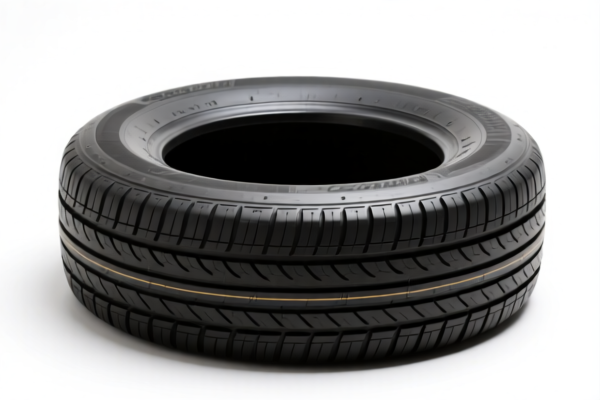
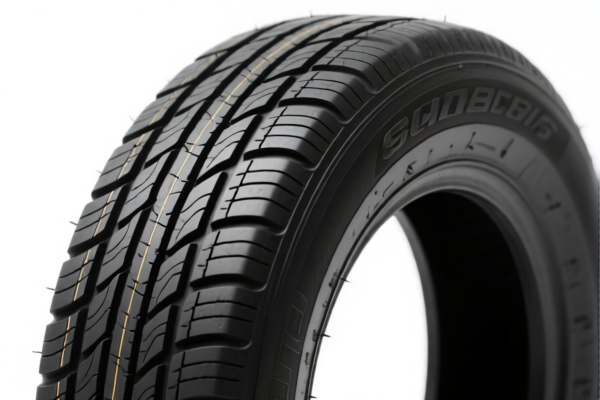
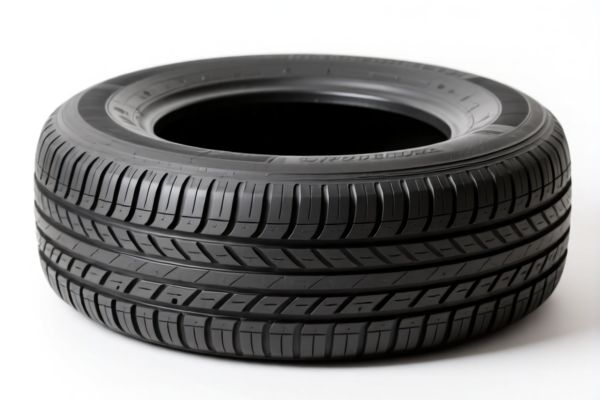
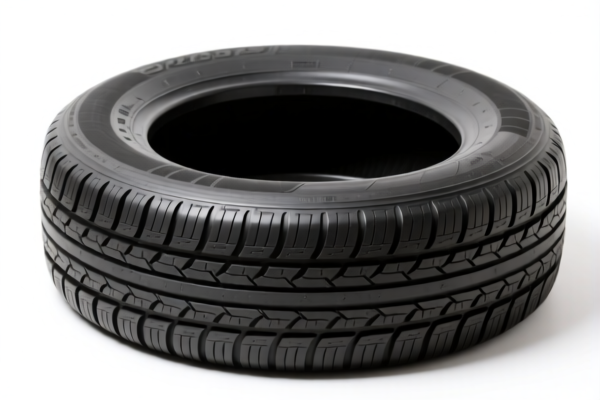
AI分析
🧱 Rough Square Rubber (Unpeeled) – Synthetic Rubber Classification Guide
🌐 HS Code Reference & Customs Clearance Guide | 2026 Latest Tariff Analysis | Professional Clearance Strategy
⚠️ Critical Clarification: Product Definition Mismatch
STOP! 🛑
The term "Rough Square Rubber (Unpeeled)" is not a standard international trade description for synthetic rubber under HS Code 4002. This term is typically associated with natural rubber (e.g., crude rubber blocks) or agricultural by-products, not the synthetic rubbers listed in your provided data.
However, based on the provided <DATA>, the relevant products are Styrene-Butadiene Rubber (SBR), a synthetic rubber, in primary forms or bales. The description "Rough Square Rubber (Unpeeled)" likely refers to SBR in bale form (which often appears as rough, rectangular blocks), but the key differentiator is the production method (Emulsion vs. Solution) and styrene content.
Below is the precise classification for SBR as per the provided data, assuming "Rough Square Rubber" refers to SBR in bale form.
📦 1. HS Code Classification Details (Based on Provided Data)
The provided data specifies two HS Codes for Styrene-Butadiene Rubber (SBR) with ≤50% styrene by weight. The classification depends on the polymerization process.
| HS Code | Product Description | Production Method | Form |
|---|---|---|---|
| 4002.19.00.15 | SBR in bales, emulsion polymerized | Emulsion Polymerization (E-SBR) | Bales |
| 4002.19.00.16 | SBR in bales, solution polymerized | Solution Polymerization (S-SBR) | Bales |
🔍 Key Distinction:
- E-SBR (4002.19.00.15): Produced via emulsion polymerization. Typically used for tires, conveyor belts, and general rubber goods.
- S-SBR (4002.19.00.16): Produced via solution polymerization. Often used for high-performance tires and specialty applications.
- Form: Both are in bales (which may appear as "rough square blocks" when unpeeled/unwrapped).
💰 2. 2026 Latest Tariff Rate Details (Including Additional Duties)
✅ Applicable Country: United States (US)
✅ Origin: China (CN) (Assumed based on "Additional Duty" context in sample)
✅ Effective Date: 2025+ (Current Policy)
🎯 1. 4002.19.00.15 —— Emulsion Polymerized SBR (E-SBR) in Bales
| Item | Content |
|---|---|
| Product | Styrene-Butadiene Rubber (E-SBR), ≤50% styrene, in bales |
| HS Code | 4002.19.00.15 |
| Base Tariff | 0.0% |
| Additional Duty | 25.0% (Section 301 Tariff) |
| Total Tariff | 25.0% |
| Tax Detail | Base: 0.0%, Additional: 25.0% |
| Calculation | CIF Value × 25% |
| De Minimis Exemption | ❌ Not Eligible (High-value chemical raw materials typically excluded) |
| Legal Basis | USITC Footnote 4002.19.00.15, Section 301 Tariff List |
📌 Explanation:
- E-SBR is subject to a 25% additional duty under Section 301 for Chinese-origin goods.
- This is a high-cost item for importers. Ensure correct classification to avoid penalties.
🎯 2. 4002.19.00.16 —— Solution Polymerized SBR (S-SBR) in Bales
| Item | Content |
|---|---|
| Product | Styrene-Butadiene Rubber (S-SBR), ≤50% styrene, in bales |
| HS Code | 4002.19.00.16 |
| Base Tariff | 0.0% |
| Additional Duty | 0.0% |
| Total Tariff | 0.0% |
| Tax Detail | Base: 0.0%, Additional: 0.0% |
| Calculation | CIF Value × 0% |
| De Minimis Exemption | N/A (Tariff is 0%) |
| Legal Basis | USITC Footnote 4002.19.00.16 |
📌 Explanation:
- S-SBR has no additional duty under current Section 301 lists for this specific HS subheading.
- This represents a significant cost advantage over E-SBR if production method allows.
🛠️ 3. Customs Clearance Practical Advice (Practical Pitfall Avoidance Guide)
✅ 1. Documentation Checklist (Must-Have)
| Document | Required | Notes |
|---|---|---|
| ✅ Commercial Invoice | ✔️ | Must specify "Styrene-Butadiene Rubber (SBR)", production method (E-SBR or S-SBR), styrene content (%), and form (bales). |
| ✅ Certificate of Origin | ✔️ | To confirm Chinese origin and apply/additional duties. |
| ✅ Bill of Lading/Air Waybill | ✔️ | Show gross/net weight, number of bales, and packaging type. |
| ✅ Product Specification Sheet | ✔️ | Include polymerization method, styrene content, and physical form (bales/blocks). |
| ✅ Manufacturer's Declaration | ✔️ | Confirm production process (emulsion vs. solution) to justify HS code selection. |
⚠️ Critical Warning:
- Misclassification Risk: Declaring S-SBR (4002.19.00.16) as E-SBR (4002.19.00.15) will result in 25% underpayment and potential fines.
- Conversely, declaring E-SBR as S-SBR may lead to overpayment but is less likely to be challenged if documentation supports S-SBR.
- Ensure the manufacturer provides explicit confirmation of the polymerization method.
✅ 2. Declaration Tips (Key Mnemonics)
🔥 "SBR in Bales: E-SBR 25%, S-SBR 0%. Confirm Process, Avoid Penalty!"
| Scenario | Correct Declaration | Incorrect Action |
|---|---|---|
| E-SBR in Bales | 4002.19.00.15 |
Misclassifying as 4002.19.00.16 → 25% penalty + back taxes |
| S-SBR in Bales | 4002.19.00.16 |
Misclassifying as 4002.19.00.15 → Overpayment (no penalty but lost savings) |
| Natural Rubber | Not in Scope | Do not use HS 4002 for natural rubber; use HS 4001 |
| Unspecified SBR | Request Clarification | Guessing HS code → High risk of audit |
✅ 3. Special Cases & Handling
| Situation | Recommendation |
|---|---|
| Mixed Shipments | If E-SBR and S-SBR are in the same shipment, separate bills of lading or clear separation in documents is recommended to avoid audit complexity. |
| "Rough Square" Appearance | Clarify that "Rough Square" refers to bale form. Do not use vague terms like "unpeeled rubber" in official documentation. Use "SBR in Bales". |
| Origin Verification | Ensure the Certificate of Origin explicitly states the country of manufacture. If from Vietnam or Malaysia, check for tariff exemptions under USMCA or other FTAs. |
| Styrene Content | Verify that styrene content is ≤50%. If >50%, different HS codes may apply (not covered in provided data). |
🌍 4. Global Market Comparison (2026 Latest)
| Country/Region | Recommended HS Code | Tariff (China Origin) | Notes |
|---|---|---|---|
| 🇺🇸 USA | 4002.19.00.15 / 4002.19.00.16 |
25% (E-SBR) / 0% (S-SBR) | Section 301 applies |
| 🇨🇳 China | 4002.19.00.15 / 4002.19.00.16 |
0% (Import) | No additional duties |
| 🇪🇺 EU | 4002.19 |
~2.5-4.5% | No Section 301 equivalent |
| 🇬🇧 UK | 4002.19 |
~2.5-4.5% | Post-Brexit tariffs apply |
📌 Conclusion:
- USA is the only market with significant additional duties for Chinese-origin SBR.
- S-SBR offers a 25% tariff advantage over E-SBR in the US market.
- If possible, favor S-SBR production for US-bound shipments to reduce costs.
📌 5. Common Mistakes & Pitfalls (Lessons Learned)
❌ Mistake 1: Using generic terms like "Rubber Blocks" or "Unpeeled Rubber"
👉 Consequence: Customs may reclassify under general heading 4002.19 without specific subheading, leading to audit delays and potential penalties.
✅ Fix: Use precise description: "Styrene-Butadiene Rubber (SBR), E-SBR, in Bales".
❌ Mistake 2: Assuming all SBR is taxed equally
👉 Consequence: 25% difference in cost between E-SBR and S-SBR.
✅ Fix: Confirm production method with supplier before shipment.
❌ Mistake 3: Ignoring styrene content
👉 Consequence: If styrene >50%, different HS codes apply (not in provided data).
✅ Fix: Request lab test reports confirming styrene content ≤50%.
🎯 6. Conclusion: Precise Classification Saves Money!
🎯 Remember the Golden Rule:
🔹 "E-SBR: 25% Tax. S-SBR: 0% Tax. Confirm Process First!"
🔹 "Bales are Key. Styrene ≤50%. Documentation is Your Shield!"
📌 Pro Tip:
- If your SBR is not from China (e.g., Vietnam, Thailand, USA), verify if Section 301 additional duties still apply. Generally, they do not, meaning 0% total tariff for both E-SBR and S-SBR in many cases.
- Apply for Advance Rulings from CBP if unsure about classification.
📣 Take Action Now:
📞 Contact your customs broker with product specs and manufacturer declaration.
🚀 Optimize your SBR supply chain by leveraging S-SBR for US shipments where possible!
✨ Precision in Classification, Profit in Clearance!
💼 Every percentage point matters in global trade!
用户评价
关于 HS 编码归类
协调制度(HS)是由世界海关组织(WCO)制定的国际贸易商品分类标准。全球 200 多个国家采用 HS 系统作为海关关税、贸易统计和进出口监管的基础。
每个 HS 编码遵循以下层级结构:
- 章(2 位)——商品大类(例如:第 84 章:机器和机械设备)
- 品目(4 位)——章内的更具体分类
- 子目(6 位)——国际通用细分,所有 WCO 成员国统一使用
- 本国细分(8-10 位)——各国自行扩展的细分编码,如美国 HTSUS 10 位编码
正确的 HS 编码归类对于顺利通关、准确缴纳关税和遵守贸易法规至关重要。错误归类可能导致海关延误、多缴关税或罚款。
从CN进口到US时,适用的关税税率可能包括:
- 最惠国(MFN)税率——适用于 WTO 成员国的标准关税税率
- 普通税率——适用于无贸易协定国家
- 贸易救济关税——附加关税,如 301 条款(反倾销)、232 条款(国家安全)或反补贴税
本页内容仅供参考。如需正式归类,请咨询当地海关或持牌报关代理。