Rough Tropical Wood
CN → US| HS编码 | 关税税率 | 原产国 | 目的国 | 文档 |
|---|---|---|---|---|
| 4407990295 | 35.0% | CN | US | 官方文档 |
| 4407990242 | 35.0% | CN | US | 官方文档 |
| 4403120060 | 35.0% | CN | US | 官方文档 |
| 4403990195 | 35.0% | CN | US | 官方文档 |
| 4403960123 | 35.0% | CN | US | 官方文档 |
商品图片
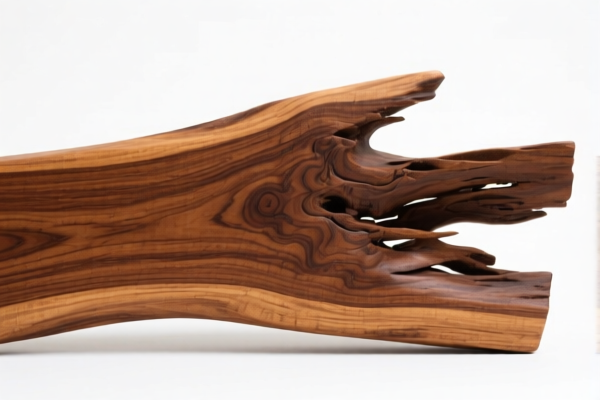
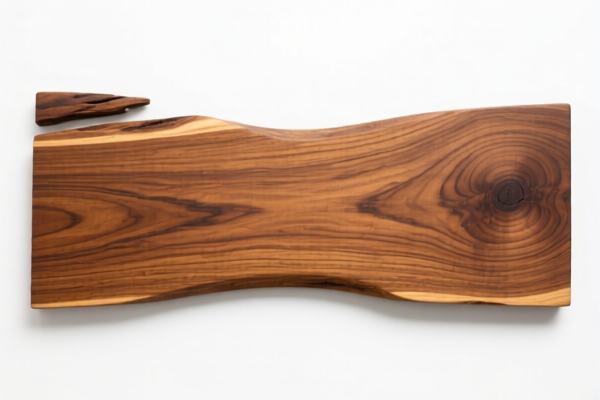
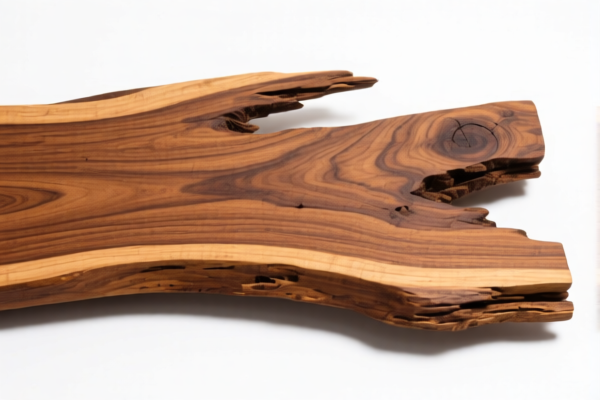
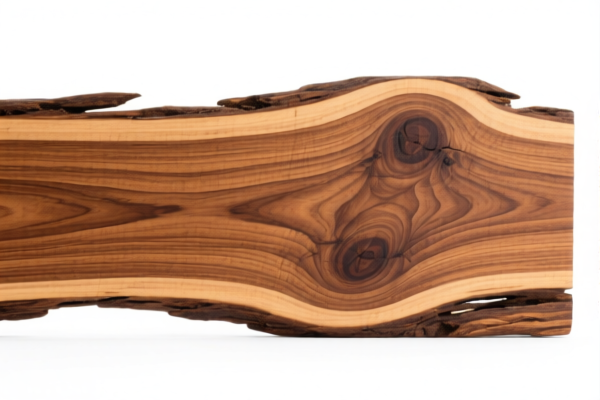
AI分析
🌳 Rough Tropical Wood (Unworked/Primary Form Timber)
🌐 HS Code Reference & Customs Clearance Guide | 2026 Latest Tariff Analysis | Professional Level Clearance Strategy
📌 I. Product Definition & Classification: Do You Truly Understand "Rough Tropical Wood"?
Rough tropical wood refers to timber that has undergone primary processing (such as sawing, planing, or rough shaping) but has not been further processed into finished goods (like furniture, flooring, or plywood). In international trade, these materials are typically categorized by:
- Wood Type: Broadleaf (non-coniferous) tropical species.
- Processing State: Rough, unworked, or merely rough-sawn/planed.
- Shape: Slabs, blocks, logs, or simple rectangular forms.
⚠️ Key Distinction:
- If the wood is merely unworked (logs/bolts) → It may fall under different HS codes (e.g., 4403.10-4403.49 depending on species).
- If it is rough-sawn/planed (even if square or rectangular) → It falls under 4407 or 4403.99 depending on specific dimensions and processing level.
- Coniferous vs. Non-Coniferous: This data specifically addresses Non-Coniferous (Broadleaf) tropical woods. Coniferous woods (pine, spruce) have entirely different codes (e.g., 4407.21).
📦 II. HS Code Classification Matrix (2026 Latest Tariff Reference)
Based on the provided data, here are the specific HS Codes for Rough Non-Coniferous Tropical Wood:
| HS Code | Product Description | Key Characteristics |
|---|---|---|
4407.99.02.95 |
Rough non-coniferous wood material, matching non-coniferous wood species and primary form. | Broadleaf timber, rough-cut, generic non-coniferous. |
4407.99.02.42 |
Rough non-coniferous wood material, matching wood species and longitudinal sawing/etc. primary forms. | Broadleaf timber, longitudinally sawn or planed. |
4403.12.00.60 |
Rough non-coniferous wood material, matching non-coniferous wood species and rough shape. | Unprocessed or roughly shaped broadleaf logs/bolts. |
4403.99.01.95 |
Rough non-coniferous wood material, matching non-coniferous wood species and rough sawn attributes. | Broadleaf timber, rough-sawn, unspecified species. |
4403.96.01.23 |
Rough Birch wood, matching birch species and unprocessed or roughly squared characteristics. | Specifically Birch (a common broadleaf), roughly squared or unworked. |
🔍 Important Note:
- All codes listed above are for Non-Coniferous (Hardwood/Tropical) species.
- The distinction between4403(Charcoal/Unworked/Rough) and4407(Sawn/Planed) is critical.4403generally covers less processed forms, while4407covers sawn/planed timber.
- Birch is explicitly called out in4403.96.01.23, which is a specific subset of non-coniferous wood.
💰 III. 2026 Latest Tariff Rate Breakdown (Including Surcharges)
✅ Applicable Country: United States (US)
✅ Origin: China (CN)
✅ Effective Date: Ongoing (Based on current 301/122 measures)
All listed HS Codes carry a Total Tax Rate of 35.0% due to the combination of base tariff and punitive surcharges.
🎯 Detailed Tariff Structure (Common to All Listed Codes)
| Component | Rate | Source/Legal Basis |
|---|---|---|
| Base Tariff (MFN) | 0.0% | Standard Most Favored Nation rate for these wood products is often 0% or negligible. |
| Section 301 Surcharge | +25.0% | USITC Footnote 9903.88.01 / Trade Act Section 301 (Retaliatory/Protective Tariffs). |
| Section 122 Tariff | +10.0% | IEEPA (International Emergency Economic Powers Act) / Specific Trade Remedies. |
| Total Effective Rate | 35.0% | Sum of Base + 301 + 122. |
📌 Interpretation:
- No Base Duty: The standard import duty is 0%.
- High Penalty Rates: The entire burden comes from US-imposed surcharges.
- Total Cost Impact: For every $1,000 CIF value, expect $350 in duties/surcharges.
- No De Minimis Exemption: These goods cannot use the $800 de minimis exemption for individual shipments if declared as commercial bulk.
🛠️ IV. Customs Clearance Practical Advice (Pitfall Avoidance Guide)
✅ 1. Documentation Checklist (Non-Negotiable)
| Document | Required? | Purpose |
|---|---|---|
| Commercial Invoice | ✔️ | Must clearly state "Rough Non-Coniferous Wood" and specific species (e.g., Birch, Teak, Oak). |
| Packing List | ✔️ | Detail dimensions, weight, and quantity of each bundle/log. |
| Phytosanitary Certificate | ✔️ | CRITICAL: USDA APHIS requires proof of freedom from pests/diseases. |
| Fumigation Certificate | ✔️ | Proof of treatment (heat or chemical) is mandatory for raw wood. |
| Species Verification | ✔️ | Botanical name (Latin name) must match the HS Code description. |
| Harvest Certificate | ✔️ | Lacey Act Compliance: Proof of legal harvesting and origin. |
✅ 2. Declaration Tips (Crucial Keywords)
🔥 “Be Specific, Be Legal, Be Prepared!”
| Scenario | Correct Declaration | Incorrect Declaration |
|---|---|---|
| Generic Tropical Wood | "Rough Sawn Non-Coniferous Timber, Species: X, HS 4407.99.02.95" | "Wood Planks" → Too vague, triggers inspection. |
| Birch Logs | "Rough Birch Logs, Unprocessed, HS 4403.96.01.23" | "Birch Wood" → May be misclassified as processed. |
| Mixed Species | Declare each species separately with correct HS Code. | "Mixed Wood" → Cannot use a single generic code if species affect duty. |
| Coniferous vs Non-Coniferous | Ensure you do NOT mix Pine (Coniferous) with Tropical Hardwoods. | Mixing leads to incorrect HS Code and potential fines. |
✅ 3. Special Considerations
| Issue | Handling Advice |
|---|---|
| Lacey Act Violations | Ensure chain of custody is documented. Fines can exceed $10,000 per violation. |
| Insect Infestation | Even one live insect can lead to entire shipment quarantine or destruction. Ensure thorough fumigation. |
| Moisture Content | High moisture can attract pests. Declare moisture content if requested. |
| Value Assessment | Custom duties are based on CIF (Cost, Insurance, Freight). Do not undervalue to avoid scrutiny; CBP audits wood shipments frequently. |
🌍 V. Global Market Comparison (2026)
| Destination | Recommended HS Code | Base Duty | Surcharges | Total Cost Impact |
|---|---|---|---|---|
| 🇺🇸 USA | 4407.99.02.95 / 4403.99.01.95 etc. |
0% | +25% (301) + 10% (122) | 35% (Very High) |
| 🇨🇳 China | 4407.99 / 4403.99 |
5-10% | None | ~5-10% (Low) |
| 🇪🇺 EU | 4407.99 / 4403.99 |
0-6% | None (unless CITES restricted) | ~0-6% (Low) |
| 🇬🇧 UK | 4407.99 / 4403.99 |
0-5% | None | ~0-5% (Low) |
| 🇮🇳 India | 4403 / 4407 |
7.5-15% | None | ~7.5-15% (Medium) |
📌 Conclusion:
- The US market is significantly more expensive due to 35% total rates.
- EU/UK/China have much lower entry barriers but require strict CITES (endangered species) and Fumigation compliance.
- Strategy: If shipping to the US, consider value-added processing (e.g., milling, drying) in a third country (Vietnam, Thailand) to potentially change origin rules, though this requires careful FTZ/NAFTA/USMCA analysis.
📌 VI. Common Errors & Pitfalls (Lessons Learned)
❌ Error 1: Misclassifying Coniferous wood (Pine) as Non-Coniferous (Tropical).
👉 Consequence: Incorrect HS Code → Higher penalty rates or rejection.
❌ Error 2: Failure to provide Phytosanitary Certificate.
👉 Consequence: Shipment quarantined, fumigated at owner’s expense, or destroyed.
❌ Error 3: Under-declaring value to save on 35% tariff.
👉 Consequence: CBP audit, liquidated damages, and potential fraud charges.
❌ Error 4: Ignoring Lacey Act requirements for endangered tropical species (e.g., Mahogany, Rosewood).
👉 Consequence: Seizure of goods and civil/criminal penalties.
✅ Correct Practice:
"Rough Sawnt Tropical Hardwood, Species: African Mahogany, Fumigated, Lacey Act Compliant, HS 4407.99.02.95"
🎯 VII. Conclusion: Professional Declaration, Save Costs, Ensure Compliance
🎯 Remember the Mantra:
🔹 "Species Specific, Fumigated, Documented."
🔹 "US Tariff is 35%, No Excuses."
🔹 "Birch is 4403.96, Not 4407."
📌 Pro Tip:
If your rough wood is destined for the US, consider:
1. Pre-Clearance: Submit documentation to CBP before shipment arrives.
2. Bonded Warehouses: Store wood in a bonded facility to defer duty payments until sale.
3. Third-Country Processing: Process wood in Vietnam/Thailand to potentially alter origin, but ensure substantial transformation occurs.
📣 Immediate Action:
📞 Hire a licensed customs broker with wood expertise.
📸 Provide high-res photos of wood grain, ends, and labels.
📄 Secure Phytosanitary and Fumigation certificates BEFORE loading.
✨ Precision in Classification is Key to Profitability!
💼 Every Percent in Duty is Margin Lost!
用户评价
关于 HS 编码归类
协调制度(HS)是由世界海关组织(WCO)制定的国际贸易商品分类标准。全球 200 多个国家采用 HS 系统作为海关关税、贸易统计和进出口监管的基础。
每个 HS 编码遵循以下层级结构:
- 章(2 位)——商品大类(例如:第 84 章:机器和机械设备)
- 品目(4 位)——章内的更具体分类
- 子目(6 位)——国际通用细分,所有 WCO 成员国统一使用
- 本国细分(8-10 位)——各国自行扩展的细分编码,如美国 HTSUS 10 位编码
正确的 HS 编码归类对于顺利通关、准确缴纳关税和遵守贸易法规至关重要。错误归类可能导致海关延误、多缴关税或罚款。
从CN进口到US时,适用的关税税率可能包括:
- 最惠国(MFN)税率——适用于 WTO 成员国的标准关税税率
- 普通税率——适用于无贸易协定国家
- 贸易救济关税——附加关税,如 301 条款(反倾销)、232 条款(国家安全)或反补贴税
本页内容仅供参考。如需正式归类,请咨询当地海关或持牌报关代理。