Roughly Processed Wood (Preliminary Processing)
CN → US| HS编码 | 关税税率 | 原产国 | 目的国 | 文档 |
|---|---|---|---|---|
| 4407110043 | 35.0% | CN | US | 官方文档 |
| 4407190055 | 35.0% | CN | US | 官方文档 |
商品图片
AI分析
🌲 Roughly Processed Wood (Preliminary Processing)
🌐 HS Code Reference & Customs Clearance Guide | 2026 Latest Tariff Analysis | Professional Clearance Strategy for Sawn Wood
📌 I. Product Definition & Classification: What Exactly is "Rough Sawn Wood"?
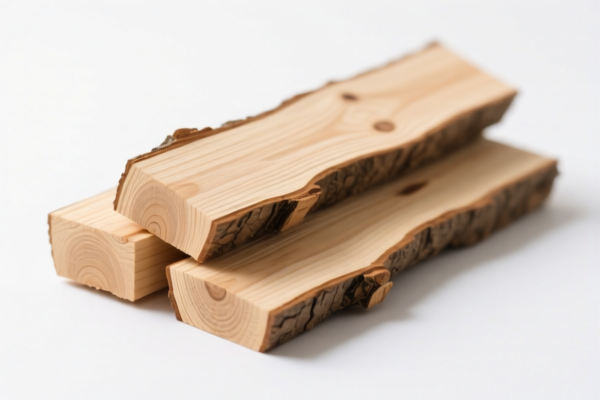
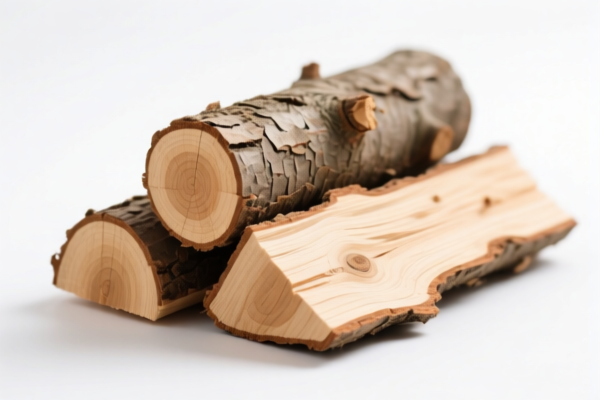
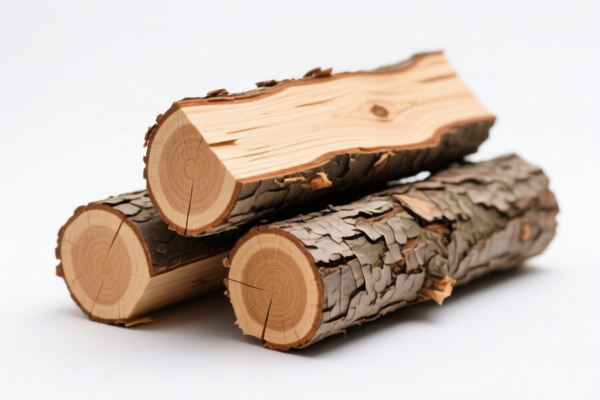
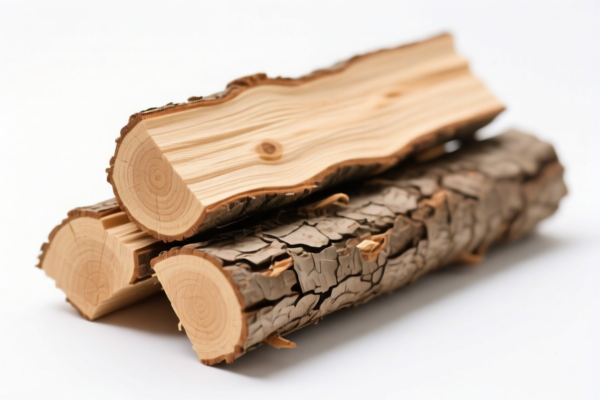
In international trade, "Roughly Processed Wood" refers to timber that has undergone primary mechanical processing (sawing, chipping, slicing, or peeling) but has not undergone significant finishing processes like planing, sanding, or specialized treatment.
This category is strictly divided by Tree Species and Dimensional Specifications. The provided data highlights two specific sub-categories under Coniferous Woods:
1. Pine Species (Pinus spp.): Specifically targeting Eastern White Pine and Red Pine.
2. Other Coniferous (Douglas-fir): Specifically targeting Pseudotsuga menziesii.
⚠️ Key Distinction Point:
- "Rough" (未刨光/未砂光): The surface is uneven, with saw marks. It is not suitable for direct fine furniture manufacturing without further processing.
- Thickness: Must exceed 6 mm.
- Treatment Status: Must be Not Treated (untreated, unpainted, unimpregnated).
📦 II. HS Code Classification Details (2026 Latest Tariff Authority Comparison)
Based on the provided data, the classification is strictly limited to these two specific HS Codes. Misclassification here can lead to significant duty discrepancies or customs holds.
| HS Code | Product Description | Applicable Scenario | Key Identification Features |
|---|---|---|---|
4407.11.00.43 |
Coniferous: Of Pine Eastern White Pine (Pinus strobus) and Red Pine (Pinus resinosa): Rough, Not Treated |
General construction lumber, rough framing, pallets made from these specific pine species | ✅ Species: Pinus strobus or Pinus resinosa ✅ Condition: Rough, Untreated ✅ Thickness: > 6mm |
4407.19.00.55 |
Coniferous: Other Douglas-fir (Pseudotsuga menziesii): Rough Having a minimum dimension 5.1 cm or more but less than 12.7 cm |
Framing lumber, structural timber made from Douglas-fir within specific dimensional limits | ✅ Species: Pseudotsuga menziesii ✅ Condition: Rough ✅ Dimension: Min dim 5.1cm ~ <12.7cm |
🔍 Critical Note:
- Species Identification is Mandatory: You must provide botanical names. "Pine" is too vague; you must specify Pinus strobus or Pinus resinosa for the first code.
- Dimensional Limits: For Douglas-fir (4407.19.00.55), the minimum dimension is a critical filter. If the dimension is < 5.1 cm or ≥ 12.7 cm, it may fall under a different subheading (not provided in this specific dataset).
- "Rough" Definition: If the wood is planed (smooth) or sanded, it cannot use these codes. It would likely fall under different HTSUS codes for planed wood.
💰 III. 2026 Latest Tariff Rate Breakdown (Including Additional Duties)
✅ Applicable Country: United States (US)
✅ Origin: China (CN) (Assumed based on the 25% additional tax pattern typical for Section 301)
✅ Effective Time: Current Section 301 Tariffs (25% Additional)
🎯 1. 4407.11.00.43 —— Rough Pine Wood (Eastern/Red Pine)
| Item | Content |
|---|---|
| Base Tariff Rate | 0.0% (Ad Valorem) |
| Section 301 Additional Tariff | +25.0% |
| Total Tax Rate | 25.0% |
| Tax Calculation | CIF Value × 25% |
| Legal Basis | HTSUS 4407.11.00.43 → Subject to USITC Footnote 9903.88.01 (Section 301) |
📌 Explanation:
- The Base Rate for this specific pine variety is duty-free (0%).
- However, due to ongoing trade tensions, a 25% additional tariff is applied under Section 301 of the Trade Act of 1974.
- Total Impact: For every $10,000 of CIF value, you pay $2,500 in duties.
🎯 2. 4407.19.00.55 —— Rough Douglas-fir (Specific Dimensions)
| Item | Content |
|---|---|
| Base Tariff Rate | 0.0% (Ad Valorem) |
| Section 301 Additional Tariff | +25.0% |
| Total Tax Rate | 25.0% |
| Tax Calculation | CIF Value × 25% |
| Legal Basis | HTSUS 4407.19.00.55 → Subject to USITC Footnote 9903.88.01 (Section 301) |
📌 Note:
- Despite being "Other Coniferous," this specific subheading for Douglas-fir also carries a 0% base rate but is hit with the same 25% additional tariff.
- This applies only to Douglas-fir with a minimum dimension between 5.1 cm and 12.7 cm.
🛠️ IV. Customs Clearance Practical Advice (Battle-Tested Pitfall Guide)
✅ 1. Required Documentation Checklist (缺一不可)
| Document | Mandatory? | Explanation |
|---|---|---|
| ✅ Commercial Invoice | ✔️ | Must explicitly state: "Rough Sawn Wood", NOT "Lumber" or "Finished Timber". |
| ✅ Botanical Name | ✔️ | Must list scientific names: Pinus strobus, Pinus resinosa, or Pseudotsuga menziesii. |
| ✅ Moisture Content Certificate | ✔️ | Usually required to ensure compliance with ISPM 15 (if non-wood packing) or general wood import standards. |
| ✅ Phytosanitary Certificate | ✔️ | CRITICAL. Wood products are heavily regulated to prevent pest introduction (e.g., Emerald Ash Borer, Pine Beetle). Issued by the country of origin's agricultural authority. |
| ✅ Bill of Lading | ✔️ | Must match the description "Rough Wood" and indicate "Not Treated". |
| ✅ Packing List | ✔️ | Detailed dimensions and quantities to verify the "5.1cm to 12.7cm" rule for Douglas-fir. |
✅ 2. Declaration Tips (Key Mantra)
🔥 “Specify Species, Declare Rough, Prove No Treatment!”
| Scenario | Correct Declaration | Incorrect Action |
|---|---|---|
| Pine Wood | "Rough Sawn Eastern White Pine (Pinus strobus), Untreated" | "Pine Lumber" → Customs may reject or misclassify. |
| Douglas-fir | "Rough Sawn Douglas-fir (Pseudotsuga menziesii), Min Dim 5.5cm" | "Wood Planks" → Ambiguous description leads to examination. |
| Treatment Status | Explicitly state "NOT TREATED" or "UNIMPREGNATED". | Omitting this → Could be misclassified as treated wood (higher duty/different code). |
| Planing/Sanding | Must be visibly unplaned. | If planed, using 4407.xx.xx.43 → Misclassification Risk. |
✅ 3. Special Handling for Wood Imports
| Situation | Handling Advice |
|---|---|
| Pest Control Risk | Ensure the wood is heat-treated or fumigated according to ISPM 15 standards if required by destination port. Provide the IPPC Mark if applicable. |
| Dimensional Accuracy | For 4407.19.00.55, the "minimum dimension" (width or thickness) must be strictly within 5.1cm–12.7cm. If a batch has mixed sizes, consult a broker to split the shipment or use the most appropriate general code. |
| Dryness/Moisture | High moisture content can lead to mold during transit, causing rejection. Ensure proper ventilation in the container. |
🌍 V. Global Market Comparison (2026 Latest)
| Country/Region | Recommended HS Code (Approx.) | Tariff Rate (China Origin) | Certification Requirements | Notes |
|---|---|---|---|---|
| 🇺🇸 United States | 4407.11.00.43 / 4407.19.00.55 |
25.0% (Total) | Phytosanitary Cert, ISPM 15 Mark | High Duty. Strict on pest control. |
| 🇨🇳 China | 4407.11.00 / 4407.19.00 |
0% - 5% (Varies by specific code) | N/A (If importing into China) | N/A for US Export. |
| 🇪🇺 European Union | 4407.10.00 / 4407.91.00 |
0% (Most Favored Nation) | FSC/PEFC Chain of Custody (often required by buyers) | No Section 301 tariff. Lower cost. |
| 🇬🇧 United Kingdom | 4407.10.00 / 4407.91.00 |
0% | UKCA/CE (if processed further) | Post-Brexit rules apply. |
| 🇨🇦 Canada | 4407.11.00 / 4407.19.00 |
0% (CUSMA) | CFIA Phytosanitary Certificate | Duty-free under USMCA/CUSMA. |
📌 Conclusion:
- The 25% Additional Tariff is unique to the United States under Section 301.
- If cost is a primary driver, consider sourcing from Canada or Europe where tariffs are 0%, but factor in logistics costs.
- Phytosanitary Compliance is as important as the tariff rate; failure here results in rejection/destruction, not just extra cost.
📌 VI. Common Errors & Pitfalls (Lessons from Blood and Tears)
❌ Error 1: Calling the product "Finished Lumber" when it is "Rough Sawn"
👉 Consequence: Customs may classify it under a higher duty code or reject it for inaccurate description.
👉 Fix: Always use the term "Rough Sawn" or "Rough Timber".
❌ Error 2: Missing the Botanical Name
👉 Consequence: Customs cannot determine if it's Pine (4407.11) or Other (4407.19). Leads to delays, exams, and potential penalty.
👉 Fix: List Pinus strobus or Pseudotsuga menziesii on the Invoice.
❌ Error 3: Ignoring the Dimensional Limits for Douglas-fir
👉 Consequence: If dimensions are outside 5.1cm–12.7cm, 4407.19.00.55 is invalid.
👉 Fix: Verify dimensions before shipment. If out of range, check other 4407.19.xx.xx subheadings.
❌ Error 4: No Phytosanitary Certificate
👉 Consequence: Container Rejected at US Port. Goods may be fumigated at your cost or returned.
👉 Fix: Obtain certificate from origin country’s agricultural authority BEFORE shipment.
🎯 VII. Conclusion: Professional Declaration Saves Money!
🎯 Remember the Mantra:
🔹 "Rough is Key, Species are King, Treatments Zero!"
🔹 "25% Tax is Inevitable for US, but 0% Base is Sweet!"
📌 Pro Tip:
If you are exporting to the US, ensure your supplier provides a Phytosanitary Certificate explicitly stating the wood is free from live insects and soil.
If you are exporting to Canada, leverage CUSMA (USMCA) for 0% Duty on many wood products, provided Rules of Origin are met.
📣 Immediate Action:
📞 Contact Your Customs Broker: Provide the Botanical Names and Dimensions.
📄 Prepare Phytosanitary Certs: Order these before loading the container.
📊 Calculate Landed Cost: Add 25% to your CIF value for US imports.
✨ Professional Clearance Starts with Precise Classification!
💼 Every percent of duty saved is profit earned!
用户评价
关于 HS 编码归类
协调制度(HS)是由世界海关组织(WCO)制定的国际贸易商品分类标准。全球 200 多个国家采用 HS 系统作为海关关税、贸易统计和进出口监管的基础。
每个 HS 编码遵循以下层级结构:
- 章(2 位)——商品大类(例如:第 84 章:机器和机械设备)
- 品目(4 位)——章内的更具体分类
- 子目(6 位)——国际通用细分,所有 WCO 成员国统一使用
- 本国细分(8-10 位)——各国自行扩展的细分编码,如美国 HTSUS 10 位编码
正确的 HS 编码归类对于顺利通关、准确缴纳关税和遵守贸易法规至关重要。错误归类可能导致海关延误、多缴关税或罚款。
从CN进口到US时,适用的关税税率可能包括:
- 最惠国(MFN)税率——适用于 WTO 成员国的标准关税税率
- 普通税率——适用于无贸易协定国家
- 贸易救济关税——附加关税,如 301 条款(反倾销)、232 条款(国家安全)或反补贴税
本页内容仅供参考。如需正式归类,请咨询当地海关或持牌报关代理。