Roughly Squared Oak Wood Construction Grade
CN → US| HS编码 | 关税税率 | 原产国 | 目的国 | 文档 |
|---|---|---|---|---|
| 4407910022 | 35.0% | CN | US | 官方文档 |
| 4407910063 | 35.0% | CN | US | 官方文档 |
商品图片

AI分析
🪵 Oak Wood Construction Grade (Roughly Squared)
🌐 HS Code Classification & Customs Clearance Guide | 2026 Tariff Analysis | Professional Compliance Strategy
📌 Part I: Product Definition & Classification Logic
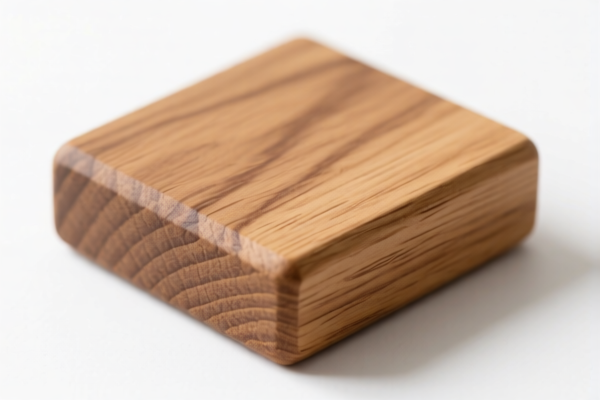
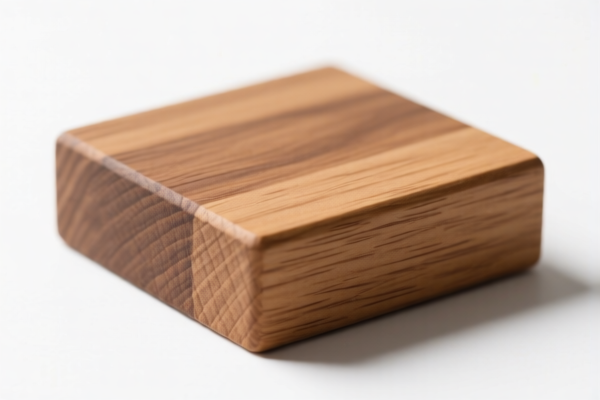
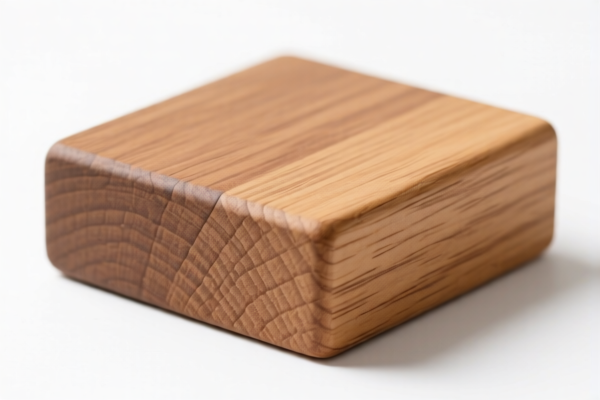
"Roughly squared oak wood" refers to timber that has been sawn or chipped lengthwise (either solid sawn or chipped/split) and roughly squared, with a thickness exceeding 6 mm. It is made of oak (Quercus spp.) and is intended for construction or further processing. In international trade, oak wood is primarily categorized by its color type due to significant differences in value and usage:
- Red Oak (Quercus rubra, etc.): Lighter in color, porous structure, widely used for flooring, furniture, and construction.
- White Oak (Quercus alba, etc.): Darker, tighter grain, water-resistant, often used for barrels, marine applications, and high-end construction.
⚠️ Key Classification Distinction:
- If the wood is Red Oak, it falls under 4407.91.00.22.
- If the wood is White Oak or any other type of Oak not specified as "Red Oak," it falls under 4407.91.00.63.
- "Roughly squared" means it has been roughly shaped into a square or rectangular cross-section but is not yet planed, sanded, or finished to precise tolerances. This process (sawing/chipping) keeps it in Chapter 44 (Wood), not Chapter 46 (Charcoal) or Chapter 39 (Plastics).
📦 Part II: HS Code Classification Details (2026 Latest Tariff Schedule)
| HS Code | Product Description | Applicable Scenario | Wood Type |
|---|---|---|---|
| 4407.91.00.22 | Wood sawn/chipped lengthwise, roughly squared, of thickness > 6mm: Other: Of Red Oak (Quercus spp.) | Red oak construction grade, beams, planks for flooring/furniture | 🔴 Red Oak |
| 4407.91.00.63 | Wood sawn/chipped lengthwise, roughly squared, of thickness > 6mm: Other: Of Oak (Quercus spp.) - Other | White oak, European oak, or other non-red oak construction timber | ⚪ White/Other Oak |
🔍 Critical Reminder:
- The description "roughly squared" indicates it has undergone sawing or chipping, which aligns with HS heading 4407 ("Wood sawn or chipped lengthwise...").
- The term "construction grade" implies structural use but does not change the HS classification unless it is treated or painted (which would move it to 4414/4421).
- Do not confuse with "veneer sheets" (4408) or "prefabricated buildings" (4421). This is raw lumber.
💰 Part III: 2026 Tariff Rate Breakdown (Including Surtaxes & Policy Surcharges)
✅ Applicable Country: United States (US)
✅ Origin: China (CN)
✅ Effective Date: November 10, 2025 onwards (including subsequent imports)
🎯 1. 4407.91.00.22 — Red Oak Lumber (Roughly Squared)
| Item | Content |
|---|---|
| Base Tariff Rate | 0% (ad valorem) |
| USITC Surcharge | +25% (under USITC Footnote 9903.88.01) |
| IEEPA Surcharge | +10% (for China/HK products, effective Nov 10, 2025) |
| Total Tariff Rate | 35% |
| Tax Calculation | CIF Value × 35% |
| De Minimis Exemption | ❌ Not Eligible (deny_de_minimis) |
| Legal Basis Path | IEEPA:9903.01.25 → IEEPA:9903.01.24 → USITC:4407.91.00.22 → FOOTNOTE:9903.88.01 |
📌 Explanation:
- The 25% USITC surcharge applies to certain wood products under Section 301 tariffs.
- The 10% IEEPA surcharge is a new addition effective Nov 2025 for Chinese-origin goods.
- Total 35% is a high tariff rate. Proper classification is crucial because misclassification as "other wood" may still incur similar surcharges, but wrong species declaration can lead to penalties.
🎯 2. 4407.91.00.63 — Other Oak Lumber (e.g., White Oak) (Roughly Squared)
| Item | Content |
|---|---|
| Base Tariff Rate | 0% |
| USITC Surcharge | +25% |
| IEEPA Surcharge | +10% |
| Total Tariff Rate | 35% |
| Tax Calculation | CIF × 35% |
| De Minimis Exemption | ❌ Not Eligible |
| Legal Basis Path | IEEPA:9901.25 → IEEPA:9903.01.24 → USITC:4407.91.00.63 → FOOTNOTE:9903.88.01 |
📌 Note:
- Both Red and White/Other oak lumber fall under the same 35% total tariff rate when imported from China to the US.
- The distinction between22and63is primarily for statistical and regulatory tracking, not for rate difference in this case.
- Do not attempt to classify Red Oak as "Other Oak" to avoid scrutiny; accurate botanical identification is required.
🛠️ Part IV: Customs Clearance Practical Advice (Avoid Pitfalls)
✅ 1. Required Documentation Checklist (Mandatory)
| Document | Must Provide | Explanation |
|---|---|---|
| ✅ Product Specification Sheet | ✔️ | Include species (Quercus spp.), dimensions, moisture content, and treatment status (untreated). |
| ✅ Botanical Identification | ✔️ | Confirm if it is Red Oak or White/Other Oak. May require a botanist’s certificate if questioned. |
| ✅ Commercial Invoice | ✔️ | Must clearly state "Roughly Squared Oak Wood" and HS Code. |
| ✅ Phytosanitary Certificate | ✔️ | Mandatory for all wood products to prove no pests/diseases. |
| ✅ Fumigation Certificate | ✔️ | Required if the wood is not heat-treated (HT mark). |
| ✅ Packing List | ✔️ | Detail package dimensions, weight, and total volume (CBM). |
| ✅ Bill of Lading/Air Waybill | ✔️ | Must match invoice description. |
✅ 2. Declaration Tips (Key Mantras)
🔥 "Species Clear, Treatment Marked, No Hidden Ply, Rate Fixed at 35%!"
| Scenario | Correct Declaration Method | Incorrect Practice |
|---|---|---|
| Red Oak Lumber | 4407.91.00.22 + "Red Oak" |
Mislabel as "Hardwood" → 15% penalty risk |
| White Oak Lumber | 4407.91.00.63 + "White Oak" |
Mislabel as "Pine" → Rejection & fine |
| Untreated Wood | State "Untreated, No HT Mark" | Omit treatment status → Phytosanitary hold |
| Treated Wood | State "Heat Treated (HT)" | False claim → Criminal penalties |
✅ 3. Special Handling Notes
| Situation | Handling Advice |
|---|---|
| Mixed Species | If a shipment contains both Red and White Oak, declare separately or use the higher-value classification. Do not mix in one line item. |
| Moisture Content | Ensure moisture content is below 20% for construction grade. High moisture can lead to mold penalties and rejection. |
| Dimensional Accuracy | "Roughly squared" allows for some variance, but if planed or sanded, it may fall under different subheadings. Keep it raw. |
| USDA Compliance | Ensure the wood complies with US Forest Service Lacey Act. Provide origin documentation to prove legality of harvest. |
🌍 Part V: Global Market Customs Comparison (2026 Latest)
| Country/Region | Recommended HS Code | Tariff | Certification Requirements | Remarks |
|---|---|---|---|---|
| 🇺🇸 USA | 4407.91.00.22 / .63 |
35% (China Origin) | Phytosanitary + Lacey Act | High tariff, strict botanical checks |
| 🇨🇳 China | 4407.91.00 |
5-10% | Fumigation Certificate | Lower tariff, common import source |
| 🇪🇺 EU | 4407.91 |
0-6.5% (depending on trade deal) | Fumigation + Timber Regulation | Strict due diligence required |
| 🇦🇺 Australia | 4407.91 |
5% | Biosecurity Permit | Strict biosecurity laws |
| 🇯🇵 Japan | 4407.91 |
2.4% | Phytosanitary | Moderate tariff, stable demand |
📌 Conclusion:
- USA imposes the highest cost due to 35% total tariff.
- EU and Japan are more favorable for tariffs but have strict environmental regulations (EUTR, FSC/PEFC certification).
- China is a major producer, so imports are common, but exporters must ensure quality control.
📌 Part VI: Common Mistakes & Pitfall Guide (Lessons from Reality)
❌ Mistake 1: Labeling "Oak" without specifying "Red" or "White"
👉 Consequence: Customs may reject or assign a default rate → Delay + Fine!
❌ Mistake 2: Failing to provide a Phytosanitary Certificate
👉 Consequence: Shipment detained at port → Demurrage Costs + Return
❌ Mistake 3: Claiming "Fumigated" when it is "Heat Treated"
👉 Consequence: Violation of ISPM 15 standards → Rejection
❌ Mistake 4: Under-declaring value or quantity
👉 Consequence: Audit, penalty, and potential blacklisting → Legal Risk
✅ Correct Practice:
"Roughly Squared Red Oak Lumber, 2"x6"x10', Untreated, Phytosanitary Certificate Attached, Lacey Act Compliant, HS: 4407.91.00.22"
🎯 Part VII: Conclusion: Precision in Classification, Savings in Clearance!
🎯 Remember the Mantra:
🔹 "Species Matters, Treatment is Key, 35% Rate is Fixed, Docs Must Match!"
🔹 "HS Code Defines Cost, 35% is the Floor, Misdeclaration Costs Double!"
📌 Pro Tip:
If your oak wood is sourced from Vietnam, Malaysia, or Canada, the tariff may be significantly lower (0-5%) due to trade agreements or origin rules.
Recommend Advance Ruling for large shipments to avoid unexpected duties.
📣 Immediate Action:
📞 Engage a Licensed Customs Broker + Provide Botanical Certificate + Apply for Pre-Ruling
🚀 Ensure Smooth Clearance, Minimize Costs, Maximize Profit!
✨ Professional Clearance Starts with Accurate Classification!
💼 Every Dollar Saved is Pure Profit!
用户评价
关于 HS 编码归类
协调制度(HS)是由世界海关组织(WCO)制定的国际贸易商品分类标准。全球 200 多个国家采用 HS 系统作为海关关税、贸易统计和进出口监管的基础。
每个 HS 编码遵循以下层级结构:
- 章(2 位)——商品大类(例如:第 84 章:机器和机械设备)
- 品目(4 位)——章内的更具体分类
- 子目(6 位)——国际通用细分,所有 WCO 成员国统一使用
- 本国细分(8-10 位)——各国自行扩展的细分编码,如美国 HTSUS 10 位编码
正确的 HS 编码归类对于顺利通关、准确缴纳关税和遵守贸易法规至关重要。错误归类可能导致海关延误、多缴关税或罚款。
从CN进口到US时,适用的关税税率可能包括:
- 最惠国(MFN)税率——适用于 WTO 成员国的标准关税税率
- 普通税率——适用于无贸易协定国家
- 贸易救济关税——附加关税,如 301 条款(反倾销)、232 条款(国家安全)或反补贴税
本页内容仅供参考。如需正式归类,请咨询当地海关或持牌报关代理。