Rubber Accelerator Mixture
CN → US| HS编码 | 关税税率 | 原产国 | 目的国 | 文档 |
|---|---|---|---|---|
| 3824992900 | 41.5% | CN | US | 官方文档 |
| 3824999330 | 40.0% | CN | US | 官方文档 |
| 4005990000 | 35.0% | CN | US | 官方文档 |
| 3824992900 | 41.5% | CN | US | 官方文档 |
| 3824999330 | 40.0% | CN | US | 官方文档 |
商品图片
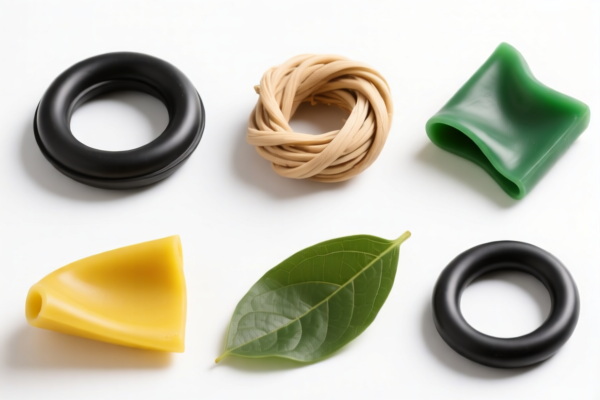
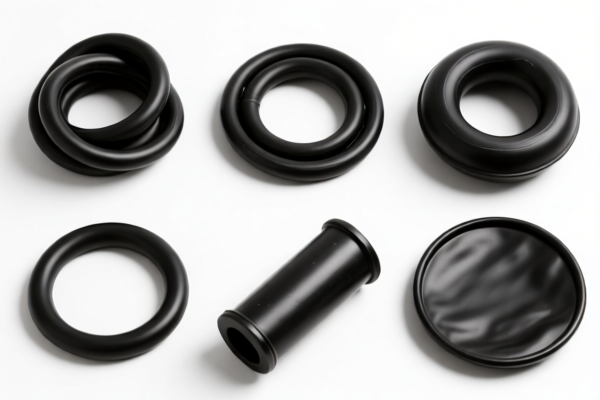
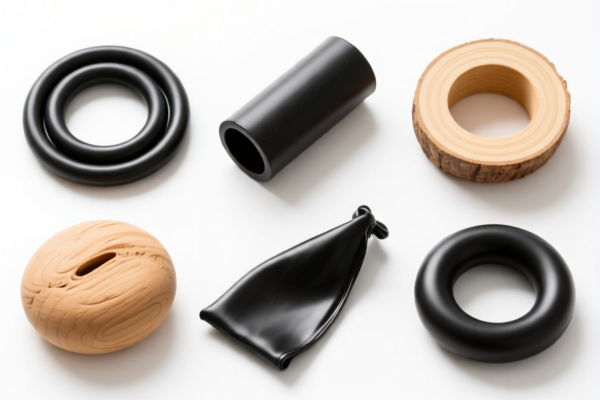
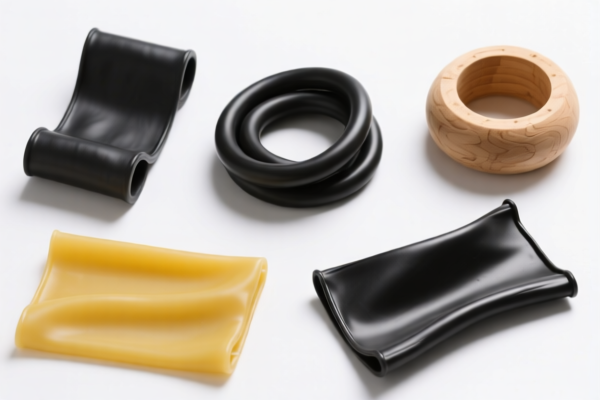
AI分析
⚗️ Rubber Accelerator Mixture (橡胶促进剂混合物/分散液)
🌐 HS Code Reference & Customs Clearance Guide | 2026 Latest Tariff Analysis | Professional Level Clearance Strategy
📌 I. Product Definition & Classification: What Exactly is "Rubber Accelerator Mixture"?
Rubber Accelerators are essential chemical additives in the rubber industry, significantly reducing vulcanization time and temperature while improving the performance of the final rubber product. In international trade, "Rubber Accelerator Mixture" is not a single monolithic category. Its classification depends heavily on its physical state (liquid vs. dry powder) and its chemical composition (whether it’s a simple blend or a specific organic compound mixture).
Based on the provided data, there are three distinct HS Code pathways, each with significantly different tax implications. Misclassification can lead to severe overpayment of duties or customs delays.
⚠️ Key Distinction Point:
- If the product is a dispersion/mixture classified under general chemical preparations → HS Code 3824.99.29.00
- If the product is a liquid dispersion specifically categorized under organic chemical mixtures → HS Code 3824.99.93.30
- If the product is treated as a rubber processing auxiliary/additive → HS Code 4005.99.00.00
📦 II. HS Code Classification Details (2026 Latest Tariff Authority Comparison)
| HS Code | Product Description | Applicable Scenario | Tax Rate (Total) | Key Tax Components |
|---|---|---|---|---|
3824.99.29.00 |
Rubber Accelerator Dispersion or Mixture; General chemical product/preparation, "catch-all" category for other chemical products. | Generic mixtures, dry blends, or dispersions not fitting specific organic categories. | 41.5% | Base: 6.5% + Section 301: 25% + 122 Clause: 10% |
3824.99.93.30 |
Rubber Accelerator Dispersion; Liquid mixture of organic chemical components, classified under non-cyclic monohydroxy unsubstituted alcohol mixtures. | Liquid forms specifically identified as organic chemical mixtures. | 40.0% | Base: 5.0% + Section 301: 25% + 122 Clause: 10% |
4005.99.00.00 |
Rubber Accelerator Dispersant; Chemical auxiliary used in the processing of unvulcanized compounded rubber, classified as other chemical components/auxiliaries. | Specific rubber processing aids where the product is viewed as an additive for rubber manufacturing rather than a standalone chemical. | 35.0% | Base: 0.0% + Section 301: 25% + 122 Clause: 10% |
🔍 Critical Reminder:
- The Total Tax Rate includes the Base Tariff, Section 301 Additional Tariff (25%), and Section 122 Tariff (10%). - The biggest difference lies in the Base Tariff:
-4005.99.00.00has a 0% Base (Lowest Total). -3824.99.93.30has a 5% Base. -3824.99.29.00has a 6.5% Base (Highest Total). - Do not misclassify: Declaring a liquid organic mixture as a "general chemical" (3824.99.29.00) when it fits the specific organic category (3824.99.93.30) will result in paying an extra 1.5% in base tariffs unnecessarily. Declaring a chemical mixture as a "rubber auxiliary" (4005.99.00.00) when it is a standalone chemical product may trigger customs audits for incorrect classification.
💰 III. 2026 Latest Tariff Rate Breakdown (Including Surcharges & Policy Add-ons)
✅ Applicable Country: USA (US)
✅ Country of Origin: China (CN)
✅ Effective Date: From Nov 10, 2025 (and subsequent imports)
🎯 1. 3824.99.29.00 —— General Chemical Product (Highest Base)
| Item | Content |
|---|---|
| Base Tariff | 6.5% (ad valorem) |
| Section 301 Surcharge | +25.0% (USITC Footnote 9903.88.01) |
| Section 122 Surcharge | +10.0% (Targeting specific Chinese imports) |
| Total Tariff | 41.5% |
| Tax Calculation | CIF Value × 41.5% |
| De Minimis Eligibility | ❌ No (deny_de_minimis) |
| Legal Basis Path | USITC:3824.99.29.00 → FOOTNOTE:9903.88.01 (Sec 301) → 122 Clause |
📌 Explanation:
- This is the "catch-all" category. It assumes no specific organic chemical characteristics. - The base tariff is the highest among the three options. - Total Cost Impact: For every $10,000 CIF value, you pay $4,150 in duties.
🎯 2. 3824.99.93.30 —— Organic Chemical Mixture (Medium Base)
| Item | Content |
|---|---|
| Base Tariff | 5.0% (ad valorem) |
| Section 301 Surcharge | +25.0% |
| Section 122 Surcharge | +10.0% |
| Total Tariff | 40.0% |
| Tax Calculation | CIF Value × 40.0% |
| De Minimis Eligibility | ❌ No |
| Legal Basis Path | USITC:3824.99.93.30 → FOOTNOTE:9903.88.01 (Sec 301) → 122 Clause |
📌 Note:
- Applicable if the product is a liquid dispersion and can be technically classified under non-cyclic monohydroxy unsubstituted alcohol mixtures. - Savings: 1.5% lower base tariff compared to3824.99.29.00. - Total Cost Impact: For every $10,000 CIF value, you pay $4,000 in duties.
🎯 3. 4005.99.00.00 —— Rubber Processing Auxiliary (Lowest Base)
| Item | Content |
|---|---|
| Base Tariff | 0.0% (ad valorem) |
| Section 301 Surcharge | +25.0% |
| Section 122 Surcharge | +10.0% |
| Total Tariff | 35.0% |
| Tax Calculation | CIF Value × 35.0% |
| De Minimis Eligibility | ❌ No |
| Legal Basis Path | USITC:4005.99.00.00 → FOOTNOTE:9903.88.01 (Sec 301) → 122 Clause |
📌 Critical Warning:
- This is the most favorable tariff rate (35%). - BUT: It only applies if the product is strictly defined as a "chemical auxiliary/additive used in the processing of unvulcanized compounded rubber". - If Customs determines it is a standalone chemical mixture (not an additive in situ), they will reclassify it to3824category, leading to back taxes + penalties. - Total Cost Impact: For every $10,000 CIF value, you pay $3,500 in duties. Savings of $650 vs. Option 1.
🛠️ IV. Customs Clearance Practical Advice (Combat Pitfall Guide)
✅ 1. Documentation Checklist (Missing any is fatal)
| Document | Mandatory? | Purpose |
|---|---|---|
| ✅ Product Specification Sheet | ✔️ | Must detail chemical composition, physical state (liquid/powder), and intended use. |
| ✅ MSDS (Material Safety Data Sheet) | ✔️ | Proves chemical nature and hazard classification. |
| ✅ Formula/Composition Analysis | ✔️ | Crucial for distinguishing between 3824 (chemical) and 4005 (rubber aid). |
| ✅ Product Photos (Label/Packaging) | ✔️ | Show exact wording. Does it say "Accelerator" or "Processing Aid"? |
| ✅ Commercial Invoice | ✔️ | Must match the HS Code description precisely. |
| ✅ Bill of Lading | ✔️ | Check weight and volume. |
✅ 2. Declaration Tips (Key Mantra)
🔥 "Know Your Form: Liquid Organic vs. General Chemical vs. Rubber Aid!"
| Scenario | Correct HS Code | Common Mistake | Consequence |
|---|---|---|---|
| Liquid dispersion, organic composition | 3824.99.93.30 |
Declared as 3824.99.29.00 |
Overpay 1.5% base tax. |
| Used as additive in rubber mixing | 4005.99.00.00 |
Declared as 3824.99.29.00 |
Overpay 6.5% base tax. Risk of audit if no proof of "auxiliary" status. |
| Generic mixture, no specific organic form | 3824.99.29.00 |
Declared as 4005.99.00.00 |
High Risk: Customs may reject as misclassification, leading to penalties. |
✅ 3. Special Handling
| Situation | Advice |
|---|---|
| OEM Custom Blend | Provide contract + formula. If it's a custom blend for a specific rubber compound, argue for 4005.99.00.00 if possible, but be prepared with technical data. |
| Dry Powder vs. Liquid | Dry powders are less likely to fit 3824.99.93.30 (which specifies "liquid mixture"). Dry powders often fall into 3824.99.29.00 or other chemical chapters. |
| Intended Use | If the product is sold as a "final chemical product," use 3824. If sold as a "processing aid" to be mixed by the buyer, use 4005. |
🌍 V. Global Market Comparison (2026 Latest)
| Country/Region | Recommended HS Code | Tariff Rate | Certification | Notes |
|---|---|---|---|---|
| 🇺🇸 USA | 4005.99.00.00 (if applicable) |
35.0% | None specific | Best rate. 3824 rates are 40-41.5%. |
| 🇨🇳 China | 3824.99.29.00 |
~5-10% (Import Duty) | None | Import duties are much lower than US. |
| 🇪🇺 EU | 3824.99.98 |
~4.7% | REACH Registration | EU has different subheadings. REACH compliance is critical. |
| 🇬🇧 UK | 3824.99.98 |
~4.7% | UK REACH | Post-Brexit rules apply. |
📌 Conclusion:
- The US market is the most expensive due to Section 301 and 122 tariffs. - Strategic Priority: If your product qualifies, aggressively pursue classification under4005.99.00.00to save 6.5% base tariffs. - If not, ensure3824.99.93.30is used for liquids to save 1.5%. - Never default to3824.99.29.00without justification, as it is the most expensive.
📌 VI. Common Errors & Pitfalls (Blood & Tears Lessons)
❌ Mistake 1: Using "Rubber Accelerator" generic name without specifying physical state.
👉 Result: Customs may pick the highest tariff (3824.99.29.00) by default.
❌ Mistake 2: Claiming 4005.99.00.00 for a standalone chemical product.
👉 Result: Customs audit, seizure, or heavy penalties for fraudulent declaration.
❌ Mistake 3: Ignoring Section 122 Tariff (10%).
👉 Result: Underestimating total landed cost. The 10% is on top of the 35% base+301 rate.
✅ Correct Practice:
"Rubber Accelerator Dispersion (Liquid), Organic Chemical Mixture, For Use in Vulcanization Processing, Model XYZ, MSDS Attached"
🎯 VII. Conclusion: Precision Classification, Cost Savings!
🎯 Remember the Mantra:
🔹 "Liquid Organic? Use .93.30 (40%). Rubber Aid? Use 4005.99 (35%). Generic Mix? Use .29.00 (41.5%)."
🔹 "Base Tariff is King! 0% vs 6.5% makes a huge difference on large volumes!"
📌 Pro Tip:
If your product is not produced in China (e.g., from USA, Germany, Japan), the Section 301 (25%) and Section 122 (10%) surcharges do NOT apply.
- US Origin: Tariff might be only 6.5% (Base) or 5% (Base).
- EU Origin: Check FTA benefits.
- Recommendation: Apply for an Advance Ruling (Pre-classification) from CBP if you are unsure whether your product fits 4005.99.00.00. This provides legal certainty.
📣 Immediate Action:
📞 Contact a licensed customs broker + Provide SDS + Submit Advance Ruling Request
🚀 Ensure accurate classification to save up to 6.5% in duties on every shipment!
✨ Professional clearance starts with precise classification!
💼 Every dollar of tariff saved is pure profit!
用户评价
关于 HS 编码归类
协调制度(HS)是由世界海关组织(WCO)制定的国际贸易商品分类标准。全球 200 多个国家采用 HS 系统作为海关关税、贸易统计和进出口监管的基础。
每个 HS 编码遵循以下层级结构:
- 章(2 位)——商品大类(例如:第 84 章:机器和机械设备)
- 品目(4 位)——章内的更具体分类
- 子目(6 位)——国际通用细分,所有 WCO 成员国统一使用
- 本国细分(8-10 位)——各国自行扩展的细分编码,如美国 HTSUS 10 位编码
正确的 HS 编码归类对于顺利通关、准确缴纳关税和遵守贸易法规至关重要。错误归类可能导致海关延误、多缴关税或罚款。
从CN进口到US时,适用的关税税率可能包括:
- 最惠国(MFN)税率——适用于 WTO 成员国的标准关税税率
- 普通税率——适用于无贸易协定国家
- 贸易救济关税——附加关税,如 301 条款(反倾销)、232 条款(国家安全)或反补贴税
本页内容仅供参考。如需正式归类,请咨询当地海关或持牌报关代理。