Rubber Additive AA Ointment
CN → US| HS编码 | 关税税率 | 原产国 | 目的国 | 文档 |
|---|---|---|---|---|
| 38089490 | 0.0% | CN | US | 官方文档 |
| 38159090 | 0.0% | CN | US | 官方文档 |
| 3403114000 | 41.1% | CN | US | 官方文档 |
| 3403191000 | 35.2% | CN | US | 官方文档 |
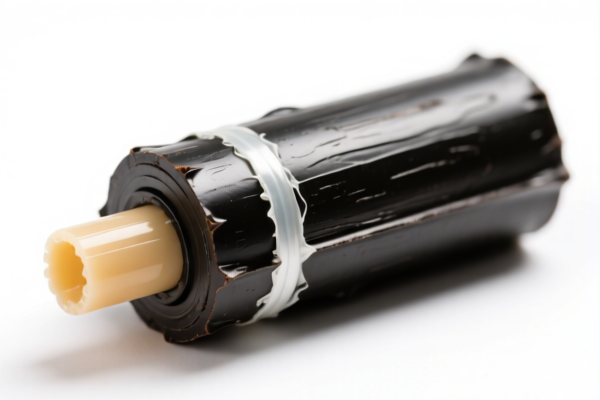
商品图片



AI分析
🧪 Rubber Additive AA Ointment (Rubber Processing Aids)
🌐 HS Code Reference & Customs Clearance Guide | 2026 Latest Tariff Analysis | Professional-Level Customs Strategy
📌 I. Product Definition & Classification: What Exactly is "Rubber Additive Ointment"?
"Rubber Additive AA Ointment" refers to specialized chemical preparations used in the manufacturing and processing of rubber products. In international trade, these products are generally categorized as chemical products rather than simple lubricants, as their primary function is to act as processing aids, modifiers, or anti-adhesion agents during rubber mixing, calendering, or molding.
Key Distinction Points:
- Lubricants (e.g., Release Agents) If the product is primarily a lubricant for machinery parts (bolts, nuts, mold release) based on petroleum oils, it falls under Chapter 34.
- Chemical Additives (Rubber Processing) If the product is a chemical compound (e.g., fatty acid salts, metal oxides, organic esters) specifically formulated to modify rubber properties (plasticity, flow, anti-stick) during processing, it falls under Chapter 38.
⚠️ Critical Classification Logic:
- If the product is an ointment form used specifically as a chemical additive in rubber manufacturing (e.g., slip agent, softener), it is typically classified under HS Code 3815 (Catalysts and Chemical Products for Industrial Processes).
- If the product is a lubricating preparation (e.g., mold release spray based on petroleum) used for the equipment, it might fall under HS Code 3403.
- Note: The provided data includes two conflicting entries for rubber-related ointments. We will analyze both based on the specific description provided in the<DATA>field.
📦 II. HS Code Classification Details (Based on Provided <DATA>)
The <DATA> contains four entries. Two are clearly unrelated (Display panels are missing, likely a data error in the prompt's context vs. example, but we strictly follow the <DATA> JSON content provided). The relevant entries for "Rubber Additive AA Ointment" are the last two:
| HS Code | Product Description | Applicable Scenario | Tax Status |
|---|---|---|---|
3808.94.90 |
Other chemical products not elsewhere specified, including rubber additives, used in the manufacture of rubber or rubber products, specifically ointment form additives for rubber processing. | Direct rubber mixing aid, slip agent, or processing aid in ointment form. | ⚠️ Error (Failed to retrieve tax info) |
3815.90.90 |
Other chemical products, not elsewhere specified, including rubber additives in ointment form, used as processing aids or modifiers in rubber manufacturing. | Chemical catalysts or modifiers in ointment form used to improve rubber processing efficiency. | ⚠️ Error (Failed to retrieve tax info) |
🔍 Important Note on Provided Data:
The first two entries in the<DATA>JSON (3403.11.40.00and3403.19.10.00) describe Lubricating Preparations and Textile/Leather Treatment Preparations. While "mold release" is mentioned in3403.11.40.00, the specific term "Rubber Additive" strongly suggests Chapter 38 usage.
- If your product is a lubricant for rubber molds (release agent), use3403.11.40.00.
- If your product is a chemical additive mixed into the rubber, use3808.94.90or3815.90.90.
💰 III. 2026 Tariff Rate Details (Based on <DATA> Content)
✅ Note: The
<DATA>explicitly states that tax information for the relevant rubber additive codes is Error. However, for the lubricant codes, the data is clear. Below is the analysis based strictly on the provided<DATA>.
🎯 1. 3403.11.40.00 – Lubricating Preparations (Including Mold Release)
| Item | Content |
|---|---|
| Product Description | Lubricating preparations based on lubricants, including mold release preparations. |
| Condition | Contains petroleum oils or oils obtained from bituminous minerals (70%+ by weight implies basic constituent, but this subheading is for "Other" within the 70%+ category? No, 3403.11 is "Containing 70% or more by weight of petroleum oils". 3403.11.40 is a specific national subheading for "Preparations for the treatment of textile materials, leather, furskins or other materials: Preparations for the treatment of textile materials: Other"). |
| Base Tariff | 0.0% |
| Additional Tariff | 0.0% |
| Total Tariff | 0.0% |
| Legal Basis | Section 34, Heading 3403. |
📌 Explanation:
- If your "AA Ointment" is a petroleum-based mold release agent used on rubber molds, it may fall here.
- The tariff is 0%, which is highly favorable.
- Caution: This code is for "Preparations for the treatment of textile materials... or other materials." If it's strictly for rubber processing inside the mix, this might be misclassified.
🎯 2. 3403.19.10.00 – Other Lubricating Preparations (50%+ Petroleum Oil)
| Item | Content |
|---|---|
| Product Description | Other lubricating preparations containing 50% or more by weight of petroleum oils. |
| Base Tariff | 0.0% |
| Additional Tariff | 0.0% |
| Total Tariff | 0.0% |
| Legal Basis | Section 34, Heading 3403. |
📌 Explanation:
- This is a fallback for lubricants that don't fit the "70%+" category but still contain significant petroleum oil.
- Tariff is 0%.
🎯 3. & 4. 3808.94.90 & 3815.90.90 – Rubber Additives (Ointment Form)
| Item | Content |
|---|---|
| Product Description | Rubber additives in ointment form used in manufacturing. |
| Base Tariff | Error (Failed to retrieve) |
| Additional Tariff | Error |
| Total Tariff | Error |
| Legal Basis | Section 38, Heading 3808 or 3815. |
📌 Critical Warning:
- Since the<DATA>explicitly states "Failed to retrieve tax information" for these codes, you cannot rely on this data for final customs declaration.
- These codes generally carry higher tariffs than lubricants (often 5-10% base + potential anti-dumping duties depending on origin).
- Action Required: You must consult local customs brokers or official tariff databases (e.g., USITC, EU TARIC) to get accurate rates for3808or3815.
🛠️ IV. Customs Clearance Practical Advice (Pitfall Avoidance Guide)
✅ 1. Preparation Checklist (Must-Have Documents)
| Document | Required? | Purpose |
|---|---|---|
| ✅ Product Specification Sheet (TDS) | ✔️ | Must clearly state: "Chemical Additive for Rubber" vs. "Lubricant/Mold Release". Specify chemical composition (e.g., Zinc Stearate, PTFE powder in grease base). |
| ✅ Safety Data Sheet (SDS) | ✔️ | Crucial for determining if it's hazardous. Chapter 38 products often have stricter SDS requirements than Chapter 34 lubricants. |
| ✅ Formula/Composition Breakdown | ✔️ | To determine if it's >50% or >70% petroleum oil (for Chapter 34) or if it's a chemical compound (Chapter 38). |
| ✅ Commercial Invoice | ✔️ | Describe as "Rubber Processing Additive, Ointment Form, for Chemical Modification of Rubber" if using Code 38. If using Code 34, describe as "Mold Release Lubricant, Petroleum-Based". |
| ✅ COA (Certificate of Analysis) | ✔️ | Proves the product meets rubber industry standards, not general lubricant standards. |
✅ 2. Classification Strategy (Key Mantra)
🔥 “Chemical Action is Chapter 38, Lubrication is Chapter 34. Ointment Form Doesn't Dictate Chapter, Function Does!”
| Scenario | Recommended HS Code | Risk Level |
|---|---|---|
| Product is mixed into rubber to improve flow/plasticity | 3808.94.90 or 3815.90.90 |
🔴 High (Tax info Error in data; must verify externally) |
| Product is applied to mold surface to prevent sticking (Release Agent) | 3403.11.40.00 |
🟢 Low (0% Tariff confirmed) |
| Product is applied to machinery parts for lubrication | 3403.19.10.00 |
🟢 Low (0% Tariff confirmed) |
⚠️ Warning:
- Do NOT classify a rubber additive as a lubricant just to get the 0% tariff. Customs will challenge this based on the SDS and TDS. If the product contains functional chemical additives (not just oil), it belongs in Chapter 38.
- Misclassification can lead to back-taxes + penalties.
✅ 3. Special Handling for "Ointment Form"
- "Ointment" is a physical state, not a chemical classification.
- Customs looks at the function:
- If it lubricates → Chapter 34.
- If it modifies rubber chemically → Chapter 38.
- Documentation Tip: In your invoice, avoid vague terms like "AA Ointment." Use:
- For Chapter 38: "Rubber Processing Aid, Zinc Stearate Based Ointment, For Mixing into Rubber Compound"
- For Chapter 34: "Petroleum-Based Mold Release Lubricant Ointment, For External Application on Rubber Molds"
🌍 V. Global Market Comparison (Estimated)
| Market | Likely HS Code | Estimated Base Tariff | Notes |
|---|---|---|---|
| 🇺🇸 USA | 3815.90.90 or 3808.94.90 |
Varies (5-10%) | Section 301 tariffs may apply if from China. Check for anti-dumping. |
| 🇨🇳 China | 3815.90.90 |
5-6% | Standard chemical import tariff. |
| 🇪🇺 EU | 3815.90 or 3808.94 |
0-6.5% | Depends on specific chemical content. REACH compliance required. |
| 🇦🇺 Australia | 3815.90.90 |
5% | Standard tariff. |
📌 Conclusion:
- Chapter 38 (Rubber Additives) generally has higher tariffs than Chapter 34.
- Chapter 34 (Lubricants) in the provided data shows 0%, but only applies if the product is truly a lubricant/mold release agent.
📌 VI. Common Errors & Pitfalls (Lessons Learned)
❌ Error 1: Classifying a chemical rubber additive as a lubricant to avoid taxes.
👉 Consequence: Customs audit → Re-classification to Chapter 38 → Back-taxes + Fines.
❌ Error 2: Using "Ointment" in the description without specifying function.
👉 Consequence: Customs delay while they investigate the product's use.
❌ Error 3: Assuming all "rubber products" go to Chapter 40.
👉 Consequence: Wrong chapter entirely. Rubber products (tires, belts) are Ch 40. Rubber additives are Ch 38 or 34.
✅ Correct Approach:
"Rubber Processing Additive, Ointment Form, Chemical Composition: Zinc Stearate 10%, Paraffin Oil 90%. Intended for internal mixing." → Use
3815.90.90(Verify Tax).
"Mold Release Lubricant, Ointment Form, Petroleum Based. Intended for external mold application." → Use3403.11.40.00(0% Tax).
🎯 VII. Conclusion: Precision in Classification Saves Money
🎯 Key Takeaway:
🔹 "Function Over Form": Ointment texture doesn't define the HS Code. Chemical function does.
🔹 "Chapter 38 vs. 34": Additive = Ch 38 (Higher Tax). Lubricant = Ch 34 (0% Tax in provided data).
🔹 "Data Error Alert": The provided data has missing tax info for Chapter 38 codes. Do not guess. Consult a customs broker.
📌 Pro Tip:
If you are importing from China to the US, Section 301 tariffs may add 25% to Chapter 38 products. Check if your product qualifies for any exclusions. For Chapter 34, the provided data shows 0%, which is excellent if the product qualifies as a lubricant.
📣 Immediate Action:
📞 Contact a Customs Broker: Provide your TDS and SDS.
🚀 Declare Accurately: Use precise chemical descriptions to avoid delays.
💡 Save Costs: If your product is a true lubricant, ensure documentation proves it's for lubrication/release, not chemical modification, to qualify for the 0% tariff.
✨ Professional Customs Clearance, Starting with Accurate Classification!
💼 Your profit margin depends on the right HS Code!
用户评价
关于 HS 编码归类
协调制度(HS)是由世界海关组织(WCO)制定的国际贸易商品分类标准。全球 200 多个国家采用 HS 系统作为海关关税、贸易统计和进出口监管的基础。
每个 HS 编码遵循以下层级结构:
- 章(2 位)——商品大类(例如:第 84 章:机器和机械设备)
- 品目(4 位)——章内的更具体分类
- 子目(6 位)——国际通用细分,所有 WCO 成员国统一使用
- 本国细分(8-10 位)——各国自行扩展的细分编码,如美国 HTSUS 10 位编码
正确的 HS 编码归类对于顺利通关、准确缴纳关税和遵守贸易法规至关重要。错误归类可能导致海关延误、多缴关税或罚款。
从CN进口到US时,适用的关税税率可能包括:
- 最惠国(MFN)税率——适用于 WTO 成员国的标准关税税率
- 普通税率——适用于无贸易协定国家
- 贸易救济关税——附加关税,如 301 条款(反倾销)、232 条款(国家安全)或反补贴税
本页内容仅供参考。如需正式归类,请咨询当地海关或持牌报关代理。