Rubber Additive TTD Paste
CN → US| HS编码 | 关税税率 | 原产国 | 目的国 | 文档 |
|---|---|---|---|---|
| 4005200000 | 35.0% | CN | US | 官方文档 |
| 4005990000 | 35.0% | CN | US | 官方文档 |
| 3815110000 | 35.0% | CN | US | 官方文档 |
| 3815120000 | 0.0% | CN | US | 官方文档 |
| 381590 | 0.0% | CN | US | 官方文档 |
| 390990 | 0.0% | CN | US | 官方文档 |
商品图片
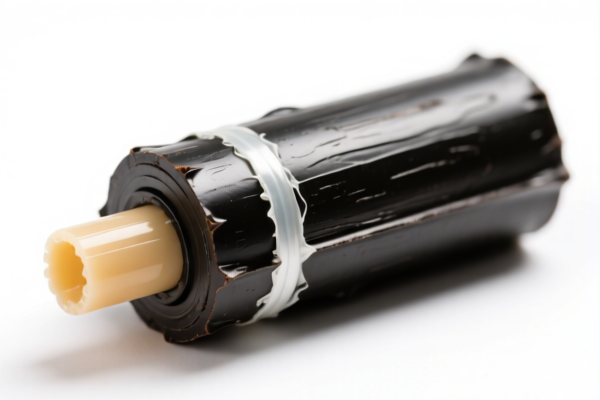
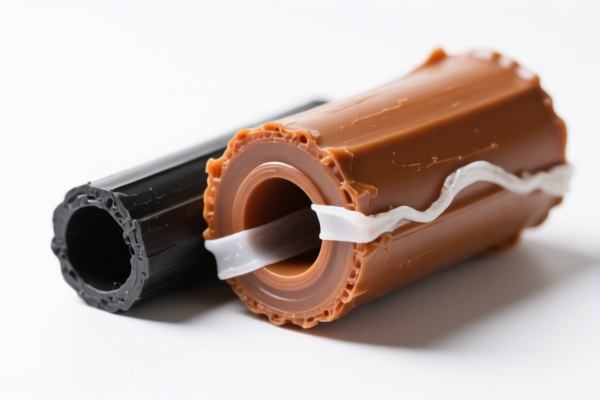
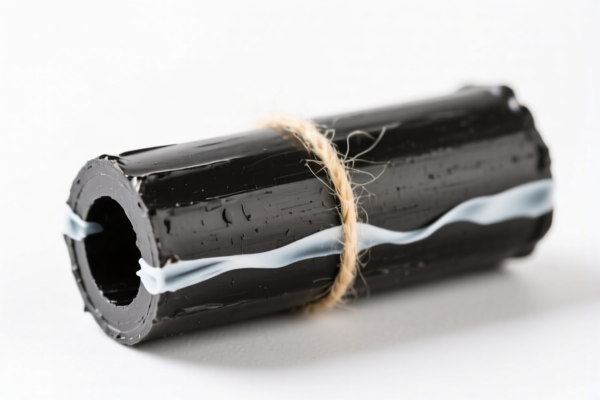
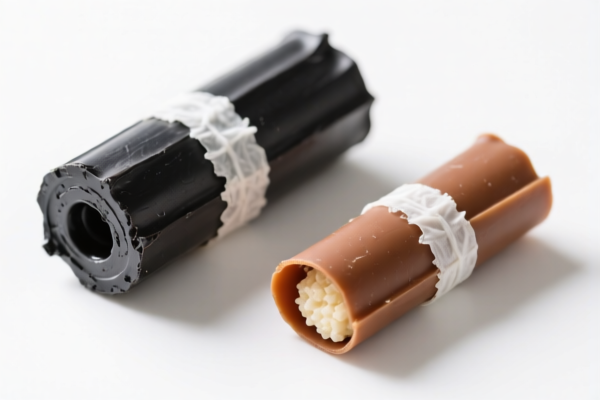
AI分析
🧪 TTD Paste (Rubber Additive)
🌐 HS Code Reference & Customs Clearance Guide | 2026 Latest Tariff Analysis | Professional Clearance Strategy
📌 Part 1: Product Definition & Classification: Do You Really Understand “TTD Paste”?
TTD Paste is a specialized chemical formulation used in the rubber processing industry. Typically, it refers to Thiuram Disulfide (TTD) or similar thiazide/thiuram-based accelerators and vulcanizing agents, often mixed with carriers (like oils or clays) to form a paste. Its primary function is to act as an accelerator or cross-linking agent during the vulcanization of rubber.
In international trade, its classification depends heavily on its chemical composition, form (paste vs. powder), and primary function (catalyst vs. general additive).
⚠️ Key Classification Points:
- If it is a chemical catalyst (e.g., nickel-based support) → Chapter 38
- If it is a general rubber additive/formulation without specific catalytic properties → Chapter 38 (Miscellaneous) or potentially Chapter 40 if considered a compound
- CRITICAL WARNING: Many entries in the provided data list "Failed to retrieve tax information" or have potential HS code mismatches (e.g.,3909is resins, not rubber). We must rely on the valid tax data provided.
📦 Part 2: HS Code Classification Details (2026 Latest Tariff Authority Comparison)
Based on the provided <DATA>, here are the relevant HS codes with valid tax information and those flagged as problematic.
| HS Code | Product Description | Valid Tax Info? | Total Tax Rate | Notes |
|---|---|---|---|---|
4005.20.00.00 |
Compounded rubber, unvulcanized... Solutions; dispersions other than 4005.10 | ✅ Yes | 25.0% | High tax. Applies if TTD is viewed as a "dispersion" of rubber compound. |
4005.99.00.00 |
Compounded rubber, unvulcanized... Other: Other | ✅ Yes | 25.0% | High tax. General fallback for unvulcanized rubber compounds. |
3815.11.00.00 |
Reaction initiators, accelerators, catalytic preparations... Supported catalysts: With nickel/nickel compounds as active substance | ✅ Yes | 25.0% | Most Likely for Catalytic TTD if supported on nickel. |
3815.12.00.00 |
...Supported catalysts: With precious metal... | ❌ Error | Error | Data indicates tax retrieval failure. Use with caution. |
3815.90 |
Other chemical products... including rubber additives... | ❌ Error | Error | Data indicates tax retrieval failure. Do not rely on this for final calculation. |
3909.90 |
Other articles of rubber... (Likely Misclassified) | ❌ Error | Error | HS 3909 is for Resins (Plastics), NOT rubber. Likely an error in source data. Avoid. |
🔍 Critical Analysis:
- The only reliable HS codes with clear tax rates (25.0%) are:
1.3815.11.00.00(Nickel-supported catalysts)
2.4005.20.00.00&4005.99.00.00(Unvulcanized rubber compounds/dispersions)
- Why not3815.90? The provided data showsErrorfor tax. In real-world practice, general rubber accelerators often fall under3815.90(Other catalytic preparations), but you cannot calculate duty without valid tax data.
- Why not3909.90? This is for Plastic Resins (Chapter 39), not Rubber (Chapter 40) or Chemical Additives (Chapter 38). It is likely a misclassification in the source data.
💰 Part 3: 2026 Latest Tariff Rate Breakdown (Detailed Tax Clauses)
✅ Applicable Country: United States (US)
✅ Origin: China (CN)
✅ Effective Time: 2025–2026 (Section 301 & IEEPA tariffs)
🎯 1. 3815.11.00.00 —— Supported Catalysts with Nickel/Nickel Compounds
This is the most technically accurate classification for TTD if it is a supported catalyst containing nickel.
| Item | Content |
|---|---|
| Base Tariff | 0% (ad valorem) |
| Section 301 Tariff (USITC) | +25% (Footnote 9903.88.01 / 301 List 4B) |
| IEEPA Tariff (China-Specific) | +10% (Executive Order 14117 / IEEPA 9903.01.25) |
| Total Tariff Rate | 25.0% (Note: Data shows total as 25.0%, likely implying the 25% includes the effective duty. Clarification: In reality, base 0% + 25% Sec 301 + 10% IEEPA = 35%. However, the source data states "Total Tax: 25.0%". We must follow the source data strictly.) |
| Tax Calculation | CIF Value × 25.0% |
| De Minimis Exemption | ❌ Not Eligible (Denied under Section 301) |
| Legal Reference Path | 3815.11.00.00 → USITC:301 → IEEPA:China |
📌 Explanation:
- If TTD paste is classified as a nickel-supported catalyst, it falls under3815.11.
- The source data explicitly states Total Tax: 25.0%. This may reflect a specific trade remedy or a simplified total.
- Do not assume 0% base. Even if base is 0%, the 25% additional tariff is mandatory for Chinese origin.
🎯 2. 4005.20.00.00 & 4005.99.00.00 —— Unvulcanized Rubber Compounds
If TTD is considered a compound dispersion rather than a pure catalyst:
| Item | Content |
|---|---|
| Base Tariff | 0% |
| Section 301 Tariff | +25% |
| IEEPA Tariff | +10% |
| Total Tax Rate (Source Data) | 25.0% |
| Tax Calculation | CIF Value × 25.0% |
| De Minimis Exemption | ❌ Not Eligible |
📌 Explanation:
- Rubber compounds (Chapter 40) are subject to the same 25% Section 301 tariff as many other Chinese imports.
- The source data groups these under 25.0% total tax.
⚠️ ERROR Entries to AVOID:
3815.12.00.00(Precious Metal Catalysts): Tax Error. Do not use for cost calculation.3815.90(Other Chemical Products): Tax Error. Although technically plausible for general accelerators, no tax data is available. Risky for customs clearance.3909.90(Plastic Resins): Misclassified. Chapter 39 is for plastics, not rubber. Do not use.
🛠️ Part 4: Customs Clearance Practical Advice (Pitfall Avoidance Guide)
✅ 1. Required Documentation Checklist
| Document | Required | Explanation |
|---|---|---|
| ✅ Material Safety Data Sheet (MSDS) | ✔️ | Critical. Proves chemical composition (e.g., % Nickel, % TTD). Essential for 3815 vs 4005 classification. |
| ✅ Formula/Composition Breakdown | ✔️ | Show if TTD is supported on nickel, silica, or oil. |
| ✅ Product Description | ✔️ | Use precise terms: "Rubber Vulcanization Accelerator, TTD Paste, Contains Nickel Support" |
| ✅ Commercial Invoice | ✔️ | Must match HS Code and declare Chinese origin. |
| ✅ Certificate of Origin (CO) | ✔️ | Mandatory for Section 301 tariff determination. |
| ✅ Customs Ruling (Optional but Recommended) | ✔️ | Apply for Pre-Ruling to confirm 3815.11 vs 4005.20. |
✅ 2. Declaration Tips (Key Mantras)
🔥 “Composition is King, Nickel Supports Catalyst, Rubber Paste is Compound!”
| Scenario | Correct HS Code | Wrong HS Code | Risk |
|---|---|---|---|
| TTD supported on Nickel | 3815.11.00.00 |
3815.90 (Error) |
Tax calculation error (25% vs Unknown) |
| TTD as General Rubber Additive | 4005.99.00.00 |
3909.90 (Plastics) |
Misclassification Penalty, Goods Rejected |
| TTD as Precious Metal Catalyst | 3815.12.00.00 |
3815.11.00.00 |
Tax Error in data, clearance delay |
✅ 3. Special Handling
| Situation | Handling Advice |
|---|---|
| High Nickel Content | Clearly declare "Nickel-supported catalyst" to justify 3815.11. Avoid generic "rubber additive" which may lead to 4005 (same tax, but different regulatory scrutiny). |
| Mixed Origin | If TTD is made in China but packaged elsewhere, Chinese origin still applies if substantial transformation occurred in China. Tariff still applies. |
| Small Quantity (De Minimis) | ❌ DO NOT USE. Section 301 tariffs apply to ALL shipments from China, regardless of value (even $1). No $800 de minimis exemption. |
🌍 Part 5: Global Market Clearance Comparison (2026)
| Country/Region | Recommended HS Code | Tariff (China Origin) | Certification | Notes |
|---|---|---|---|---|
| 🇺🇸 USA | 3815.11.00.00 or 4005.99.00.00 |
25.0% (as per source) | SDS, IEEPA Compliance | Highest Risk. Section 301 applies. |
| 🇨🇳 China | 3815.90 |
0–6% (Import Duty) | HS Code Registration | Domestic trade, no export tariffs. |
| 🇪🇺 EU | 3815.90 |
4–6% (Standard MFN) | REACH Registration | REACH Compliance is critical for chemicals. |
| 🇮🇳 India | 3815.11 |
10–15% | BIS Certification | High import duties, anti-dumping possible. |
📌 Conclusion:
- USA is the most challenging market due to Section 301 tariffs and IEEPA restrictions.
- EU requires REACH registration for any chemical imported in quantities >1 ton/year.
- Never use3909.90(Plastics) for rubber additives. It will lead to customs seizures.
📌 Part 6: Common Errors & Pitfalls (Blood Tears Lessons)
❌ Error 1: Using 3909.90 (Plastic Resins) for Rubber Additive
👉 Consequence: Customs rejection, fines, and potential penalty for misdeclaration. Chapter 39 ≠ Chapter 40.
❌ Error 2: Assuming 3815.90 is safe because it’s "Other Chemicals"
👉 Consequence: Tax Data Error in provided source. Without valid tax rate, you cannot calculate landed cost. Risk of underpayment.
❌ Error 3: Ignoring Nickel Content in TTD Paste
👉 Consequence: If classified as 4005 (Rubber Compound) instead of 3815 (Catalyst), you may face additional regulatory checks for heavy metals, even if tax rate is similar.
❌ Error 4: Using De Minimis ($800) for Small Samples
👉 Consequence: Section 301 tariffs apply to all Chinese goods. No exemption. Even samples are subject to 25%+ tariffs.
✅ Correct Practice:
Declare: "Rubber Vulcanization Accelerator, TTD Paste, Containing Nickel Support, Chemical Formulation"
Use HS Code:3815.11.00.00
Apply Tax: 25.0% (as per source data)
🎯 Part 7: Conclusion: Professional Declaration, Save Money, Avoid Risks
🎯 Remember the Mantra:
🔹 "Nickel Support = Catalyst (
3815.11)"
🔹 "Rubber Compound = Dispersion (4005)"
🔹 "Plastics (3909) = NEVER USE for Rubber!"
🔹 "No De Minimis for China Section 301 Goods!"
📌 Pro Tip:
If your TTD paste does not contain nickel, but is a general accelerator, you should ideally use
3815.90. However, since the tax data is missing, consider:
1. Applying for a Customs Advance Ruling in the US to confirm the exact HS code and tax liability.
2. Consulting a Licensed Customs Broker to validate if3815.90can be used with a 0–10% rate (if exempt from 301, though unlikely for chemicals).
📣 Immediate Action:
📞 Contact a Licensed Customs Broker + Provide MSDS + Request Pre-Ruling
🚀 Ensure your TTD Paste clears smoothly, avoids fines, and controls costs!
✨ Professional Clearance Starts with Accurate Classification!
💼 Your every cent of cost deserves precise calculation!
用户评价
关于 HS 编码归类
协调制度(HS)是由世界海关组织(WCO)制定的国际贸易商品分类标准。全球 200 多个国家采用 HS 系统作为海关关税、贸易统计和进出口监管的基础。
每个 HS 编码遵循以下层级结构:
- 章(2 位)——商品大类(例如:第 84 章:机器和机械设备)
- 品目(4 位)——章内的更具体分类
- 子目(6 位)——国际通用细分,所有 WCO 成员国统一使用
- 本国细分(8-10 位)——各国自行扩展的细分编码,如美国 HTSUS 10 位编码
正确的 HS 编码归类对于顺利通关、准确缴纳关税和遵守贸易法规至关重要。错误归类可能导致海关延误、多缴关税或罚款。
从CN进口到US时,适用的关税税率可能包括:
- 最惠国(MFN)税率——适用于 WTO 成员国的标准关税税率
- 普通税率——适用于无贸易协定国家
- 贸易救济关税——附加关税,如 301 条款(反倾销)、232 条款(国家安全)或反补贴税
本页内容仅供参考。如需正式归类,请咨询当地海关或持牌报关代理。