Rubber Board
CN → US| HS编码 | 关税税率 | 原产国 | 目的国 | 文档 |
|---|---|---|---|---|
| 4008111000 | 35.0% | CN | US | 官方文档 |
| 4008115000 | 38.3% | CN | US | 官方文档 |
| 4006901000 | 35.0% | CN | US | 官方文档 |
| 4006905000 | 37.7% | CN | US | 官方文档 |
| 4016993000 | 35.0% | CN | US | 官方文档 |
| 4016996050 | 37.5% | CN | US | 官方文档 |
商品图片


AI分析
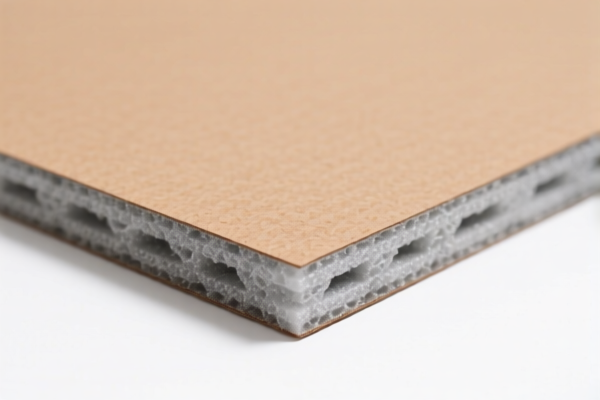
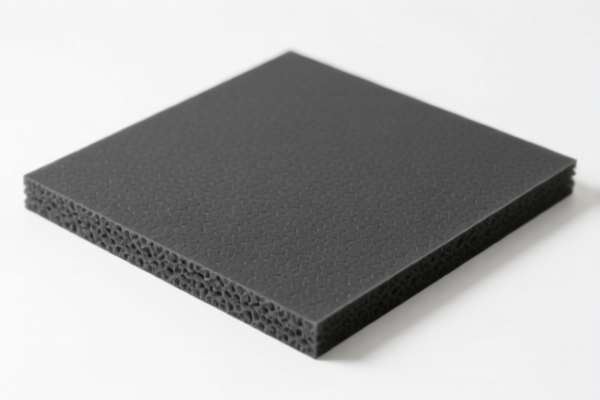
🖥️ Rubber Board (Rubber Foam & Insulation Boards)
🌐 HS Code Reference & Customs Clearance Guide | 2026 Latest Tariff Analysis | Professional Customs Strategy
📌 1. Product Definition: What is "Rubber Board"?
"Rubber Board" is a broad term in international trade, typically referring to flat, sheet-like products made from rubber. In customs classification, the critical distinction lies in the state of vulcanization (vulcanized vs. unvulcanized) and the presence of cellular structure (foam vs. solid).
- Unvulcanized Rubber Sheets (Raw Material): Soft, pliable, not yet cured. Used for further processing.
- Vulcanized Rubber Sheets/Foam (Finished/Intermediate Goods): Cured, elastic, and durable. Used for insulation, sealing, gaskets, and damping.
⚠️ Key Classification Differentiator:
- If the rubber is NOT vulcanized (raw/unhardened) → It falls under Heading 4006 (Other articles of vulcanized rubber? No, 4006 is for unvulcanized other articles). Correction: Heading 4005/4006 covers unvulcanized. Heading 4008 covers vulcanized sheets.
- If the rubber is VULCANIZED (cured) → It generally falls under Heading 4008 (Plates, sheets, strip, rods, and profiles).
- Specific subtype: Rubber Foam (cellular structure) has specific subheadings compared to solid rubber.
📦 2. HS Code Classification Matrix (2026 Tariff Data)
Based on the provided data, here are the five specific HS Codes applicable to "Rubber Board," ranging from unvulcanized raw materials to vulcanized foam and specialized soundproofing boards.
| HS Code | Product Description & Logic | Tax Rate (Total) | Key Classification Criteria |
|---|---|---|---|
| 4006.90.10.00 | Unvulcanized Rubber Foam Board Material: Rubber; Form: Board; State: Unvulcanized. |
35.0% | Classified as "Other articles of unvulcanized rubber." |
| 4008.11.10.00 | Vulcanized Rubber Foam Board (Basic) Form: Board; Material: Rubber. Core elements match classification logic. |
35.0% | Classified as "Plates, sheets... of vulcanized rubber, in plates, sheets or strip." |
| 4008.11.50.00 | Vulcanized Rubber Foam Board (Specific) Name: Rubber (Material) + Foam (Type) + Board (Form). |
38.3% | Specific subheading for vulcanized rubber foam plates. |
| 4006.90.50.00 | Unvulcanized Rubber Board (General) Material: Rubber; Form: Board; Category: Other unvulcanized articles. |
37.7% | Broad category for unvulcanized rubber boards not specified elsewhere. |
| 4016.99.60.50 | Vulcanized Rubber Soundproof Board Material: Vulcanized Rubber; Form: Board; Function: Soundproofing/Insulation. |
37.5% | Classified as "Other articles of vulcanized rubber" (specialized use). |
🔍 Critical Note:
- Unvulcanized (4006) vs. Vulcanized (4008/4016) is the primary legal distinction.
- Foam (Cellular) vs. Solid affects the subheading within 4008.
- Functionality (e.g., Soundproofing) may push a vulcanized board into 4016 ("Other articles of vulcanized rubber") rather than 4008, depending on local customs interpretation.
💰 3. Tariff Breakdown & Legal Basis (USA / China Origin)
✅ Applicable Country: United States (US)
✅ Origin: China (CN)
✅ Effective Date: Post-2025 Trade Policy (Includes Section 301 & IEEPA)
🎯 1. Unvulcanized Rubber Boards (HS: 4006.90.10.00 & 4006.90.50.00)
| Item | Detail |
|---|---|
| Base Duty | 0.0% (for 4006.90.10.00) or 2.7% (for 4006.90.50.00) |
| Section 301 Duty | +25% |
| IEEPA Surcharge | +10% (China-specific tariff, effective Nov 10, 2025) |
| Total Effective Rate | 35.0% (for .10.00) or 37.7% (for .50.00) |
| De Minimis Exemption | ❌ NO (Subject to strict scrutiny; high risk of seizure under current policies) |
| Legal Path | IEEPA:9903.01.25 → USITC:4006.90.XX.XX |
📌 Explanation:
- Unvulcanized rubber is often cheaper in duty base but carries high surcharges.
- The 10% IEEPA is a new layer on top of the existing 25% Section 301 duty.
🎯 2. Vulcanized Rubber Foam Boards (HS: 4008.11.10.00 & 4008.11.50.00)
| Item | Detail |
|---|---|
| Base Duty | 0.0% (for 4008.11.10.00) or 3.3% (for 4008.11.50.00) |
| Section 301 Duty | +25% |
| IEEPA Surcharge | +10% |
| Total Effective Rate | 35.0% (for .10.00) or 38.3% (for .50.00) |
| De Minimis Exemption | ❌ NO |
| Legal Path | IEEPA:9903.01.24 → USITC:4008.11.XX.XX |
📌 Explanation:
- Vulcanized foam boards are heavily regulated due to their volume in industrial insulation.
- The difference between .10.00 and .50.00 lies in the specific sub-classification of "foam" vs. "solid" or general "plates."
🎯 3. Vulcanized Soundproof/Insulation Boards (HS: 4016.99.60.50)
| Item | Detail |
|---|---|
| Base Duty | 2.5% |
| Section 301 Duty | +25% |
| IEEPA Surcharge | +10% |
| Total Effective Rate | 37.5% |
| De Minimis Exemption | ❌ NO |
| Legal Path | IEEPA:9903.01.24 → USITC:4016.99.XX.XX |
📌 Explanation:
- Classified under "Other articles" (4016) rather than "Plates/Sheets" (4008) because it is often viewed as a finished product (soundproofing board) rather than a raw sheet material.
- Base duty is slightly higher (2.5%) than basic foam sheets, but the surcharge structure is identical.
🛠️ 4. Customs Clearance Practical Guide
✅ 1. Documentation Checklist (Mandatory)
| Document | Required | Purpose |
|---|---|---|
| ✅ Product Specification Sheet | ✔️ | Must clearly state: Vulcanized vs. Unvulcanized, Foam vs. Solid, Hardness (Shore A), Density. |
| ✅ Composition Analysis | ✔️ | Confirm 100% Rubber content vs. mixed materials. Impurities change HS codes. |
| ✅ Product Photos | ✔️ | Show cross-section (to prove foam structure) and edges (to confirm board shape). |
| ✅ Commercial Invoice | ✔️ | Must use precise terms: "Vulcanized Rubber Foam Sheet" or "Unvulcanized Rubber Board." Avoid vague "Rubber Part." |
| ✅ Packing List | ✔️ | Weight and dimensions to verify CIF value. |
| ✅ Certificate of Origin | ✔️ | To determine eligibility for any potential exemptions (though unlikely for China origin in this category). |
✅ 2. Declaration Strategy (Pro Tips)
🔥 "Declare State, Declare Form, Declare Function!"
| Scenario | Recommended HS Code | Risk if Misclassified |
|---|---|---|
| Raw, soft rubber sheets (can be cut easily, no elasticity) | 4006.90.10.00 / 4006.90.50.00 |
Misclassifying as Vulcanized → Overpay Duties |
| Elastic rubber sheets (cured, bounce back) | 4008.11.XX.XX |
Misclassifying as Unvulcanized → Underpay Duties + Penalties |
| Board used specifically for soundproofing (with backing/film) | 4016.99.60.50 |
Misclassifying as generic 4008 → Potential Rejection if deemed "finished article" |
| Mixed Material (Rubber + Plastic) | Check % Ratio | If Rubber < 50% → Chapter 39 (Plastics) |
✅ 3. Common Pitfalls & Avoidance
❌ Error 1: Vague Description "Rubber Board"
👉 Consequence: Customs issues a "Red Box" inspection, demands lab tests, delays shipment by 2-4 weeks.
👉 Fix: Use exact chemical/physical description.
❌ Error 2: Confusing Foam with Solid
👉 Consequence: Different subheadings within 4008 have different duty rates (e.g., 0% vs 3.3% base). Misdeclaration leads to audits.
👉 Fix: Provide density data. Foam is lighter (lower density) than solid rubber.
❌ Error 3: Ignoring IEEPA 10% Surcharge
👉 Consequence: Underestimating landed cost. The total tax is not just 25%, but 35-38%.
👉 Fix: Budget for ~35-40% total tax inclusion in pricing.
🌍 5. Global Market Comparison (2026)
| Region | Typical HS Code | Base Duty | Additional Tariffs (China) | Total Est. Duty |
|---|---|---|---|---|
| 🇺🇸 USA | 4006 / 4008 / 4016 | 0% - 3.3% | 35% (25% Sec 301 + 10% IEEPA) | 35% - 38.3% |
| 🇨🇳 China (Import) | 4006 / 4008 | 5% - 10% | None | ~5-10% |
| 🇪🇺 EU | 4008 | 0% - 4% | None (Most Favorable Rate) | ~0-4% |
| 🇬🇧 UK | 4008 | 0% - 4% | None | ~0-4% |
| 🇯🇵 Japan | 4008 | 0% - 5% | None | ~0-5% |
📌 Conclusion:
- USA is the highest-cost market due to the dual-layer surcharge (Section 301 + IEEPA).
- EU/UK/Japan are significantly cheaper for imports from China (assuming no specific trade wars on rubber).
- Strategy: If targeting the US, consider transshipment (with significant risk) or value engineering (reducing rubber content) to lower CIF value, as duties are ad valorem.
📌 6. Final Clearance Advice
- Pre-Classification Ruling: For large volumes, apply for an ACE Ruling from US CBP to confirm if your "Soundproof Board" belongs in 4008 or 4016. This prevents future retroactive duties.
- Labeling: Ensure the product label states "VULCANIZED RUBBER" clearly.
- Costing: Always calculate Landed Cost using 38.3% as the worst-case scenario for rubber boards to maintain profit margins.
- Material Check: If the board contains significant plasticizers or fillers, ensure the composition matches the HS code definition. High filler content might shift classification to other rubber articles.
🎯 Remember:
🔹 "State of Cure is King" (Vulcanized vs. Unvulcanized)
🔹 "Foam is Specific" (Check 4008.11 vs 4008.90)
🔹 "US Tariff is High" (35%+ is the reality)
✨ Accurate Classification Saves Money!
💼 Don't let customs hold your rubber boards.
📞 Consult a customs broker with rubber expertise!
用户评价
关于 HS 编码归类
协调制度(HS)是由世界海关组织(WCO)制定的国际贸易商品分类标准。全球 200 多个国家采用 HS 系统作为海关关税、贸易统计和进出口监管的基础。
每个 HS 编码遵循以下层级结构:
- 章(2 位)——商品大类(例如:第 84 章:机器和机械设备)
- 品目(4 位)——章内的更具体分类
- 子目(6 位)——国际通用细分,所有 WCO 成员国统一使用
- 本国细分(8-10 位)——各国自行扩展的细分编码,如美国 HTSUS 10 位编码
正确的 HS 编码归类对于顺利通关、准确缴纳关税和遵守贸易法规至关重要。错误归类可能导致海关延误、多缴关税或罚款。
从CN进口到US时,适用的关税税率可能包括:
- 最惠国(MFN)税率——适用于 WTO 成员国的标准关税税率
- 普通税率——适用于无贸易协定国家
- 贸易救济关税——附加关税,如 301 条款(反倾销)、232 条款(国家安全)或反补贴税
本页内容仅供参考。如需正式归类,请咨询当地海关或持牌报关代理。