Rubber Buffer Strips
CN → US| HS编码 | 关税税率 | 原产国 | 目的国 | 文档 |
|---|---|---|---|---|
| 4008210000 | 35.0% | CN | US | 官方文档 |
| 4016995500 | 37.5% | CN | US | 官方文档 |
| 4016993000 | 35.0% | CN | US | 官方文档 |
| 4008111000 | 35.0% | CN | US | 官方文档 |
| 4016996050 | 37.5% | CN | US | 官方文档 |
商品图片
AI分析
🛡️ Rubber Buffer Strips (Cushioning & Shock Absorption)
🌐 HS Code Reference & Customs Clearance Guide | 2026 Latest Tariff Analysis | Strategic Entry for Natural Rubber Products
📌 I. Product Definition: Are You Sure It’s Just a “Buffer Strip”?
"Rubber Buffer Strips" is a broad functional description. In international trade, the material composition and specific physical form determine the HS Code, which drastically impacts your duty costs. Based on the provided data, we are dealing specifically with Natural Rubber products, not synthetic rubber.
The key distinction lies in whether the product is classified as a basic raw material shape (Section XI) or a finished industrial article (Section XVII/Chapter 40 subheading 4016).
⚠️ Critical Distinction Point:
- If the product is a simple sheet/strip of natural rubber, likely cut from a larger roll, it may fall under 4008.
- If the product is a specific molded or profiled item designed for shock absorption/vibration control, it falls under 4016.
- Do not assume "Rubber" = Synthetic. The data confirms these are Natural Rubber items. Misdeclaring natural rubber as synthetic or generic "rubber" can lead to severe compliance issues.
📦 II. HS Code Classification Details (2026 Latest Tariff Alignment)
Based on the provided dataset, here are the five possible HS Codes for your Natural Rubber Buffer Strips, categorized by their structural and functional characteristics.
| HS Code | Product Description & Logic | Shape/Form | Duty Rate (Total) | Tax Breakdown |
|---|---|---|---|---|
| 4008.21.00.00 | Natural Rubber Cushioning Sheets Classified as sheets of natural rubber. The primary characteristic is the shape (sheet/strip) rather than a specific complex mechanism. |
Sheet (片) | 35.0% | Base: 0% Add: 25% 122 Clause: 10% |
| 4016.99.55.00 | Vibration Control Products Classified as "Other articles of vulcanized rubber other than hard rubber." Specifically categorized under shock-absorption control items. |
Cushioning Pad (缓冲片) | 37.5% | Base: 2.5% Add: 25% 122 Clause: 10% |
| 4016.99.30.00 | Shock/Absorption Products Classified as shock absorption / buffering products. This is a specific sub-category for items designed to absorb impact. |
Cushioning Pad (缓冲片) | 35.0% | Base: 0% Add: 25% 122 Clause: 10% |
| 4008.11.10.00 | Natural Rubber Sheets/Strips Classified under sheets, strips, and profiles. Specifically matches the "Sheet" (片) type within this category. |
Sheet (片) | 35.0% | Base: 0% Add: 25% 122 Clause: 10% |
| 4016.99.60.50 | Rubber Bumper/Anti-Collision Strip Classified as other vulcanized rubber products used specifically for anti-collision (防撞). |
Strip (防撞条) | 37.5% | Base: 2.5% Add: 25% 122 Clause: 10% |
🔍 Key Observation:
- Codes 4008.21 & 4008.11 are for sheets/strips of natural rubber. They generally have a 0% base duty, making them slightly more favorable if the product is simple.
- Codes 4016.99 are for finished articles (shock absorbers, bumpers). They often have a 2.5% base duty, pushing the total to 37.5%.
- The 122 Clause (10%) applies to ALL entries in the dataset, indicating a specific punitive or trade-specific tariff (likely Section 301 or similar bilateral trade measures) that applies regardless of the base classification.
💰 III. 2026 Tariff Rate Explanation (Detailed Breakdown)
✅ Applicable Market: China/US Trade Context (Implied by "122 Clause" and specific rates)
✅ Product Origin: Natural Rubber (China)
✅ Total Tax Impact: High due to layered tariffs.
🎯 1. The "122 Clause" & Additional Tariffs (The 35%-37.5% Trap)
| Component | Rate | Source/Logic |
|---|---|---|
| Base Duty | 0% or 2.5% | Depends on HS Code. 4008 series = 0%. 4016 series = 2.5%. |
| Added Duty (加征关税) | +25.0% | Standard additional tariff applied to these rubber categories. |
| 122 Clause Tariff (122条款) | +10.0% | A specific trade policy tariff. This is non-negotiable for these HS codes in the current dataset. |
| TOTAL RATE | 35.0% - 37.5% | Sum of Base + Added + 122 Clause. |
📌 Why the Difference?
- 4008.21 / 4008.11: 0% (Base) + 25% + 10% = 35.0%
- 4016.99.55 / 4016.99.30 / 4016.99.60: 2.5% (Base) + 25% + 10% = 37.5%💡 Strategic Insight: If your product can be legitimately classified as a simple "Sheet/Strip" (4008) rather than a "Shock Absorbing Article" (4016), you save 2.5% on the base duty. However, if the item is complex, molded, or marketed specifically as a "buffer/cushion," customs may force the 4016 classification.
🛠️ IV. Customs Clearance Practical Advice (Pitfall Avoidance Guide)
✅ 1. Documentation Checklist (Essential for Natural Rubber)
| Document | Required? | Purpose |
|---|---|---|
| ✅ Product Specification Sheet | YES | Must specify: Material = Natural Rubber, Density, Hardness (Shore A), Dimensions. |
| ✅ Material Composition Proof | YES | Lab test or supplier declaration confirming >50% Natural Rubber. Synthetic rubber has different HS codes. |
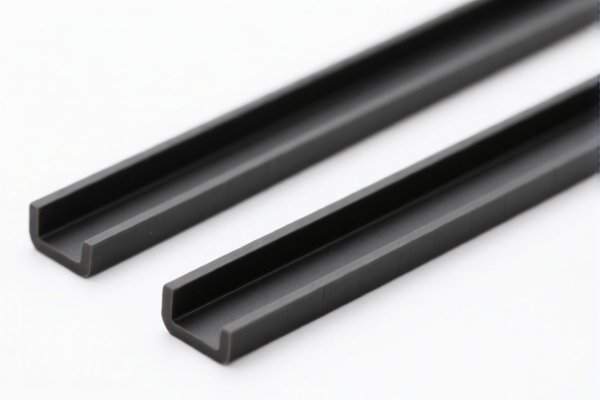
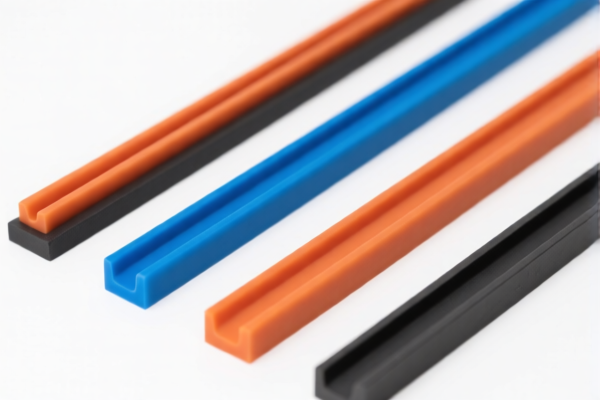
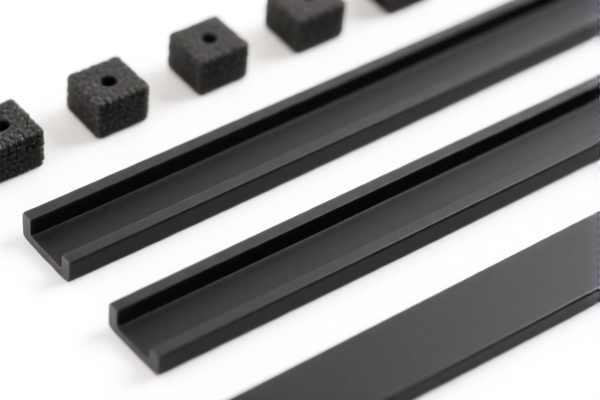
| ✅ Product Photos | YES | Clear images showing the shape (Sheet vs. Molded Pad vs. Strip). This determines 4008 vs. 4016. |
| ✅ Commercial Invoice | YES | Must clearly state "Natural Rubber Buffer Strip" and HS Code. |
| ✅ Packing List | YES | Detail weight and dimensions for customs valuation. |
| ✅ Certificate of Origin | YES | Required for duty calculation and potential preferential treatments (if applicable in other markets). |
✅ 2. Declaration Strategy (Key Mnemonics)
🔥 "Shape Dictates Code, Material Dictates HS!"
| Scenario | Recommended HS Code | Why? |
|---|---|---|
| Simple Cut Strip/Sheet | 4008.21.00.00 or 4008.11.10.00 | It is essentially a processed sheet/strip. No complex molding. Lowest base duty (0%). |
| Molded Cushion Pad | 4016.99.30.00 | It is a specific shock absorption product. Higher value-added item. |
| Anti-Collision Bumper | 4016.99.60.50 | Specific use case: Anti-collision. Often requires specific labeling or application proof. |
⚠️ Warning: Do not declare a molded vibration pad as a "Simple Sheet" to save 2.5%. If customs inspects and finds complex molding, you will face penalties for misclassification.
✅ 3. Special Considerations for Natural Rubber
- Phytosanitary Checks: Natural rubber may require phytosanitary certificates if it contains plant residues. Ensure your supplier provides this.
- ISIR/RSS Grades: Specify the grade (e.g., TSR 20, RSS 3) in your documentation. Different grades have different values and quality standards.
- Anti-Dumping Duties: Check if your specific natural rubber grade is subject to anti-dumping duties in the destination country. The "122 Clause" suggests existing trade tensions, so verify if additional AD/CVD duties apply.
🌍 V. Global Market Clearance Comparison (2026 Update)
| Market | HS Code Focus | Tariff Estimate | Key Requirement |
|---|---|---|---|
| 🇨🇳 China (Export) | 4008 / 4016 | Varies by destination | FTA benefits (RCEP, ASEAN) if exporting to member states. |
| 🇺🇸 USA (Import) | 4008 / 4016 | 35-37.5% | Section 301 Tariffs + 122 Clause. High cost. Strict natural rubber verification. |
| 🇪🇺 EU (Import) | 4008 / 4016 | 0-6% (with EBA) | GSP+ or EBA (Everything But Arms) may apply if from eligible developing countries. No 122 Clause. |
| 🇯🇵 Japan (Import) | 4008 / 4016 | 0% (with EPA) | Japan-EPA allows zero duty for many rubber products from China/Vietnam. |
📌 Conclusion:
- The 35-37.5% rate is likely specific to a high-tariff market (likely USA or a market with specific trade barriers).
- If exporting to EU or Japan, you may qualify for 0% duty under free trade agreements. Always check FTA eligibility!
📌 VI. Common Mistakes & Pitfalls (Lessons Learned)
❌ Mistake 1: Declaring "Rubber Strip" without specifying Natural Rubber.
👉 Result: Customs may classify as synthetic rubber (higher base duty) or demand extensive proof, causing delays.
❌ Mistake 2: Confusing 4008 (Sheets/Strips) with 4016 (Articles).
👉 Result: Misclassification. If you declare a complex buffer as a simple sheet, you might underpay duties and face audits later.
❌ Mistake 3: Ignoring the 122 Clause.
👉 Result: Budgeting errors. The 10% additional tariff is mandatory for these codes in the current dataset. Factor it into your pricing.
❌ Mistake 4: Poor Quality Photos.
👉 Result: Customs cannot distinguish between a "Sheet" (4008) and a "Molded Pad" (4016). They may default to the higher-duty category or hold the shipment for inspection.
✅ Correct Practice:
"Natural Rubber, TSR 20 Grade, Cushioning Strip, Cut from Sheet, Used for Machinery Buffer, HS Code: 4008.21.00.00"
🎯 VII. Conclusion: Strategic Clearance for Natural Rubber
🎯 Remember:
🔹 "Sheet vs. Pad: Choose Wisely, Duty Difference is Real!"
🔹 "Natural Rubber: Prove It, or Pay More!"
🔹 "122 Clause is Inescapable: Budget for the 10% Hit!"
✨ Professional Advice:
If your product is simple cut strips, aim for 4008 to save the 2.5% base duty.
If your product is molded/shaped, accept 4016 but ensure your documentation highlights its shock-absorption function.
Always verify if Free Trade Agreements (FTAs) can reduce the tariff in your target market.
📣 Action Item:
📞 Contact your customs broker with product photos and material specs.
📝 Apply for Advance Ruling if the classification is ambiguous.
📉 Negotiate prices with suppliers to absorb the 35-37.5% total tariff if exporting to high-tariff markets.
💼 Precision in Classification = Profit in Logistics!
🚀 Clear the way to global markets with confidence!
用户评价
关于 HS 编码归类
协调制度(HS)是由世界海关组织(WCO)制定的国际贸易商品分类标准。全球 200 多个国家采用 HS 系统作为海关关税、贸易统计和进出口监管的基础。
每个 HS 编码遵循以下层级结构:
- 章(2 位)——商品大类(例如:第 84 章:机器和机械设备)
- 品目(4 位)——章内的更具体分类
- 子目(6 位)——国际通用细分,所有 WCO 成员国统一使用
- 本国细分(8-10 位)——各国自行扩展的细分编码,如美国 HTSUS 10 位编码
正确的 HS 编码归类对于顺利通关、准确缴纳关税和遵守贸易法规至关重要。错误归类可能导致海关延误、多缴关税或罚款。
从CN进口到US时,适用的关税税率可能包括:
- 最惠国(MFN)税率——适用于 WTO 成员国的标准关税税率
- 普通税率——适用于无贸易协定国家
- 贸易救济关税——附加关税,如 301 条款(反倾销)、232 条款(国家安全)或反补贴税
本页内容仅供参考。如需正式归类,请咨询当地海关或持牌报关代理。