Rubber Coated Cotton/Man Made Fiber Gloves
CN → US| HS编码 | 关税税率 | 原产国 | 目的国 | 文档 |
|---|---|---|---|---|
| 4015191150 | 38.0% | CN | US | 官方文档 |
| 6216002410 | 30.7% | CN | US | 官方文档 |
| 6216002425 | 30.7% | CN | US | 官方文档 |
| 6116105510 | 30.7% | CN | US | 官方文档 |
| 4015195100 | 49.0% | CN | US | 官方文档 |
商品图片

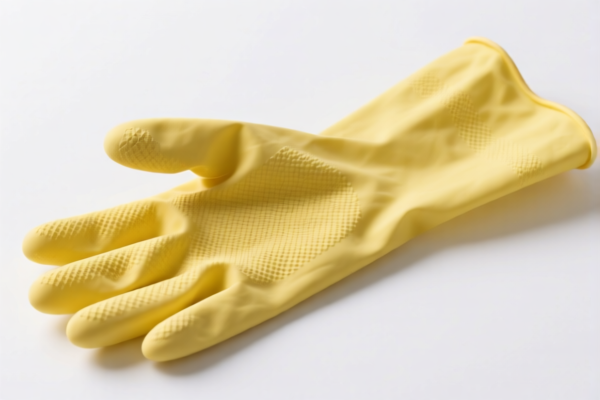


AI分析
🧤 Rubber Coated Cotton/Man Made Fiber Gloves: The Ultimate US Customs Classification Guide (2026 Update)
🌐 HS Code Reference & Clearance Strategy | Latest Tariff Analysis | Professional Customs Strategy
📌 I. Product Definition: What Are "Rubber Coated Gloves"?
Rubber-coated gloves are protective handwear where the base material is primarily cotton or man-made fibers, treated with a layer of rubber or latex for waterproofing, chemical resistance, or grip.
In international trade, these gloves are NOT classified as pure rubber goods (Chapter 40). Instead, they fall under Chapter 62 (Articles of apparel and clothing accessories, not knitted or crocheted) or Chapter 61 (Knitted or crocheted), depending on the base fabric's construction.
⚠️ Critical Distinction:
- If the glove is 100% vulcanized rubber (no textile backing) → Chapter 40 (4015...)
- If the glove has a textile base (cotton/MMF) with rubber coating → Chapter 61/62 (6116...or6216...)
- Why it matters: The tax rate differs significantly between Chapter 40 and Chapter 61/62 due to different USITC Footnotes and IEEPA restrictions.
📦 II. HS Code Classification Matrix (2026 Latest Tariff Schedule)
Based on the provided data, here are the 5 specific HS Codes for rubber-coated gloves subject to US import tariffs.
| HS Code | Product Description & Key Criteria | Total Tax Rate | Tax Breakdown (US Importer) |
|---|---|---|---|
4015.19.11.50 |
Vulcanized Rubber Gloves (Pure Rubber) • Classified as "Other gloves of vulcanized rubber". • NO textile backing requirement. • Fits "Unclassified/Other" sub-category. |
38.0% | • Base Duty: 3.0% • Section 301 Duty: 25.0% • IEEPA Sec. 122: 10.0% |
6216.00.24.10 |
Rubber-Coated Cotton/MMF Gloves (Woven/Non-Knit) • Base: Cotton or Man-Made Fiber ≥50%. • Process: Impregnated, coated, covered, or laminated with rubber. • Woven apparel structure. |
30.7% | • Base Duty: 13.2% • Section 301 Duty: 7.5% • IEEPA Sec. 122: 10.0% |
6216.00.24.25 |
Rubber-Coated Cotton/MMF Gloves (Woven/Non-Knit) • Similar to above, specific sub-classification for coated textiles. • Key: Plastic/Rubber coating + Cotton/MMF content. |
30.7% | • Base Duty: 13.2% • Section 301 Duty: 7.5% • IEEPA Sec. 122: 10.0% |
6116.10.55.10 |
Knitted Rubber-Coated Cotton/MMF Gloves • Base: Knitted Cotton or Man-Made Fiber ≥50%. • Form: Coated with rubber. • Knitted construction (unlike 6216 which is woven). |
30.7% | • Base Duty: 13.2% • Section 301 Duty: 7.5% • IEEPA Sec. 122: 10.0% |
4015.19.51.00 |
Vulcanized Rubber Glove Accessories • Rubber-coated gloves classified under "Other" in Chapter 40. • Key: Vulcanized rubber coating + Glove form. • Treated as Rubber Apparel Accessory. |
49.0% | • Base Duty: 14.0% • Section 301 Duty: 25.0% • IEEPA Sec. 122: 10.0% |
🔍 Key Takeaway:
- Chapter 61/62 (Textile Base): Total tax 30.7%
- Chapter 40 (Rubber Base): Total tax 38.0% - 49.0%
- ⚠️ High Risk:4015.19.51.00has the highest burden at 49.0% due to high base duty (14%).
💰 III. Detailed Tariff Breakdown & Legal Basis
All rates apply to goods originating in China (CN) imported into the United States (US).
🎯 1. Textile-Based Gloves (6116.10.55.10 / 6216.00.24.10 / 6216.00.24.25)
- Base Duty: 13.2% (Standard MFN rate for coated gloves)
- Section 301 Duty: +7.5% (List 4A tariffs for specific textile/glove items)
- IEEPA Sec. 122: +10.0% (Additional tariff on Chinese products under International Emergency Economic Powers Act)
- Total: 30.7%
- Legal Path:
USITC:6116.10.55.10→FOOTNOTE:301.25→IEEPA:9903.01.24
🎯 2. Pure Rubber Gloves (4015.19.11.50)
- Base Duty: 3.0% (Low base duty for general rubber gloves)
- Section 301 Duty: +25.0% (Higher List 4C/301 rate for rubber articles)
- IEEPA Sec. 122: +10.0%
- Total: 38.0%
- Legal Path:
USITC:4015.19.11.50→FOOTNOTE:301.88.01→IEEPA:9903.01.24
🎯 3. Rubber Accessory Gloves (4015.19.51.00)
- Base Duty: 14.0% (High base duty for "other" rubber apparel accessories)
- Section 301 Duty: +25.0%
- IEEPA Sec. 122: +10.0%
- Total: 49.0%
- ⚠️ Warning: This is the most expensive classification. Avoid if your product can be justified as textile-based.
🛠️ IV. Customs Clearance Practical Advice (Avoid Pitfalls)
✅ 1. Preparation Checklist (Required Documents)
| Document | Mandatory? | Purpose |
|---|---|---|
| Product Specification Sheet | ✔️ | Must state: "Base Material: 100% Cotton" OR "Base: Vulcanized Rubber" |
| Material Composition Label | ✔️ | Proof of ≥50% Cotton/MMF for Chapter 61/62 classification |
| Process Description | ✔️ | "Impregnated with latex" vs. "Vulcanized rubber mold" |
| Photos (Inside/Outside) | ✔️ | Show textile weave vs. smooth rubber surface |
| Commercial Invoice | ✔️ | Clearly describe: "Rubber Coated Cotton Gloves, Model XYZ" |
| Coated Fabric Certificate | ✔️ | To prove rubber content ratio if disputed |
✅ 2. Classification Strategy (Critical Decision Points)
| Scenario | Correct HS Code | Risk if Wrong |
|---|---|---|
| Glove has visible cotton weave inside | 6116.10.55.10 or 6216.00.24.10 |
Misclassifying as 4015 may lead to underpayment (if 30.7% vs 38%) or overpayment (if 30.7% vs 49%). |
| 100% Rubber, no fabric | 4015.19.11.50 |
Misclassifying as textile may lead to overpayment (38% vs 30.7%) but less severe than underpayment. |
| Mixed Material (e.g., Nylon + Rubber) | 6216.00.24.25 (if Nylon ≥50%) |
Must prove synthetic fiber content. |
| Glove is just a rubber tip on fabric | 6116.10.55.10 |
If rubber is minor, it's still textile. If rubber is primary structure, it may shift to 4015. |
✅ 3. Common Mistakes to Avoid
❌ Mistake 1: Calling it "Latex Gloves" without specifying base material.
👉 Result: CBP may assume 100% Rubber → 4015.19.51.00 (49% tax).
✅ Fix: Always specify "Rubber Coated Cotton Gloves".
❌ Mistake 2: Ignoring the "Knitted" vs. "Woven" distinction.
👉 Result: 6116 (Knitted) and 6216 (Woven) have different duty structures.
✅ Fix: Check if the cotton liner is knitted (looped) or woven (crisscross).
❌ Mistake 3: Assuming all "Rubber Gloves" are the same.
👉 Result: 4015.19.11.50 (38%) vs 4015.19.51.00 (49%) is a 11% difference.
✅ Fix: Ensure the "Glove Accessory" classification (4015.19.51.00) is not applied unless it’s a specific rubber cuff/accessory not meant as a primary protective glove.
🌍 V. Market Comparison & Cost Implication
| Market | HS Code Focus | Tax Burden (China Origin) | Notes |
|---|---|---|---|
| 🇺🇸 USA | 6116.10.55.10 / 6216.00.24.10 |
30.7% | High IEEPA + Section 301 impact. |
| 🇺🇸 USA | 4015.19.51.00 |
49.0% | Avoid this code if possible for standard gloves. |
| 🇨🇳 China (Import) | 6116.10.55.10 |
Low | China imports similar goods at lower rates. |
| 🇪🇺 EU | 4015.19 / 6116 |
Varies | No Section 301, but CE/REACH certs needed. |
📌 Conclusion for US Importers:
- Target:6116.10.55.10or6216.00.24.10(30.7%)
- Avoid:4015.19.51.00(49.0%) unless the product is truly a rubber accessory.
- Mitigation: Ensure your supplier provides a material breakdown proving ≥50% cotton/MMF to qualify for the lower textile-based duty.
📌 VI. Final Clearance Tips (Pro Tips)
- Pre-Ruling Application: File an ACE (Automated Commercial Environment) Pre-Ruling with CBP if unsure about the "Knitted vs. Woven" distinction.
- Labeling: Ensure the glove's packaging clearly states: "Cotton Lining with Rubber Coating" to justify Chapter 61/62.
- Sample Submission: Provide a sample to your customs broker with a cross-section photo showing the textile layer beneath the rubber.
- Cost Calculation:
- CIF Value × 30.7% = Tax for Textile-Based
- CIF Value × 49.0% = Tax for Rubber-Based (Higher)
- Savings: Using
6216.00.24.10saves 18.3% vs4015.19.51.00.
🎯 VII. Conclusion
🎯 Remember the Golden Rule:
🔹 "Textile Base = 30.7% | Rubber Base = 38-49%"
🔹 "Cotton/MMF > 50% = Chapter 61/62 | 100% Rubber = Chapter 40"
🔹 "Specify 'Coated Cotton' not just 'Latex' to avoid 49% penalty!"
📌 Pro Tip:
If your gloves are knitted cotton, use 6116.10.55.10. If woven cotton, use 6216.00.24.10. Both are 30.7%.
Always double-check the manufacturing process to ensure correct classification.
📣 Immediate Action:
📞 Consult a licensed customs broker with product photos and material specs.
🚀 Optimize your supply chain by declaring textile-based goods to save up to 18.3% in tariffs.
✨ Precision Classification = Maximum Profit!
💼 Don't let misclassification cost you 18% of your cargo value!
用户评价
关于 HS 编码归类
协调制度(HS)是由世界海关组织(WCO)制定的国际贸易商品分类标准。全球 200 多个国家采用 HS 系统作为海关关税、贸易统计和进出口监管的基础。
每个 HS 编码遵循以下层级结构:
- 章(2 位)——商品大类(例如:第 84 章:机器和机械设备)
- 品目(4 位)——章内的更具体分类
- 子目(6 位)——国际通用细分,所有 WCO 成员国统一使用
- 本国细分(8-10 位)——各国自行扩展的细分编码,如美国 HTSUS 10 位编码
正确的 HS 编码归类对于顺利通关、准确缴纳关税和遵守贸易法规至关重要。错误归类可能导致海关延误、多缴关税或罚款。
从CN进口到US时,适用的关税税率可能包括:
- 最惠国(MFN)税率——适用于 WTO 成员国的标准关税税率
- 普通税率——适用于无贸易协定国家
- 贸易救济关税——附加关税,如 301 条款(反倾销)、232 条款(国家安全)或反补贴税
本页内容仅供参考。如需正式归类,请咨询当地海关或持牌报关代理。