Rubber Coated Gloves (Non fingered)
CN → US| HS编码 | 关税税率 | 原产国 | 目的国 | 文档 |
|---|---|---|---|---|
| 6116105510 | 30.7% | CN | US | 官方文档 |
| 4015191110 | 38.0% | CN | US | 官方文档 |
| 4015195100 | 49.0% | CN | US | 官方文档 |
| 6116105520 | 30.7% | CN | US | 官方文档 |
| 4015195100 | 49.0% | CN | US | 官方文档 |
商品图片

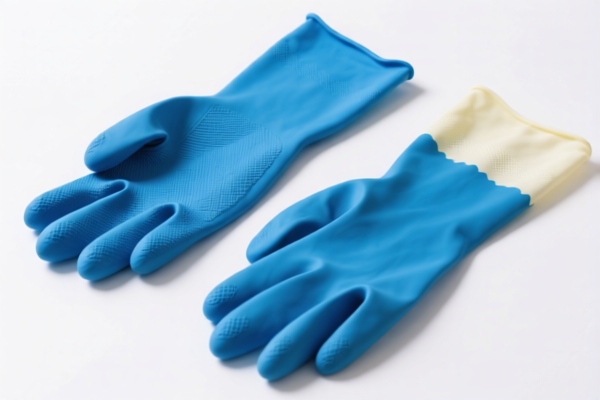


AI分析
🧤 Rubber Coated Gloves (Non-fingered / Dip-dipped)
🌐 HS Code Reference & Customs Clearance Guide | 2026 Latest Tariff Analysis | Professional Clearance Strategy
📌 I. Product Definition & Classification: What Exactly Are "Non-fingered Rubber Gloves"?
"Rubber Coated Gloves (Non-fingered)" typically refer to glove liners, knit gloves with rubber coating, or dipped gloves where the fingers are not fully separated or enclosed (e.g., open-ended, mitt-style, or fully dipped with no finger separation). These are primarily used for protection against chemicals, oils, water, or general industrial handling.
In international trade, classification hinges on two key factors:
1. Material Composition: Is it primarily textile (knit) or rubber/plastic?
2. Construction: Are they "with separate fingers" or "without separate fingers"?
⚠️ Key Distinction:
- If the base is textile (e.g., cotton knit) and only coated/dipped in rubber → Falls under Chapter 61 (Articles of Apparel, Knitted or Crocheted).
- If the entire structure is solid rubber (vulcanized) or plastic, regardless of finger design → Falls under Chapter 40 (Rubber and Articles Thereof).
📦 II. HS Code Classification Details (2026 Latest Tariff Authority Comparison)
Based on the provided data, here are the exact HS Codes matched to your product description:
| HS Code | Product Description | Key Characteristics | Tax Rate |
|---|---|---|---|
6116.10.55.10 |
Rubber-Coated Gloves, No Crotch Between Fingers (Knit Base + Rubber Coating) |
- Base: Textile/Knit - Coating: Rubber浸渍/涂布 (Dipped/Coated) - Design: No crotch (no separate fingers) |
30.7% |
6116.10.55.20 |
Rubber-Coated Gloves, No Side Seam (Knit Base + Rubber Coating) |
- Base: Textile/Knit - Coating: Rubber浸渍/涂布 - Design: Seamless side construction |
30.7% |
4015.19.11.10 |
Rubber-Coated Protective Gloves, Vulcanized Rubber Category | - Material: Solid Vulcanized Rubber - Purpose: Protective - Design: Non-fingered or open-ended |
38.0% |
4015.19.51.00 |
Rubber-Dipped Gloves, Vulcanized Rubber Classification | - Material: Solid Vulcanized Rubber - Design: Non-fingered (e.g., open-ended, mitt-style) - Note: Appears twice in data, same rate |
49.0% |
🔍 Critical Clarification:
- HS 6116.10: Applies if the glove is primarily textile with a rubber coating. This is common for "knit gloves dipped in rubber" (e.g., yellow nitrile-dipped work gloves).
- HS 4015.19: Applies if the glove is primarily rubber (solid, not just coated). Even if "non-fingered," if it’s made of vulcanized rubber sheets or solid rubber molding, it goes here.
- "Non-fingered" (No Crotch): This design feature is explicitly mentioned in 6116.10.55.10 and implied in 4015.19.51.00 (vulcanized rubber non-fingered gloves).
💰 III. 2026 Latest Tariff Rate Breakdown (Including Surcharges & Policy Add-ons)
✅ Applicable Country: United States (US)
✅ Origin: China (CN)
✅ Effective Date: November 10, 2025 (and subsequent imports)
🎯 1. 6116.10.55.10 & 6116.10.55.20 —— Textile Base + Rubber Coated (No Crotch/Seamless)
| Item | Content |
|---|---|
| Base Tariff | 13.2% |
| Section 301 Surcharge | +7.5% |
| Section 122 Tariff | +10% |
| Total Tariff Rate | 30.7% |
| Tax Calculation | CIF Value × 30.7% |
| De Minimis Exemption | ❌ Not Eligible (Deny de_minimis for China-origin goods under these codes) |
| Legal Basis Path | USITC:6116.10.55.10 → Section 301: 7.5% → Section 122: 10% |
📌 Explanation:
- These gloves are classified as apparel items (Chapter 61), but because they are coated/dipped in rubber, they attract higher duties than plain textile gloves.
- Section 301 (7.5%) applies to most textile-rubber composite goods from China.
- Section 122 (10%) is a specific tariff added for certain imported goods, including some rubber-coated textiles.
- Total: 30.7% is the effective burden for this category.
🎯 2. 4015.19.11.10 —— Solid Vulcanized Rubber Protective Gloves
| Item | Content |
|---|---|
| Base Tariff | 3.0% |
| Section 301 Surcharge | +25.0% |
| Section 122 Tariff | +10% |
| Total Tariff Rate | 38.0% |
| Tax Calculation | CIF Value × 38.0% |
| De Minimis Exemption | ❌ Not Eligible |
| Legal Basis Path | USITC:4015.19.11.10 → Section 301: 25% → Section 122: 10% |
📌 Explanation:
- This code falls under Chapter 40 (Rubber). Even if the base is low (3.0%), the Section 301 surcharge is steep at 25% because these are considered "industrial protective rubber goods."
- Note: If your gloves are not fully solid rubber but are textile-based, do not use this code. Misclassification can lead to audits and penalties.
🎯 3. 4015.19.51.00 —— Vulcanized Rubber Non-Fingered Gloves
| Item | Content |
|---|---|
| Base Tariff | 14.0% |
| Section 301 Surcharge | +25.0% |
| Section 122 Tariff | +10% |
| Total Tariff Rate | 49.0% |
| Tax Calculation | CIF Value × 49.0% |
| De Minimis Exemption | ❌ Not Eligible |
| Legal Basis Path | USITC:4015.19.51.00 → Section 301: 25% → Section 122: 10% |
📌 Explanation:
- This is the highest tariff among the options. It applies to vulcanized rubber gloves that are non-fingered (e.g., open-ended or mitt-style) but do not fall under the specific protective category of4015.19.11.10.
- Warning: If your product is simply a textile glove dipped in rubber, DO NOT use this code. It is for solid rubber items. Using this code for a textile-based product will result in severe penalties.
🛠️ IV. Customs Clearance Practical Advice (Real-World Pitfall Guide)
✅ 1. Preparation Checklist (Non-Negotiable)
| Document | Required? | Explanation |
|---|---|---|
| ✅ Product Specifications | ✔️ | Must clearly state: Material (Textile vs. Rubber), Coating Type (Nitrile, Latex, PVC), and Finger Design (Non-fingered/Open-ended). |
| ✅ Photos (Front/Back/Inside) | ✔️ | Show the lack of finger separation to justify "No Crotch" or "Non-fingered" classification. |
| ✅ Material Test Report | ✔️ | Confirm % of rubber vs. textile. If >50% rubber by weight, consider Chapter 40. |
| ✅ Commercial Invoice | ✔️ | Use precise language: "Rubber-Coated Knit Gloves, Non-Fingered, Industrial Use" or "Vulcanized Rubber Gloves, Open-Ended." |
| ✅ Certificate of Origin (CO) | ✔️ | Essential for verifying China origin and applying surcharges. |
| ✅ Packing List | ✔️ | Ensure no mixed shipments (e.g., don’t pack textile gloves with solid rubber gloves in the same box if they have different HS codes). |
✅ 2. Declaration Tips (Key Mnemonic)
🔥 "Material First, Then Shape. Textile=61, Rubber=40. Misclassify = Penalty!"
| Scenario | Correct HS Code | Wrong Code | Consequence |
|---|---|---|---|
| Knit glove dipped in rubber, no finger crotch | 6116.10.55.10 (30.7%) |
4015.19.51.00 (49.0%) |
Overpay by ~18.3% |
| Solid rubber open-ended glove | 4015.19.11.10 or 51.00 (38%-49%) |
6116.10.55.10 (30.7%) |
Underpayment → Audit & Fine |
| Textile glove with rubber palm coating only | 6116.10.55.10 |
4015.19.11.10 |
Risk of misclassification if coating is thick |
✅ 3. Special Handling for "Non-Fingered" Design
| Situation | Recommendation |
|---|---|
| Open-Ended Fingers | Clearly state "Open-Ended" or "No Crotch" in the description. This matches 6116.10.55.10. |
| Mitt-Style (No Finger Separation at All) | If solid rubber, use 4015.19.51.00. If textile-based, use 6116.10.55.10. |
| Custom OEM Gloves | Provide design sketches to prove the "non-fingered" structure. Customs may request samples for verification. |
| Chemical Resistance Claims | If claiming chemical resistance, ensure the product meets relevant standards (e.g., EN 374). This doesn’t change HS Code but supports "protective use" classification. |
🌍 V. Global Market Customs Comparison (2026 Latest)
| Country/Region | Recommended HS Code | Tariff | Certification Required | Notes |
|---|---|---|---|---|
| 🇺🇸 USA | 6116.10.55.10 / 4015.19.11.10 |
30.7% - 49% | No specific cert, but origin proof needed | High tariffs due to Section 301 & 122 |
| 🇨🇳 China | 6116.10.55.10 |
13.2% | GB Standards (if applicable) | Lower base tariff |
| 🇪🇺 EU | 4015.19.90 / 6116.90 |
0% - 4% | CE (if protective), REACH | No Section 301 equivalents |
| 🇬🇧 UK | 4015.19.90 / 6116.90 |
0% - 4% | UKCA (if protective) | Post-Brexit tariffs similar to EU |
| 🇯🇵 Japan | 4015.19.90 / 6116.90 |
0% - 5% | PSE (if electrical) | Low tariffs, strict quality checks |
📌 Conclusion:
- USA is the most expensive market due to additional tariffs.
- EU/UK/Japan offer significant tariff advantages but require strict compliance with local safety standards.
- Strategy: If shipping to the US, ensure accurate classification to avoid overpayment or underpayment penalties. Consider supply chain diversification if volumes are high.
📌 VI. Common Mistakes & Pitfall Guide (Blood Lessons)
❌ Mistake 1: Classifying textile-coated gloves as solid rubber gloves (4015.19.51.00)
👉 Consequence: You pay 49% instead of 30.7% → Overpayment of 18.3%!
❌ Mistake 2: Using non-fingered description but classifying as fingered gloves (6116.10.55.10 vs. 6116.10.55.00)
👉 Consequence: Customs may reject the declaration if the product doesn’t match the code’s definition → Delays & Inspections.
❌ Mistake 3: Ignoring Section 122 (10%) in the calculation
👉 Consequence: Underestimating landed cost → Profit margin erosion.
❌ Mistake 4: Mixing solid rubber and textile-coated gloves in one shipment without clear separation
👉 Consequence: Customs may audit the entire shipment → Holds & Delays.
✅ Correct Approach:
"Rubber-Coated Knit Gloves, Open-Ended, Yellow, Industrial Grade, Model XYZ, Origin China"
🎯 VII. Conclusion: Precise Classification Saves Money!
🎯 Remember the Mnemonic:
🔹 "Textile Base = 6116 (30.7%), Rubber Base = 4015 (38%-49%)."
🔹 "Non-Fingered is Key: No Crotch = 6116.10.55.10."
🔹 "Don’t Guess: Check Material First, Then Shape."
📌 Pro Tip:
If your gloves are made in Vietnam, Mexico, or Malaysia, you may qualify for lower or zero tariffs under USMCA or other FTAs.
Consider Advance Ruling from US CBP if you are unsure about the classification.
📣 Take Action Now:
📞 Contact a Licensed Customs Broker + Provide Product Photos + Apply for HS Code Advance Ruling
🚀 Ensure Smooth Clearance, Accurate Tariffs, and Maximized Profits!
✨ Professional Clearance Starts with Accurate Classification!
💼 Every Penny Counts in International Trade!
用户评价
关于 HS 编码归类
协调制度(HS)是由世界海关组织(WCO)制定的国际贸易商品分类标准。全球 200 多个国家采用 HS 系统作为海关关税、贸易统计和进出口监管的基础。
每个 HS 编码遵循以下层级结构:
- 章(2 位)——商品大类(例如:第 84 章:机器和机械设备)
- 品目(4 位)——章内的更具体分类
- 子目(6 位)——国际通用细分,所有 WCO 成员国统一使用
- 本国细分(8-10 位)——各国自行扩展的细分编码,如美国 HTSUS 10 位编码
正确的 HS 编码归类对于顺利通关、准确缴纳关税和遵守贸易法规至关重要。错误归类可能导致海关延误、多缴关税或罚款。
从CN进口到US时,适用的关税税率可能包括:
- 最惠国(MFN)税率——适用于 WTO 成员国的标准关税税率
- 普通税率——适用于无贸易协定国家
- 贸易救济关税——附加关税,如 301 条款(反倾销)、232 条款(国家安全)或反补贴税
本页内容仅供参考。如需正式归类,请咨询当地海关或持牌报关代理。