Rubber Composite Gloves (Without Fourchechettes)
CN → US| HS编码 | 关税税率 | 原产国 | 目的国 | 文档 |
|---|---|---|---|---|
| 4015191150 | 38.0% | CN | US | 官方文档 |
| 6116104830 | 36.1% | CN | US | 官方文档 |
| 6216001900 | 0.0% | CN | US | 官方文档 |
| 6216002600 | 24.5% | CN | US | 官方文档 |
| 4015191110 | 38.0% | CN | US | 官方文档 |
| 6116104400 | 27.4% | CN | US | 官方文档 |
商品图片


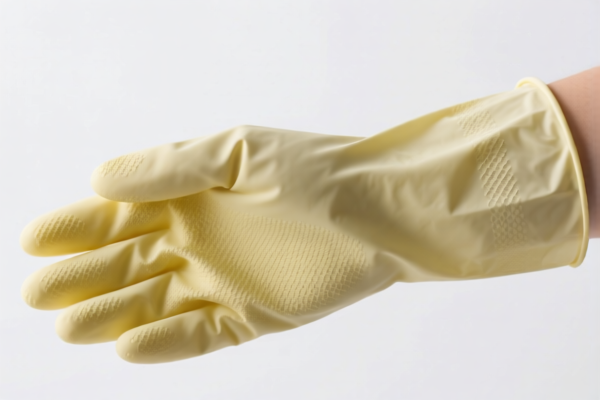

AI分析
🧤 Rubber Composite Gloves (Without Fourchechettes)
🌐 HS Code Reference & Customs Clearance Guide | 2026 Latest Tariff Analysis | Professional Clearance Strategy
📌 I. Product Definition & Classification: What Are "Gloves Without Fourchechettes"?
Fourchechettes (often referred to as gauntlet cuffs or extended cuffs) are the long, protective extensions on gloves that cover the wrist and forearm. "Without Fourchechettes" means these gloves feature a standard wrist-length cuff or no extended cuff, distinguishing them from heavy-duty industrial gauntlet gloves.
In international trade, these gloves fall into two primary categories based on material composition and manufacturing process: 1. Vulcanized Rubber Gloves (HS Chapter 40): Made from raw rubber that has been chemically treated (vulcanized) for durability. 2. Knitted/Laid Gloves Impregnated with Rubber/Plastic (HS Chapter 61/62): Fabric gloves (knitted or woven) that have been dipped, coated, or laminated with a layer of rubber or plastic for waterproofing or chemical resistance.
⚠️ Key Distinction Point:
- If the glove is solid rubber or vulcanized rubber composite → It belongs in Chapter 40.
- If the glove is fabric-based (knitted/weaved) and only coated/dipped → It belongs in Chapter 61 or 62.
📦 II. HS Code Classification Details (2026 Latest Tariff Matrix)
Based on the provided data, here are the specific HS Codes for Rubber Composite Gloves Without Fourchechettes:
| HS Code | Product Description | Material Structure | Key Feature |
|---|---|---|---|
4015.19.11.10 |
Rubber composite, vulcanized, glove shape, no fourchechettes | Solid/Composite Vulcanized Rubber | No finger separation stitching |
6116.10.44.00 |
Rubber composite, impregnated/coated with plastic/rubber, knitted glove, no fourchechettes | Knitted Fabric + Coating | Knitted base, coated surface |
4015.19.11.50 |
Vulcanized rubber composite material, for glove use, no fourchechettes | Solid/Composite Vulcanized Rubber | No finger separation stitching |
6116.10.48.30 |
Rubber composite, laminated/impregnated with plastic/rubber, knitted glove, no fourchechettes | Knitted Fabric + Lamination | Multi-layer knitted construction |
6216.00.19.00 |
Rubber material, glove shape, no fourchechettes | Other Rubber Materials | General rubber glove (non-vulcanized or specific subtype) |
6216.00.26.00 |
Rubber material, impregnated/coated/covered with rubber, glove, no fourchechettes | Woven/Knitted Fabric + Rubber Coating | Fabric base fully covered in rubber |
🔍 Important Note:
- Chapter 40 Codes (4015...) generally attract higher additional tariffs due to the specific trade policies affecting vulcanized rubber products.
- Chapter 61/62 Codes (6116...,6216...) are often considered "textiles with rubber coating," leading to different base rates but still significant additional tariffs.
💰 III. 2026 Latest Tariff Rate Breakdown (Including Add-ons & Policy Surcharges)
✅ Applicable Country: USA (US)
✅ Origin: China (CN)
✅ Effective Date: Current trade policies (2024-2026 period)
🎯 1. Vulcanized Rubber Gloves (Chapter 40)
A. 4015.19.11.10 & 4015.19.11.50
(Solid/Composite Vulcanized Rubber, No Fourchechettes)
| Item | Content |
|---|---|
| Base Tariff | 3.0% |
| Section 301 Additional Tariff | +25.0% |
| Section 122 Tariff (H.R. 1) | +10.0% |
| Total Tax Rate | 38.0% |
| Tax Calculation | CIF Value × 38.0% |
| Legal Basis Path | HTSUS:4015.19.11 → 301 Footnote 3 → 122 Footnote |
📌 Explanation:
- These codes cover high-quality, durable rubber gloves (e.g., medical, laboratory, or heavy-duty industrial gloves made from solid rubber).
- The 38.0% total rate is extremely high, significantly impacting profit margins.
- No de minimis exemption applies for this classification from China.
🎯 2. Knitted Gloves Coated with Rubber/Plastic (Chapter 61)
B. 6116.10.44.00
(Knitted, Impregnated/Coated, No Fourchechettes)
| Item | Content |
|---|---|
| Base Tariff | 9.9% |
| Section 301 Additional Tariff | +7.5% |
| Section 122 Tariff (H.R. 1) | +10.0% |
| Total Tax Rate | 27.4% |
| Tax Calculation | CIF Value × 27.4% |
| Legal Basis Path | HTSUS:6116.10.44 → 301 Footnote 3 → 122 Footnote |
📌 Explanation:
- This is a common commercial glove (e.g., disposable-style nitrile or latex dipped gloves).
- Lower base tariff (9.9%) compared to Chapter 40, but still subject to substantial additional taxes.
C. 6116.10.48.30
(Knitted, Laminated/Impregnated, No Fourchechettes)
| Item | Content |
|---|---|
| Base Tariff | 18.6% |
| Section 301 Additional Tariff | +7.5% |
| Section 122 Tariff (H.R. 1) | +10.0% |
| Total Tax Rate | 36.1% |
| Tax Calculation | CIF Value × 36.1% |
| Legal Basis Path | HTSUS:6116.10.48 → 301 Footnote 3 → 122 Footnote |
📌 Explanation:
- "Laminated" implies a more complex manufacturing process (multiple layers), which carries a higher base duty (18.6%).
- Total tax is nearly as high as solid rubber gloves.
🎯 3. Other Rubber Gloves (Chapter 62)
D. 6216.00.19.00
(Other Rubber Gloves, No Fourchechettes)
| Item | Content |
|---|---|
| Base Tariff | 11.1¢/kg + 5.5% (Ad Valorem) |
| Section 301 Additional Tariff | +7.5% |
| Section 122 Tariff (H.R. 1) | +10.0% |
| Total Tax Rate | 11.1¢/kg + 23.0% (5.5% + 7.5% + 10%) |
| Tax Calculation | (Weight × 11.1¢) + (Value × 23.0%) |
| Legal Basis Path | HTSUS:6216.00.19 → 301 Footnote 3 → 122 Footnote |
📌 Explanation:
- This code uses a mixed duty (Specific + Ad Valorem).
- For low-value, lightweight gloves, the per-kg duty might be significant relative to value.
- Total ad valorem component is 23.0%, plus the specific duty.
E. 6216.00.26.00
(Rubber-Coated/Woven Gloves, No Fourchechettes)
| Item | Content |
|---|---|
| Base Tariff | 7.0% |
| Section 301 Additional Tariff | +7.5% |
| Section 122 Tariff (H.R. 1) | +10.0% |
| Total Tax Rate | 24.5% |
| Tax Calculation | CIF Value × 24.5% |
| Legal Basis Path | HTSUS:6216.00.26 → 301 Footnote 3 → 122 Footnote |
📌 Explanation:
- This is often the most competitive code for coated fabric gloves in Chapter 62.
- Lowest total percentage rate (24.5%) among all listed options, but strictly requires the glove to be a fabric base fully covered in rubber.
🛠️ IV. Customs Clearance Operational Advice (Practical Pitfall Guide)
✅ 1. Preparation Checklist (Non-Negotiable)
| Document | Required? | Description |
|---|---|---|
| ✅ Product Specification Sheet | ✔️ | Must specify: Material (Rubber vs. Knitted), Thickness, Liner type, Cuff style (Confirm "No Fourchechettes"). |
| ✅ Material Composition Chart | ✔️ | Percentage of rubber vs. fabric. Critical for distinguishing 4015 vs 6116/6216. |
| ✅ Product Photos (Front/Back/Cross-section) | ✔️ | Show the cuff clearly to prove absence of gauntlet/fourchechettes. |
| ✅ Commercial Invoice | ✔️ | Must state "Gloves, Rubber Composite, Without Fourchechettes". Avoid generic terms like "Safety Gear". |
| ✅ Packing List | ✔️ | Net weight and gross weight are crucial for 6216.00.19.00 (specific duty calculation). |
| ✅ Country of Origin Certificate | ✔️ | Required for 301/122 tariff application. |
✅ 2. Declaration Strategy (Key Mantras)
🔥 "Material First, Structure Second, Name Accurate, Tax Lower!"
| Scenario | Correct Declaration | Wrong Approach |
|---|---|---|
| Solid/Vulcanized Rubber Glove | 4015.19.11.10 |
Declare as "Knitted Glove" → Smuggling Risk |
| Fabric Dipped in Latex | 6116.10.44.00 |
Declare as "Rubber Glove" → Wrong Chapter, Penalties |
| Fabric Laminated with Plastic | 6116.10.48.30 |
Declare as "Simple Coated" → Higher Base Duty Applied |
| Low-Value Light Gloves | 6216.00.19.00 |
Ignore weight → Incorrect Specific Duty Calculation |
⚠️ Critical Warning:
- If you declare a Knitted Glove as Chapter 40, CBP will reject it based on material composition.
- If you declare a Vulcanized Glove as Chapter 61, you may face 25% Section 301 vs 7.5% Section 301 discrepancies (huge tax difference).
- "Without Fourchechettes" must be explicitly stated or shown in photos to avoid being classified as a "Gauntlet Glove" (which might have different sub-codes or higher base duties).
✅ 3. Special Circumstances Handling
| Situation | Handling Advice |
|---|---|
| Mixed Shipment | If a shipment contains both 4015 (solid) and 6116 (knitted) gloves, they must be declared separately. Do not combine them into one line item. |
| Sample vs. Bulk | Samples still require HS Code classification. If value is >$800, de minimis does NOT apply for Chinese-origin goods. |
| Re-exports | If gloves are manufactured in China but exported to a third country, the 301/122 tariffs still apply if re-imported into the US. |
| Labeling | Ensure labels say "Made in China". Any ambiguity regarding origin can lead to additional audits and delays. |
🌍 V. Global Market Clearance Comparison (2026)
| Country/Region | Recommended HS Code (Example) | Approx. Tariff (China Origin) | Certification | Notes |
|---|---|---|---|---|
| 🇺🇸 USA | 4015.19.11.10 / 6116.10.44.00 |
27.4% – 38.0% | FDA (if medical), CPSIA | High Risk: 301 & 122 tariffs are mandatory. |
| 🇪🇺 EU | 4015.11 / 6116.91 |
~3.7% - 6.5% | CE, REACH | No Section 301/122. Lower barrier. |
| 🇨🇳 China | 4015.19 / 6116.10 |
3.0% - 9.9% | CCC (if applicable) | No additional anti-dumping tariffs on most gloves. |
| 🇬🇧 UK | 4015.11 / 6116.91 |
~3.7% - 6.5% | UKCA, REACH | Post-Brexit rules similar to EU but separate certs. |
| 🇨🇦 Canada | 4015.11 / 6116.91 |
~3.5% - 6.5% | Health Canada | CFIA approval for food-contact rubber. |
📌 Conclusion:
- The USA is the most expensive market for Chinese rubber gloves due to Section 301 (25%/7.5%) and Section 122 (10%) tariffs.
- Total taxes can exceed 38%, making cost optimization critical.
- Consider supply chain diversification (e.g., Vietnam, Indonesia) if targeting the US market, as these countries may enjoy lower or zero Section 301 tariffs.
📌 VI. Common Errors & Pitfalls (Lessons Learned)
❌ Error 1: Declaring all rubber gloves under one HS Code regardless of construction.
👉 Consequence: CBP audits reveal misclassification → Back taxes + Penalties.
❌ Error 2: Ignoring the "No Fourchechettes" detail.
👉 Consequence: If gauntlets are present, the correct code might be 4015.19.11.30 (higher duty) → Underpayment.
❌ Error 3: Failing to declare Section 122 Tariff.
👉 Consequence: Since January 2024, Section 122 tariffs are active. Failure to include leads to seizure or forced return.
❌ Error 4: Confusing "Impregnated" with "Laminated".
👉 Consequence: 6116.10.44.00 (Impregnated) vs 6116.10.48.30 (Laminated) have different base duties (9.9% vs 18.6%). Misdeclaration leads to corrective entries.
✅ Correct Practice:
"Gloves, Rubber Composite, Vulcanized, No Gauntlets/Fourchechettes, Model XYZ, Made in China, HS Code 4015.19.11.10"
🎯 VII. Conclusion: Professional Declaration, Cost Efficiency, Smooth Clearance!
🎯 Remember the Mantra:
🔹 "Material Dictates Chapter, Structure Dictates Sub-code, No Fourchechettes Means Wrist-Cuff, 301+122 Means High Cost!"
🔹 "HS Code Determines Fate, Tax Difference is Key, Wrong Declaration Costs Thousands!"
📌 Pro Tip:
If your gloves are manufactured in Vietnam, Indonesia, or Thailand, they may be exempt from Section 301 tariffs (check current HTSUS rulings).
Recommend applying for an Advance Ruling from US CBP if the product structure is unique (e.g., hybrid materials) to avoid future disputes.
📣 Immediate Action:
📞 Contact a Licensed Customs Broker + Provide Product Samples + Apply for HS Code Pre-Ruling
🚀 Ensure your Rubber Gloves are Cleared Efficiently, Landed Costs are Predicted, and Profits are Protected!
✨ Professional Clearance Starts with Precise Classification!
💼 Every Cent of Tariff Savings is a Cent of Profit Gained!
用户评价
关于 HS 编码归类
协调制度(HS)是由世界海关组织(WCO)制定的国际贸易商品分类标准。全球 200 多个国家采用 HS 系统作为海关关税、贸易统计和进出口监管的基础。
每个 HS 编码遵循以下层级结构:
- 章(2 位)——商品大类(例如:第 84 章:机器和机械设备)
- 品目(4 位)——章内的更具体分类
- 子目(6 位)——国际通用细分,所有 WCO 成员国统一使用
- 本国细分(8-10 位)——各国自行扩展的细分编码,如美国 HTSUS 10 位编码
正确的 HS 编码归类对于顺利通关、准确缴纳关税和遵守贸易法规至关重要。错误归类可能导致海关延误、多缴关税或罚款。
从CN进口到US时,适用的关税税率可能包括:
- 最惠国(MFN)税率——适用于 WTO 成员国的标准关税税率
- 普通税率——适用于无贸易协定国家
- 贸易救济关税——附加关税,如 301 条款(反倾销)、232 条款(国家安全)或反补贴税
本页内容仅供参考。如需正式归类,请咨询当地海关或持牌报关代理。