Rubber Gloves for Car Washing
CN → US| HS编码 | 关税税率 | 原产国 | 目的国 | 文档 |
|---|---|---|---|---|
| 5603110070 | 35.0% | CN | US | 官方文档 |
| 3926204050 | 16.5% | CN | US | 官方文档 |
| 5603920070 | 35.0% | CN | US | 官方文档 |
| 3926201050 | 10.0% | CN | US | 官方文档 |
| 6116105510 | 30.7% | CN | US | 官方文档 |
商品图片



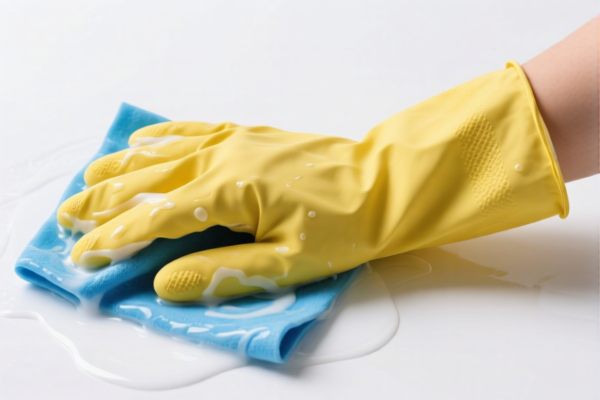
AI分析
🧤 Rubber/Textile Gloves for Car Washing (Automotive Detailing)
🌐 HS Code Reference & Customs Clearance Guide | 2026 Latest Tariff Analysis | Professional Clearance Strategy
📌 I. Product Definition & Classification: Do You Really Understand "Car Wash Gloves"?
Car wash gloves are essential tools in the automotive care industry, designed to lift dirt and grime without scratching the vehicle's paint. In international trade, these gloves are not treated as a single homogeneous category. Their HS Code classification depends entirely on material composition and structural manufacturing.
There are two primary pathways for classification: 1. Non-Woven/Fibrous Textiles: If the glove is made of microfiber, foam, or non-woven fabric (common for "wash mitts" that are disposable or semi-disposable). 2. Plastic/Rubber Coated or Solid: If the glove is primarily made of solid rubber, latex, or has a plastic coating on a textile base (common for heavy-duty cleaning gloves).
⚠️ Key Distinction:
- If the material is textile-based (knitted/woven/non-woven) → Look towards Chapter 56 (Non-wovens) or Chapter 61 (Knitted/Crocheted Apparel).
- If the material is plastic/rubber-based → Look towards Chapter 39 (Plastics) or Chapter 40 (Rubber).
- Note: The data below focuses on the specific HS Codes provided in the input, which heavily feature Non-Woven Textiles (Ch 56) and Plastic Gloves (Ch 39).
📦 II. HS Code Classification Details (2026 Latest Tariff Authority Comparison)
| HS Code | Product Description | Material/Structure | Applicable Scenario |
|---|---|---|---|
5603.11.00.70 |
Non-woven fabrics, of man-made fibers, weighing ≤ 25 g/m² | Non-woven, synthetic fiber (Microfiber/Melange) | Lightweight wash mitts, disposable cleaning pads, fiber-based gloves sold as "non-woven products". |
5603.92.00.70 |
Non-woven fabrics, of other textile materials, weighing > 25 g/m² but ≤ 70 g/m² | Non-woven, mixed fiber, or heavier synthetic foam/fiber blend | Thicker non-woven mitts, composite material gloves, industrial cleaning pads. |
3926.20.40.50 |
Other articles of plastics: other gloves | Solid plastic or synthetic material gloves | PVC/Plastic gloves used for cleaning, rubber-coated gloves (if classified under plastic), or fully synthetic non-fabric gloves. |
3926.20.10.50 |
Other articles of plastics: other gloves (specific sub-category) | Plastic/Rubber gloves (often lighter duty or specific chemical resistant) | Lighter duty plastic gloves, sometimes used for delicate interior cleaning or as liner gloves. |
6116.10.55.10 |
Gloves, mittens, and mitts, impregnated, coated, covered or laminated with plastics, of knitting or crocheting | Knitted textile glove with plastic/rubber coating | Textile gloves (e.g., cotton/polyester knit) that are coated with latex, PVC, or nitrile for water resistance. Note: The input summary suggests "textile fiber" inference. |
🔍 Critical Insight:
- Non-Woven (5603.xx): Best for gloves that are essentially "fibrous pads" or microfiber mitts that don't have a knitted structure. They are often treated as industrial supplies or retail goods under non-woven categories.
- Plastic/Gloves (3926.xx): Best for gloves that are essentially solid plastic/rubber or where the dominant characteristic is the plastic material, not the textile base.
- Knitted/Coated (6116.xx): Best for traditional glove shapes (with fingers, thumb, wrist cuff) made of knit fabric but treated with a waterproof coating.
💰 III. 2026 Latest Tariff Rate Details (Including Surcharges & Policy Add-ons)
✅ Applicable Country: United States (US)
✅ Origin: China (CN)
✅ Effective Time: Post-2025/2026 (Includes Section 301 & IEEPA tariffs)
🎯 1. 5603.11.00.70 —— Non-woven Fabrics (Light Weight)
| Item | Content |
|---|---|
| Base Tariff | 0% |
| Section 301 Tariff (25%) | +25% (Due to origin: China) |
| Section 122 Tariff (10%) | +10% (Specific trade measure) |
| Total Tariff Rate | 35.0% |
| Tax Calculation | CIF Value × 35% |
| De Minimis Exemption | ❌ Not Applicable (Subject to high tariffs) |
| Legal Basis Path | USITC:5603.11.00.70 → Section 301: Footnote 9903.01 → Section 122: IEEPA |
📌 Explanation:
- This code applies to lightweight non-woven cleaning mitts/pads.
- Total Cost Impact: 35% is significant. While the base tariff is 0%, the 25% Section 301 and 10% Section 122 surcharges make this expensive for high-volume imports.
- Strategy: Ensure the product is truly "non-woven" and not "knitted." Misclassification can lead to penalties.
🎯 2. 3926.20.40.50 —— Plastic Gloves (Other Articles of Plastic)
| Item | Content |
|---|---|
| Base Tariff | 6.5% |
| Section 301 Tariff (0%) | 0% (Note: Some plastic gloves may be exempt from specific 25% surcharge depending on detailed HTS sub-classification, per input data) |
| Section 122 Tariff (10%) | +10% |
| Total Tariff Rate | 16.5% |
| Tax Calculation | CIF Value × 16.5% |
| De Minimis Exemption | ❌ Not Applicable |
| Legal Basis Path | USITC:3926.20.40.50 → Section 122: IEEPA |
📌 Explanation:
- This code is for plastic-based gloves.
- Advantage: The 16.5% total rate is significantly lower than the non-woven textile options (35%).
- Key Check: Verify if the glove is primarily plastic/rubber. If it's a fabric glove with plastic coating, this code might be incorrect. However, if it's a solid plastic "dishwashing-style" or "rubber" glove, this is the most cost-effective option.
🎯 3. 5603.92.00.70 —— Non-Woven Fabrics (Medium Weight)
| Item | Content |
|---|---|
| Base Tariff | 0% |
| Section 301 Tariff (25%) | +25% |
| Section 122 Tariff (10%) | +10% |
| Total Tariff Rate | 35.0% |
| Tax Calculation | CIF Value × 35% |
| De Minimis Exemption | ❌ Not Applicable |
| Legal Basis Path | USITC:5603.92.00.70 → Section 301 → Section 122 |
📌 Explanation:
- Similar to5603.11.00.70but for heavier non-woven materials.
- Same High Cost: 35% total tariff.
- Use Case: Thicker, more durable non-woven wash mitts.
🎯 4. 3926.20.10.50 —— Plastic Gloves (Specific Sub-category)
| Item | Content |
|---|---|
| Base Tariff | 0% |
| Section 301 Tariff (0%) | 0% |
| Section 122 Tariff (10%) | +10% |
| Total Tariff Rate | 10.0% |
| Tax Calculation | CIF Value × 10% |
| De Minimis Exemption | ❌ Not Applicable |
| Legal Basis Path | USITC:3926.20.10.50 → Section 122 |
📌 Explanation:
- Best Rate! At only 10%, this is the most tariff-efficient option for plastic/rubber gloves.
- Caution: This code is very specific. It likely refers to a particular type of plastic glove (e.g., simple utility gloves) that is excluded from the 25% Section 301 surcharge.
- Recommendation: If your car wash glove is made of solid rubber, latex, or PVC (not fabric-based), try to qualify for this code. It saves 25% compared to non-woven textile options.
🎯 5. 6116.10.55.10 —— Knitted Gloves with Plastic Coating
| Item | Content |
|---|---|
| Base Tariff | 13.2% |
| Section 301 Tariff (7.5%) | +7.5% (Note: Input indicates 7.5% surcharge, which may be a partial or specific rate) |
| Section 122 Tariff (10%) | +10% |
| Total Tariff Rate | 30.7% |
| Tax Calculation | CIF Value × 30.7% |
| De Minimis Exemption | ❌ Not Applicable |
| Legal Basis Path | USITC:6116.10.55.10 → Section 301 → Section 122 |
📌 Explanation:
- This code is for knitted textile gloves (like a microfiber mitt with a rubber palm) that are coated with plastic/rubber.
- Mid-Range Cost: 30.7% is lower than the non-woven fabric rate (35%) but higher than the plastic glove rate (10-16.5%).
- Structure Matters: Must have a clear knitted/crocheted structure (fingers, thumb, cuff) and be coated. If it's just a "pad" or "mitt" without distinct finger separation, it might fall under Non-Woven (5603) instead.
🛠️ IV. Customs Clearance Practical Advice (Avoid Pitfalls)
✅ 1. Documentation Checklist (Mandatory)
| Document | Required? | Notes |
|---|---|---|
| Product Spec Sheet | ✔️ | Must specify Material Composition (e.g., "100% Polyester Non-Woven" vs. "Nitrile Rubber Coated Cotton"). |
| Material Test Report | ✔️ | Third-party lab report confirming fiber type (synthetic vs. natural) and coating substance. |
| Product Photos | ✔️ | Clear images of the glove, including texture (non-woven vs. knitted) and any logos/labels. |
| Commercial Invoice | ✔️ | Describe as "Non-Woven Microfiber Wash Mitt" or "Rubber Coated Cleaning Glove" accurately. |
| Packing List | ✔️ | Detail inner packaging (e.g., "Polybag") and outer carton dimensions. |
✅ 2. Classification Strategy (Key Mnemonic)
🔥 "Material First, Structure Second, Code Fits the Truth!"
| Glove Type | Likely HS Code | Total Tariff | Risk Level |
|---|---|---|---|
| Solid Plastic/Rubber Glove (No fabric base) | 3926.20.10.50 |
10.0% | Low (If correctly identified) |
| Plastic Glove (General) | 3926.20.40.50 |
16.5% | Low |
| Knitted Fabric + Coated (Distinct fingers/cuff) | 6116.10.55.10 |
30.7% | Medium (Must prove knitted structure) |
| Non-Woven Fabric Mitt (No distinct fingers, fibrous) | 5603.11.00.70 / 5603.92.00.70 |
35.0% | High (Check weight and fiber type) |
✅ 3. Special Cases & Mitigation
| Scenario | Advice |
|---|---|
| Microfiber Wash Mitts (Fuzzy, no fingers) | Often misclassified as "Gloves." If they are non-woven, they may fall under 5603 (Non-Wovens) rather than Chapter 61 or 39. This is critical for tariff accuracy. |
| Gloves with Rubber Palms & Fabric Back | If the fabric is knitted, use 6116. If the fabric is non-woven, use 5603. Do not use 3926 unless the rubber is the dominant material by weight/volume. |
| Avoiding 25% Section 301 | If possible, structure the product as a Plastic/Rubber Glove (3926.20.10.50) to enjoy the 10% rate. This requires the product to be primarily plastic/rubber, not textile. |
| De Minimis (Section 321) | ❌ Not Available. All these HS Codes are subject to high tariffs and do not qualify for the $800 de minimis exemption for low-value shipments. |
🌍 V. Global Market Comparison (2026)
| Market | Recommended HS Code | Tariff (China Origin) | Notes |
|---|---|---|---|
| 🇺🇸 USA | 3926.20.10.50 |
10.0% | Best rate for plastic/rubber gloves. |
| 🇺🇸 USA | 5603.11.00.70 |
35.0% | High tariff for non-woven textiles. |
| 🇨🇳 China (Import) | 4015.11.00.00 (Example) |
~5-10% | Lower base tariffs, no Section 301. |
| 🇪🇺 EU | 4015.11.00 (Rubber) |
6.5% | Standard MFN rate, no equivalent Section 301. |
| 🇯🇵 Japan | 4015.11.00 |
6.5% - 10% | Depends on free trade agreements. |
📌 Conclusion for US Market:
- Plastic/Rubber Gloves are significantly cheaper to import than Non-Woven Textile Gloves due to the removal of the 25% Section 301 surcharge in some plastic categories.
- Non-Woven Gloves (5603) face a 35% total tariff, making them less competitive unless the product value is very high.
📌 VI. Common Errors & Pitfalls (Lessons Learned)
❌ Error 1: Calling a Non-Woven Microfiber Mitt a "Glove" and classifying it under 6116 (Knitted).
👉 Consequence: If it's not knitted, it will be reclassified to 5603 or 3926, leading to tariff underpayment penalties or delays.
❌ Error 2: Using 3926 for a Fabric-Based Glove.
👉 Consequence: Customs will reject the classification. If the fabric is the main component, it must be Class 61 or 56.
❌ Error 3: Ignoring Section 122.
👉 Consequence: All provided codes include a 10% Section 122 tariff. Forgetting this leads to 10% underpayment on every shipment.
❌ Error 4: Assuming De Minimis applies.
👉 Consequence: Shipments under $800 will still be subject to tariffs for these HS Codes.
✅ Correct Approach:
"Check the Material. Check the Structure. Apply the Right Chapter. Always Include Section 122."
🎯 VII. Conclusion: Professional Classification Saves Money!
🎯 Key Takeaway:
- For Car Wash Gloves, the Tariff Rate varies from 10% to 35% based on material.
- Plastic/Rubber Gloves (3926.20.10.50) offer the lowest tariff (10%).
- Non-Woven Textile Gloves (5603) incur the highest tariff (35%) due to Section 301.
- Coated Knitted Gloves (6116) sit in the middle (30.7%).
📌 Actionable Advice:
1. Analyze Your Product: Is it primarily plastic/rubber or textile/non-woven?
2. Choose the Code Wisely: If it's plastic-based, aim for 3926.20.10.50 for the 10% rate.
3. Document Precisely: Ensure your invoices and specs match the chosen HS Code exactly.
4. Consult a Customs Broker: Get a Pre-Ruling if your product has mixed materials (e.g., fabric with rubber coating).
✨ Professional Clearance, From Precise Classification!
💼 Your Every Dollar of Tariff is Worth Saving!
用户评价
关于 HS 编码归类
协调制度(HS)是由世界海关组织(WCO)制定的国际贸易商品分类标准。全球 200 多个国家采用 HS 系统作为海关关税、贸易统计和进出口监管的基础。
每个 HS 编码遵循以下层级结构:
- 章(2 位)——商品大类(例如:第 84 章:机器和机械设备)
- 品目(4 位)——章内的更具体分类
- 子目(6 位)——国际通用细分,所有 WCO 成员国统一使用
- 本国细分(8-10 位)——各国自行扩展的细分编码,如美国 HTSUS 10 位编码
正确的 HS 编码归类对于顺利通关、准确缴纳关税和遵守贸易法规至关重要。错误归类可能导致海关延误、多缴关税或罚款。
从CN进口到US时,适用的关税税率可能包括:
- 最惠国(MFN)税率——适用于 WTO 成员国的标准关税税率
- 普通税率——适用于无贸易协定国家
- 贸易救济关税——附加关税,如 301 条款(反倾销)、232 条款(国家安全)或反补贴税
本页内容仅供参考。如需正式归类,请咨询当地海关或持牌报关代理。