Rubber Hose
CN → US| HS编码 | 关税税率 | 原产国 | 目的国 | 文档 |
|---|---|---|---|---|
| 4009110000 | 37.5% | CN | US | 官方文档 |
| 4009120050 | 20.0% | CN | US | 官方文档 |
| 5909002000 | 38.3% | CN | US | 官方文档 |
| 4009220020 | 37.5% | CN | US | 官方文档 |
商品图片
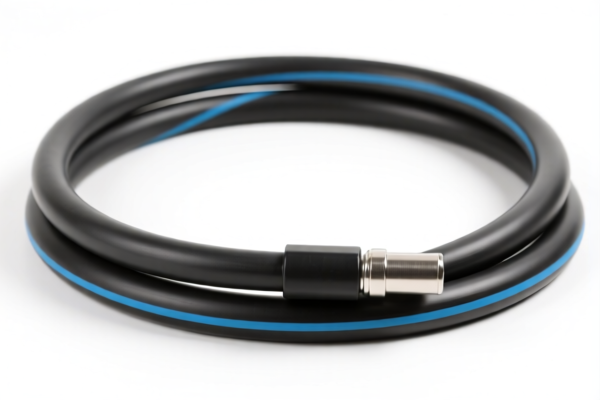
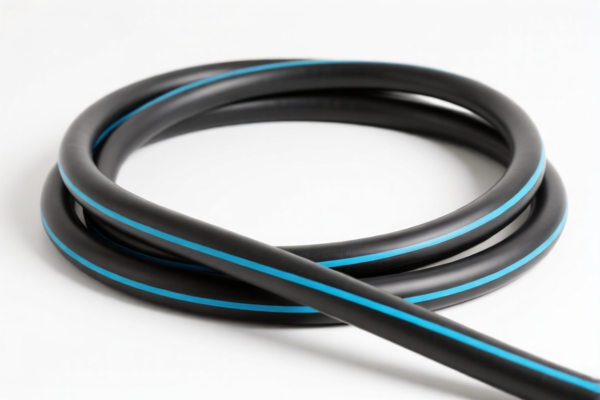
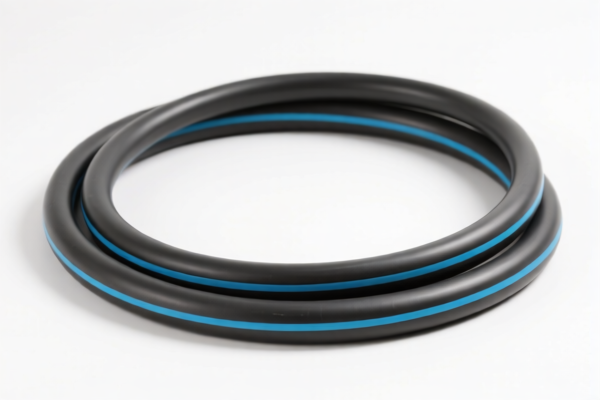
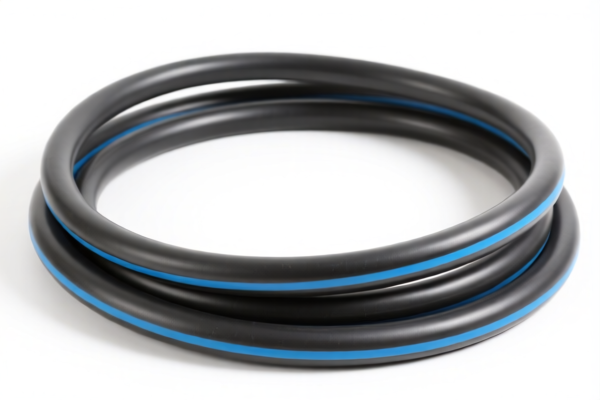
AI分析
🌊 Rubber Hoses (Industrial & Automotive Fluid Transfer)
🌐 HS Code Reference & Customs Clearance Guide | 2026 Latest Tariff Analysis | Professional-Level Strategy
📌 I. Product Definition & Classification: What Exactly is a "Rubber Hose"?
Rubber hoses are flexible tubes used for conveying fluids (water, oil, air, gas, chemicals) in industrial, automotive, and agricultural applications. In international trade, they are not a monolithic category. The correct HS Code depends strictly on three factors: 1. Reinforcement Structure: Is it reinforced? If so, with wire, cord, or other material? 2. Connection Type: Does it have joints/accessories attached (e.g., metal flanges)? 3. Specific Application/Nature: Is it a textile-reinforced hose falling under Chapter 59?
⚠️ Key Distinction Points: - Pure Rubber/No Reinforcement: Simple flexible tubes without added strength layers → Often 4009.11 or 4009.12. - Reinforced (Wire/Cord): Hoses with metal wires or textile cords for pressure resistance → 4009.22 or 4009.32. - Textile/Other Reinforcement: Hoses where the primary reinforcement is not rubber/latex itself but textile or other materials (Chapter 59) → 5909.00. - With Joints: Hoses permanently or temporarily attached with fittings (joints, couplings) → 4009.42 (though not listed in the provided data, generally distinct from plain hoses).
📦 II. HS Code Classification Matrix (Based on Provided Data)
| HS Code | Product Description (From Data) | Key Characteristics | Reinforcement Type |
|---|---|---|---|
4009.11.00.00 |
Rubber hose, material: vulcanized rubber, form: tube/hose without joints | Basic vulcanized rubber hose | None or Light |
4009.12.00.50 |
Rubber hose, material: rubber, form: hose with joints/accessories | Hoses equipped with fittings (flanges, couplings) | Any (Focus on "With Joints") |
5909.00.20.00 |
Rubber hose, conforms to textile tube/like form, classified elsewhere | Textile-reinforced or similar non-rubber-primary structure | Textile/Other |
4009.22.00.20 |
High-pressure metal-fitted rubber hose, includes metal reinforcement structure, material: vulcanized rubber | High-pressure industrial/hydraulic hose with metal wire reinforcement | Metal Wire/Cord |
🔍 Critical Note: - 4009.11.00.00 vs 4009.12.00.50: The difference is NOT pressure rating, but the presence of joints/accessories. If it has fittings, it goes to 4009.12 (in this specific dataset context). - 4009.22.00.20 is distinct because it explicitly mentions metal reinforcement. This is typical for hydraulic hoses. - 5909.00.20.00 is the "outlier" chapter. If the hose is primarily textile-reinforced (e.g., garden hose with fabric lining, industrial hose with fabric plies), it moves to Chapter 59, not 40.
💰 III. 2026 Tariff Rate Breakdown (US Import from China)
✅ Applicable Country: United States (US)
✅ Origin: China (CN)
✅ Effective Time: Current 2026 Tariff Structure (Section 301 & IEEPA)
🎯 1. 4009.11.00.00 — Basic Vulcanized Rubber Hose (No Joints)
| Item | Content |
|---|---|
| Base Tariff | 2.5% |
| Section 301 Add-on | +25.0% |
| IEEPA 122 Clause | +10.0% |
| Total Tariff Rate | 37.5% |
| Calculation Basis | CIF Value × 37.5% |
| De Minimis Exemption? | ❌ NO (Denied) |
| Legal Path | USITC:4009.11.00.00 → Section 301 → IEEPA:122 |
📌 Explanation: - This is a standard vulcanized rubber hose without complex reinforcements or joints. - 37.5% is a high barrier. It includes the standard 2.5% MFN rate, the heavy Section 301 tariff (25%), and the additional 10% under IEEPA Section 122 (often related to specific Chinese goods lists). - No de minimis: Shipments under $800 cannot bypass this tariff.
🎯 2. 4009.12.00.50 — Rubber Hose WITH Joints/Accessories
| Item | Content |
|---|---|
| Base Tariff | 2.5% |
| Section 301 Add-on | +7.5% |
| IEEPA 122 Clause | +10.0% |
| Total Tariff Rate | 20.0% |
| Calculation Basis | CIF Value × 20.0% |
| De Minimis Exemption? | ❌ NO (Denied) |
| Legal Path | USITC:4009.12.00.50 → Section 301 → IEEPA:122 |
📌 Strategic Insight: - Why lower? The Section 301 add-on is only 7.5%, not 25%. This suggests this specific subheading (possibly for certain types of jointed hoses) has a favorable trade remedy status compared to plain hoses. - Total 20% is significantly cheaper than the 37.5% for plain hoses. - Risk: If you declare a hose with joints as "plain hose" (4009.11) to avoid inspection but it’s clearly jointed, you risk misclassification penalties. Conversely, if it’s plain but declared as jointed, you might save money but face audits.
🎯 3. 5909.00.20.00 — Textile/Other Reinforced Rubber Hose
| Item | Content |
|---|---|
| Base Tariff | 3.3% |
| Section 301 Add-on | +25.0% |
| IEEPA 122 Clause | +10.0% |
| Total Tariff Rate | 38.3% |
| Calculation Basis | CIF Value × 38.3% |
| De Minimis Exemption? | ❌ NO (Denied) |
| Legal Path | USITC:5909.00.20.00 → Section 301 → IEEPA:122 |
📌 Explanation: - This is the highest tariff among the options. - Textile-reinforced hoses often fall under Chapter 59. - The base tariff (3.3%) is higher than rubber-only (2.5%), and the Section 301 add-on is the maximum 25%. - Cost Impact: For every $10,000 shipment, you pay $383 in tariffs.
🎯 4. 4009.22.00.20 — High-Pressure Metal-Reinforced Hose
| Item | Content |
|---|---|
| Base Tariff | 2.5% |
| Section 301 Add-on | +25.0% |
| IEEPA 122 Clause | +10.0% |
| Total Tariff Rate | 37.5% |
| Calculation Basis | CIF Value × 37.5% |
| De Minimis Exemption? | ❌ NO (Denied) |
| Legal Path | USITC:4009.22.00.20 → Section 301 → IEEPA:122 |
📌 Explanation: - Despite being "metal-reinforced," it retains the 2.5% base tariff. - However, it is subject to the full 25% Section 301 tariff. - This is a high-performance product (hydraulic, oil) but faces the same high tariff wall as plain rubber hoses.
🛠️ IV. Customs Clearance Practical Advice (Pitfall Avoidance Guide)
✅ 1. Documentation Checklist (Non-Negotiable)
| Document | Must Provide? | Purpose |
|---|---|---|
| ✅ Product Specification Sheet | ✔️ | Details: Material (Vulcanized Rubber, EPDM, NBR?), Reinforcement (Wire, Textile, None?), Pressure Rating (PSI/Bar). |
| ✅ Photographs (Clear) | ✔️ | Show cross-section (to prove reinforcement), ends (with/without joints), and any markings. |
| ✅ Commercial Invoice | ✔️ | Must clearly state "Rubber Hose" and specify HS Code. Avoid vague terms like "Plumbing Parts." |
| ✅ Packing List | ✔️ | Weight and dimensions of each package. |
| ✅ Certificate of Origin | ✔️ | Proves China origin (triggering the tariffs). |
| ✅ Material Safety Data Sheet (MSDS) | ⚠️ If Applicable | If the hose is for chemical transfer, prove compatibility and material composition. |
✅ 2. Classification Strategy (Key Mnemonics)
🔥 "Structure is King, Joints Change the Rate, Textile Goes Elsewhere!"
| Scenario | Correct HS Code | Tariff Rate | Why? |
|---|---|---|---|
| Plain rubber tube, no fittings, no wire | 4009.11.00.00 |
37.5% | Basic vulcanized rubber, no joints. |
| Rubber hose with metal/flange fittings attached | 4009.12.00.50 |
20.0% | Lower Rate! Key benefit of having joints in this specific dataset. |
| Hose reinforced with metal wire (High Pressure) | 4009.22.00.20 |
37.5% | Metal reinforcement triggers 25% Section 301. |
| Hose reinforced with Textile/Fabric (Chapter 59) | 5909.00.20.00 |
38.3% | Wrong chapter (59 vs 40), highest base tariff + full add-ons. |
✅ 3. Special Cases & Tips
| Situation | Recommendation |
|---|---|
| OEM Custom Hoses | Provide the customer’s drawing. If the drawing shows a joint, classify as 4009.12 (20%) if technically accurate. Do not force 4009.11 to save money if it will be audited. |
| Mixed Shipments | If you ship both plain hoses (4009.11) and jointed hoses (4009.12), declare them separately. Mixing them can lead to the entire shipment being audited at the highest rate or rejected. |
| Textile vs. Rubber | If your hose is a "garden hose" with a fabric layer, ensure it is not classified as 5909 unless it truly falls under Chapter 59 exclusions. Misclassification here leads to the 38.3% rate. |
| High-Pressure Hydraulic Hoses | These are almost always 4009.22 (Metal Reinforced). Ensure you have test certificates for pressure ratings to justify the high-value classification. |
🌍 V. Global Market Comparison (2026)
| Region | Recommended HS Code | Approx. Tariff (China Origin) | Key Requirements |
|---|---|---|---|
| 🇺🇸 USA | 4009.11/12/22 or 5909 |
20% – 38.3% | Section 301 + IEEPA 122 apply. No de minimis. |
| 🇪🇺 EU | 4009 or 5909 |
0% – 3.5% | CE Marking, REACH Compliance. No Section 301. |
| 🇨🇳 China | 4009 or 5909 |
2.5% – 3.3% | CCC Certification (if for specific uses). |
| 🇯🇵 Japan | 4009 or 5909 |
0% – 3.0% | JIS Standards. Low base tariffs. |
📌 Conclusion for US Importers: - The 20% tariff for
4009.12.00.50(Hoses with Joints) is the most cost-effective classification if your product legitimately has joints. - Avoid5909.00.20.00if possible due to the 38.3% rate. Ensure textile hoses are correctly analyzed; if they can be classified under Chapter 40, do so. - Plan Ahead: Since de minimis is denied, even small B2C shipments of rubber hoses face high duties. Consider warehousing in a Foreign Trade Zone (FTZ) if applicable.
📌 VI. Common Mistakes & Pitfalls (Lessons Learned)
❌ Mistake 1: Declaring a hose with metal fittings as "Plain Rubber Hose" (4009.11) to avoid inspection.
👉 Consequence: If caught, customs may reclassify it to the correct code, plus penalties. If it should be 4009.12, you might actually benefit from the lower rate, but you risk an audit for incorrect description.
❌ Mistake 2: Classifying a metal-wire reinforced hose (4009.22) as a plain hose (4009.11).
👉 Consequence: Both have 37.5% in this dataset, so no immediate savings, but you risk seizure if the physical inspection reveals wire reinforcement, leading to delays.
❌ Mistake 3: Ignoring the "Textile" factor.
👉 Consequence: Using 4009 for a textile-reinforced hose leads to 5909 classification (38.3%). If you declared it as 4009 (e.g., 37.5%), you might save 0.8%, but it’s a compliance risk. Better to classify correctly.
❌ Mistake 4: Assuming "De Minimis" ($800) applies. 👉 Consequence: IT DOES NOT. Rubber hoses from China are subject to Section 301 and IEEPA. Every package, no matter how small, is taxable.
✅ Correct Approach:
"Vulcanized Rubber Hose, 2-inch Diameter, With Brass Fittings, 150 PSI Max, For Hydraulic Use, Model XYZ, Reinforced with Steel Wire"
🎯 VII. Conclusion: Professional Classification, Cost Optimization!
🎯 Remember the Key Takeaways:
🔹 "Joints Can Save Money (20%) vs. Plain (37.5%)" – Check if your hose technically qualifies as "with accessories." 🔹 "Metal Reinforcement = 37.5%" – High-pressure hoses face the standard high tariff. 🔹 "Textile = 38.3%" – The most expensive category. Avoid if possible. 🔹 "No De Minimis" – Budget for taxes on ALL shipments, even small samples.
📌 Pro Tip: If you are importing large volumes, consider Advanced Rulings (Preliminary Determination) from US Customs and Border Protection (CBP) to lock in your HS Code classification and avoid post-entry audits.
📣 Immediate Action:
📞 Review your BOM (Bill of Materials): Does the hose have joints? Is it textile or metal reinforced? 🚀 Update your Incoterms: Ensure duties are accounted for in your pricing model (DDP vs DDU). ✨ Professional Clearance Starts with Accurate Classification! 💼 Every Percent of Tariff Saved is Pure Profit!
用户评价
关于 HS 编码归类
协调制度(HS)是由世界海关组织(WCO)制定的国际贸易商品分类标准。全球 200 多个国家采用 HS 系统作为海关关税、贸易统计和进出口监管的基础。
每个 HS 编码遵循以下层级结构:
- 章(2 位)——商品大类(例如:第 84 章:机器和机械设备)
- 品目(4 位)——章内的更具体分类
- 子目(6 位)——国际通用细分,所有 WCO 成员国统一使用
- 本国细分(8-10 位)——各国自行扩展的细分编码,如美国 HTSUS 10 位编码
正确的 HS 编码归类对于顺利通关、准确缴纳关税和遵守贸易法规至关重要。错误归类可能导致海关延误、多缴关税或罚款。
从CN进口到US时,适用的关税税率可能包括:
- 最惠国(MFN)税率——适用于 WTO 成员国的标准关税税率
- 普通税率——适用于无贸易协定国家
- 贸易救济关税——附加关税,如 301 条款(反倾销)、232 条款(国家安全)或反补贴税
本页内容仅供参考。如需正式归类,请咨询当地海关或持牌报关代理。