Rubber Plastic Synchronous Belts
CN → US| HS编码 | 关税税率 | 原产国 | 目的国 | 文档 |
|---|---|---|---|---|
| 3926906010 | 39.2% | CN | US | 官方文档 |
| 8431390010 | 35.0% | CN | US | 官方文档 |
| 8431499084 | 85.0% | CN | US | 官方文档 |
| 4010353000 | 39.1% | CN | US | 官方文档 |
| 4010354100 | 43.0% | CN | US | 官方文档 |
商品图片
AI分析
🏭 Rubber & Plastic Synchronous Belts (传动同步带)
🌐 HS Code Reference & Customs Clearance Guide | 2026 Latest Tariff Analysis | Professional Strategy for Mixed Materials
📌 I. Product Definition & Classification: Do You Really Know What You’re Shipping?
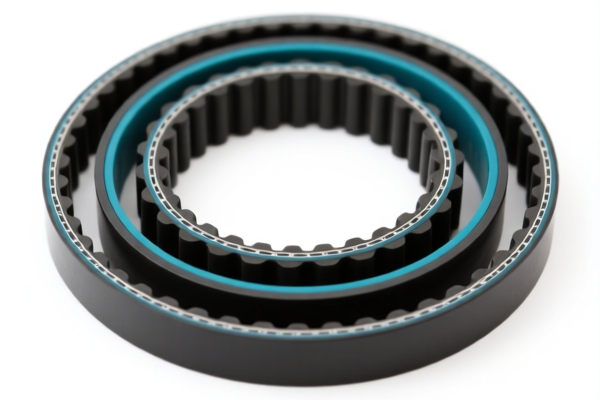
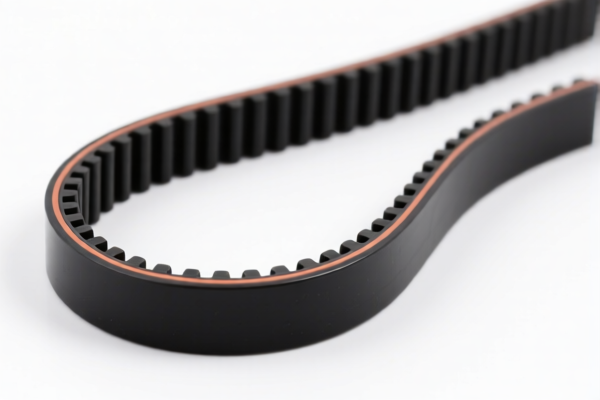
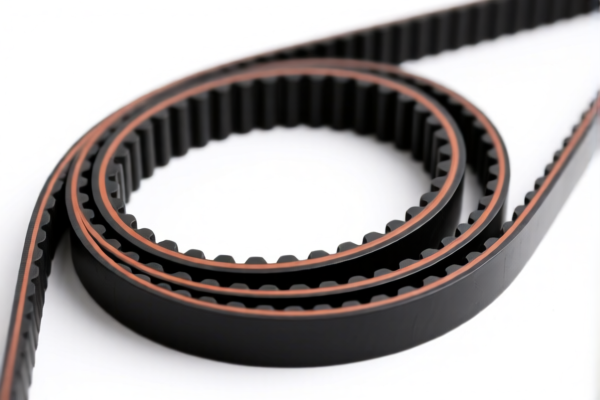
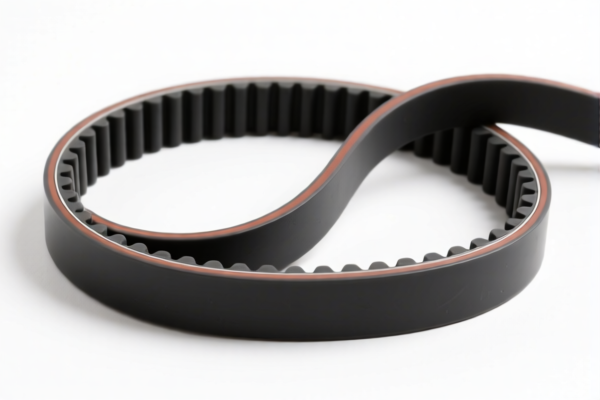
Synchronous Belts (Synchronous Drive Belts) are precision transmission components that prevent slippage, ensuring exact speed ratios between drive and driven shafts. They are critical in automotive engines, industrial machinery, CNC machines, and robotics.
The classification challenge lies in the material composition and specific application: 1. Rubber Synchronous Belts: Primarily made of rubber (often reinforced with fibers/wires), used in high-torque, high-heat applications. 2. Plastic Synchronous Belts: Made entirely of plastic (e.g., Polyurethane/PUR, Nylon), often used in lighter loads, clean environments, or where noise reduction is key.
⚠️ Key Distinction Point:
- If the belt is primarily Rubber → Look at Chapter 40 (4010).
- If the belt is primarily Plastic AND is part of a machine system → Look at Chapter 84 (8431).
- If it’s a standalone plastic timing belt → Look at Chapter 39 (3926).
📦 II. HS Code Classification Details (Based on Provided Data)
| HS Code | Product Description | Applicable Scenario | Material/State | Total Tax Rate |
|---|---|---|---|---|
3926.90.60.10 |
Plastic Synchronous Belt | Standalone plastic timing belt, not part of a specific machine assembly | Pure Plastic | 39.2% |
8431.39.00.10 |
Plastic Conveyor Belt/Part | Part of a conveyor system; recognized as a machine component | Plastic (Machine Part) | 35.0% |
8431.49.90.84 |
Plastic Mechanical Part | Generic mechanical part/semi-finished plastic product | Plastic (Other/Metal Contamination Risk) | 85.0% |
4010.35.30.00 |
Rubber Synchronous Belt | Standard rubber timing belt, matches shape/size requirements | Rubber | 39.1% |
4010.35.41.00 |
Rubber Synchronous Belt | High-spec rubber belt, meets outer circumference/structure specs | Rubber | 43.0% |
🔍 Critical Note:
- Plastic Belts have varying tax rates depending on whether they are classified as "general plastic articles" (3926), "conveyor parts" (8431.39), or "other mechanical parts" (8431.49).
- Rubber Belts are strictly classified under4010, with rates depending on specific dimensions (outer circumference).
💰 III. 2026 Latest Tariff Rate Breakdown (Detailed Tax Clauses)
✅ Applicable Country: United States (US)
✅ Origin: China (CN)
✅ Effective Time: Post-2025 November 10 (Current Policy)
🎯 1. 3926.90.60.10 —— Plastic Synchronous Belt (Standalone)
| Item | Detail |
|---|---|
| Base Tariff | 4.2% |
| Section 301 Surcharge | +25.0% |
| Section 122 Surcharge | +10.0% |
| Total Tax Rate | 39.2% |
| Calculation | CIF Value × 39.2% |
| De Minimis Exemption? | ❌ Denied (High rate excludes de minimis) |
| Legal Basis | Section 301: HTS 3926.90.60.10 + Section 122: General Surcharge |
📌 Explanation:
- This is the baseline for generic plastic timing belts. - The Section 122 tariff (10%) is a specific additional duty often applied to Chinese goods, stacking on top of the Section 301 (25%) and base duty.
🎯 2. 8431.39.00.10 —— Plastic Conveyor System Component
| Item | Detail |
|---|---|
| Base Tariff | 0.0% |
| Section 301 Surcharge | +25.0% |
| Section 122 Surcharge | +10.0% |
| Total Tax Rate | 35.0% |
| Calculation | CIF Value × 35.0% |
| De Minimis Exemption? | ❌ Denied |
| Legal Basis | Section 301: HTS 8431.39.00.10 + Section 122: General Surcharge |
📌 Why Lower?
- The base duty is 0% because it is classified as a "Part of Machinery" for conveyors, not just "Plastic Goods." - Strategy Tip: If your plastic belt is clearly part of a conveyor system, this classification saves 4.2% compared to3926.90.60.10.
🎯 3. 8431.49.90.84 —— Plastic Mechanical Part (High Risk)
| Item | Detail |
|---|---|
| Base Tariff | 0.0% |
| Section 301 Surcharge | +25.0% |
| Section 122 Surcharge | +10.0% |
| Steel/Aluminum/Copper Surcharge | +50.0% ⚠️ |
| Total Tax Rate | 85.0% |
| Calculation | CIF Value × 85.0% |
| De Minimis Exemption? | ❌ Denied |
⚠️ WARNING:
- This high rate applies if the belt is deemed a "part" but triggers the 50% surcharge on metal components or is misclassified as containing significant steel/aluminum/copper reinforcement. - Avoid this code unless absolutely necessary. It is the most expensive option.
🎯 4. 4010.35.30.00 —— Rubber Synchronous Belt (Standard)
| Item | Detail |
|---|---|
| Base Tariff | 4.1% |
| Section 301 Surcharge | +25.0% |
| Section 122 Surcharge | +10.0% |
| Total Tax Rate | 39.1% |
| Calculation | CIF Value × 39.1% |
| De Minimis Exemption? | ❌ Denied |
| Legal Basis | Section 301: HTS 4010.35.30.00 + Section 122: General Surcharge |
📌 Explanation:
- Rubber belts (4010) have a slightly lower base duty (4.1%) than plastic counterparts (3926at 4.2%). - This is the standard rate for general-purpose rubber timing belts.
🎯 5. 4010.35.41.00 —— Rubber Synchronous Belt (High Spec/Large Diameter)
| Item | Detail |
|---|---|
| Base Tariff | 8.0% |
| Section 301 Surcharge | +25.0% |
| Section 122 Surcharge | +10.0% |
| Total Tax Rate | 43.0% |
| Calculation | CIF Value × 43.0% |
| De Minimis Exemption? | ❌ Denied |
| Legal Basis | Section 301: HTS 4010.35.41.00 + Section 122: General Surcharge |
📌 Why Higher?
- This code often applies to larger outer circumference or specific structural specifications of rubber belts. - The base duty is 8.0%, which is significantly higher than standard rubber belts, leading to a 43.0% total rate.
🛠️ IV. Customs Clearance Practical Advice (Avoid Pitfalls)
✅ 1. Documentation Checklist (Mandatory)
| Document | Required | Notes |
|---|---|---|
| ✅ Product Specification Sheet | ✔️ | Must explicitly state: "Synchronous Belt," Material (Rubber/Plastic), Pitch, Width, Length. |
| ✅ Material Composition Statement | ✔️ | Crucial for distinguishing between 3926 (Plastic) and 4010 (Rubber). |
| ✅ Usage Statement | ✔️ | "Used in Conveyor System" (for 8431) or "General Machine Drive" (for 3926). |
| ✅ Commercial Invoice | ✔️ | Must match the HS Code description precisely. |
| ✅ Photos (Internal/External) | ✔️ | Show teeth profile (synchronous), material texture (rubber vs. plastic). |
✅ 2. Classification Strategy & Optimization
🔥 Golden Rule: "Material First, Application Second, Avoid Metal Contamination!"
| Scenario | Recommended HS Code | Reason | Tax Impact |
|---|---|---|---|
| Pure Plastic Belt (No machine context) | 3926.90.60.10 |
Safest standalone classification | 39.2% |
| Plastic Belt (Part of Conveyor) | 8431.39.00.10 |
Lower base duty (0%) | 35.0% (Save 4.2%) |
| Rubber Belt (Standard Size) | 4010.35.30.00 |
Standard rubber classification | 39.1% (Save 0.1% vs Plastic Standalone) |
| Rubber Belt (Large/Specified) | 4010.35.41.00 |
Specific size/structure requirement | 43.0% (Costly) |
| Any Belt with Metal Reinforcement | ⚠️ Avoid 8431.49.90.84 |
Triggers 50% metal surcharge | 85.0% (Avoid at all costs) |
✅ 3. Special Cases & Warnings
| Case | Handling Advice |
|---|---|
| Mixed Material Belts | If a belt has rubber teeth but plastic backing, declare based on the principal material (usually rubber for torque belts → 4010). |
| OEM/Custom Parts | Provide engineering drawings showing it is a "Part of Machinery" to justify 8431 classification for plastic belts. |
| Section 122 Tariff | Note that the 10% Section 122 tariff applies to all Chinese-origin goods in this list. It cannot be avoided unless a specific exemption is granted. |
| De Minimis (Section 321) | These items do NOT qualify for the $800 de minimis exemption due to the high combined tariff rates (>20%). |
🌍 V. Global Market Comparison (2026)
| Country/Region | Recommended HS Code | Est. Duty (China Origin) | Key Certification | Notes |
|---|---|---|---|---|
| 🇺🇸 USA | 3926.90.60.10 / 4010.35.30.00 |
39.1% - 39.2% | None specific | High Section 301 + 122 duties apply. |
| 🇨🇳 China | 3926.90.90 / 4010.35 |
~5% - 10% | CCC (if applicable) | Low base duty, no Section 301. |
| 🇪🇺 EU | 3926.90 / 4010.35 |
4.5% - 6.5% | CE (if machinery) | No Section 122 equivalent. |
| 🇻🇳 Vietnam | 4010.35 |
0% - 5% | None | Potential for lower duties if processed locally. |
📌 Conclusion:
- USA is the most expensive market due to the combination of Section 301 (25%) and Section 122 (10%). - Plastic belts classified as machine parts (8431.39) offer the lowest effective rate (35.0%) among plastic options. - Rubber belts are generally comparable to plastic belts in tax cost, but avoid large-spec codes (4010.35.41.00) if possible.
📌 VI. Common Mistakes & Pitfalls (Lessons Learned)
❌ Mistake 1: Declaring a Rubber Belt as 3926 (Plastic)
👉 Consequence: Misclassification. If audited, penalties + back taxes. Rubber belongs in 4010.
❌ Mistake 2: Ignoring Section 122 Tariff
👉 Consequence: Unexpected 10% additional charge on every shipment from China. Must be budgeted.
❌ Mistake 3: Misclassifying Plastic Belts as 8431.49.90.84
👉 Consequence: Jump from 35% to 85% due to potential metal surcharge. Always use 8431.39 for conveyors if applicable.
✅ Correct Practice:
"Plastic Synchronous Belt, Polyurethane, For Conveyor System, Model XYZ" → Use
8431.39.00.10
"Rubber Synchronous Belt, Reinforced, For Engine Drive, Outer Circumference < 1524mm" → Use4010.35.30.00
🎯 VII. Conclusion: Precision Classification Saves Money!
🎯 Key Takeaways:
🔹 Plastic Belts: Try to classify as
8431.39.00.10(Conveyor Part) → 35.0% Total.
🔹 Rubber Belts: Standard is4010.35.30.00→ 39.1% Total.
🔹 Avoid:8431.49.90.84(85.0%) unless you have no other choice.
🔹 Budget: Always include +35-43% in your landed cost calculation for US imports.
📌 Pro Tip:
If you are importing large volumes, consider pre-classification rulings with CBP (Customs and Border Protection) to lock in a lower rate (e.g., confirming 8431.39 eligibility).
Also, explore supply chain diversification to Vietnam or Mexico to avoid Section 301/122 tariffs entirely.
📣 Immediate Action:
📞 Consult a licensed customs broker before shipping.
📄 Prepare detailed material composition sheets.
🚀 Optimize your HS Code to save up to 50% in potential tax liabilities!
✨ Professional Clearance Starts with Accurate Classification!
💼 Your Bottom Line Depends on the Right HS Code!
用户评价
关于 HS 编码归类
协调制度(HS)是由世界海关组织(WCO)制定的国际贸易商品分类标准。全球 200 多个国家采用 HS 系统作为海关关税、贸易统计和进出口监管的基础。
每个 HS 编码遵循以下层级结构:
- 章(2 位)——商品大类(例如:第 84 章:机器和机械设备)
- 品目(4 位)——章内的更具体分类
- 子目(6 位)——国际通用细分,所有 WCO 成员国统一使用
- 本国细分(8-10 位)——各国自行扩展的细分编码,如美国 HTSUS 10 位编码
正确的 HS 编码归类对于顺利通关、准确缴纳关税和遵守贸易法规至关重要。错误归类可能导致海关延误、多缴关税或罚款。
从CN进口到US时,适用的关税税率可能包括:
- 最惠国(MFN)税率——适用于 WTO 成员国的标准关税税率
- 普通税率——适用于无贸易协定国家
- 贸易救济关税——附加关税,如 301 条款(反倾销)、232 条款(国家安全)或反补贴税
本页内容仅供参考。如需正式归类,请咨询当地海关或持牌报关代理。