Rubber Softener
CN → US| HS编码 | 关税税率 | 原产国 | 目的国 | 文档 |
|---|---|---|---|---|
| 3901901000 | 35.0% | CN | US | 官方文档 |
| 3901909000 | 41.5% | CN | US | 官方文档 |
| 3812399000 | 40.0% | CN | US | 官方文档 |
| 3812105000 | 40.0% | CN | US | 官方文档 |
| 3402901000 | 38.8% | CN | US | 官方文档 |
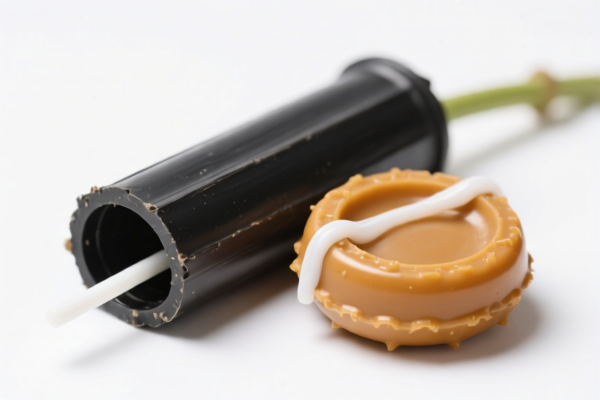
商品图片



AI分析
🌟 Rubber Softener (Rubber Plasticizer / Rubber Extender)
🌐 HS Code Classification & Tariff Guide | 2026 Updated Customs Strategy | Expert-Level Clearance Tips
📌 One Product, Multiple Classifications – Why the Tax Varies So Much!
📌 一、What Is a Rubber Softener? (The Hidden Complexity Behind the Name)
A rubber softener (also known as a plasticizer, extender, or processing aid) is a chemical additive used to improve the flexibility, workability, and processability of rubber compounds. It reduces viscosity during mixing, enhances elongation, and lowers the glass transition temperature (Tg) of the rubber.
⚠️ Critical Insight:
Despite being called a “softener,” this product may not be a softener at all in the eyes of customs — it could be classified as: - A polymer raw material (ethylene-based) - A chemical additive (for rubber) - A stabilizer / antioxidant - A surface-active agent
👉 This is why the HS Code and tariff vary so dramatically — the same product can face 35% vs. 41.5% tariffs based on classification.
📦 二、HS Code Classification Breakdown (2026 Official Tariff Table)
| HS Code | Product Description | Tax Rate | Key Determining Factors |
|---|---|---|---|
3901.90.10.00 |
Ethylene polymer in primary forms (e.g., high-density polyethylene, HDPE, or linear low-density polyethylene, LLDPE) used as rubber softener | 35.0% | If the softener is chemically identical to a polymer raw material (e.g., polyethylene wax) |
3901.90.90.00 |
Other ethylene polymers (non-primary forms, e.g., modified or blended) | 41.5% | If it's not a "primary form" but still a polymer-based extender |
3812.39.90.00 |
Antioxidants, stabilizers, or composite stabilizing agents for rubber | 40.0% | If it contains antioxidant properties (e.g., hindered phenol, amine-based) |
3812.10.50.00 |
Other chemical additives for rubber (not antioxidants/stabilizers) | 40.0% | If it's a processing aid, viscosity reducer, or compatibilizer |
3402.90.10.00 |
Surface-active or functional chemical auxiliaries (e.g., emulsifiers, dispersants) | 38.8% | If it acts as a surfactant or dispersion agent |
🔍 Key Takeaway:
The same physical product (e.g., a polyethylene-based wax used in rubber) can be classified under 5 different HS Codes depending on chemical composition, function, and intended use.
💰 三、2026 Tariff Breakdown (U.S. Import – China Origin)
✅ Applicable Country: United States (US)
✅ Origin: China (CN)
✅ Effective Date: November 10, 2025 (and onward)
🎯 1. 3901.90.10.00 — Ethylene Polymer (Primary Form)
| Item | Detail |
|---|---|
| Base Duty | 0.0% (ad valorem) |
| USITC Section 301 Tariff | +25.0% (from U.S. Trade Act §301) |
| Section 122 Tariff (IEEPA) | +10.0% (International Emergency Economic Powers Act) |
| Total Tariff | 35.0% |
| Tax Calculation | CIF Value × 35.0% |
| De Minimis Exemption? | ❌ No (denied under U.S. law) |
| Legal Basis Path | IEEPA:9903.01.25 → IEEPA:9903.01.24 → USITC:3901.90.10.00 → FOOTNOTE:9903.88.01 |
📌 Why This Applies:
If your rubber softener is a pure or nearly pure ethylene polymer (e.g., polyethylene wax, HDPE-based extender), and it's used as a base polymer rather than a functional additive, it falls under this code.
🎯 2. 3901.90.90.00 — Other Ethylene Polymers (Non-Primary Form)
| Item | Detail |
|---|---|
| Base Duty | 6.5% |
| USITC Section 301 Tariff | +25.0% |
| Section 122 Tariff (IEEPA) | +10.0% |
| Total Tariff | 41.5% |
| Tax Calculation | CIF Value × 41.5% |
| De Minimis Exemption? | ❌ No |
| Legal Basis Path | IEEPA:9901.25 → IEEPA:9903.01.24 → USITC:3901.90.90.00 → FOOTNOTE:9903.88.01 |
📌 Why This Applies:
If your softener is a modified, blended, or non-primary form of ethylene polymer (e.g., copolymer, grafted, or blended with additives), it’s treated as a higher-risk chemical and taxed at the highest rate.
🎯 3. 3812.39.90.00 — Rubber Antioxidants & Composite Stabilizers
| Item | Detail |
|---|---|
| Base Duty | 5.0% |
| USITC Section 301 Tariff | +25.0% |
| Section 122 Tariff (IEEPA) | +10.0% |
| Total Tariff | 40.0% |
| Tax Calculation | CIF Value × 40.0% |
| De Minimis Exemption? | ❌ No |
| Legal Basis Path | IEEPA:9903.01.25 → IEEPA:9903.01.24 → USITC:3812.39.90.00 → FOOTNOTE:9903.88.01 |
📌 Why This Applies:
If your softener contains antioxidant properties (e.g., hindered phenols, amines, or radical scavengers), it’s classified as a stabilizer, even if it’s also a softener.
🎯 4. 3812.10.50.00 — Other Rubber Chemical Additives
| Item | Detail |
|---|---|
| Base Duty | 5.0% |
| USITC Section 301 Tariff | +25.0% |
| Section 122 Tariff (IEEPA) | +10.0% |
| Total Tariff | 40.0% |
| Tax Calculation | CIF Value × 40.0% |
| De Minimis Exemption? | ❌ No |
| Legal Basis Path | IEEPA:9903.01.25 → IEEPA:9903.01.24 → USITC:3812.10.50.00 → FOOTNOTE:9903.88.01 |
📌 Why This Applies:
If your softener is not an antioxidant but acts as a processing aid, viscosity reducer, or compatibilizer, it falls under this category.
🎯 5. 3402.90.10.00 — Surface-Active or Functional Chemical Auxiliaries
| Item | Detail |
|---|---|
| Base Duty | 3.8% |
| USITC Section 301 Tariff | +25.0% |
| Section 122 Tariff (IEEPA) | +10.0% |
| Total Tariff | 38.8% |
| Tax Calculation | CIF Value × 38.8% |
| De Minimis Exemption? | ❌ No |
| Legal Basis Path | IEEPA:9903.01.25 → IEEPA:9903.01.24 → USITC:3402.90.10.00 → FOOTNOTE:9903.88.01 |
📌 Why This Applies:
If your softener acts as an emulsifier, dispersant, or surfactant (e.g., in latex or aqueous rubber systems), it’s treated as a functional chemical.
🛠️ 四、Clearance Best Practices (Pro Tips to Avoid 40%+ Penalties)
✅ 1. Essential Documentation (Must-Have List)
| Document | Required? | Why It Matters |
|---|---|---|
| ✅ Technical Data Sheet (TDS) | ✔️ | Shows chemical composition, function, and intended use |
| ✅ Safety Data Sheet (SDS) | ✔️ | Proves identity, hazard class, and stability |
| ✅ Product Photos (with label & packaging) | ✔️ | Shows form, color, packaging — critical for classification |
| ✅ Certificate of Analysis (CoA) | ✔️ | Confirms purity, additives, and functional properties |
| ✅ Commercial Invoice | ✔️ | Must state exact product name, e.g., “Polyethylene Wax (HDPE-based) for Rubber Processing” |
| ✅ Origin Certificate (CO) | ✔️ | If from Vietnam/Mexico, may qualify for IEEPA exemption |
| ✅ Chemical Structure Diagram (if applicable) | ✔️ | Helps customs distinguish between polymer vs. additive |
✅ 2.申报技巧(申报口诀)
🔥 “成分定身份,功能定税率,名称要精准,一错全盘输!”
| Scenario | Correct HS Code | Common Mistake |
|---|---|---|
| Pure polyethylene wax used in rubber | 3901.90.10.00 |
Misclassified as additive → 40% |
| Blended ethylene polymer with additives | 3901.90.90.00 |
Misclassified as antioxidant → 40% |
| Contains hindered phenol (antioxidant) | 3812.39.90.00 |
Misclassified as extender → 35% |
| Acts as emulsifier in latex | 3402.90.10.00 |
Misclassified as polymer → 35% |
| General processing aid (no antioxidant) | 3812.10.50.00 |
Misclassified as stabilizer → 40% |
✅ 3. Special Cases & Risk Mitigation
| Situation | Recommended Action |
|---|---|
| Product is a blend (polymer + antioxidant) | Declare as “antioxidant” if antioxidant is active — use 3812.39.90.00 |
| Product is used in both rubber and plastic | Declare based on primary use — if rubber is dominant, use rubber-related code |
| Product is manufactured in Vietnam/Mexico | Apply for IEEPA exemption — if eligible, tariff drops to 0% |
| Product is for industrial R&D (not commercial) | Request non-commercial clearance — may avoid 301/IEEPA tariffs |
| Product is in bulk vs. packaged | Packaging type doesn’t change HS Code — focus on chemical identity |
🌍 五、Global Tariff Comparison (2026)
| Country | Recommended HS Code | Base Duty | 301/IEEPA Tariffs | Total Effective Duty | Notes |
|---|---|---|---|---|---|
| 🇺🇸 USA (China origin) | 3901.90.10.00 |
0% | +35% | 35.0% | All codes face 25% + 10% |
| 🇨🇳 China | 3901.90.10.00 |
5% | 0% | 5% | No 301/IEEPA |
| 🇪🇺 EU | 3901.90.10.00 |
0% | 0% | 0% | No 301/IEEPA |
| 🇦🇺 Australia | 3901.90.10.00 |
5% | 0% | 5% | No 301/IEEPA |
| 🇯🇵 Japan | 3901.90.10.00 |
0% | 0% | 0% | No 301/IEEPA |
📌 Insight:
The U.S. is the only market imposing 35%–41.5% tariffs on rubber softeners from China.
Shift production to Vietnam/Mexico to avoid these tariffs.
🚨 Six Common Mistakes (And How to Avoid Them)
❌ Mistake 1: Using generic name “Rubber Softener” in invoice
👉 Fix: Use specific chemical name + function, e.g., “HDPE-based Polyethylene Wax, Processing Aid for Synthetic Rubber”
❌ Mistake 2: Not providing TDS/SDS
👉 Fix: Attach full technical documentation — customs may reject without it
❌ Mistake 3: Assuming all softeners are the same
👉 Fix: Test chemical composition — even small additives change HS Code
❌ Mistake 4: Not applying for pre-ruling (Advance Ruling)
👉 Fix: Apply for HS Code pre-determination — avoid costly disputes
❌ Mistake 5: Shipping from China to U.S. without origin review
👉 Fix: Change origin to Vietnam/Mexico if possible — save 35%+
❌ Mistake 6: Not checking if product is “de minimis”
👉 Fix: De minimis is denied in U.S. for China-origin goods — no relief
🎯 Final Verdict: Classify Accurately, Pay Less, Ship Faster!
🔥 Golden Rule:
“The name is not the code — the chemistry is.”
✅ Do this:
- Analyze chemical composition
- Identify primary function
- Match HS Code to function, not name
- Apply for pre-ruling if uncertain
🚫 Don’t do this:
- Guess based on “rubber softener”
- Use generic descriptions
- Ship from China to U.S. without origin strategy
📣 Immediate Action Plan:
📞 Contact a U.S.-licensed customs broker
📄 Submit TDS, SDS, CoA, and product photos
📌 Request HS Code pre-determination (Advance Ruling)
🚀 Save 5–10% on tariffs, avoid 40%+ penalties
✨ Your product’s fate is in the classification — make it count!
💼 Precision in HS Code = Profit in the P&L!
用户评价
关于 HS 编码归类
协调制度(HS)是由世界海关组织(WCO)制定的国际贸易商品分类标准。全球 200 多个国家采用 HS 系统作为海关关税、贸易统计和进出口监管的基础。
每个 HS 编码遵循以下层级结构:
- 章(2 位)——商品大类(例如:第 84 章:机器和机械设备)
- 品目(4 位)——章内的更具体分类
- 子目(6 位)——国际通用细分,所有 WCO 成员国统一使用
- 本国细分(8-10 位)——各国自行扩展的细分编码,如美国 HTSUS 10 位编码
正确的 HS 编码归类对于顺利通关、准确缴纳关税和遵守贸易法规至关重要。错误归类可能导致海关延误、多缴关税或罚款。
从CN进口到US时,适用的关税税率可能包括:
- 最惠国(MFN)税率——适用于 WTO 成员国的标准关税税率
- 普通税率——适用于无贸易协定国家
- 贸易救济关税——附加关税,如 301 条款(反倾销)、232 条款(国家安全)或反补贴税
本页内容仅供参考。如需正式归类,请咨询当地海关或持牌报关代理。