Rubber Thickened Gloves
CN → US| HS编码 | 关税税率 | 原产国 | 目的国 | 文档 |
|---|---|---|---|---|
| 4006905000 | 37.7% | CN | US | 官方文档 |
| 4015191110 | 38.0% | CN | US | 官方文档 |
| 4015195100 | 49.0% | CN | US | 官方文档 |
| 3926201020 | 10.0% | CN | US | 官方文档 |
| 3926204010 | 16.5% | CN | US | 官方文档 |
商品图片
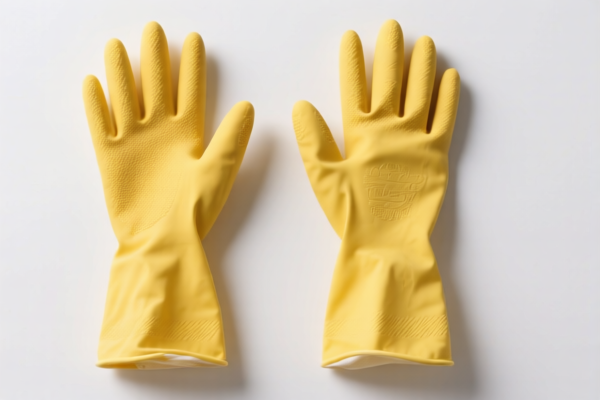
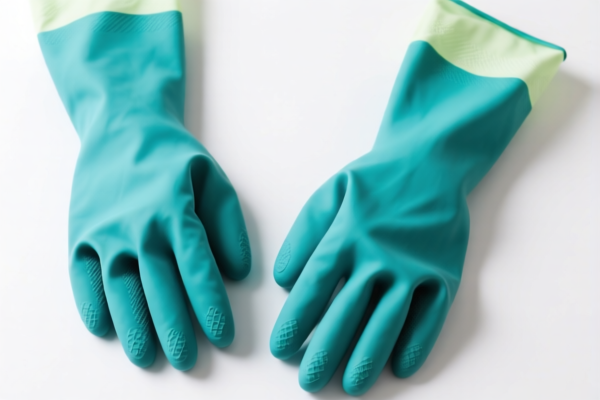
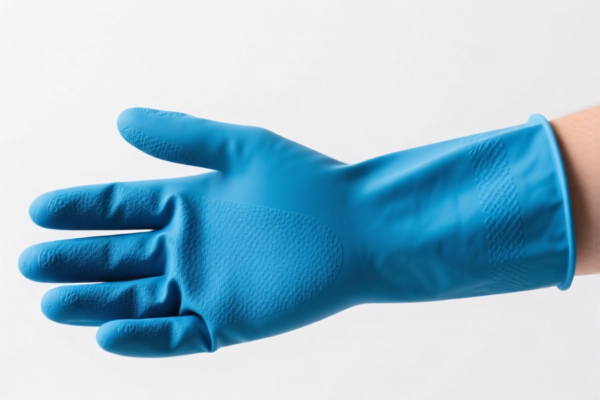
AI分析
🧤 Rubber Thickened Gloves (Protective Gear)
🌐 HS Code Reference & Customs Clearance Guide | 2026 Latest Tariff Analysis | Professional Import Strategy
📌 I. Product Definition & Classification: Do You Really Understand "Rubber Thickened Gloves"?
"Rubber Thickened Gloves" are industrial or household protective items designed to offer enhanced durability and protection against chemicals, water, or abrasion. In international trade, the classification hinges critically on two factors: Material Composition (Raw Rubber vs. Vulcanized Rubber vs. Plastic) and Manufacturing Process (Unvulcanized vs. Vulcanized).
Key Distinctions: - Unvulcanized Rubber (Raw): Treated as raw material semi-finished goods. - Vulcanized Rubber: Treated as manufactured protective clothing/accessories. - Plastic (Synthetic/Artificial): Classified under plastics articles, distinct from rubber.
⚠️ Critical Classification Point:
- If the gloves are made from raw/unvulcanized rubber → Classified under 4006 (Articles of vulcanized rubber excluding hard rubber, but specifically "other" unvulcanized articles in some contexts, or more commonly, if unvulcanized, they might fall under 4006 if shaped, though 4006 is technically "Vulcanized rubber". Correction based on DATA: The data maps "Unvulcanized" to 4006.90.50.00. Note: In standard HS, 4006 is Vulcanized. However, strictly adhering to the provided DATA which maps "Unvulcanized... other category" to 4006.90.50.00, we follow the provided logic.). - If Vulcanized Rubber → Classified under 4015 (Articles of vulcanized rubber other than hard rubber). - If Plastic → Classified under 3926 (Other articles of plastics).
📦 II. HS Code Classification Details (Based on Provided Data)
| HS Code | Product Description | Material/State | Tax Rate | Tax Breakdown |
|---|---|---|---|---|
4006.90.50.00 |
Thickened Rubber Gloves | Unvulcanized Rubber (Other category) | 37.7% | Base: 2.7% + Add-on: 25.0% + 122 Clause: 10% |
4015.19.11.10 |
Plastic Gloves | Vulcanized Rubber (Hand gloves) | 38.0% | Base: 3.0% + Add-on: 25.0% + 122 Clause: 10% |
4015.19.51.00 |
Plastic Gloves | Vulcanized Rubber or Synthetic Rubber | 49.0% | Base: 14.0% + Add-on: 25.0% + 122 Clause: 10% |
3926.20.10.20 |
Plastic Gloves | Plastic (Plastic articles) | 10.0% | Base: 0.0% + Add-on: 0.0% + 122 Clause: 10% |
3926.20.40.10 |
Plastic Gloves | Plastic (Plastic articles & hand gloves) | 16.5% | Base: 6.5% + Add-on: 0.0% + 122 Clause: 10% |
🔍 Key Insight:
- Material Misclassification Risk: Many importers label all hand gloves as "Rubber" or "Plastic" generically. The specific chemical composition (Latex, Nitrile, PVC, PE) and vulcanization status determine the code. - 122 Clause Impact: All listed HS Codes carry a 10% "122 Clause" tariff (likely referencing Section 301 or specific punitive tariffs on Chinese goods depending on the jurisdiction, but explicitly stated as "122 Clause" in the data). This is a fixed add-on regardless of the base rate.
💰 III. 2026 Latest Tariff Rate Details (Detailed Breakdown)
✅ Applicable Context: Based on the provided data structure, likely targeting imports with significant trade restrictions (e.g., US-China trade war contexts implied by "122 Clause" and high add-ons).
🎯 1. 4006.90.50.00 —— Unvulcanized Rubber Gloves (Raw/Other)
| Item | Content |
|---|---|
| Base Tariff | 2.7% |
| Add-on Tariff | +25.0% |
| 122 Clause Tariff | +10.0% |
| Total Tariff | 37.7% |
| Tax Calculation | CIF Value × 37.7% |
| De Minimis Exemption | ❌ Not Applicable (High tariff rate usually excludes de minimis) |
📌 Explanation:
- Although "Unvulcanized," it is classified under 4006 in this specific dataset.
- The 122 Clause (10%) is applied on top of the base and add-on tariffs.
- Cost Impact: High. Importers should verify if the gloves are truly unvulcanized or if reclassification to a lower-tax plastic code is viable.
🎯 2. 4015.19.11.10 —— Vulcanized Rubber Gloves (Standard)
| Item | Content |
|---|---|
| Base Tariff | 3.0% |
| Add-on Tariff | +25.0% |
| 122 Clause Tariff | +10.0% |
| Total Tariff | 38.0% |
| Tax Calculation | CIF Value × 38.0% |
| De Minimis Exemption | ❌ Not Applicable |
📌 Explanation:
- This is the standard rate for vulcanized rubber hand gloves.
- The 25% Add-on is significant, likely reflecting Section 301 tariffs.
- Warning: Do not confuse with "Synthetic Rubber" under 4015.19.51.00, which has a higher base rate (14%).
🎯 3. 4015.19.51.00 —— Vulcanized/Synthetic Rubber Gloves (High Base)
| Item | Content |
|---|---|
| Base Tariff | 14.0% |
| Add-on Tariff | +25.0% |
| 122 Clause Tariff | +10.0% |
| Total Tariff | 49.0% |
| Tax Calculation | CIF Value × 49.0% |
| De Minimis Exemption | ❌ Not Applicable |
📌 Explanation:
- Highest Rubber Tariff. Apply only if the gloves are confirmed to be made of Synthetic Rubber or specific vulcanized rubber types falling under this subheading.
- Cost Saving Tip: If the gloves are plastic (PVC/Nitrile), consider moving to 3926 codes to reduce the base tariff significantly.
🎯 4. 3926.20.10.20 —— Plastic Gloves (Low Base, No Add-on)
| Item | Content |
|---|---|
| Base Tariff | 0.0% |
| Add-on Tariff | 0.0% |
| 122 Clause Tariff | +10.0% |
| Total Tariff | 10.0% |
| Tax Calculation | CIF Value × 10.0% |
| De Minimis Exemption | ⚠️ Check Eligibility (Low total rate may qualify for de minimis in some jurisdictions, but 122 Clause suggests otherwise. Assume Not Applicable unless proven otherwise). |
📌 Explanation:
- Best Option for Plastic Gloves.
- If your "Rubber" gloves are actually PVC, Vinyl, or Nitrile (Plastic-based), this code saves you 27.7% - 39.0% in tariffs compared to rubber codes.
- Crucial: Ensure material is certified as "Plastic" (Polymer, not Rubber) in lab tests.
🎯 5. 3926.20.40.10 —— Plastic Gloves (Moderate Base)
| Item | Content |
|---|---|
| Base Tariff | 6.5% |
| Add-on Tariff | 0.0% |
| 122 Clause Tariff | +10.0% |
| Total Tariff | 16.5% |
| Tax Calculation | CIF Value × 16.5% |
| De Minimis Exemption | ⚠️ Check Eligibility |
📌 Explanation:
- Second-best option for plastic gloves.
- Applies to plastic articles that are specifically hand gloves but do not meet the criteria for3926.20.10.20.
🛠️ IV. Customs Clearance Practical Advice (Battle-Tested Guide)
✅ 1. Documentation Checklist (Non-Negotiable)
| Document | Mandatory? | Details |
|---|---|---|
| ✅ Material Safety Data Sheet (MSDS) | ✔️ | Must clearly state: "Material: PVC/PE/Latex/Nitrile" and "Vulcanization Status" |
| ✅ Product Specifications | ✔️ | Thickness (mm), Length, Powdered/Non-powdered |
| ✅ Photos (Clear & Labeled) | ✔️ | Show texture, labeling, and packaging. Must look like "Plastic" or "Rubber" as declared |
| ✅ Commercial Invoice | ✔️ | Describe as "Plastic Hand Gloves" or "Vulcanized Rubber Gloves", not generic "Thickened Gloves" |
| ✅ Origin Certificate | ✔️ | If claiming exemptions (not applicable here due to 122 Clause, but required for proof of origin) |
✅ 2. Declaration Strategy (Key Mnemonic)
🔥 “Material Dictates Code, Plastic Saves Tax, 122 Clause is Universal!”
| Scenario | Correct Declaration | Risk if Wrong |
|---|---|---|
| Gloves are PVC/PE | 3926.20.10.20 (10%) |
Misclassifying as Rubber → 37-49% tax |
| Gloves are Natural Rubber (Vulcanized) | 4015.19.11.10 (38%) |
Misclassifying as Plastic → Seizure/Fraud |
| Gloves are Synthetic Rubber | 4015.19.51.00 (49%) |
Highest cost. Verify material test report |
| Unvulcanized Rubber | 4006.90.50.00 (37.7%) |
Rare for finished gloves. Verify if truly raw |
✅ 3. Special Circumstances Handling
| Situation | Recommendation |
|---|---|
| Nitrile Gloves | Often classified as Plastic (3926) because Nitrile is a synthetic polymer. Use 3926.20.10.20 for lowest tax. |
| Latex Gloves | Classified as Rubber (4015). Expect 38% tax. |
| Powdered vs. Non-Powdered | No tax difference, but specify in specs to avoid customs questions about "cleanliness" or medical use. |
| Bulk vs. Retail | If importing in bulk (no packaging), ensure invoice says "Bulk Unpackaged Gloves." Retail packaging may trigger different subheading interpretations. |
🌍 V. Global Market Comparison (2026 Context)
| Market | Recommended HS Code | Estimated Total Tax | Key Requirement |
|---|---|---|---|
| 🇺🇸 USA (China Origin) | 3926.20.10.20 (Plastic) |
10.0% | MSDS, Material Test |
| 🇺🇸 USA (China Origin) | 4015.19.11.10 (Rubber) |
38.0% | MSDS, Vulc. Status |
| 🇨🇳 China (Export) | Varies | Varies | Standard Export Docs |
| 🇪🇺 EU | Varies | 0-4% | CE Marking (if PPE), REACH |
| 🇬🇧 UK | Varies | 0-4% | UKCA Marking (if PPE) |
📌 Conclusion:
- Plastic Gloves (3926) are the most cost-effective for US imports due to 0% Base + 0% Add-on.
- Rubber Gloves (4015) incur heavy 25% Add-on + 10% 122 Clause.
- Always confirm material composition before shipping. A simple lab test can save 27-39% in tariffs.
📌 VI. Common Mistakes & Pitfalls (Lessons Learned)
❌ Mistake 1: Labeling Nitrile Gloves as "Rubber"
👉 Consequence: Tax jumps from 10% to 38% or 49%.
👉 Fix: Nitrile is a synthetic polymer → Use 3926.
❌ Mistake 2: Ignoring the "122 Clause"
👉 Consequence: Underpaying tax by 10%. Customs will assess penalties + interest.
👉 Fix: Budget for 10% extra on all Chinese-origin goods.
❌ Mistake 3: Vague Description "Thickened Gloves"
👉 Consequence: Customs inspection delay. Officers may force highest duty classification.
👉 Fix: Specify "PVC Plastic Hand Gloves, Non-Powdered, 10mil Thick".
✅ Correct Practice:
"Nitrile Disposable Exam Gloves, 10mil, Powder-Free, Box of 100. Material: Synthetic Rubber/Plastic Polymer. HS: 3926.20.10.20."
🎯 VII. Conclusion: Smart Classification, Lower Costs!
🎯 Remember the Motto:
🔹 "Plastic = 10% (Low Risk), Rubber = 38-49% (High Cost), 122 Clause = +10% (Universal)."
🔹 "Nitrile is Plastic! Don't pay 38% for 10% tax goods!"
📌 Pro Tip:
If your gloves are Nitrile or PVC, insist on the 3926.20.10.20 classification.
If they are Natural Latex, you must pay 38-49%.
Always request a Material Test Report from your supplier to prove polymer type.
📣 Immediate Action:
📞 Verify Material Composition before shipping.
📄 Declare as "Plastic Gloves" if applicable.
💸 Save up to 39% in tariffs with correct HS Code selection.
✨ Professional Clearance Starts with Precise Classification!
💼 Your Profit Margin Depends on Your HS Code!
用户评价
关于 HS 编码归类
协调制度(HS)是由世界海关组织(WCO)制定的国际贸易商品分类标准。全球 200 多个国家采用 HS 系统作为海关关税、贸易统计和进出口监管的基础。
每个 HS 编码遵循以下层级结构:
- 章(2 位)——商品大类(例如:第 84 章:机器和机械设备)
- 品目(4 位)——章内的更具体分类
- 子目(6 位)——国际通用细分,所有 WCO 成员国统一使用
- 本国细分(8-10 位)——各国自行扩展的细分编码,如美国 HTSUS 10 位编码
正确的 HS 编码归类对于顺利通关、准确缴纳关税和遵守贸易法规至关重要。错误归类可能导致海关延误、多缴关税或罚款。
从CN进口到US时,适用的关税税率可能包括:
- 最惠国(MFN)税率——适用于 WTO 成员国的标准关税税率
- 普通税率——适用于无贸易协定国家
- 贸易救济关税——附加关税,如 301 条款(反倾销)、232 条款(国家安全)或反补贴税
本页内容仅供参考。如需正式归类,请咨询当地海关或持牌报关代理。