Rubber Toughening Agent
CN → US| HS编码 | 关税税率 | 原产国 | 目的国 | 文档 |
|---|---|---|---|---|
| 3812399000 | 40.0% | CN | US | 官方文档 |
| 3901909000 | 41.5% | CN | US | 官方文档 |
| 3506990000 | 37.1% | CN | US | 官方文档 |
| 3506915000 | 37.1% | CN | US | 官方文档 |
| 3812105000 | 40.0% | CN | US | 官方文档 |
商品图片
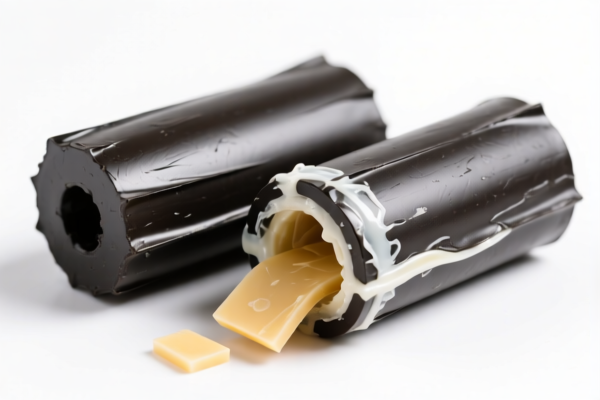
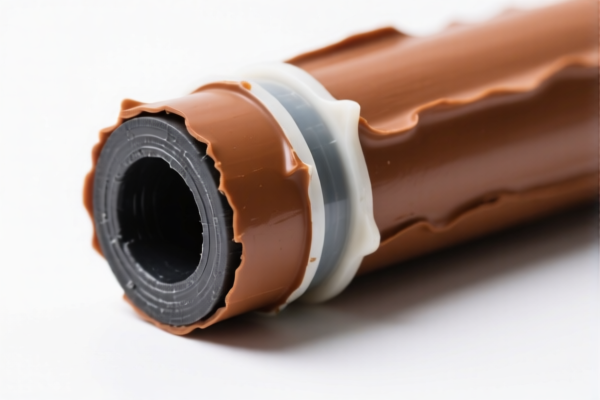


AI分析
🛡️ Rubber Toughening Agent (Chemical Additive for Rubber/Plastics Processing)
🌐 HS Code Reference & Customs Clearance Guide | 2026 Latest Tariff Analysis | Professional Clearance Strategy
📌 1. Product Definition & Classification: What is a "Rubber Toughening Agent"?
A Rubber Toughening Agent is a chemical additive used in the polymer industry to enhance the impact resistance, flexibility, and durability of rubber and plastic materials. In international trade, it is classified based on its chemical function (stabilizer/additive) and material composition (rubber/polymer-based), rather than just its name.
⚠️ Key Classification Distinction:
- Chemical Additive/Stabilizer: If the product is primarily a chemical formulation designed to prevent degradation or improve processing stability → Classified under Chapter 38 (Miscellaneous Chemical Products).
- Adhesive/Prepared Glue: If the product acts as a binding agent or is a prepared mixture of polymers → Classified under Chapter 35 (Albuminoidal Substances; Glues).
- Polymer Raw Material: If it is a basic unprepared polymer → Classified under Chapter 39 (Plastics and Articles Thereof).
📦 2. HS Code Classification Details (2026 Latest Tariff Authority Comparison)
Based on the provided data, here are the five potential HS Codes for "Rubber Toughening Agent," ranked by logical fit and tax implications:
| HS Code | Product Description | Matching Logic | Tax Rate (Total) |
|---|---|---|---|
3812.39.90.00 |
Rubber/Plastic Stabilizers & Antioxidants Other prepared stabilizers, antioxidants, or composite stabilizers for rubber/plastics. |
✅ Best Fit: "Toughening" is a form of stabilization. The term "Rubber" matches the material scope. Matches the chemical function of "composite stabilizer." | 40.0% |
3901.90.90.00 |
Other Primary Shapes of Ethylene Polymers Plastics in primary forms, other (catch-all for polymers not elsewhere specified). |
⚠️ Alternative: Inferred as a polymer-based raw material. Fits the "catch-all" principle for polymers, but less precise than Ch.38 additives. | 41.5% |
3506.99.00.00 |
Other Prepared Adhesives Other prepared glues, adhesives, including those made from rubber or plastics. |
⚠️ Functional Match: Treated as a "prepared chemical adhesive/stabilizer." No material conflict, but functionally distinct from glues. | 37.1% |
3506.91.50.00 |
Glues Based on Polymers (39.01-39.13) or Rubber Other glues based on ethylene polymers or rubber. |
✅ Strong Fit: Infers the agent is a rubber-based polymer glue/adhesive. Fits the "based on rubber" requirement. | 37.1% |
3812.10.50.00 |
Vulcanization Accelerators & Composite Stabilizers Other prepared stabilizers, antioxidants, etc., for rubber/plastics. |
✅ Strong Fit: Explicitly mentions "Rubber." "Toughening" aligns with "composite stabilizers." No material conflict. | 40.0% |
🔍 Key Insight:
- The lowest tax rate (37.1%) falls under Chapter 35 (Adhesives/Prepared Glues).
- The most functionally accurate rate (40.0%) falls under Chapter 38 (Chemical Stabilizers/Additives).
- The highest tax rate (41.5%) falls under Chapter 39 (Raw Polymers).
- Strategic Choice: If the product can be legally described as a "prepared adhesive" or "chemical mixture," Chapter 35 offers the lowest cost. However, if it is strictly a "stabilizer," Chapter 38 is the correct classification despite the slightly higher tax.
💰 3. 2026 Latest Tariff Rate Breakdown (Including Surcharges & Policy Add-ons)
✅ Applicable Country: United States (US)
✅ Country of Origin: China (CN)
✅ Effective Date: November 10, 2025 onwards (for subsequent imports)
🎯 1. 3812.39.90.00 & 3812.10.50.00 —— Chemical Stabilizers & Additives (Chapter 38)
These codes share the same tariff structure in the provided data.
| Item | Detail |
|---|---|
| Base Duty Rate | 5.0% (ad valorem) |
| USITC Additional Duty (Section 301) | +25.0% (from USITC Footnote related to 301 Tariffs) |
| IEEPA Additional Duty (Section 122) | +10.0% (Targeting China/HK products, effective Nov 10, 2025) |
| Total Effective Rate | 40.0% |
| Tax Calculation | CIF Value × 40.0% |
| De Minimis Exemption | ❌ Not Eligible (deny_de_minimis) |
| Legal Basis Path | Base Tariff → USITC:301_Addon → IEEPA:9903.01.24 |
📌 Explanation:
- Base 5%: Standard MFN rate for chemical preparations.
- +25% Section 301: Retaliatory tariff on Chinese chemical goods.
- +10% IEEPA: New emergency tariff on Chinese imports.
- Total 40%: Significant cost burden. Must be accounted for in pricing.
🎯 2. 3901.90.90.00 —— Ethylene Polymers (Chapter 39)
| Item | Detail |
|---|---|
| Base Duty Rate | 6.5% |
| USITC Additional Duty (Section 301) | +25.0% |
| IEEPA Additional Duty (Section 122) | +10.0% |
| Total Effective Rate | 41.5% |
| Tax Calculation | CIF Value × 41.5% |
| De Minimis Exemption | ❌ Not Eligible |
| Legal Basis Path | Base Tariff → USITC:301_Addon → IEEPA:9903.01.24 |
📌 Note:
- This is the highest tax bracket. Avoid this classification unless the product is clearly a raw polymer and not a prepared additive/adhesive.
🎯 3. 3506.99.00.00 & 3506.91.50.00 —— Prepared Adhesives/Glues (Chapter 35)
These codes share the same tariff structure.
| Item | Detail |
|---|---|
| Base Duty Rate | 2.1% |
| USITC Additional Duty (Section 301) | +25.0% |
| IEEPA Additional Duty (Section 122) | +10.0% |
| Total Effective Rate | 37.1% |
| Tax Calculation | CIF Value × 37.1% |
| De Minimis Exemption | ❌ Not Eligible |
| Legal Basis Path | Base Tariff → USITC:301_Addon → IEEPA:9903.01.24 |
📌 Advantage:
- Lowest Total Rate (37.1%).
- Strategy: If the "Toughening Agent" can be technically justified as a "preparation based on rubber/polymers" (i.e., a functional adhesive or binder), this classification saves 2.9% compared to Chapter 38 and 4.4% compared to Chapter 39.
🛠️ 4. Customs Clearance Practical Advice (Real-World Pitfall Guide)
✅ 1. Required Documentation Checklist (Non-Negotiable)
| Document | Mandatory? | Purpose |
|---|---|---|
| ✅ Technical Data Sheet (TDS) | ✔️ | Defines chemical composition, function (stabilizer vs. adhesive), and HS Code justification. |
| ✅ Safety Data Sheet (SDS) | ✔️ | Required for chemical imports; confirms no hazardous material violations. |
| ✅ Product Photos | ✔️ | Show packaging, labeling, and physical state (liquid/paste/powder). |
| ✅ Commercial Invoice | ✔️ | Must specify "Rubber Toughening Agent" or "Polymer Additive" clearly. |
| ✅ Certificate of Origin (CO) | ✔️ | Confirms Chinese origin for Section 301/IEEPA calculation. |
| ✅ Formula/Composition Disclosure | ✔️ | If classifying under Ch. 35, prove it is "based on polymers/rubber." |
✅ 2. Declaration Tips (Key Mnemonic)
🔥 "Function First, Chemistry Second, Label Precisely, Save Thousands!"
| Scenario | Correct Declaration | Incorrect Declaration |
|---|---|---|
| Chemical Additive | 3812.39.90.00 ("Rubber/Plastic Stabilizer") |
Misdeclare as 3506 ("Glue") → Customs Rejection |
| Polymer-Based Binder | 3506.91.50.00 ("Rubber-Based Adhesive") |
Misdeclare as 3901 ("Raw Polymer") → +4.4% Higher Tax |
| Raw Material | 3901.90.90.00 |
Use if unprepared, but unlikely for "agent." |
| Incomplete Specs | Provide TDS | Vague "Chemical Mixture" → Audit Risk |
✅ 3. Special Case Handling
| Situation | Advice |
|---|---|
| OEM/Private Label | Provide contract + TDS to justify HS Code choice. |
| Mixed Function | If it stabilizes AND bonds, lean towards Ch. 35 (37.1%) if legally defensible, as it is cheaper. |
| Hazardous Chemicals | Ensure SDS is compliant with US DOT/EPA regulations; otherwise, shipment will be blocked. |
| Small Quantity Samples | No De Minimis Exemption for China origin under current tariffs. Full taxes apply even for samples. |
🌍 5. Global Market Comparison (2026 Latest)
| Country/Region | Recommended HS Code | Total Tariff (China Origin) | Certification | Notes |
|---|---|---|---|---|
| 🇺🇸 USA | 3506.91.50.00 or 3812.39.90.00 |
37.1% – 40.0% | EPA/SDS Compliance | High Tariff: Section 301 + IEEPA 10% apply. |
| 🇨🇳 China | 3506.91.00.00 or 3812.10.00.00 |
~2.1% – 5.0% | None (Internal) | No additional surcharges. |
| 🇪🇺 EU | 3824.99.95 or 3506.91.99 |
0% – 6.5% | REACH Registration | REACH is Critical: Chemical substances must be registered. |
| 🇯🇵 Japan | 3824.99.60 or 3506.91.00 |
~2.1% – 6.0% | JIS Standards | No major surcharges for China. |
📌 Conclusion:
- USA is the most expensive market due to Section 301 and IEEPA tariffs.
- EU requires REACH registration, which is a high barrier to entry for chemical additives.
- Japan/Asia offer more favorable terms.
📌 6. Common Errors & Pitfall Guide (Lessons Learned)
❌ Error 1: Classifying as 3901 (Raw Polymer) when it is a prepared additive.
👉 Consequence: +41.5% Tax instead of 37.1%. Overpayment of 4.4%.
❌ Error 2: Ignoring the IEEPA 10% Surcharge.
👉 Consequence: Customs audit, penalties, and 10% shortfall in duty payment.
❌ Error 3: Describing product vaguely as "Chemical Additive" without function.
👉 Consequence: Customs assigns highest default rate (often Ch. 39 at 41.5%).
❌ Error 4: Attempting to use De Minimis (under $800) for Chinese goods.
👉 Consequence: Seizure or forced entry filing. IEEPA explicitly denies de minimis for China.
✅ Correct Approach:
"Rubber-Based Polymer Adhesive/Agant, for Plastic Modification, Model XYZ, SDS Attached, HS 3506.91.50.00"
🎯 7. Conclusion: Precise Classification Saves Money!
🎯 Key Takeaways:
🔹 "Chapter 35 (Adhesive) = 37.1% (Cheapest)"
🔹 "Chapter 38 (Stabilizer) = 40.0% (Standard)"
🔹 "Chapter 39 (Polymer) = 41.5% (Most Expensive)"
🔹 "US Tariffs Include 35% Surcharges (25% 301 + 10% IEEPA)"
📌 Pro Tip:
If your product can be technically described as a "preparation based on rubber or plastics" (Ch. 35), choose 3506.91.50.00 to save 2.9% in tariffs. Always provide a Technical Data Sheet to justify the "adhesive/prepared mixture" nature to customs.
📣 Immediate Action:
📞 Contact a licensed customs broker.
📄 Provide TDS + SDS.
📝 Request an Advance Ruling from US CBP for3506.91.50.00vs.3812.39.90.00to lock in the lower rate.
✨ Professional Clearance, Starts with Accurate Classification!
💼 Your Cost Margin Depends on This 0.1% Shift!
用户评价
关于 HS 编码归类
协调制度(HS)是由世界海关组织(WCO)制定的国际贸易商品分类标准。全球 200 多个国家采用 HS 系统作为海关关税、贸易统计和进出口监管的基础。
每个 HS 编码遵循以下层级结构:
- 章(2 位)——商品大类(例如:第 84 章:机器和机械设备)
- 品目(4 位)——章内的更具体分类
- 子目(6 位)——国际通用细分,所有 WCO 成员国统一使用
- 本国细分(8-10 位)——各国自行扩展的细分编码,如美国 HTSUS 10 位编码
正确的 HS 编码归类对于顺利通关、准确缴纳关税和遵守贸易法规至关重要。错误归类可能导致海关延误、多缴关税或罚款。
从CN进口到US时,适用的关税税率可能包括:
- 最惠国(MFN)税率——适用于 WTO 成员国的标准关税税率
- 普通税率——适用于无贸易协定国家
- 贸易救济关税——附加关税,如 301 条款(反倾销)、232 条款(国家安全)或反补贴税
本页内容仅供参考。如需正式归类,请咨询当地海关或持牌报关代理。