Rubber impregnated Plant Fiber Gloves
CN → US商品图片
AI分析
🧤 Rubber Impregnated Plant Fiber Gloves (Rubber-impregnated Felt Gloves / Agricultural Gloves)
🌐 HS Code Reference & Clearance Guide | 2026 Latest Tariff Analysis | Professional Customs Strategy
📌 I. Product Definition & Classification: Do You Truly Understand "Rubber Impregnated Plant Fiber Gloves"?
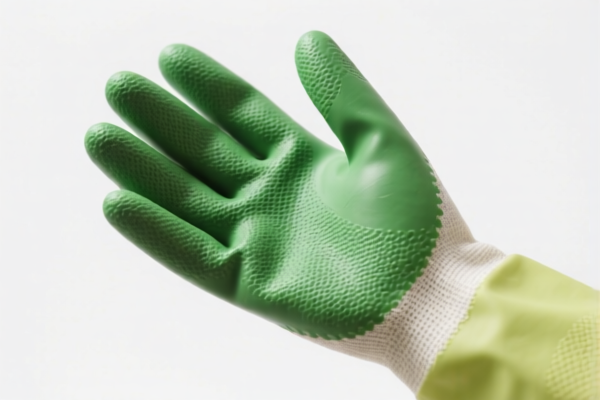
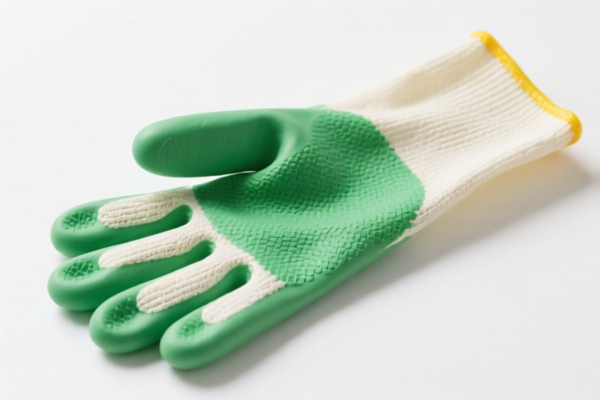
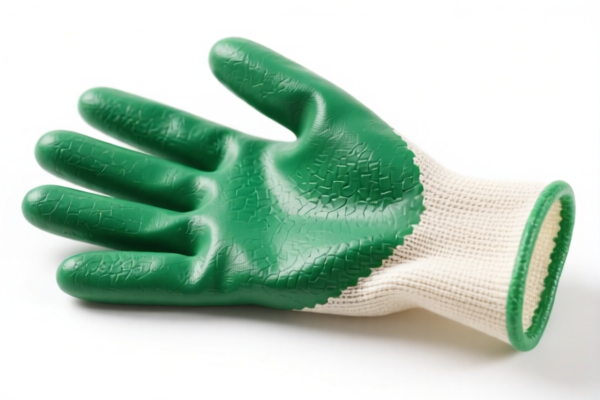
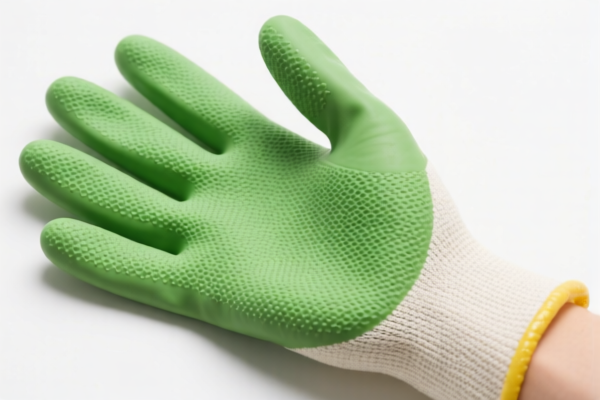
These gloves, often referred to as "rubber-impregnated felt gloves" or "agricultural protective gloves," consist of a plant fiber base (such as felt, woven cotton, or other natural fibers) coated or impregnated with rubber (natural or synthetic). They are primarily used for agricultural work, gardening, light industrial handling, and general-purpose protection against abrasion, moisture, and mild chemicals.
Key Distinction in Classification:
The classification depends heavily on the primary character of the glove:
- If the rubber coating determines the essential character (e.g., heavy-duty waterproofing, specific grip function), it is classified as Rubber Gloves (Chapter 40).
- If the fiber base is primary and the rubber is merely an impregnation/coating for durability, it may be classified under Articles of Apparel or Accessories (Chapter 61/62/39) or even Medical Devices (if specifically designed for medical use).
- If intended for medical procedures, it falls under Medical Instruments (Chapter 90).
⚠️ Critical Differentiator:
- If used for general labor/agriculture → Typically 4015 (Rubber Gloves).
- If used for medical/dental procedures → Typically 9018 or 3926 (depending on structure).
- Misclassification Risk: Declaring medical gloves as general-purpose gloves (or vice versa) can lead to severe penalties or seizure.
📦 II. HS Code Classification Details (2026 Latest Tariff Authority Comparison)
| HS Code | Product Description | Application Scenario | Tax Rate Profile |
|---|---|---|---|
4015.19.51.00 |
Rubber impregnated finger cots/gloves, classified as Sulfur-vulcanized rubber gloves | Agricultural work, gardening, general labor, heavy-duty protection | 49.0% (High) |
4015.19.11.50 |
Rubber impregnated finger cots/gloves, classified as Other apparel accessories | Light-duty gardening, decorative use, non-medical accessories | 38.0% (Medium-High) |
9018.39.00.20 |
Rubber impregnated finger cots/gloves, classified as Medical catheters/instruments | Medical/dental procedures, sterile environments, healthcare | 10.0% (Low) |
3926.20.10.50 |
Rubber impregnated finger cots/gloves, classified as Composite products of polymeric materials | Industrial handling, non-medical, non-apparel specific use | 10.0% (Low) |
9018.39.00.50 |
Rubber impregnated finger cots/gloves, classified as Other medical instruments | Surgical support, diagnostic aids, specialized medical use | 10.0% (Low) |
🔍 Key Insight:
- The same physical product can have vastly different tax liabilities (10% vs. 49%) based on its intended use and classification basis. - Medical classification (9018/3926) offers significant tax savings but requires strict documentation proving medical intent.
💰 III. 2026 Latest Tariff Rate Breakdown (Including Surtaxes & Policy Add-ons)
✅ Applicable Country: United States (US)
✅ Country of Origin: China (CN)
✅ Effective Date: November 10, 2025 (and onwards)
🎯 1. 4015.19.51.00 —— Rubber Gloves (Sulfur-Vulcanized)
| Item | Detail |
|---|---|
| Base Duty Rate | 14.0% (Ad Valorem) |
| Section 301 Surtax | +25.0% (USITC Footnote) |
| Section 122 Surtax | +10.0% (Specific to China) |
| Total Effective Rate | 49.0% |
| Tax Calculation | CIF Value × 49.0% |
| De Minimis Exemption | ❌ Not Eligible (deny_de_minimis) |
| Legal Basis Path | USITC:4015.19.51.00 → 301:Footnote → 122:China-Specific |
📌 Explanation:
- This is the highest tax bracket for this product.
- "122 Section Tariff" refers to specific US trade actions targeting certain Chinese rubber goods.
- High cost burden: 49% significantly impacts profitability. Must be avoided if alternative classification is viable.
🎯 2. 4015.19.11.50 —— Other Apparel Accessories
| Item | Detail |
|---|---|
| Base Duty Rate | 3.0% (Ad Valorem) |
| Section 301 Surtax | +25.0% |
| Section 122 Surtax | +10.0% |
| Total Effective Rate | 38.0% |
| Tax Calculation | CIF Value × 38.0% |
| De Minimis Exemption | ❌ Not Eligible (deny_de_minimis) |
| Legal Basis Path | USITC:4015.19.11.50 → 301:Footnote → 122:China-Specific |
📌 Note:
- Slightly lower than the primary rubber glove category, but still substantially high due to 301 and 122 tariffs.
- Suitable only if medical classification is not applicable.
🎯 3. 9018.39.00.20 —— Medical Catheters/Instruments
| Item | Detail |
|---|---|
| Base Duty Rate | 0.0% |
| Section 301 Surtax | 0.0% |
| Section 122 Surtax | +10.0% |
| Total Effective Rate | 10.0% |
| Tax Calculation | CIF Value × 10.0% |
| De Minimis Exemption | ❌ Not Eligible (deny_de_minimis) |
| Legal Basis Path | USITC:9018.39.00.20 → 122:China-Specific |
📌 Critical Advantage:
- No Section 301 tariff applies to most medical instruments.
- Only the 10% 122 Section tariff applies.
- Requires: Proof of medical use (e.g., FDA registration, sterile packaging, doctor prescription).
🎯 4. 3926.20.10.50 —— Composite Polymeric Products
| Item | Detail |
|---|---|
| Base Duty Rate | 0.0% |
| Section 301 Surtax | 0.0% |
| Section 122 Surtax | +10.0% |
| Total Effective Rate | 10.0% |
| Tax Calculation | CIF Value × 10.0% |
| De Minimis Exemption | ❌ Not Eligible (deny_de_minimis) |
| Legal Basis Path | USITC:3926.20.10.50 → 122:China-Specific |
📌 Note:
- Applicable if the product is considered a composite good where the polymer (rubber/plastic) is not the primary essential character.
- Requires careful justification to avoid being reclassified as rubber gloves.
🎯 5. 9018.39.00.50 —— Other Medical Instruments
| Item | Detail |
|---|---|
| Base Duty Rate | 0.0% |
| Section 301 Surtax | 0.0% |
| > Section 122 Surtax | +10.0% |
| Total Effective Rate | 10.0% |
| Tax Calculation | CIF Value × 10.0% |
| De Minimis Exemption | ❌ Not Eligible (deny_de_minimis) |
| Legal Basis Path | USITC:9018.39.00.50 → 122:China-Specific |
📌 Note:
- Another low-tax option for medical-specific rubber-impregnated products.
- Must provide medical certification to support this classification.
🛠️ IV. Customs Clearance Practical Advice (Pro Tips to Avoid Pitfalls)
✅ 1. Documentation Checklist (Essential for Low-Tax Classification)
| Document | Mandatory? | Purpose |
|---|---|---|
| ✅ Product Specifications | ✔️ | Detail material composition (fiber vs. rubber ratio), impregnation method |
| ✅ Intended Use Statement | ✔️ | Critical: Declare if for medical vs. agricultural use |
| ✅ Medical Certification (if applicable) | ✔️ | FDA 510(k) clearance, CE MDR certificate, or hospital procurement contract |
| ✅ Photos (Packaging & Product) | ✔️ | Show sterile packaging (for medical) or rugged labeling (for agricultural) |
| ✅ Commercial Invoice | ✔️ | Clear description: "Sterile Rubber-Impregnated Medical Gloves" vs. "Agricultural Rubber Gloves" |
| ✅ Origin Certificate (CO) | ✔️ | Required for all Chinese-origin goods to verify 122 Section applicability |
⚠️ Warning:
- Do NOT use generic terms like "Gloves" on the invoice.
- Medical gloves must be declared with medical intent; otherwise, customs may reclassify them to Chapter 40 (49% tax).
✅ 2. Declaration Strategy (Key Principles)
🔥 "Know Your Use, Choose Your Code, Avoid the 49% Trap!"
| Scenario | Correct HS Code | Risk of Misclassification |
|---|---|---|
| Agricultural/Gardening Use | 4015.19.51.00 |
Low risk, but 49% tax |
| Light Industrial/Accessory Use | 4015.19.11.50 |
Medium risk, 38% tax |
| Medical/Dental Use | 9018.39.00.20 or 9018.39.00.50 |
High scrutiny — must provide medical proof |
| Composite Industrial Use | 3926.20.10.50 |
Moderate risk — must prove non-rubber essential character |
✅ 3. Special Cases & Handling
| Situation | Recommendation |
|---|---|
| OEM for Medical Clients | Include client’s medical registration and usage statement in documentation |
| Dual-Use Product (Medical & Industrial) | Declare based on primary intended use in the specific shipment; provide clear labeling |
| Sterile vs. Non-Sterile | Sterile packaging strongly supports medical classification (9018); Non-sterile may be pushed to 4015 |
| Pre-Clearance | Apply for Advance Ruling from US CBP to confirm HS code before shipment |
🌍 V. Global Market Comparison (2026 Latest)
| Country/Region | Recommended HS Code | Tax Rate (China Origin) | Certification Required | Notes |
|---|---|---|---|---|
| 🇺🇸 USA | 9018.39.00.20 (Medical) |
10.0% (122 only) | FDA, CE, Sterility Proof | 49% if classified as 4015 |
| 🇺🇸 USA | 4015.19.51.00 (General) |
49.0% (301 + 122) | None | Avoid if medical classification is viable |
| 🇨🇳 China | 4015.19 |
5-14% | CCC (if applicable) | No 301/122 tariffs domestically |
| 🇪🇺 EU | 4015.19 |
3.7% | CE MDR (if medical) | No Section 122 equivalent; lower base rates |
| 🇬🇧 UK | 4015.19 |
3.7% | UKCA | Similar to EU post-Brexit |
📌 Conclusion:
- USA is the most tax-intensive market for these goods due to 301 + 122 surcharges.
- Medical classification is the most effective tax-saving strategy in the US (10% vs. 49%).
- EU/UK offer more stable, lower rates without punitive surtaxes.
📌 VI. Common Errors & Pitfalls (Lessons Learned)
❌ Mistake 1: Declaring medical gloves as "Agricultural Gloves" to avoid FDA scrutiny
👉 Consequence: If customs discovers medical intent, they may reclassify to 4015 (49%) and impose penalties.
✅ Correct: Declare as Medical with full documentation.
❌ Mistake 2: Using "Rubber Gloves" as the product name without specifying use
👉 Consequence: Ambiguity leads to customs defaulting to Chapter 40 (49% tax).
✅ Correct: Use precise names: "Sterile Rubber-Impregnated Medical Finger Cots" or "Agricultural Rubber-Coated Felt Gloves".
❌ Mistake 3: Assuming "De Minimis" exemption applies
👉 Consequence: All these HS codes are excluded from de minimis (deny_de_minimis).
✅ Correct: Prepare full customs entry for all shipments.
❌ Mistake 4: Failing to provide sterile packaging proof for medical claims
👉 Consequence: Customs rejects medical classification, reclassifying to 4015.
✅ Correct: Include photos of sterile packaging and sterilization certificates.
🎯 VII. Conclusion: Precision Classification Saves Thousands!
🎯 Key Takeaways:
🔹 "Medical Intent = 10% Tax; General Use = 49% Tax"
🔹 "Documentation is King: Provide medical proof to unlock low rates"
🔹 "No De Minimis: Every shipment requires full customs entry"
🔹 "Pre-Clearance: Apply for Advance Ruling to lock in HS code"
📌 Pro Tip:
If your product can be classified as medical, invest in FDA registration and sterile packaging. The 39% tax savings (49% - 10%) easily justifies the compliance cost.
📣 Immediate Action Plan:
📞 Consult a Customs Broker: Confirm HS code with CBP via Advance Ruling.
📄 Prepare Medical Documentation: FDA 510(k), CE MDR, Sterilization Certificates.
🏷️ Label Precisely: "Medical Use" or "Agricultural Use" clearly on packaging.
🚀 Optimize Supply Chain: Ensure all documents match the declared HS code.
✨ Professional Clearance, Start with Accurate Classification!
💼 Every percentage point matters — save 39% by classifying correctly!
用户评价
关于 HS 编码归类
协调制度(HS)是由世界海关组织(WCO)制定的国际贸易商品分类标准。全球 200 多个国家采用 HS 系统作为海关关税、贸易统计和进出口监管的基础。
每个 HS 编码遵循以下层级结构:
- 章(2 位)——商品大类(例如:第 84 章:机器和机械设备)
- 品目(4 位)——章内的更具体分类
- 子目(6 位)——国际通用细分,所有 WCO 成员国统一使用
- 本国细分(8-10 位)——各国自行扩展的细分编码,如美国 HTSUS 10 位编码
正确的 HS 编码归类对于顺利通关、准确缴纳关税和遵守贸易法规至关重要。错误归类可能导致海关延误、多缴关税或罚款。
从CN进口到US时,适用的关税税率可能包括:
- 最惠国(MFN)税率——适用于 WTO 成员国的标准关税税率
- 普通税率——适用于无贸易协定国家
- 贸易救济关税——附加关税,如 301 条款(反倾销)、232 条款(国家安全)或反补贴税
本页内容仅供参考。如需正式归类,请咨询当地海关或持牌报关代理。