Safety Mesh
CN → US| HS编码 | 关税税率 | 原产国 | 目的国 | 文档 |
|---|---|---|---|---|
| 5608192010 | 40.0% | CN | US | 官方文档 |
| 5608192090 | 40.0% | CN | US | 官方文档 |
| 7314311000 | 85.0% | CN | US | 官方文档 |
| 7314315010 | 85.0% | CN | US | 官方文档 |
商品图片
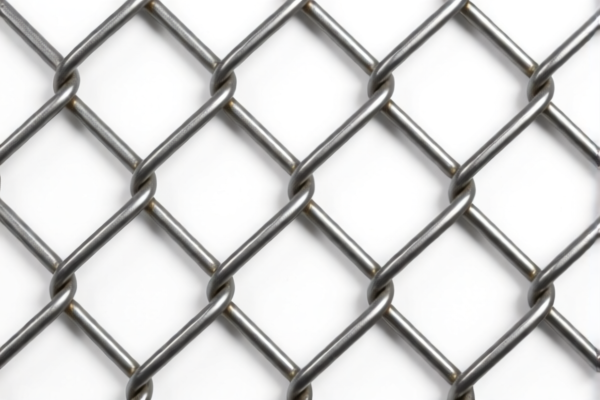
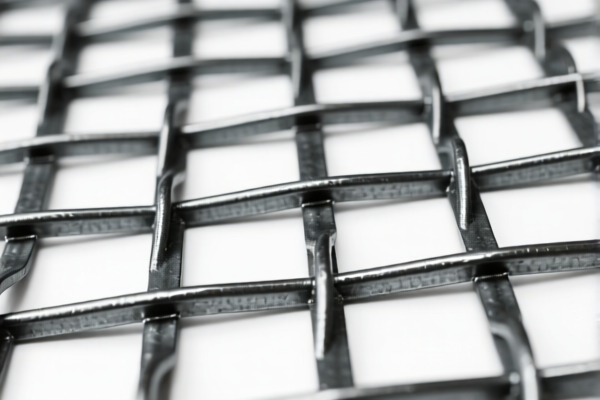
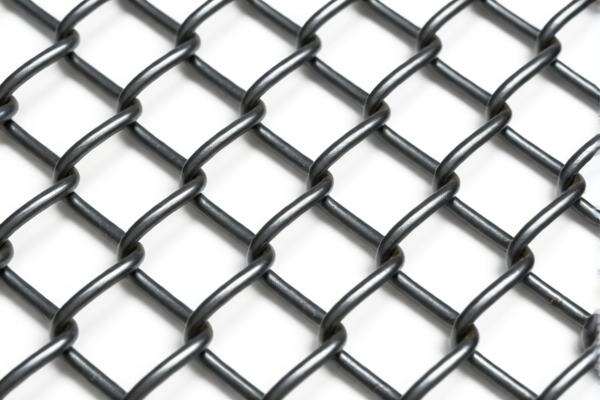
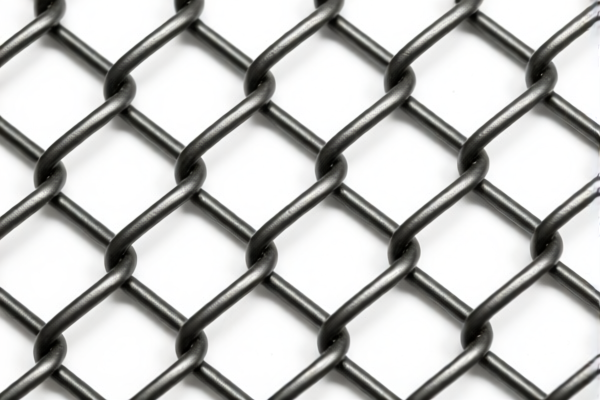
AI分析
🛡️ Safety Mesh (Industrial Wire Fencing & Netting)
🌐 HS Code Reference & Clearance Guide | 2026 Tariff Breakdown | Critical Compliance Strategy for Steel Products
📌 Part I: Product Definition & Classification: Is Your "Safety Mesh" Steel or Textile?
"Safety Mesh" is a broad commercial term that masks a critical legal distinction in international trade: Material Composition.
In customs classification, the difference between a textile fishing net and a welded steel wire fence is the difference between 0% tax and 75% tax.
Key Classification Criteria: 1. Steel Wire Mesh (Welded/Woven): Made of iron or steel wire. Used for construction reinforcement, animal fencing, or industrial safety barriers. * Primary HS Code: 7314.31.10.00 or 7314.31.50.10 2. Textile/Plastic Mesh: Made of twine, cordage, or rope (often polyethylene or nylon). Used for fishing nets, debris containment, or decorative netting. * Primary HS Code: 5608.19.20.10 or 5608.19.20.90
⚠️ CRITICAL WARNING:
- If your product is steel wire and it is welded at intersections, it falls under Chapter 73.
- If it is galvanized (zinc-plated), it triggers massive additional tariffs under US Section 301 and IEEPA rules.
- Do not misdeclare steel mesh as "plastic netting" to avoid tariffs. US Customs (CBP) conducts strict material verification (FTX tests). Misclassification leads to seizure and fines.
📦 Part II: HS Code Classification Matrix (2026 Data from )
Based strictly on the provided <DATA>, here are the four applicable HS Codes and their tax implications.
| HS Code | Product Description (From ) | Material Type | Welded? | Zinc Coated? | Risk Level |
|---|---|---|---|---|---|
7314.31.10.00 |
Cloth/netting/fencing of iron/steel wire; Plated or coated with zinc; Wire fencing | Steel/Iron | Yes (Welded) | Yes | 🔴 EXTREME |
7314.31.50.10 |
Cloth/netting/fencing of iron/steel wire; Plated/coated with zinc; Welded wire stucco netting, furred, no supplemental horizontal wire | Steel/Iron | Yes (Welded) | Yes | 🔴 EXTREME |
5608.19.20.10 |
Knotted netting of textile materials; Bait bags with draw string closures | Textile (Man-made) | No (Knotted) | N/A | 🟢 LOW |
5608.19.20.90 |
Knotted netting of textile materials; Other | Textile (Man-made) | No (Knotted) | N/A | 🟢 LOW |
🔍 Clarification:
- The term "Safety Mesh" in construction often refers to Stucco Netting or Wire Fencing. These fall under 7314.
- If "Safety Mesh" refers to Debris Netting or Fishing Nets made of rope/nylon, these fall under 5608.
- The provided data shows ZERO tax on Textile Nets (5608) but 75% tax on Zinc-Coated Steel Nets (7314).
💰 Part III: 2026 Tariff Rate Breakdown (Detailed Tax Analysis)
✅ Scope: Import into the United States
✅ Origin: China (implied by the high surtax structure in )
✅ Product Category: Steel Wire Mesh vs. Textile Mesh
🎯 1. 7314.31.10.00 & 7314.31.50.10 — Zinc-Coated Steel Wire Fencing/Netting
These are the most common "safety meshes" used in industrial safety barriers, chicken wire, or stucco lath. However, the tax burden is severe.
| Tax Component | Rate | Source / Legal Basis |
|---|---|---|
| Base Tariff | 0.0% | General Rate of Duty (Column 1) |
| Section 301 Surcharge | 25.0% | USITC Footnote 9903.88.01 (Steel Products) |
| IEEPA Surcharge | 50.0% | "Steel, Aluminum, Copper Products" Additional Tariff |
| TOTAL EFFECTIVE RATE | 75.0% | 75% of CIF Value |
📌 Explanation of the 75% Rate:
- The<DATA>explicitly states:加征关税: 25.0%钢,铝铜制品加征关税: 50%
- This means a standard 25% Section 301 tariff applies to steel, PLUS an additional 50% specific surcharge for steel/copper/aluminum products.
- Result: For every $10,000 of goods, you pay $7,500 in duties.
- Applicability: This applies to7314.31.10.00(Wire Fencing) and7314.31.50.10(Stucco Netting). Both are welded, zinc-plated steel products.
🎯 2. 5608.19.20.10 & 5608.19.20.90 — Textile/Knotted Nets
If your "Safety Mesh" is made of polyester, nylon, or polypropylene rope (e.g., debris nets, fishing nets, bait bags), it is classified as textile.
| Tax Component | Rate | Source / Legal Basis |
|---|---|---|
| Base Tariff | 0.0% | General Rate of Duty |
| Section 301 Surcharge | 0.0% | Textiles are generally exempt from steel-specific surcharges |
| IEEPA Surcharge | 0.0% | No steel/aluminum content |
| TOTAL EFFECTIVE RATE | 0.0% | Free Entry |
📌 Explanation:
- The<DATA>showstax_detail: "基础关税: 0.0%, 加征关税: 0.0%".
- Strategic Implication: If a product can be legally classified as a textile net (e.g., high-density polyethylene debris netting) rather than a steel wire fence, the duty saving is 75%.
- Constraint: You must prove the material is textile/man-made fiber, not steel wire. If it contains steel wire reinforcement, it may be reclassified under Chapter 73.
🛠️ Part IV: Clearance Strategy & Risk Mitigation (Expert Advice)
✅ 1. Material Verification is Key
Before shipping, you MUST determine the exact material composition.
* Scenario A: Product is Galvanized Steel Wire.
* HS Code: 7314.31.10.00 or 7314.31.50.10
* Action: Expect 75% duty. Budget accordingly.
* Risk: High. CBP will test for zinc coating and steel composition.
* Scenario B: Product is Plastic/Textile Net (e.g., Nylon, Polyester).
* HS Code: 5608.19.20.10 or 5608.19.20.90
* Action: Declare as 0% duty.
* Risk: Low, but must provide material certificates (e.g., Polyethylene/Polyester specs).
✅ 2. Detailed Declaration Requirements
| Document | Requirement for 7314 (Steel) |
Requirement for 5608 (Textile) |
|---|---|---|
| Product Name | "Welded Galvanized Steel Wire Fencing, Zinc-Coated" | "Polyester Debris Control Netting, Knotted" |
| Material Spec | Must state: Iron/Steel, Zinc Plating/Galvanized | Must state: Polyester/Nylon/Polypropylene |
| Structure | "Welded at intersections" | "Knotted" or "Tied" |
| Usage | "Construction reinforcement" or "Animal fencing" | "Fishing," "Bait bag," or "Debris containment" |
✅ 3. Common Pitfalls & "Blood & Tears" Lessons
❌ Pitfall 1: Misdeclaring Steel as Plastic
👉 Consequence: CBP performs a "FTX" (Fiber Test) or magnet test. If steel is detected, the rate jumps from 0% to 75%.
👉 Penalty: Retroactive duties + 25-75% penalty + seizure of goods.
❌ Pitfall 2: Ignoring the "Zinc Coating" Factor
👉 Insight: Even if it's steel, is it zinc-plated? The <DATA> specifically lists Plated or coated with zinc.
👉 Strategy: If it is bare steel (unplated), it might fall under a different subheading (not in this specific <DATA> snippet, but often 7314.31.90). However, most "safety meshes" are galvanized. Ensure you are not declaring a galvanized product as unplated.
❌ Pitfall 3: Confusing "Stucco Netting" with "Fencing"
👉 Detail: 7314.31.50.10 is specifically for Stucco Netting (furred, no supplemental horizontal wire). 7314.31.10.00 is for general Wire Fencing.
👉 Action: If you are exporting stucco lath for plastering, use 7314.31.50.10. If it is a fence, use 7314.31.10.00. Both carry the 75% tax in this data set.
📌 Part V: Final Recommendation
-
If your product is Steel Wire Mesh (Galvanized):
- HS Code:
7314.31.10.00or7314.31.50.10 - Tax: 75%
- Advice: This is a high-cost item. Consider supply chain diversification (e.g., sourcing from Vietnam or Mexico if eligible for exemptions, though steel tariffs are often global) or negotiate price reductions with suppliers to absorb the 75% duty.
- HS Code:
-
If your product is Textile/Plastic Netting:
- HS Code:
5608.19.20.10or5608.19.20.90 - Tax: 0%
- Advice: Ensure the product description clearly emphasizes "Textile," "Polyester," "Nylon," or "Knotted Netting" to avoid steel classification. Provide material safety data sheets (MSDS) confirming no steel wire content.
- HS Code:
🚀 Pro Tip:
"Material Dictates the Code, Code Dictates the Cost."
One magnet test can save you $7,500 per $10,000 in goods. Verify your material before you ship!
✨ Professional Clearance Starts with Precise Classification!
💼 Every percentage point of tariff difference is pure profit loss!
用户评价
关于 HS 编码归类
协调制度(HS)是由世界海关组织(WCO)制定的国际贸易商品分类标准。全球 200 多个国家采用 HS 系统作为海关关税、贸易统计和进出口监管的基础。
每个 HS 编码遵循以下层级结构:
- 章(2 位)——商品大类(例如:第 84 章:机器和机械设备)
- 品目(4 位)——章内的更具体分类
- 子目(6 位)——国际通用细分,所有 WCO 成员国统一使用
- 本国细分(8-10 位)——各国自行扩展的细分编码,如美国 HTSUS 10 位编码
正确的 HS 编码归类对于顺利通关、准确缴纳关税和遵守贸易法规至关重要。错误归类可能导致海关延误、多缴关税或罚款。
从CN进口到US时,适用的关税税率可能包括:
- 最惠国(MFN)税率——适用于 WTO 成员国的标准关税税率
- 普通税率——适用于无贸易协定国家
- 贸易救济关税——附加关税,如 301 条款(反倾销)、232 条款(国家安全)或反补贴税
本页内容仅供参考。如需正式归类,请咨询当地海关或持牌报关代理。