Sales Record Book
CN → US| HS编码 | 关税税率 | 原产国 | 目的国 | 文档 |
|---|---|---|---|---|
| 4820104000 | 35.0% | CN | US | 官方文档 |
| 4820102060 | 35.0% | CN | US | 官方文档 |
商品图片
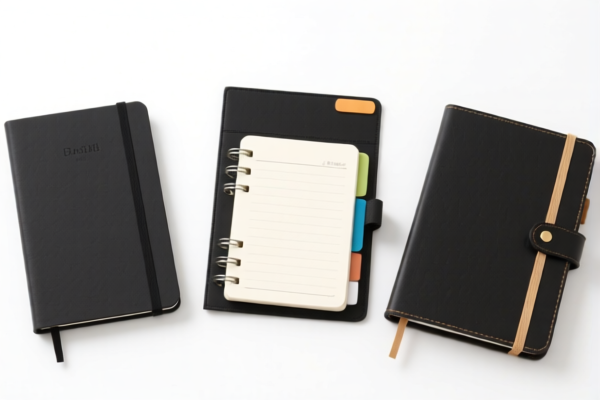
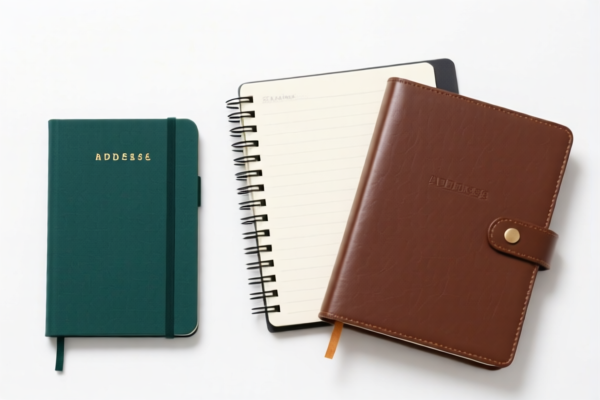
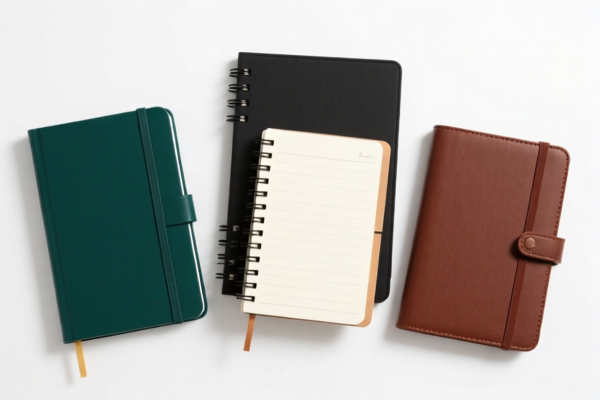

AI分析
📓 Sales Record Book (Registers & Account Books)
🌐 HS Code Reference & Customs Clearance Guide | 2024/2025 Latest Tariff Analysis | Professional Compliance Strategy
📌 1. Product Definition & Classification: What exactly is a "Sales Record Book"?
A Sales Record Book falls under the broad category of Stationery of Paper or Paperboard. In international trade, these items are strictly classified as "Registers, Account Books, Notebooks, Order Books, Receipt Books, Letter Pads, Memorandum Pads, Diaries and Similar Articles."
Key Distinction: * Bound Volumes (Registers/Notebooks): Pages bound together (spiral, perfect binding, thread binding). These are classified under 4820.10.20 or 4820.10.40. * Loose Sheets/Pads (Letter Pads/Memo Pads): Unbound or loose-leaf sheets. These may fall under different subheadings depending on specific formatting.
⚠️ Critical Classification Point: * If the product is a bound book (even if it has pre-printed columns for sales, dates, and amounts) → It is classified as a Register/Notebook. * If the product is a diary-like format with personal scheduling + sales tracking → It may be classified as a Diary. * Do NOT classify as "Books for printing" (Chapter 49) unless it is blank manuscript for publishing. Stationery is Chapter 48.
📦 2. HS Code Classification Details (From Source Data)
Based on the provided data, two specific HS Codes apply to Sales Record Books depending on their specific binding and description:
| HS Code | Product Description | Applicable Scenario | Binding Type |
|---|---|---|---|
4820.10.40.00 |
Registers, account books, notebooks, order books, receipt books, letter pads, memorandum pads, diaries and similar articles: Other | Generic sales books not specifically described as "Diaries, notebooks and address books" or "Memo pads." | Any bound form not fitting the specific "Diary/Memo" sub-categories. |
4820.10.20.60 |
Registers, account books...: Diaries, notebooks and address books, bound; memorandum pads, letter pads and similar articles: Other | Specific pre-printed sales journals, bound account logs, or specialized business notebooks. | Bound volumes explicitly designed for business record-keeping. |
🔍 Key Note:
Both codes fall under Chapter 48 (Paper and Paperboard) and Heading 4820 (Stationery).
The distinction between4820.10.40.00and4820.10.20.60often depends on the specific national tariff schedule's sub-headings. However, the Tax Rate is identical in the provided dataset.
💰 3. Tax Rate Breakdown (Detailed Analysis)
✅ Applicable Jurisdiction: Implied United States (based on "Additional Tariffs" structure)
✅ Origin: China (CN)
✅ Effective Time: 2024/2025 (Current Trade War Era)
🎯 1. Both 4820.10.40.00 & 4820.10.20.60
| Item | Content |
|---|---|
| Base Tariff (MFN) | 0.0% |
| Section 301 Additional Tariff | +25.0% |
| Total Tax Rate | 25.0% |
| Calculation Basis | Ad Valorem (Based on CIF Value) |
| De Minimis Exemption | ❌ NOT Eligible |
| Legal Basis | USITC Footnote 9903.88.01 (Section 301 Tariffs) |
📌 Explanation:
Although the Base Tariff is 0%, these products are subject to the 25% additional tariff imposed under Section 301 of the Trade Act against Chinese goods.
This means for every $1,000 worth of Sales Record Books imported from China, you must pay $250 in duties.
There is no exemption* for low-value shipments (De Minimis) for these specific HS codes under current Section 301 enforcement.
🛠️ 4. Customs Clearance Practical Advice
✅ 1. Documentation Checklist (Mandatory)
| Document | Required? | Notes |
|---|---|---|
| ✅ Commercial Invoice | ✔️ | Must clearly state: "Sales Record Book, Paper, Bound, No Electronic Components" |
| ✅ Packing List | ✔️ | Specify quantity per box, total boxes, gross/net weight. |
| ✅ Product Photos | ✔️ | Show interior pages (pre-printed columns), binding type, and cover. |
| ✅ Material Declaration | ✔️ | Confirm 100% Paper/Paperboard. No plastic covers, metal spirals, or electronic components. |
| ✅ Country of Origin | ✔️ | Must be marked "Made in China" on product and package. |
✅ 2. Common Pitfalls & Avoidance Strategies
| Mistake | Consequence | Correct Action |
|---|---|---|
| Misclassifying as "Book" (Ch 49) | Wrong HS Code, potential penalty | Use 4820.10.xx for stationery; reserve Ch 49 for literary/educational books. |
| Including Pens/Markers | Mixed shipment complexity | Ship Paper Goods and Pens separately. Pens may have different tariff treatments. |
| Using "Blank Notebook" Description | Customs may suspect evasion | Use precise terms: "Pre-printed Sales Journal," "Account Book," "Business Register." |
| Ignoring Section 301 | Unexpected $250 duty per $1,000 | Factor the 25% additional tariff into your landed cost calculation before purchasing. |
✅ 3. Clearance Tips
- Precise Naming: Use "Sales Register" or "Account Book" rather than generic "Notebook."
- Component Check: Ensure NO electronic chips, QR code readers, or Bluetooth features are embedded. If yes, it may shift to Chapter 85 (Electrical Machinery) with different tariffs.
- Binding Type: Specify if it’s Spiral, Perfect Bound, or Thread Bound. This helps customs verify it’s truly a "book" and not loose-leaf forms.
- Pre-Import Ruling: If shipping large volumes, consider applying for a Binding Tariff Ruling from CBP to lock in the HS Code and avoid future disputes.
🌍 5. Global Market Comparison (2024/2025)
| Country | HS Code | Base Rate | Additional Duty | Total Duty | Notes |
|---|---|---|---|---|---|
| 🇺🇸 USA | 4820.10.40.00 / 4820.10.20.60 |
0% | +25% (Sec 301) | 25% | High barrier for Chinese origin. |
| 🇨🇳 China (Import) | 4820.10.40.00 |
6.5% | 0% | 6.5% | Standard MFN rate. |
| 🇪🇺 EU | 4820.10.40.00 |
3.7% | 0% | 3.7% | No additional tariffs on stationery. |
| 🇬🇧 UK | 4820.10.40.00 |
4.5% | 0% | 4.5% | Post-Brexit tariff schedule. |
| 🇨🇦 Canada | 4820.10.40.00 |
5.25% | 0% | 5.25% | Standard applied rate. |
| 🇦🇺 Australia | 4820.10.40.00 |
5.0% | 0% | 5.0% | No additional tariffs. |
📌 Conclusion:
The USA is the most expensive market for importing Sales Record Books from China due to the 25% Section 301 tariff.
Other major markets (EU, UK, Canada, Australia) have significantly lower duties (~3-6%).
Strategy: If targeting the US market, consider sourcing from Vietnam, Thailand, or Mexico* to potentially avoid the 25% additional tariff (subject to strict rules of origin).
📌 6. Common Errors & Avoidance Guide (Lessons Learned)
❌ Error 1: Shipping Laptop Stand + Sales Book together
👉 Consequence: The entire shipment may be scrutinized under electronics or furniture tariffs.
✅ Fix: Ship separately. Clearly label the book as "Stationery."
❌ Error 2: Calling it a "Diary" when it’s a Sales Ledger
👉 Consequence: Minor classification risk, but tax rate remains same in this case. However, misdescription can delay customs.
✅ Fix: Use "Sales Register" or "Account Book" for B2B products.
❌ Error 3: Ignoring the 25% Additional Tariff
👉 Consequence: Profit margin eaten up by unexpected customs duties.
✅ Fix: Always add 25% to your cost model for US-bound paper stationery from China.
❌ Error 4: Including Plastic Covers or Metal Spirals
👉 Consequence: Customs may argue it’s not "pure paper" or question the material composition.
✅ Fix: Disclose materials accurately. Paper + minor binding materials are still Class 4820.
🎯 7. Conclusion: Professional Clearance, Cost Optimization
🎯 Remember the Golden Rule:
🔹 "Stationery is Chapter 48, not Chapter 49."
🔹 "USA = 25% Extra Duty on Chinese Paper Goods."
🔹 "Precise Description Prevents Delays."
📌 Pro Tip:
If you are importing large quantities to the USA, consider:
1. Supply Chain Diversification: Source from non-China countries (Vietnam, Indonesia) to avoid the 25% tariff.
2. Pre-Import Ruling: Get a binding opinion from CBP to secure your HS Code.
3. Duty Mitigation: Consult a customs broker about FTZ (Foreign Trade Zone) storage if applicable.
📣 Immediate Action:
📞 Verify your supplier’s Country of Origin certificate.
📊 Calculate your Landed Cost including the 25% US Additional Tariff.
📝 Ensure your Commercial Invoice explicitly states: "Sales Record Book, Paper, Bound, Harmonized Tariff Schedule Code: 4820.10.40.00."
✨ Professional Clearance Starts with Accurate Classification!
💼 Your Cost Efficiency Depends on This 25% Difference!
用户评价
关于 HS 编码归类
协调制度(HS)是由世界海关组织(WCO)制定的国际贸易商品分类标准。全球 200 多个国家采用 HS 系统作为海关关税、贸易统计和进出口监管的基础。
每个 HS 编码遵循以下层级结构:
- 章(2 位)——商品大类(例如:第 84 章:机器和机械设备)
- 品目(4 位)——章内的更具体分类
- 子目(6 位)——国际通用细分,所有 WCO 成员国统一使用
- 本国细分(8-10 位)——各国自行扩展的细分编码,如美国 HTSUS 10 位编码
正确的 HS 编码归类对于顺利通关、准确缴纳关税和遵守贸易法规至关重要。错误归类可能导致海关延误、多缴关税或罚款。
从CN进口到US时,适用的关税税率可能包括:
- 最惠国(MFN)税率——适用于 WTO 成员国的标准关税税率
- 普通税率——适用于无贸易协定国家
- 贸易救济关税——附加关税,如 301 条款(反倾销)、232 条款(国家安全)或反补贴税
本页内容仅供参考。如需正式归类,请咨询当地海关或持牌报关代理。