Sample Display Album
CN → US| HS编码 | 关税税率 | 原产国 | 目的国 | 文档 |
|---|---|---|---|---|
| 4820500000 | 35.0% | CN | US | 官方文档 |
| 4820900000 | 35.0% | CN | US | 官方文档 |
| 3926904800 | 13.4% | CN | US | 官方文档 |
| 4911100080 | 17.5% | CN | US | 官方文档 |
| 4911100020 | 17.5% | CN | US | 官方文档 |
商品图片
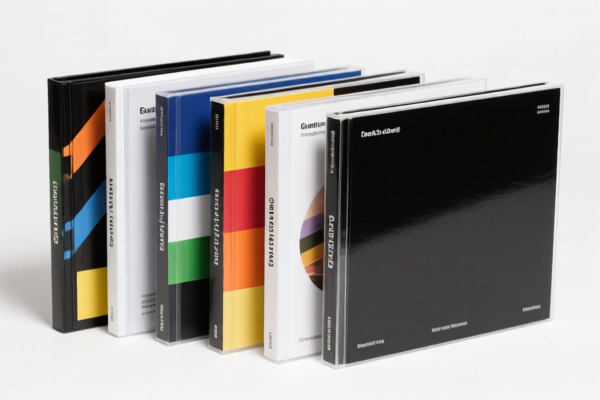
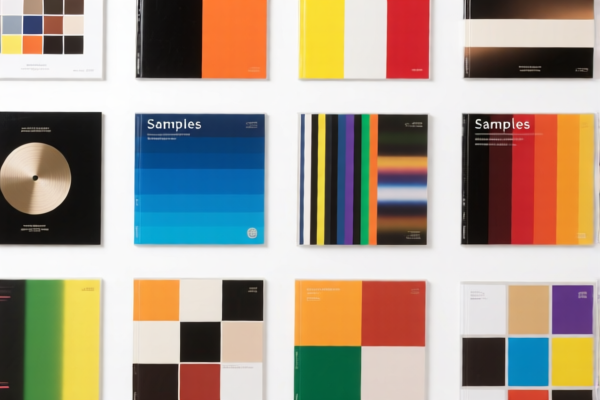
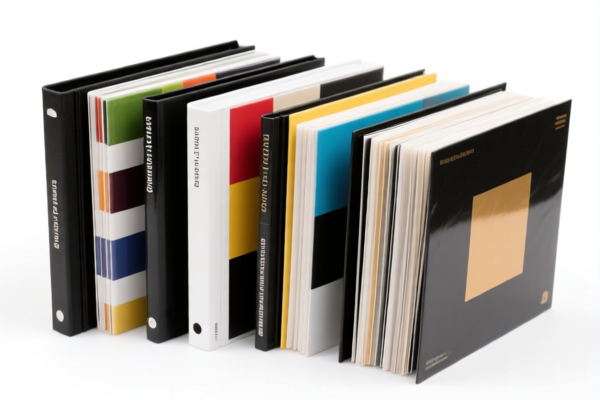
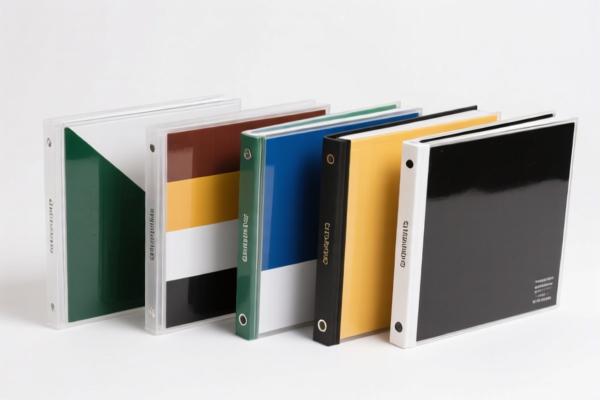
AI分析
📂 Sample Display Album (Catalogs & Brochures)
🌐 HS Code Reference & Customs Clearance Guide | 2026 Latest Tariff Analysis | Professional Strategy for Cross-Border Trade
📌 I. Product Definition & Classification: Do You Really Know What a "Sample Display Album" Is?
A Sample Display Album is a crucial tool for B2B trade, used to store samples, product catalogs, or collections. In international trade, its classification depends heavily on its material and content nature. It is generally categorized into three main types:
Paper-based Albums: Made primarily of paper or cardboard, used for binding paper samples or printed catalogs.
Plastic/Composite Albums: Made of plastic or mixed materials, often used for protecting physical samples (e.g., fabric swatches, material chips).
Printed Commercial Publications: Specifically printed materials intended for trade advertising, such as product directories or brochures, regardless of binding type.
⚠️ Key Distinction Point:
- If it is a physical binder/album holding samples (paper or plastic material) → Classified under Chapter 48 (Paper/Paperboard) or Chapter 39 (Plastics).
- If it is a printed commercial directory/catalog primarily for advertising purposes → Classified under Chapter 49 (Printed Matter).
- Material matters: Paper vs. Plastic determines whether it falls under HS 4820 or HS 3926.
📦 II. HS Code Classification Details (2026 Latest Tariff Authority Comparison)
| HS Code | Product Description | Application Scenario | Primary Material |
|---|---|---|---|
4820.50.00.00 |
Sample Albums for storing samples or collections; made of paper or paperboard | Generic paper sample binders, trade show sample books | 📄 Paper/Paperboard |
4820.90.00.00 |
Other albums for sample or collection display; made of paper or paperboard | Specialized paper albums, non-standard bindings | 📄 Paper/Paperboard |
3926.90.48.00 |
Sample Albums with functions consistent with photo albums; made of plastic or related paper/composite materials | Plastic-covered sample binders, durable material chips | 🧱 Plastic/Composite |
4911.10.00.80 |
Sample Albums in printed form; classified as trade advertising materials or commercial directories | Printed catalogs, product brochures, advertising albums | 🖨️ Printed Paper |
4911.10.00.20 |
Sample Albums in printed form; used to display product info as trade ads/commercial directories | Specific commercial product directories for trade | 🖨️ Printed Paper |
🔍 Key Reminder:
- Physical Binders (Paper/Plastic): Must use HS 4820 or HS 3926. The focus is on the container holding the samples.
- Printed Directories: Must use HS 4911. The focus is on the content (advertising/information) rather than the physical binding mechanism.
- Do not mix: A plastic-bound book of printed ads is still often treated as a printed product (HS 4911) if the primary function is information display, but a plastic binder holding physical fabric swatches is HS 3926.
💰 III. 2026 Latest Tariff Rate Details (Including Surcharges & Policy Add-ons)
✅ Applicable Country: United States (US)
✅ Origin: China (CN)
✅ Effective Date: Current Trade Policies (Section 301 & IEEPA)
🎯 1. 4820.50.00.00 & 4820.90.00.00 —— Paper/Paperboard Sample Albums
| Item | Content |
|---|---|
| Base Tariff | 0.0% |
| Section 301 Surcharge (USITC) | +25.0% |
| Section 122 / IEEPA Surcharge | +10.0% |
| Total Tariff Rate | 35.0% |
| Calculation Basis | CIF Value × 35% |
| De Minimis Exemption | ❌ NOT Eligible (High risk of seizure/rejection for low-value shipments) |
| Legal Basis Path | USITC:4820.xxxx → FOOTNOTE:301.88 → IEEPA:9903.01.25 |
📌 Explanation:
- Although the base tariff is 0%, the 25% Section 301 tariff applies to most Chinese-made paper products.
- The additional 10% IEEPA tariff further increases the cost.
- Total 35% is a significant cost driver for low-margin paper samples.
🎯 2. 3926.90.48.00 —— Plastic/Composite Sample Albums
| Item | Content |
|---|---|
| Base Tariff | 3.4% |
| Section 301 Surcharge (USITC) | 0.0% (Specific exclusion or lower bracket application) |
| Section 122 / IEEPA Surcharge | +10.0% |
| Total Tariff Rate | 13.4% |
| Calculation Basis | CIF Value × 13.4% |
| De Minimis Exemption | ❌ NOT Eligible |
| Legal Basis Path | USITC:3926.90.48.00 → IEEPA:9903.01.24 |
📌 Note:
- Plastic albums enjoy a lower total tax rate (13.4%) compared to paper albums (35.0%).
- The base tariff is 3.4%, but crucially, the 25% Section 301 surcharge does NOT apply (or applies differently) to this specific subheading, saving significant cost.
- Strategy Tip: If your product is a binder holding physical samples, consider upgrading from Paper to Plastic to save ~21.6% in tariffs.
🎯 3. 4911.10.00.80 & 4911.10.00.20 —— Printed Commercial Directories/Catalogs
| Item | Content |
|---|---|
| Base Tariff | 0.0% |
| Section 301 Surcharge (USITC) | +7.5% |
| Section 122 / IEEPA Surcharge | +10.0% |
| Total Tariff Rate | 17.5% |
| Calculation Basis | CIF Value × 17.5% |
| De Minimis Exemption | ❌ NOT Eligible |
| Legal Basis Path | USITC:4911.10.00 → FOOTNOTE:301.88 (Reduced rate) → IEEPA:9903.01.25 |
📌 Critical Insight:
- Printed catalogs are classified as advertising materials, which often have lower Section 301 surcharges than general paper goods.
- The 7.5% Section 301 rate is significantly lower than the 25% applied to paper albums.
- Total 17.5% is the most cost-effective option for high-volume printed catalogs.
🛠️ IV. Customs Clearance Practical Advice (Pitfall Avoidance Guide)
✅ 1. Essential Documentation Checklist
| Document | Mandatory | Description |
|---|---|---|
| ✅ Product Photos | ✔️ | Clear images showing the album structure and content (samples vs. printed pages). |
| ✅ Material Specification | ✔️ | Explicitly state "Paper," "Cardboard," or "Plastic." Customs may reject vague "Mixed Material" claims. |
| ✅ Content Description | ✔️ | "Holds physical fabric swatches" (Binder) vs. "Contains product advertising text" (Catalog). |
| ✅ Commercial Invoice | ✔️ | Must match the HS Code description precisely. |
| ✅ Packing List | ✔️ | Weight and dimensions to support the declared material type. |
✅ 2. Classification Strategy (Key Rules of Thumb)
🔥 "Material Dictates Chapter, Content Dictates Duty!"
| Scenario | Recommended HS Code | Reason |
|---|---|---|
| Paper binder holding fabric swatches | 4820.50.00.00 |
Physical container, paper material. |
| Plastic binder holding plastic samples | 3926.90.48.00 |
Physical container, plastic material. Lowest duty. |
| Printed book of product specs & ads | 4911.10.00.80 |
Printed matter, advertising function. |
| Hardcover album with printed photos | 4911.10.00.20 |
Printed matter, commercial display. |
| Plastic cover with printed inserts | 4911.10.00.80 |
Primary function is printing/display; binding is secondary. |
⚠️ Warning:
- Do NOT declare a plastic sample book as "Paper" to avoid the 3.4% base tariff. It will be reclassified, leading to fines.
- Do NOT declare a simple paper catalog as a "Plastic Binder." It will be reclassified to HS 4820, potentially increasing Section 301 liability if misclassified.
✅ 3. Special Case Handling
| Scenario | Handling Advice |
|---|---|
| Digital Samples (USB Drives) in Album | The USB drive itself may be 8523.49 (High tariff 25%+10%). The album may be separate. Consider declaring separately to avoid complexity. |
| Hybrid (Physical Swatches + QR Codes) | If physical swatches are the main feature, use HS 4820 or HS 3926. If it's mostly ad copy, use HS 4911. |
| Low Value (Under $800) | ❌ Do NOT rely on De Minimis (Section 321). These goods are subject to IEEPA/Section 301 surcharges even in small shipments. Expect delays and taxes. |
| Gift vs. Commercial | Commercial intent triggers HS 4911 or 4820. Personal gifts may be treated differently but are risky for bulk shipments. |
🌍 V. Global Market Comparison (2026 Update)
| Country/Region | Recommended HS Code | Est. Total Tax (China Origin) | Notes |
|---|---|---|---|
| 🇺🇸 USA | 4820.50.00.00 / 3926.90.48.00 / 4911.10.00 |
13.4% – 35.0% | High Section 301 + IEEPA. Plastic is cheapest. |
| 🇪🇺 EU | 4820.50.00 / 3926.90.48 / 4911.10 |
0% – 6.5% | Lower base tariffs, no Section 301. Check EPR (packaging) rules. |
| 🇨🇳 China | 4820.50.00 / 3926.90.48 / 4911.10 |
0% – 6% | Import duties vary by source country (FTA benefits). |
| 🇬🇧 UK | 4820.50.00 / 3926.90.48 / 4911.10 |
4% – 6% | Post-Brexit tariffs apply. No US-style surcharges. |
📌 Conclusion:
- USA is the most expensive market due to Trade War Surcharges.
- Plastic Albums (HS 3926) are the most tax-efficient for physical sample holders in the US (13.4% vs 35%).
- Printed Catalogs (HS 4911) offer a middle ground (17.5%) if the product is information-heavy.
📌 VI. Common Errors & Pitfall Guide (Lessons Learned)
❌ Error 1: Declaring a Plastic Album as Paper (HS 4820)
👉 Consequence: Customs inspection reveals plastic → Penalty + Reclassification + Back Taxes.
❌ Error 2: Declaring a Physical Sample Binder as a Catalog (HS 4911)
👉 Consequence: Customs sees physical objects inside → Reclassification to HS 4820/3926 + 25% Surcharge.
❌ Error 3: Ignoring IEEPA (122 Clause) 10% Surcharge
👉 Consequence: All these items are subject to the additional 10% on Chinese goods. Total tax is not just Base + 301.
✅ Correct Practice:
"Plastic Sample Binder, Holding Fabric Swatches, 10x10 inches, Made in China" → HS 3926.90.48.00
"Printed Product Catalog, 50 Pages, Advertising Material, Made in China" → HS 4911.10.00.80
🎯 VII. Conclusion: Professional Classification Saves Money!
🎯 Remember the Golden Rules:
🔹 "Physical Samples? Use Plastic (HS 3926) for Lowest Tax (13.4%)."
🔹 "Printed Ads? Use HS 4911 for Lower Surcharge (17.5%)."
🔹 "Paper Binders? Expect 35% Tax (High Cost Avoidance Needed)."
🔹 "No De Minimis! All US Shipments are Taxable."
📌 Pro Tip:
If you are shipping small quantities for sampling, consider Digital-First Strategies (QR Codes, PDFs) to avoid physical customs clearance entirely.
For physical samples, choose Plastic Binders over Paper to optimize cost under current US trade policies.
📣 Immediate Action Required:
📞 Contact your Customs Broker: Provide photos and material specs.
🚀 Apply for Advance Ruling: If volume is high, secure the correct HS Code in advance.
💡 Optimize Material: Switch from Paper to Plastic binders if possible to save ~21% in US tariffs.
✨ Professional Clearance Starts with Accurate Classification!
💼 Every cent saved in tariff is pure profit added to your bottom line!
用户评价
关于 HS 编码归类
协调制度(HS)是由世界海关组织(WCO)制定的国际贸易商品分类标准。全球 200 多个国家采用 HS 系统作为海关关税、贸易统计和进出口监管的基础。
每个 HS 编码遵循以下层级结构:
- 章(2 位)——商品大类(例如:第 84 章:机器和机械设备)
- 品目(4 位)——章内的更具体分类
- 子目(6 位)——国际通用细分,所有 WCO 成员国统一使用
- 本国细分(8-10 位)——各国自行扩展的细分编码,如美国 HTSUS 10 位编码
正确的 HS 编码归类对于顺利通关、准确缴纳关税和遵守贸易法规至关重要。错误归类可能导致海关延误、多缴关税或罚款。
从CN进口到US时,适用的关税税率可能包括:
- 最惠国(MFN)税率——适用于 WTO 成员国的标准关税税率
- 普通税率——适用于无贸易协定国家
- 贸易救济关税——附加关税,如 301 条款(反倾销)、232 条款(国家安全)或反补贴税
本页内容仅供参考。如需正式归类,请咨询当地海关或持牌报关代理。