Sandalwood Essential Oil
CN → US| HS编码 | 关税税率 | 原产国 | 目的国 | 文档 |
|---|---|---|---|---|
| 3301295139 | 17.5% | CN | US | 官方文档 |
| 3301295109 | 17.5% | CN | US | 官方文档 |
商品图片

AI分析
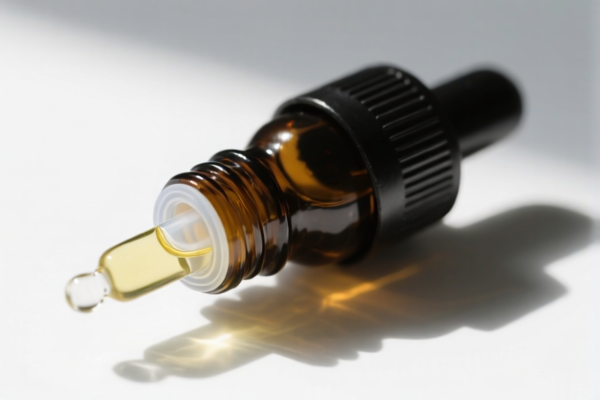
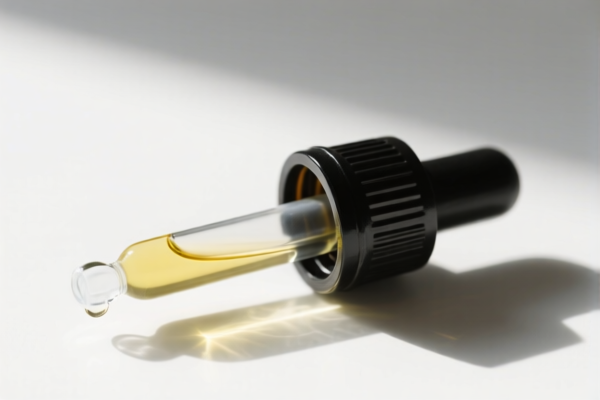
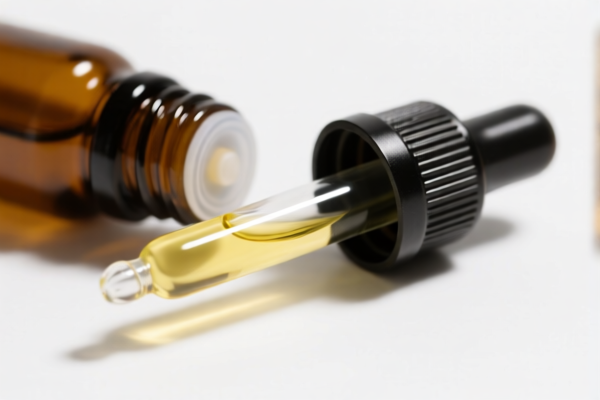
🌿 Sandalwood Essential Oil (Terpeneless & Extracted)
🌐 HS Code Reference & Customs Clearance Guide | 2026 Latest Tariff Analysis | Professional Clearance Strategy
📌 I. Product Definition & Classification: Do You Really Understand "Sandalwood Oil"?
Sandalwood essential oil is a premium aromatic substance derived from the heartwood of Santalum species. In international trade, it is categorized under Chapter 33 (Essential Oils and Resinoids). The classification depends heavily on whether the oil is "terpeneless" and its specific origin or processing method.
⚠️ Key Distinction Point:
- If the oil is a generic sandalwood oil not specifically listed under other subheadings, it falls under the general residual category for "Other essential oils other than those of citrus fruit."
- Terpeneless oils (where terpenes have been removed to increase stability and concentration) are often grouped under specific subheadings if explicitly described, but in this dataset, they are grouped with other sandalwood oils.
📦 II. HS Code Classification Details (2026 Latest Tariff Authority Comparison)
Based on the provided data, Sandalwood Essential Oil is classified under two specific HS codes within the 3301.29 series. These codes represent "Essential oils other than those of citrus fruit: Other: Other" with the specific descriptor "Of sandalwood".
| HS Code | Product Description | Specific Variant | Key Characteristic |
|---|---|---|---|
3301.29.51.39 |
Essential oils, including concretes and absolutes; resinoids; extracted oleoresins...: Essential oils other than those of citrus fruit: Other: Other Of sandalwood | Generic Sandalwood Oil | Applies to standard sandalwood essential oils, including terpeneless or non-terpeneless varieties where not specifically exempted. |
3301.29.51.09 |
Essential oils, including concretes and absolutes; resinoids; extracted oleoresins...: Essential oils other than those of citrus fruit: Other: Other Of sandalwood | Specific Sandalwood Type | May apply to specific grades or origins of sandalwood oil not covered by the .39 variant (note: In some tariff schedules, .09 and .39 differentiate between "terpeneless" and "not terpeneless" or specific origins, but here both are labeled "Of sandalwood". Verify with local customs if terpene status changes the code). |
🔍 Important Note:
- Both codes fall under HS Chapter 3301.29 (Essential oils other than those of citrus fruit).
- The suffix.51indicates "Essential oils other than those of citrus fruit: Other: Other".
- The final digits.39and.09specify the source as "Of sandalwood".
- Do not confuse with Cedarwood Oil (3301.29.51.09in the second entry, but described as "Of cedarwood"). Ensure your product description explicitly states "Sandalwood" to avoid misclassification.
💰 III. 2026 Latest Tariff Rate Details (Detailed Breakdown)
✅ Applicable Jurisdiction: United States (US)
✅ Origin: China (CN) (Inferred from the 7.5% additional tariff context typical for US-China trade)
✅ Effective Date: 2025/2026 Current Trade Policies
🎯 1. 3301.29.51.39 & 3301.29.51.09 —— Sandalwood Essential Oil
| Item | Detail |
|---|---|
| Product | Sandalwood Essential Oil (Terpeneless or Not) |
| HS Code | 3301.29.51.39 OR 3301.29.51.09 |
| Base Tariff Rate | 0.0% (Ad Valorem) |
| Additional Tariff (Section 301 / IEEPA) | +7.5% |
| Total Tax Rate | 7.5% |
| Tax Calculation | CIF Value × 7.5% |
| Legal Basis | USITC Tariff Schedule + Section 301 List 4B / IEEPA Proclamations |
📌 Explanation:
- The base tariff for sandalwood essential oil is 0%, which is a preferential rate for certain essential oils.
- However, due to trade tensions, an additional tariff of 7.5% is applied to Chinese-origin products under specific Section 301 or IEEPA measures.
- Total Cost Impact: Importers must budget for 7.5% of the CIF value.
- No De Minimis Exemption: For commercial shipments, this tax applies. For very small packages under $800, de minimis rules may apply, but professional clearance requires full duty payment.
🛠️ IV. Customs Clearance Practical Advice (Real-World Pitfall Guide)
✅ 1. Required Documentation Checklist (Non-Negotiable)
| Document | Mandatory? | Description |
|---|---|---|
| ✅ Product Specification Sheet | ✔️ | Must specify: "Sandalwood Essential Oil," "Santalum album/montanum," Terpene content (%), Origin. |
| ✅ Safety Data Sheet (SDS) | ✔️ | Required for hazardous material classification (flammable liquid). |
| ✅ Certificate of Analysis (COA) | ✔️ | Verifies purity, chemical composition, and consistency with HS description. |
| ✅ Commercial Invoice | ✔️ | Clearly state "Essential Oil, Sandalwood," NOT just "Perfume" or "Fragrance." |
| ✅ Packing List | ✔️ | Net/Gross weight, container type (glass bottles, UN-certified if applicable). |
| ✅ FD&C Act Compliance | ✔️ | If used in cosmetics or food, ensure FDA compliance documentation. |
✅ 2. Declaration Tips (Key Mantra)
🔥 “Specify 'Sandalwood', not just 'Essential Oil'; Declare 'Terpeneless' if true; Avoid 'Cedarwood' confusion!”
| Scenario | Correct Declaration | Incorrect Declaration | Consequence |
|---|---|---|---|
| Standard Sandalwood Oil | 3301.29.51.39 |
Generic "Essential Oil" | Misclassification risk, potential delays. |
| Terpeneless Sandalwood Oil | 3301.29.51.39 (Verify specific subheading) |
"Sandalwood Oil" without terpene note | May still apply, but precise description aids clearance. |
| Cedarwood Oil | 3301.29.51.09 (Cedarwood description) |
"Sandalwood Oil" | Severe misclassification, fines, and retroactive duties. |
| Oleo-Resin/Concreate | Ensure HS 3301.29 vs 3301.10 | "Sandalwood Extract" | Different subheadings for concretes/absolutes vs. distilled oils. |
✅ 3. Special Handling Considerations
| Situation | Advice |
|---|---|
| Flammable Liquid Classification | Essential oils are flammable. Ensure proper UN packaging (Class 3 Hazardous Material) if required by carrier. |
| Terpeneless vs. Non-Terpeneless | While both may fall under .51, some jurisdictions distinguish them. Declare explicitly whether terpenes have been removed. |
| Endangered Species (CITES) | If Sandalwood is from Santalum album (Indian Sandalwood), verify CITES documentation. Some regions require permits for endangered species derivatives. |
| Cosmetic vs. Industrial Use | If used in cosmetics, additional FDA labeling (Ingredient List, Warnings) is required alongside customs clearance. |
🌍 V. Global Market Comparison (2026 Snapshot)
| Country/Region | Recommended HS Code | Tariff (China Origin) | Key Requirement | Notes |
|---|---|---|---|---|
| 🇺🇸 USA | 3301.29.51.39 / .09 |
7.5% (Base 0% + Add. 7.5%) | SDS, FDA Compliance | Highest scrutiny on "Essential Oils." |
| 🇨🇳 China | 3301.29.51 |
~0-5% (Varies by FTAs) | CITES (if Indian Sandalwood) | Check for import licenses on endangered species. |
| 🇪🇺 EU | 3301.29 |
0% (Most FTA partners) | REACH, IFRA Compliance | Strict allergen labeling required. |
| 🇬🇧 UK | 3301.29 |
0-5% | UKCA Marking (if cosmetics) | Post-Brexit rules apply. |
📌 Conclusion:
- The US market imposes a 7.5% additional tariff on Chinese sandalwood oil.
- CITES compliance is critical if the source is endangered Santalum album.
- Accurate description ("Sandalwood" vs. "Cedarwood" vs. "Generic Oil") is vital to avoid customs penalties.
📌 VI. Common Mistakes & Pitfalls (Blood & Tears Lessons)
❌ Mistake 1: Declaring "Sandalwood Oil" but the cargo is "Cedarwood Oil"
👉 Consequence: HS Code misalignment → Customs seizure, fines, and potential criminal investigation.
✅ Fix: Match HS Code to the exact botanical name on the invoice and COA.
❌ Mistake 2: Omitting "Terpeneless" in the description
👉 Consequence: Customs may request additional documentation to verify chemical composition, causing delays.
✅ Fix: Always include "Terpeneless" or "Non-Terpeneless" in the commercial invoice description.
❌ Mistake 3: Ignoring CITES for Indian Sandalwood
👉 Consequence: Illegal trade accusation → Confiscation of goods.
✅ Fix: Obtain CITES permits for Santalum album sourced from India.
🎯 VII. Conclusion: Precise Classification, Smooth Clearance, Maximize Profit!
🎯 Remember the Mantra:
🔹 "Sandalwood, not Cedarwood; Terpeneless, specify it; 7.5% Tax, budget it; CITES, check it!"
🔹 "HS Code 3301.29.51 is your key, but description is your shield!"
📌 Pro Tip:
If your sandalwood oil is re-exported from a third country (e.g., Singapore, UAE), ensure the Certificate of Origin is correctly filled to avoid unexpected additional tariffs.
Pre-arrival filing with US CBP is recommended for high-value shipments.
📣 Immediate Action:
📞 Contact a licensed customs broker
📄 Prepare SDS + COA + CITES (if applicable)
🚀 Ensure your invoice reads: "Essential Oil, Sandalwood, Terpeneless/Not, HS 3301.29.51.39"
✨ Professional Clearance Starts with Accurate Classification!
💼 Your Margins Depend on Precision!
用户评价
关于 HS 编码归类
协调制度(HS)是由世界海关组织(WCO)制定的国际贸易商品分类标准。全球 200 多个国家采用 HS 系统作为海关关税、贸易统计和进出口监管的基础。
每个 HS 编码遵循以下层级结构:
- 章(2 位)——商品大类(例如:第 84 章:机器和机械设备)
- 品目(4 位)——章内的更具体分类
- 子目(6 位)——国际通用细分,所有 WCO 成员国统一使用
- 本国细分(8-10 位)——各国自行扩展的细分编码,如美国 HTSUS 10 位编码
正确的 HS 编码归类对于顺利通关、准确缴纳关税和遵守贸易法规至关重要。错误归类可能导致海关延误、多缴关税或罚款。
从CN进口到US时,适用的关税税率可能包括:
- 最惠国(MFN)税率——适用于 WTO 成员国的标准关税税率
- 普通税率——适用于无贸易协定国家
- 贸易救济关税——附加关税,如 301 条款(反倾销)、232 条款(国家安全)或反补贴税
本页内容仅供参考。如需正式归类,请咨询当地海关或持牌报关代理。