Sanding Belt Machine Carbon Base
CN → US| HS编码 | 关税税率 | 原产国 | 目的国 | 文档 |
|---|---|---|---|---|
| 3801105010 | 35.0% | CN | US | 官方文档 |
| 8545192000 | 35.0% | CN | US | 官方文档 |
| 8466931560 | 35.0% | CN | US | 官方文档 |
| 8466933000 | 40.8% | CN | US | 官方文档 |
| 8545194000 | 35.0% | CN | US | 官方文档 |
商品图片
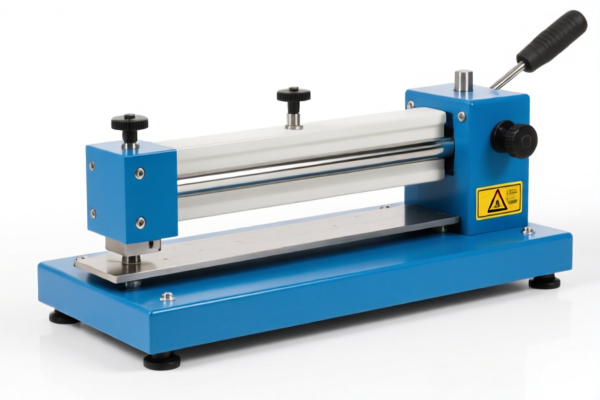
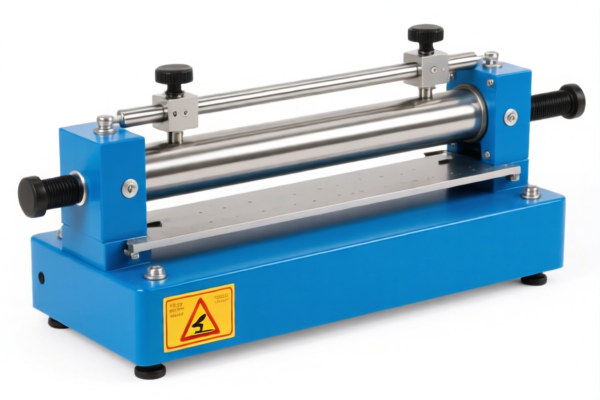
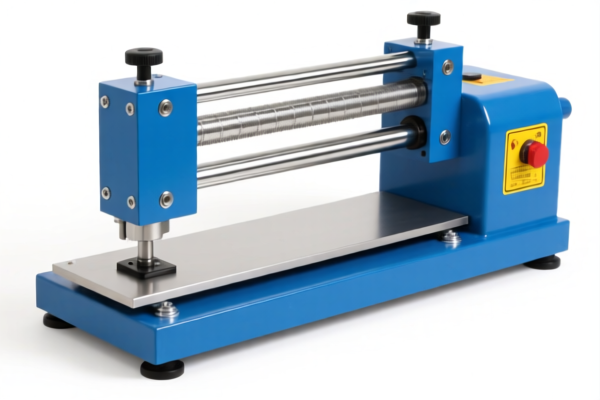
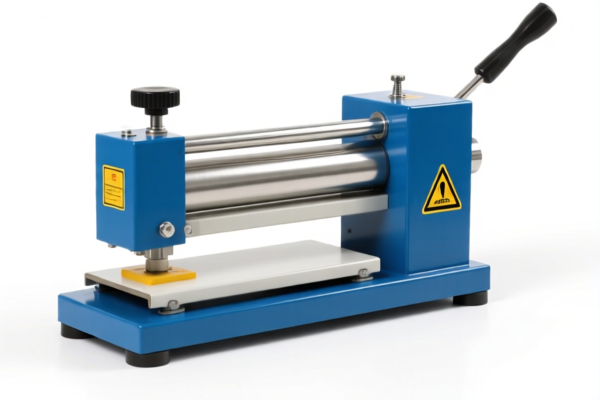
AI分析
🏭 Sanding Belt Machine Carbon Base (砂带机碳底板)
🌐 HS Code Reference & Customs Clearance Guide | 2026 Latest Tariff Analysis | Professional Clearance Strategy
📌 I. Product Definition & Classification: What Exactly is a "Carbon Base"?
The Sanding Belt Machine Carbon Base is a critical structural or functional component of belt sanding machines. In international trade, its classification hinges on its material composition (carbon, graphite, carbon fiber, or cast iron) and its functional role (support, electrode, or generic machine part). Misclassification often leads to significant tariff discrepancies due to the heavy trade measures applied to Chinese goods.
⚠️ Key Distinction Points:
- If the material is pure carbon/graphite/carbon fiber and used for electrolytic purposes or as a generic electrode → HS Code 8545.
- If it is treated as a generic abrasive carrier part → HS Code 3801.
- If it is metal-based (cast iron/carbon steel) despite the name "carbon" (often a misnomer for steel or a metal base) → HS Code 8466.
📦 II. HS Code Classification Details (2026 Latest Tariff Authority Mapping)
Based on the provided data, here are the 5 possible HS Code classifications for the Sanding Belt Machine Carbon Base, depending on specific material and functional attributes:
| HS Code | Product Description | Applicable Scenario | Material/Function |
|---|---|---|---|
3801.10.50.10 |
Abrasive carrier components, other (Carbon/Carbide) | Generic sanding belt support made of carbon or silicon carbide | Carbon/SiC |
8545.19.20.00 |
Other carbon electrodes/electrodes for electrolytic purposes | Carbon base used as an electrode or in electrolytic processes | Carbon |
8466.93.15.60 |
Parts of machine tools, other (Cast Iron) | Inferred as cast iron base for machine tools | Cast Iron |
8466.93.30.00 |
Parts of machine tools, other (Metal/Cast/Welded) | Carbon steel or metal base, featuring casting/welding characteristics | Carbon Steel/Metal |
8545.19.40.00 |
Graphite or other carbon articles (Other electrodes) | Carbon base made of carbon fiber or graphite, fitting "other carbon articles" | Carbon Fiber/Graphite |
🔍 Critical Insight:
- The term "Carbon Base" is ambiguous. Customs authorities will scrutinize the Bill of Materials (BOM).
- If the item is 8545 (Carbon/Graphite), it avoids the higher base duties of machinery parts but attracts specific "122 Clause" tariffs.
- If classified under 8466 (Machine Parts), the base duty differs (5.8% vs 0%), impacting the total landed cost.
💰 III. 2026 Latest Tariff Rate Breakdown (Including Surtaxes & Policy Surcharges)
✅ Applicable Country: United States (US)
✅ Origin: China (CN)
✅ Effective Date: Current measures active as of 2025-2026
All entries below reflect the total tariff burden including Base Duty, Section 301 Surtax (25%), and Section 122/IEEPA Surtax (10%).
🎯 1. 3801.10.50.10 —— Abrasive Carrier Components (Carbon/SiC)
| Item | Content |
|---|---|
| Base Duty | 0.0% |
| Surtax (Sec. 301) | +25.0% |
| 122 Clause Surtax | +10.0% |
| Total Rate | 35.0% |
| Tax Calculation | CIF Value × 35% |
| De Minimis Eligibility | ❌ Not Eligible (High-risk category for consolidation shipments) |
| Legal Basis Path | 3801.10.50.10 → Sec301:25% → Sec122:10% |
📌 Explanation:
- Classified as an "abrasive carrier," this code carries a 0% base duty, which is favorable.
- However, the 35% total tariff is significant. The 10% surcharge is likely due to specific trade remedy clauses (e.g., Section 122 or similar emergency measures) targeting carbon-related industrial goods.
🎯 2. 8545.19.20.00 —— Other Carbon Electrodes (Electrolytic Purpose)
| Item | Content |
|---|---|
| Base Duty | 0.0% |
| Surtax (Sec. 301) | +25.0% |
| 122 Clause Surtax | +10.0% |
| Total Rate | 35.0% |
| Tax Calculation | CIF Value × 35% |
| De Minimis Eligibility | ❌ Not Eligible |
| Legal Basis Path | 8545.19.20.00 → Sec301:25% → Sec122:10% |
📌 Explanation:
- If the carbon base is functional as an electrode (even in sanding machines with electrical contact), it falls here.
- Same tax structure as above: 35% total. Crucial to prove if it is truly an "electrode" or just a mechanical support.
🎯 3. 8466.93.15.60 —— Machine Tool Parts (Cast Iron)
| Item | Content |
|---|---|
| Base Duty | 0.0% |
| Surtax (Sec. 301) | +25.0% |
| 122 Clause Surtax | +10.0% |
| Total Rate | 35.0% |
| Tax Calculation | CIF Value × 35% |
| De Minimis Eligibility | ❌ Not Eligible |
| Legal Basis Path | 8466.93.15.60 → Sec301:25% → Sec122:10% |
📌 Explanation:
- Inferred classification: If the "carbon" label is a misnomer for cast iron or if customs deems it a standard cast iron machine part.
- Warning: Do not misdeclare cast iron as carbon to save duties; the physical inspection will reveal the material.
🎯 4. 8466.93.30.00 —— Machine Tool Parts (Carbon Steel/Metal)
| Item | Content |
|---|---|
| Base Duty | 5.8% |
| Surtax (Sec. 301) | +25.0% |
| 122 Clause Surtax | +10.0% |
| Total Rate | 40.8% |
| Tax Calculation | CIF Value × 40.8% |
| De Minimis Eligibility | ❌ Not Eligible |
| Legal Basis Path | 8466.93.30.00 → Sec301:25% → Sec122:10% |
📌 Critical Alert:
- This is the most expensive classification at 40.8%.
- It applies if the base is Carbon Steel or a welded metal casting.
- The 5.8% base duty pushes the total cost higher than the 0% base duty codes.
🎯 5. 8545.19.40.00 —— Other Carbon Articles (Graphite/Carbon Fiber)
| Item | Content |
|---|---|
| Base Duty | 0.0% |
| Surtax (Sec. 301) | +25.0% |
| 122 Clause Surtax | +10.0% |
| Total Rate | 35.0% |
| Tax Calculation | CIF Value × 35% |
| De Minimis Eligibility | ❌ Not Eligible |
| Legal Basis Path | 8545.19.40.00 → Sec301:25% → Sec122:10% |
📌 Explanation:
- Suitable for high-end carbon fiber or graphite bases.
- Like8545.19.20.00, it benefits from 0% base duty but still faces the 35% total tariff.
🛠️ IV. Customs Clearance Practical Advice (实战避坑指南)
✅ 1. Preparation Checklist (All Required)
| Document | Mandatory? | Notes |
|---|---|---|
| ✅ Product Specification Sheet | ✔️ | Must detail exact material (e.g., "Graphite vs. Cast Iron vs. Carbon Fiber"). |
| ✅ Material Safety Data Sheet (MSDS) | ✔️ | To confirm carbon content and chemical composition. |
| ✅ Technical Drawings | ✔️ | Highlight whether it functions as a conductive part (electrode) or structural part. |
| ✅ Commercial Invoice | ✔️ | Clear description: "Sanding Machine Carbon Base, Material: [Specific Material]". |
| ✅ Packing List | ✔️ | Separate if mixed with other items. |
| ✅ Third-Party Lab Test Report | ✔️ | Recommended to prove material composition (e.g., XRF test for metal vs. carbon). |
✅ 2. Declaration Tips (Key Mantra)
🔥 "Material is King, Function is Queen, Don't Mix Steel with Carbon!"
| Scenario | Correct Declaration | Error Risk |
|---|---|---|
| True Carbon/Graphite Base | HS 8545.19.40.00 or 3801.10.50.10 (35% Tariff) |
If declared as Metal (8466.93.30.00) → 40.8% Tariff + Penalties |
| Carbon Steel Base | HS 8466.93.30.00 (40.8% Tariff) |
If declared as Carbon → Risk of Seizure for Fraud |
| Cast Iron Base | HS 8466.93.15.60 (35% Tariff) |
Misidentifying as Carbon |
📌 Note: The term "Carbon Base" is a common trap. If the product is Carbon Steel, you must use the 8466 codes. Using 8545 for carbon steel is considered misdeclaration.
✅ 3. Special Cases
| Case | Handling Advice |
|---|---|
| Carbon Fiber Reinforced | Use 8545.19.40.00. Provide proof of carbon fiber content. |
| Mixed Material (Carbon + Metal) | Customs may classify based on the essential character (usually the metal frame) or split the shipment. Declare separately if possible. |
| OEM Parts | Provide the end-use specification from the machine manufacturer to justify the HS Code. |
🌍 V. Global Market Comparison (2026 Update)
| Country/Region | Recommended HS Code | Estimated Tariff (China Origin) | Remarks |
|---|---|---|---|
| 🇺🇸 USA | 8545.19.40.00 / 3801.10.50.10 |
35% | High surcharges apply. 8466.93.30.00 is higher (40.8%). |
| 🇪🇺 EU | 8545.19.00 / 8466.93.90 |
~0-4.5% | Generally no Section 301 equivalent. Lower total cost. |
| 🇨🇳 China | 8545.19.00 / 8466.93.90 |
5-8% | Import into China for re-export. |
| 🇦🇺 Australia | 8545.19.00 |
5% | No major surcharges on carbon goods. |
📌 Conclusion:
- US Market is the most challenging due to the 35-40.8% total tariff rate.
- Material verification is critical. A mistake from 35% to 40.8% is a 5.8% cost increase on top of potential legal risks.
📌 VI. Common Mistakes & Pitfalls (Lessons Learned)
❌ Mistake 1: Declaring a Carbon Steel base as Graphite/Carbon (8545)
👉 Consequence: Customs inspection reveals metal → Seizure, fines, and 40.8% retroactive duty + penalties.
❌ Mistake 2: Ignoring the 122 Clause (10% Surtax)
👉 Consequence: Underestimating landed cost by 10%. All listed HS Codes above include this 10% add-on.
❌ Mistake 3: Using "Machine Part" (8466) for a Carbon Component
👉 Consequence: Paying 5.8% base duty unnecessarily when 0% base duty is available (8545/3801), though total tariff remains high due to surcharges. However, misclassification is a compliance risk.
✅ Correct Approach:
"Sanding Machine Carbon Base, Material: High-Purity Graphite, Function: Structural Support, Model: XYZ, No Metal Content."
🎯 VII. Conclusion: Precision in Classification Saves Money!
🎯 Remember the Mantra:
🔹 "Carbon is 35%, Steel is 40.8%, Base Duty Matters, Surcharge is Fixed!"
🔹 "If it's carbon, use 8545/3801. If it's steel, use 8466.93.30."
📌 Pro Tip:
If your Carbon Base can be proven to be Graphite or Carbon Fiber and not just "carbon-infused metal," stick to the 8545 or 3801 codes to secure the 0% base duty advantage.
For US imports, Budget for 35-40.8% total tariff regardless of the specific code.
📣 Immediate Action:
📞 Contact your customs broker with a material test report before shipping.
🚀 Apply for an Advance Ruling if the material is ambiguous to avoid clearance delays.
✨ Professional clearance starts with accurate classification!
💼 Every percentage point counts in the age of trade wars!
用户评价
关于 HS 编码归类
协调制度(HS)是由世界海关组织(WCO)制定的国际贸易商品分类标准。全球 200 多个国家采用 HS 系统作为海关关税、贸易统计和进出口监管的基础。
每个 HS 编码遵循以下层级结构:
- 章(2 位)——商品大类(例如:第 84 章:机器和机械设备)
- 品目(4 位)——章内的更具体分类
- 子目(6 位)——国际通用细分,所有 WCO 成员国统一使用
- 本国细分(8-10 位)——各国自行扩展的细分编码,如美国 HTSUS 10 位编码
正确的 HS 编码归类对于顺利通关、准确缴纳关税和遵守贸易法规至关重要。错误归类可能导致海关延误、多缴关税或罚款。
从CN进口到US时,适用的关税税率可能包括:
- 最惠国(MFN)税率——适用于 WTO 成员国的标准关税税率
- 普通税率——适用于无贸易协定国家
- 贸易救济关税——附加关税,如 301 条款(反倾销)、232 条款(国家安全)或反补贴税
本页内容仅供参考。如需正式归类,请咨询当地海关或持牌报关代理。