Sandpaper Sheets
CN → US| HS编码 | 关税税率 | 原产国 | 目的国 | 文档 |
|---|---|---|---|---|
| 6805200000 | 35.0% | CN | US | 官方文档 |
| 6805301000 | 35.0% | CN | US | 官方文档 |
| 6805100000 | 35.0% | CN | US | 官方文档 |
| 4016996050 | 37.5% | CN | US | 官方文档 |
| 4016993550 | 35.0% | CN | US | 官方文档 |
商品图片
AI分析
🧱 Sandpaper Sheets (Abrasive Papers)
🌐 HS Code Reference & Customs Clearance Guide | 2026 Latest Tariff Analysis | Professional Clearance Strategy
📌 I. Product Definition & Classification: Do You Really Understand "Sandpaper"?
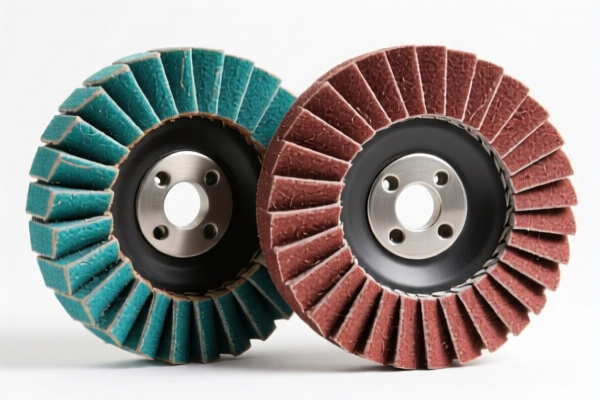
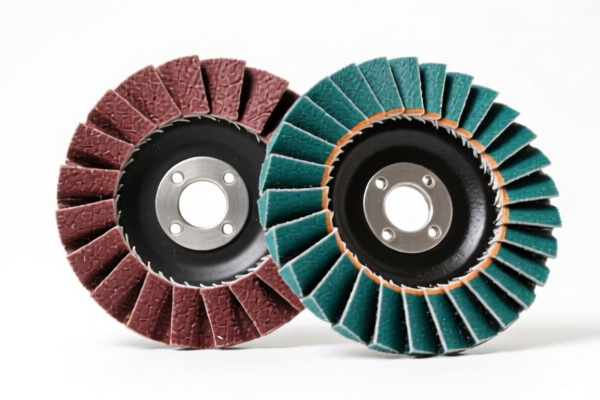
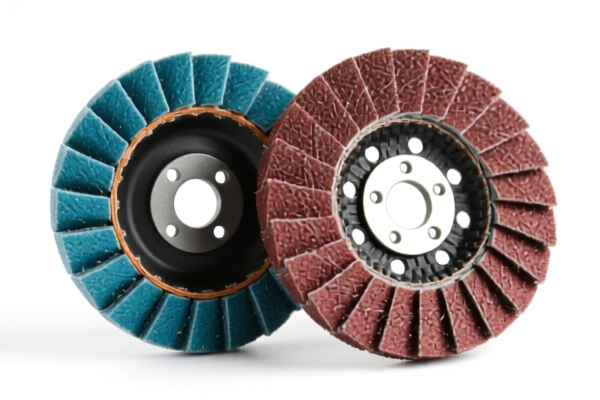
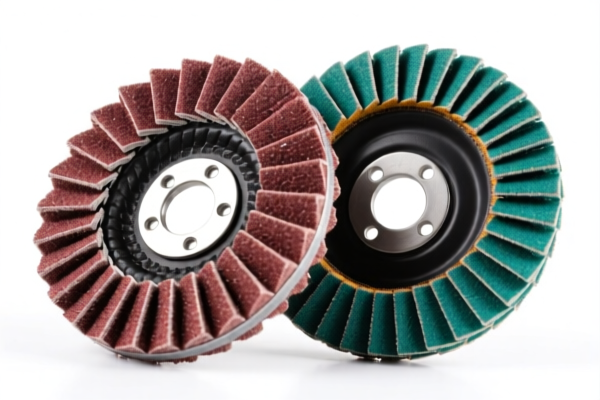
Sandpaper sheets are essential abrasive products used for grinding, polishing, and smoothing surfaces. In international trade, they are classified based on their backing material (paper, cloth, or other substrates) and the form (sheets, rolls, or cut shapes).
Key Characteristics: - Structure: Abrasive powder/granules (e.g., aluminum oxide, silicon carbide) adhered to a flexible base (usually paper or fabric). - Form: Sheets (as specified in the input). - Function: Grinding and polishing tools.
⚠️ Critical Distinction for Classification:
- Chapters 68 (Mineral Products): Covers abrasive materials on paper or cardboard bases. This is the most common classification for standard sandpaper sheets.
- Chapter 40 (Rubber): Covers abrasive materials on cloth or other non-paper bases, or specific rubber-bound abrasives.
- Misclassification Risk: Many importers mistakenly classify sandpaper under general hardware or tools, leading to severe penalties. The backing material is the decisive factor.
📦 II. HS Code Classification Details (2026 Latest Tariff Authority Comparison)
| HS Code | Product Description | Key Logic / Summary from Data | Total Tax Rate |
|---|---|---|---|
6805.20.00.00 |
Abrasive material on a basis of paper or cardboard, in sheets | "Sandpaper sheets belong to abrasive products, matching the characteristic of abrasive powder/granules attached to a paper/cardboard base. Sheet form aligns with the paper/cardboard substrate logic." | 35.0% |
6805.30.10.00 |
Other abrasive materials on a basis of paper or cardboard, in sheets/rolls | "Product form is sheet-like, meeting shape requirements; material inferred to include grinding powder/granules attached to paper or other substrates, matching classification description." | 35.0% |
6805.10.00.00 |
Abrasive material on a basis of paper or textile, in sheets/rolls | "Sandpaper is a grinding product with a paper or textile base, matching the feature of abrasive powder/granules coated on a substrate." | 35.0% |
4016.99.60.50 |
Other articles of vulcanized rubber other than hard rubber | "Sandpaper consists of a backing and abrasive; it belongs to non-vulcanized rubber abrasive articles, fitting the fallback logic for other categories." | 37.5% |
4016.99.35.50 |
Other articles of vulcanized rubber other than hard rubber | "Sandpaper backing or structure often contains rubber-based adhesives or composite components; under no obvious material conflict, judged as possibly complying with other categories." | 35.0% |
🔍 Key Insight:
- Chapter 68 (6805.xx) is the primary and most accurate classification for sandpaper with paper/cardboard backs. The tax rate is consistently 35% (including additional duties).
- Chapter 40 (4016.xx) is a fallback or alternative classification, typically applied if the backing is predominantly rubber-based or if specific adhesive compositions trigger Chapter 40 rules. The tax rate is either 35% or 37.5% depending on the specific subheading.
- Do NOT assume all sandpaper is 35%. Verify the backing material composition to determine if Chapter 68 or 40 applies.
💰 III. 2026 Latest Tariff Rate Breakdown (Including Additional Duties & Policy Surcharges)
✅ Applicable Country: USA (US)
✅ Origin: China (CN)
✅ Effective Date: From November 10, 2025 (including subsequent imports)
🎯 1. 6805.20.00.00 / 6805.30.10.00 / 6805.10.00.00 —— Abrasive on Paper/Cardboard Base
| Item | Content |
|---|---|
| Basic Tariff | 0.0% (ad valorem) |
| Section 301 Additional Duty | +25.0% (USITC Footnote for Section 301) |
| IEEPA Additional Duty (Section 122) | +10.0% (Targeting Chinese/HK products, effective Nov 10, 2025) |
| Total Tariff Rate | 35.0% |
| Tax Calculation | CIF Value × 35% |
| De Minimis Eligibility | ❌ Not Eligible (Denied under Section 301/IEEPA) |
| Legal Basis Path | IEEPA:9903.01.25 → IEEPA:9903.01.24 → USITC:6805.20.00.00 → FOOTNOTE:301 |
📌 Explanation:
- The 25% Section 301 duty applies to abrasive products from China.
- The 10% IEEPA duty is a new surcharge for Chinese-origin goods.
- Total: 35%. This is a high tariff item. Pre-import calculation is essential.
🎯 2. 4016.99.60.50 —— Rubber-Based Abrasive Articles
| Item | Content |
|---|---|
| Basic Tariff | 2.5% |
| Section 301 Additional Duty | +25.0% |
| IEEPA Additional Duty (Section 122) | +10.0% |
| Total Tariff Rate | 37.5% |
| Tax Calculation | CIF Value × 37.5% |
| De Minimis Eligibility | ❌ Not Eligible |
| Legal Basis Path | IEEPA:9903.01.25 → IEEPA:9903.01.24 → USITC:4016.99.60.50 → FOOTNOTE:301 |
📌 Explanation:
- If classified under Chapter 40 due to rubber content, the basic rate is higher (2.5%).
- Total: 37.5%. This is 2.5% more expensive than Chapter 68 classification.
- Risk: Misclassifying paper-backed sandpaper as rubber-backed will not save money; it increases the base rate.
🎯 3. 4016.99.35.50 —— Other Rubber Articles
| Item | Content |
|---|---|
| Basic Tariff | 0.0% |
| Section 301 Additional Duty | +25.0% |
| IEEPA Additional Duty (Section 122) | +10.0% |
| Total Tariff Rate | 35.0% |
| Tax Calculation | CIF Value × 35% |
| De Minimis Eligibility | ❌ Not Eligible |
| Legal Basis Path | IEEPA:9903.01.25 → IEEPA:9903.01.24 → USITC:4016.99.35.50 → FOOTNOTE:301 |
📌 Note:
- Same total rate as Chapter 68 items (35%).
- However, proving the "rubber adhesive/composite" nature for this subheading can be complex and may trigger additional scrutiny.
🛠️ IV. Customs Clearance Practical Advice (Real-World Pitfall Avoidance)
✅ 1. Preparation Checklist (Mandatory)
| Document | Required | Notes |
|---|---|---|
| ✅ Product Specification Sheet | ✔️ | Must detail: Base material (Paper/Cloth/Rubber), Grit size, Backing type, Dimensions |
| ✅ Material Composition Report | ✔️ | Crucial to prove if backing is >50% paper/cardboard (Chapter 68) or rubber-based (Chapter 40) |
| ✅ Product Photos (Clear) | ✔️ | Show entire sheet, edge, and any packaging labels |
| ✅ Commercial Invoice | ✔️ | Description must specify "Abrasive Paper Sheets" or "Sandpaper Sheets", NOT just "Sandpaper" |
| ✅ Packing List | ✔️ | Clearly state quantity, weight, and dimensions |
| ✅ Certificate of Origin (CO) | ✔️ | If applicable, to verify Chinese origin |
✅ 2. Declaration Tips (Key Mantra)
🔥 "Back material dictates chapter, Paper is 68, Rubber is 40, Tax is 35%, Don't Guess!"
| Scenario | Correct Declaration | Wrong Practice |
|---|---|---|
| Standard Sandpaper (Paper Back) | 6805.20.00.00 or 6805.30.10.00 |
Misclassify as 6805.10 (Textile) → Potential penalty |
| Cloth-backed Sandpaper | 6805.10.00.00 |
Misclassify as 6805.20 (Paper) → Risk of seizure |
| Rubber-bonded Abrasive | 4016.99.60.50 |
Misclassify as 6805 → Basic rate error (2.5% vs 0%) |
| "Sandpaper" without detail | Vague → Customs will reclassify or penalize | ❌ Never use generic terms |
✅ 3. Special Cases Handling
| Scenario | Handling Advice |
|---|---|
| Mixed Packaging | If sandpaper is sold with plastic films or boxes, declare only the sandpaper as the primary item; packaging should be separate or included in the main HS code |
| Custom Cut Sizes | Ensure description states "Sheets" (not "Rolled") to align with 6805.20 or 6805.30 |
| OEM Private Label | Provide customer PO + Design specs to prove standard abrasive nature, not a specialized tool |
| High-Volume Imports | Apply for Advance Ruling (Pre-classification) from CBP to lock in the HS Code and avoid post-entry audits |
🌍 V. Global Market Comparison (2026 Latest)
| Country/Region | Recommended HS Code | Tariff (China Origin) | Certification | Notes |
|---|---|---|---|---|
| 🇺🇸 USA | 6805.20.00.00 |
35% (25% + 10%) | No special cert | High tariff due to 301 + IEEPA |
| 🇨🇳 China | 6805.20.00.00 |
5-8% (Import Duty) | None | Lower tax, but this guide focuses on US import |
| 🇪🇺 EU | 6805.10.00 |
4-6% | CE (if tool) | No Section 301/IEEPA surcharges |
| 🇬🇧 UK | 6805.10.00 |
4-6% | UKCA | Post-Brexit tariffs align with EU mostly |
| 🇦🇺 Australia | 6805.10.00 |
5% | GOTS (if organic) | No major surcharges |
📌 Conclusion:
- USA is the most expensive market for Chinese sandpaper imports due to the 35% total duty.
- No other major market applies the 25% Section 301 or 10% IEEPA surcharges.
- Strategy: If shipping to the US, consider supply chain diversification (e.g., sourcing from Vietnam, India, or Thailand) to avoid these surcharges, where applicable under free trade agreements.
📌 VI. Common Errors & Pitfall Avoidance (Lessons Learned)
❌ Error 1: Declaring "Sandpaper" without specifying backing material
👉 Consequence: Customs will assume the worst-case scenario or penalize for inaccurate description → Delay + Fine
❌ Error 2: Classifying paper-backed sandpaper under Chapter 40 to "try" to find a lower rate
👉 Consequence: If challenged, you may face 37.5% tax + penalties for misclassification → Worse outcome
❌ Error 3: Ignoring the IEEPA 10% surcharge
👉 Consequence: Underpayment of 10% on CIF value → 100% penalty on unpaid duties
❌ Error 4: Using "Abrasive Paper" vs "Sandpaper" inconsistently in docs
👉 Consequence: Inconsistency triggers manual review → Clearance delay of 7-14 days
✅ Correct Practice:
"Abrasive Paper Sheets, Aluminum Oxide on Paper Backing, Grit 80, 11x14 inch, Model: XYZ, Chinese Origin"
🎯 VII. Conclusion: Precise Classification Saves Money!
🎯 Remember the Mantra:
🔹 "Paper Back → Chapter 68 → 35% Total"
🔹 "Rubber Back → Chapter 40 → 35-37.5% Total"
🔹 "IEEPA 10% + Section 301 25% = 35% Minimum"
📌 Pro Tip:
If your sandpaper sheets are shipped from Vietnam, Thailand, or India, you may qualify for IEEPA Exemptions or lower Section 301 rates.
Action:
📞 Contact your customs broker immediately
📤 Provide material composition reports
🚀 Apply for an Advance Ruling to secure your HS Code
✨ Professional clearance starts with accurate classification!
💼 Every percentage point matters in your profit margin!
用户评价
关于 HS 编码归类
协调制度(HS)是由世界海关组织(WCO)制定的国际贸易商品分类标准。全球 200 多个国家采用 HS 系统作为海关关税、贸易统计和进出口监管的基础。
每个 HS 编码遵循以下层级结构:
- 章(2 位)——商品大类(例如:第 84 章:机器和机械设备)
- 品目(4 位)——章内的更具体分类
- 子目(6 位)——国际通用细分,所有 WCO 成员国统一使用
- 本国细分(8-10 位)——各国自行扩展的细分编码,如美国 HTSUS 10 位编码
正确的 HS 编码归类对于顺利通关、准确缴纳关税和遵守贸易法规至关重要。错误归类可能导致海关延误、多缴关税或罚款。
从CN进口到US时,适用的关税税率可能包括:
- 最惠国(MFN)税率——适用于 WTO 成员国的标准关税税率
- 普通税率——适用于无贸易协定国家
- 贸易救济关税——附加关税,如 301 条款(反倾销)、232 条款(国家安全)或反补贴税
本页内容仅供参考。如需正式归类,请咨询当地海关或持牌报关代理。