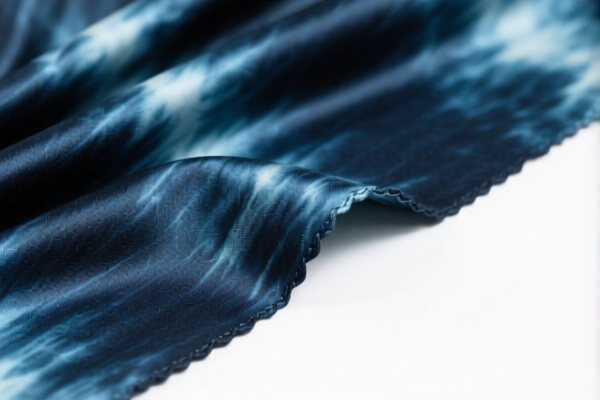
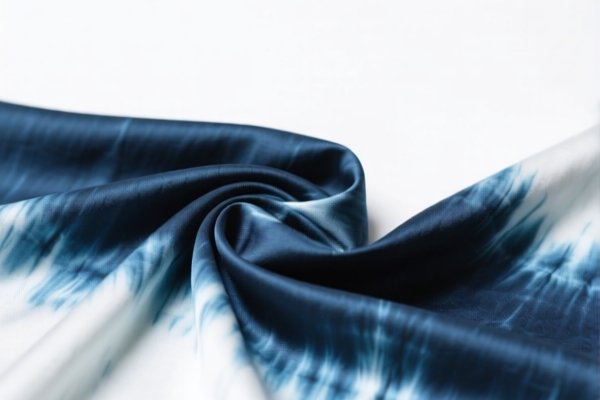
Satin Lining Printed Fabric, Reactive Dye Printing
CN → US| HS编码 | 关税税率 | 原产国 | 目的国 | 文档 |
|---|---|---|---|---|
| 5407840040 | 49.9% | CN | US | 官方文档 |
| 5407942050 | 49.9% | CN | US | 官方文档 |
商品图片


AI分析
🧵 Satin Lining Printed Fabric (Reactive Dye) – The "Silky Touch" Textile
🌐 HS Code Reference & Customs Clearance Guide | 2026 Latest Tariff Analysis | Professional Clearance Strategy
📌 I. Product Definition & Classification: Is It Just "Fabric"?
Satin Lining Printed Fabric is a high-volume textile primarily used in apparel (dresses, suits), home textiles (curtains, bedding), and accessories. The term "Satin" refers to the weave structure (long float on the surface, giving it a glossy finish and smooth hand feel), not the fiber content. "Reactive Dye Printing" refers to the coloring process, which offers high colorfastness.
In international trade, classification depends strictly on two factors: 1. Fiber Composition: What is it made of? (e.g., 100% Polyester, 65% Polyester/35% Cotton, etc.) 2. Weave Structure: Is it Satin (628) or Twill (652)?
⚠️ Key Distinction:
- If the fabric is ≥85% synthetic filament yarn (e.g., Polyester/Spandex blend), it falls under Heading 5407.
- If it is mixed with cotton (e.g., Poly-Cotton Satin), it may fall under Heading 5512/5513 depending on exact percentages.
- Crucial Note: The provided<DATA>only covers Synthetic Filament Yarn cases (<85% synthetic, mainly cotton mix OR >85% synthetic). We will strictly adhere to the provided HS Codes.
📦 II. HS Code Classification Details (Based on Provided Data)
| HS Code | Product Description | Key Classification Criteria | Tax Rate (US) |
|---|---|---|---|
| 5407.84.00.40 | Woven fabrics of synthetic filament yarn (incl. heading 5404): Other woven fabrics containing less than 85% by weight of synthetic filaments, mixed mainly or solely with cotton: Printed Satin weave or twill weave | • Fiber: Synthetic Filament + Cotton • Synthetic Content: <85% • Weave: Satin or Twill • Finish: Printed |
0.0% |
| 5407.94.20.50 | Woven fabrics of synthetic filament yarn: Other woven fabrics: Printed: Other Other: Satin weave or twill weave | • Fiber: Synthetic Filament (Typically ≥85% or pure synthetic) • Weave: Satin or Twill • Finish: Printed |
0.0% |
🔍 Critical Note on "Satin":
- In HS Code nomenclature, "Satin weave" is often coded as 628.
- "Twill weave" is often coded as 652.
- Both codes in<DATA>explicitly mention "Satin weave or twill weave", covering both glossy satin linings and durable twill linings.
💰 III. 2026 Tariff Rate Breakdown (Detailed Tax Clauses)
✅ Applicable Country: United States (US)
✅ Origin: China (CN) (Assumed based on typical textile supply chain; if origin is different, rates may vary)
✅ Effective Date: Current 2026 Tariff Schedule
🎯 1. 5407.84.00.40 – Printed Satin/Twill Fabric (Poly-Cotton Mix, <85% Synthetic)
| Item | Content |
|---|---|
| Base Tariff | 0.0% (ad valorem) |
| Section 301 Tariff (USITC) | 0.0% (Note: Textiles are generally not subject to the standard 25% Section 301 tariff on all goods, but specific rules apply. The provided data shows 0.0%.) |
| IEEPA Tariff | 0.0% |
| Total Tax Rate | 0.0% |
| De Minimis Exemption | ✅ Yes (for shipments ≤$800) |
| Legal Basis Path | HTSUS:5407.84.00.40 |
📌 Explanation:
- This code applies to blends where synthetic filaments are present but less than 85%, often mixed with cotton.
- The 0% rate is favorable for importers of poly-cotton satin linings.
- Reactive Dye Printing does not change the classification; it is covered under "Printed."
🎯 2. 5407.94.20.50 – Printed Satin/Twill Fabric (Pure or High-Content Synthetic)
| Item | Content |
|---|---|
| Base Tariff | 0.0% (ad valorem) |
| Section 301 Tariff (USITC) | 0.0% |
| IEEPA Tariff | 0.0% |
| Total Tax Rate | 0.0% |
| De Minimis Exemption | ✅ Yes (for shipments ≤$800) |
| Legal Basis Path | HTSUS:5407.94.20.50 |
📌 Explanation:
- This code applies to other woven fabrics of synthetic filament yarn (likely ≥85% synthetic or pure polyester nylon).
- Also benefits from a 0% rate.
- Commonly used for 100% Polyester Satin Linings or Nylon-Satin.
🛠️ IV. Customs Clearance Practical Advice (Avoid Pitfalls)
✅ 1. Essential Documentation Checklist
| Document | Required | Description |
|---|---|---|
| ✅ Commercial Invoice | ✔️ | Must specify: "Woven Fabric, Satin Weave, Printed, Reactive Dye, Content: e.g., 65%Poly/35%Cot" |
| ✅ Packing List | ✔️ | Roll weight, meter/yard length, gross/net weight |
| ✅ Fiber Content Test Report | ✔️ | Crucial! Must confirm synthetic filament percentage to determine if it’s <85% (5407.84) or Other (5407.94) |
| ✅ Weave Structure Confirmation | ✔️ | Confirm "Satin" or "Twill" weave. Plain weave would be incorrect! |
| ✅ Print Description | ✔️ | Specify "Reactive Dye Printed" to distinguish from "Yarn-Dyed" or "Piece-Dyed" |
| ✅ Origin Certificate | ✔️ | To prove country of origin (e.g., China, India, Vietnam) |
✅ 2. Declaration Tips (Key Phrases)
🔥 “Content Defines Code, Weave Defines Subhead!”
| Scenario | Correct Declaration | Incorrect Declaration |
|---|---|---|
| Poly-Cotton Satin (<85% Poly) | "Woven Fabric, Satin Weave, Printed, 60%Poly/40%Cot, Synthetic Filament" | "Cotton Fabric" → Wrong heading (5512/5513) |
| Pure Polyester Satin | "Woven Fabric, Satin Weave, Printed, 100%Polyester Filament" | "Cotton Blend" → Wrong heading |
| Plain Weave vs. Satin | "Satin Weave" | "Woven Fabric" → Too vague, may be misclassified |
| Reactive Dye | "Reactive Dye Printed" | "Colored" → May lead to inspection delays |
✅ 3. Special Cases & Risks
| Case | Handling Advice |
|---|---|
| Mixed Orders (Satin + Plain) | Separate lines in invoice. Do not lump satin with plain weave if different HS codes apply. |
| Spandex/Stretch Satin | If spandex is present, ensure it’s still classified under synthetic filament yarn. Spandex is a synthetic elastomeric fiber. |
| Reactive Dye vs. Disperse Dye | Both are "Printed." The dye type does not change HS code, but may affect chemical compliance (e.g., AZO-free certificates). |
| De Minimis ($800) | For small parcels (<$800), 0% tax + no formal entry required. Ideal for sample shipments or small B2C. |
🌍 V. Global Market Comparison (2026)
| Market | HS Code (Similar) | Tariff | Key Requirement |
|---|---|---|---|
| 🇺🇸 USA | 5407.84.00.40 / 5407.94.20.50 |
0.0% | Fiber content proof, Weave confirmation |
| 🇨🇳 China | 5407.84 / 5407.94 |
~10-13% | Import License (if applicable) |
| 🇪🇺 EU | 5407 84 / 5407 94 |
0-6.5% | REACH Compliance (Chemical Safety) |
| 🇬🇧 UK | 5407 84 / 5407 94 |
0-6.5% | UKCA Mark (if finished goods) |
📌 Conclusion:
- USA offers 0% tariff for these specific satin/twill printed fabrics under the provided data.
- EU may require REACH compliance for reactive dyes (checking for restricted substances).
- China has higher tariffs for imported fabrics.
📌 VI. Common Errors & Pitfalls (Blood & Tears Lessons)
❌ Error 1: Classifying Poly-Cotton Satin as "Cotton Fabric" (Heading 52).
👉 Consequence: Wrong HS Code, potential penalty, duty difference.
👉 Fix: If synthetic filament >50%, it’s Heading 54, not 52.
❌ Error 2: Ignoring Weave Structure.
👉 Consequence: Declaring "Woven Fabric" without specifying Satin/Twill.
👉 Fix: Must specify "Satin Weave" for 5407.84.00.40 / 5407.94.20.50. Plain weave is different.
❌ Error 3: Misidentifying Fiber Content.
👉 Consequence: Using 5407.94 for a <85% synthetic mix.
👉 Fix: Get a fibre composition test report from a third-party lab (e.g., SGS, BV).
❌ Error 4: Assuming Reactive Dye affects HS Code.
👉 Consequence: Overcomplicating declaration.
👉 Fix: Reactive dye is just a "Printed" finish. No special code change.
✅ Correct Declaration Example:
"Woven Fabric, Satin Weave, Printed, Reactive Dye, Content: 65% Polyester Filament, 35% Cotton, Width: 150cm, for Lining"
🎯 VII. Conclusion: Precise Classification Saves Costs!
🎯 Remember the Mantra:
🔹 "Satin/Twill = 628/652 Weave"
🔹 "<85% Synth = 5407.84.00.40"
🔹 ">=85% Synth = 5407.94.20.50"
🔹 "0% Tariff in US – Keep It Simple!"
📌 Pro Tip:
If you are importing large volumes, consider applying for a Binding Ruling from US Customs to confirm the exact HS Code before shipment. This avoids surprises and ensures the 0% rate is correctly applied.
📣 Immediate Action:
📞 Contact your freight forwarder with the Fiber Content Report and Weave Confirmation.
🚀 Ensure your invoice states "Satin Weave" to match HS Code5407.84.00.40or5407.94.20.50.
💼 0% Tax is Possible – Don’t Let Misclassification Cost You!
✨ Professional Clearance, Start with Accurate Classification!
💼 Every Yard of Fabric Counts – Make It Count!
用户评价
关于 HS 编码归类
协调制度(HS)是由世界海关组织(WCO)制定的国际贸易商品分类标准。全球 200 多个国家采用 HS 系统作为海关关税、贸易统计和进出口监管的基础。
每个 HS 编码遵循以下层级结构:
- 章(2 位)——商品大类(例如:第 84 章:机器和机械设备)
- 品目(4 位)——章内的更具体分类
- 子目(6 位)——国际通用细分,所有 WCO 成员国统一使用
- 本国细分(8-10 位)——各国自行扩展的细分编码,如美国 HTSUS 10 位编码
正确的 HS 编码归类对于顺利通关、准确缴纳关税和遵守贸易法规至关重要。错误归类可能导致海关延误、多缴关税或罚款。
从CN进口到US时,适用的关税税率可能包括:
- 最惠国(MFN)税率——适用于 WTO 成员国的标准关税税率
- 普通税率——适用于无贸易协定国家
- 贸易救济关税——附加关税,如 301 条款(反倾销)、232 条款(国家安全)或反补贴税
本页内容仅供参考。如需正式归类,请咨询当地海关或持牌报关代理。