Screw Punch
CN → US| HS编码 | 关税税率 | 原产国 | 目的国 | 文档 |
|---|---|---|---|---|
| 7326190010 | 87.9% | CN | US | 官方文档 |
| 7326190080 | 87.9% | CN | US | 官方文档 |
| 8207303050 | 40.7% | CN | US | 官方文档 |
| 8207306062 | 37.9% | CN | US | 官方文档 |
商品图片
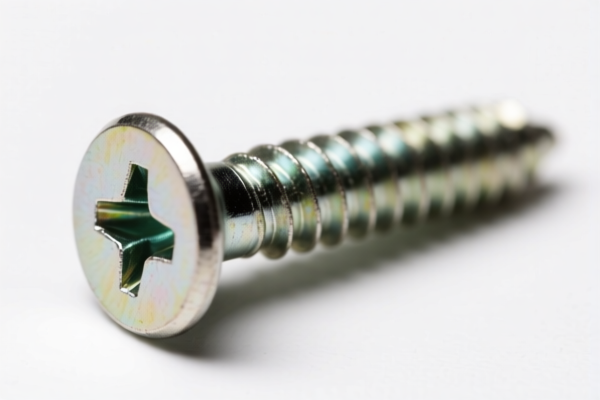
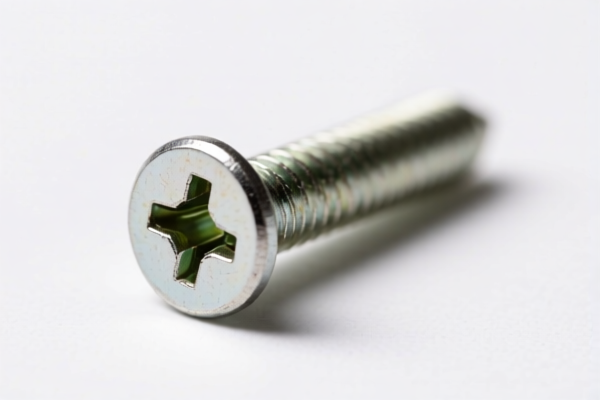
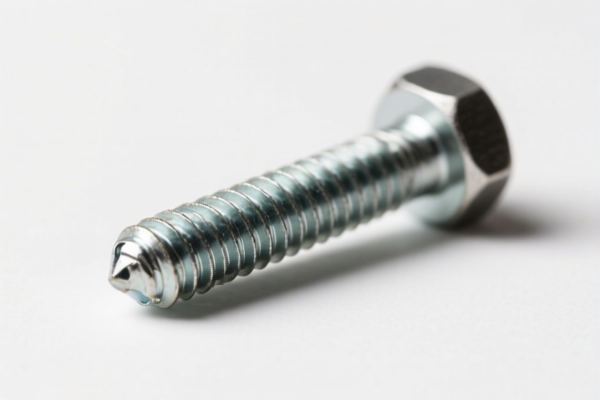
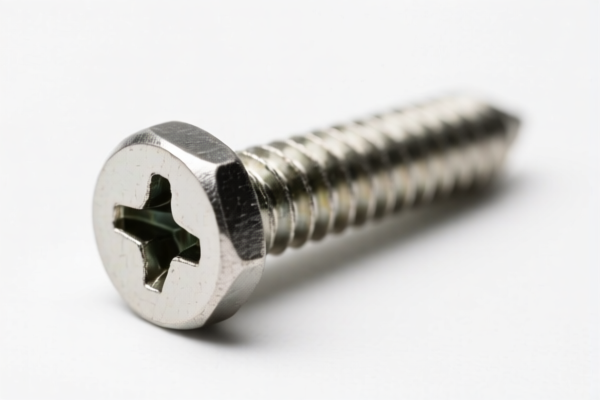
AI分析
🔨 Screw Punch (Steel Forming Tools & Components)
🌐 HS Code Reference & Clearance Guide | 2026 Latest Tariff Analysis | Professional Customs Strategy
📌 I. Product Definition & Classification: Do You Really Know What a "Screw Punch" Is?
A Screw Punch (also known as a center punch, prick punch, or swaging punch depending on context) is a precision tool or component used in metalworking. Its primary function is to create indentations (centers) for drilling, or to shape/cut holes in metal sheets or fasteners through forging, stamping, or pressing operations.
In international trade, it is critical to distinguish between: * The Tool Itself: A handheld or machine-mounted instrument used for marking or forming. * The Component: A replaceable part (such as a die or punch head) used within a larger stamping or forging machine.
⚠️ Key Distinction Point:
- If the item is a standalone tool (even if made of steel) used for marking centers or light forming, it often falls under Tool Components (Chapter 82).
- If the item is a heavy-duty industrial part (like a forging punch or stamping die component) primarily made of steel, it may fall under Articles of Iron or Steel (Chapter 73).
- Material & Function Rule: Steel construction + Forming/Stamping use → Often Chapter 82 (Tools) or Chapter 73 (Steel Articles), depending on whether it is classified as a "tool part" or a "general steel article."
📦 II. HS Code Classification Details (2026 Latest Tariff Authority Comparison)
Based on the specific material (Steel) and form (Stamping/Forging parts or Punch components), the following HS Codes are the most relevant.
| HS Code | Product Description | Applicable Scenario | Key Classification Logic |
|---|---|---|---|
7326.19.00.10 |
Other articles of iron or steel, forged or stamped | General steel parts, structural components, non-tool steel punches | ✅ Material: Steel ✅ Process: Forged/Stamped |
7326.19.00.80 |
Other articles of iron or steel, punches (parts/components) | Replacement punch heads, industrial stamping pins, steel forming tips | ✅ Material: Steel ✅ Function: Punch/Part |
8207.30.30.50 |
Interchangeable tools for machine tools, parts: Metal-working tools | Tool bodies, punch holders, or tool components made of metal | ✅ Category: Tool Component ✅ Use: Metal Forming/Marking |
8207.30.60.62 |
Interchangeable tools for machine tools, parts: Metal-forming (pressing/stamping) tools | Precision forming punches, swaging punches, stamping dies | ✅ Category: Tool Component ✅ Use: Metal Forming (Press/Stamp) |
🔍 Key Reminder:
- Chapter 82 (8207) is preferred if the item is considered a "Tool" or "Tool Part" specifically designed for machine operation (e.g., a punch inserted into a press).
- Chapter 73 (7326) is used if the item is considered a "General Steel Article" or a structural component made by forging/stamping, even if used in punching operations.
- Clarity is Critical: Customs may challenge the classification based on whether the item is a "tool" (8207) or a "steel article" (7326).
💰 III. 2026 Latest Tariff Rate Details (Including Additional Duties & Policy Add-ons)
✅ Applicable Country: United States (US)
✅ Country of Origin: China (CN)
✅ Effective Date: November 10, 2025 onwards (including subsequent imports)
🎯 1. 7326.19.00.10 — Other Steel Articles, Forged or Stamped
| Item | Content |
|---|---|
| Base Tariff | 2.9% |
| Section 301 Tariff (25%) | +25.0% |
| Section 122 Tariff (Steel/Aluminum) | +10.0% |
| Section 232 Tariff (10% Steel + 50% Aluminum/Copper) | +50.0% (Specific to Steel/Aluminum/Copper products under Section 122/232 rules) |
| Total Tax Rate | 87.9% |
| Tax Calculation | CIF Value × 87.9% |
| De Minimis Eligibility | ❌ No (Deny De Minimis) |
| Legal Basis Path | Section 232: Steel/Aluminum → Section 301: 25% → Section 122: 10% → USITC:7326.19.00.10 |
📌 Explanation:
- This code is subject to multiple layers of punitive tariffs.
- The 50% refers to the additional duty on specific steel/aluminum/copper products under Section 122/232 rules.
- Total Effective Rate: 87.9%. This is an extremely high tariff, significantly impacting profit margins.
🎯 2. 7326.19.00.80 — Other Steel Articles, Punches (Parts/Components)
| Item | Content |
|---|---|
| Base Tariff | 2.9% |
| Section 301 Tariff (25%) | +25.0% |
| Section 122 Tariff (Steel/Aluminum) | +10.0% |
| Section 232 Tariff (10% Steel + 50% Aluminum/Copper) | +50.0% |
| Total Tax Rate | 87.9% |
| Tax Calculation | CIF Value × 87.9% |
| De Minimis Eligibility | ❌ No (Deny De Minimis) |
| Legal Basis Path | Section 232: Steel/Aluminum → Section 301: 25% → Section 122: 10% → USITC:7326.19.00.80 |
📌 Note:
- Identical tariff structure to7326.19.00.10.
- Even if labeled as a "punch part," if classified under Chapter 73 (Steel Articles), it attracts the highest tier of tariffs.
🎯 3. 8207.30.30.50 — Interchangeable Tools, Parts: Metal-Working Tools
| Item | Content |
|---|---|
| Base Tariff | 5.7% |
| Section 301 Tariff (25%) | +25.0% |
| Section 122 Tariff (Steel/Aluminum) | +10.0% (Note: Section 122 steel tariffs may not apply if classified as Tools, but data indicates +10% here) |
| Total Tax Rate | 40.7% |
| Tax Calculation | CIF Value × 40.7% |
| De Minimis Eligibility | ❌ No (Deny De Minimis) |
| Legal Basis Path | Section 301: 25% → Section 122: 10% → USITC:8207.30.30.50 |
📌 Explanation:
- Classification under Chapter 82 (Tools) typically exempts the item from the Section 232 steel tariff (50%) but may still be subject to Section 122 and 301.
- Significant Savings: 40.7% vs. 87.9%. Proper classification as a "Tool" is critical for cost reduction.
🎯 4. 8207.30.60.62 — Interchangeable Tools, Parts: Metal-Forming (Pressing/Stamping) Tools
| Item | Content |
|---|---|
| Base Tariff | 2.9% |
| Section 301 Tariff (25%) | +25.0% |
| Section 122 Tariff (Steel/Aluminum) | +10.0% |
| Total Tax Rate | 37.9% |
| Tax Calculation | CIF Value × 37.9% |
| De Minimis Eligibility | ❌ No (Deny De Minimis) |
| Legal Basis Path | Section 301: 25% → Section 122: 10% → USITC:8207.30.60.62 |
📌 Key Advantage:
- This is the most favorable classification for Screw Punches if they are considered metal-forming tool components.
- Total Rate: 37.9%, which is less than half of the Chapter 73 rates.
- Justification: Must demonstrate the item is an "interchangeable tool" for "metal-forming" (pressing/stamping).
🛠️ IV. Customs Clearance Operational Advice (Practical Pitfall Avoidance Guide)
✅ 1. Preparation Checklist (Mandatory Items)
| Document | Required | Explanation |
|---|---|---|
| ✅ Product Specification Sheet | ✔️ | Detail material (e.g., "High-Speed Steel," "Tool Steel"), hardness, dimensions, and intended use. |
| ✅ Technical Drawings / CAD Files | ✔️ | Show if it is a standalone tool or a machine component. Highlight "interchangeable tool" features. |
| ✅ Product Photos (Clear Labeling) | ✔️ | Show the item clearly. Avoid ambiguous names like "Steel Pin." |
| ✅ Third-Party Test Report | ✔️ | Hardness test, material composition analysis (to prove it is a tool steel, not just carbon steel). |
| ✅ Commercial Invoice | ✔️ | Use precise description: "Screw Punch, Tool Component for Metal Forming, Model XYZ, Material: Tool Steel" |
| ✅ Certificate of Origin (CO) | ✔️ | Required for origin determination. |
| ✅ Packing List | ✔️ | Detail the relationship between tools and machinery. |
✅ 2. Declaration Tips (Key Mnemonics)
🔥 "Tool, Not Just Steel! Forming, Not Just Parts! Name Matters, Tax Drops!"
| Scenario | Correct Declaration | Wrong Practice |
|---|---|---|
| Punch used in a press/machine | 8207.30.60.62 (Metal-Forming Tool) |
Declaring as "Steel Part" → 87.9% |
| Handheld center punch | 8207.30.30.50 (Tool Part) |
Declaring as "General Steel Article" → 87.9% |
| Replacement punch head | 8207.30.60.62 if used for forming |
Declaring as "Steel Component" → 87.9% |
| Structural steel pin | 7326.19.00.10 |
Misclassifying as "Tool" without proof → Risk of audit |
✅ 3. Special Situations Handling
| Situation | Handling Advice |
|---|---|
| OEM Custom Punches | Provide client order + design specs to prove it is a tool component, not a generic steel part. |
| Punch + Machine Kit | Declare tools separately as 8207. Do not bundle with the machine if possible, or clarify "Tool Set Included." |
| Material Ambiguity | If made of Tool Steel (e.g., SKD11, D2), emphasize "Tool" characteristics. If Carbon Steel, it may be forced into Chapter 73. |
| Military/Aerospace Use | May require additional security clearance, but HS Code logic remains the same (Tool vs. Steel Article). |
🌍 V. Global Market Clearance Comparison (2026 Latest)
| Country/Region | Recommended HS Code | Tariff Rate (China Origin) | Certification Requirements | Notes |
|---|---|---|---|---|
| 🇺🇸 USA | 8207.30.60.62 |
37.9% | No specific CE/FCC needed for tools | Best Option: Avoid Chapter 73 (87.9%) |
| 🇺🇸 USA (Chapter 73) | 7326.19.00.10 |
87.9% | No specific CE/FCC needed for tools | Avoid: High penalty tariffs |
| 🇨🇳 China | 8207.30.60.62 |
5% - 9% | CCC (if applicable) | No additional US-style punitive tariffs |
| 🇪🇺 EU | 8207.30.60.62 |
0% - 4.5% | CE Marking (if under machinery directive) | No US-style Section 301/232 tariffs |
| 🇬🇧 UK | 8207.30.60.62 |
0% - 4.5% | UKCA Marking | Post-Brexit tariffs generally lower |
| 🇯🇵 Japan | 8207.30.60.62 |
0% - 3% | PSE (if electrical) | Very favorable for tools |
📌 Conclusion:
- USA is the most punitive market for steel/tool imports from China.
- Classification is Key: Getting it into 8207 saves ~50% in duties compared to 7326.
- EU/UK/Japan offer significantly lower risks and costs.
📌 VI. Common Errors & Pitfalls (Lessons Learned from Experience)
❌ Error 1: Declaring "Screw Punch" as "Steel Pin" or "Steel Component"
👉 Consequence: Classified under 7326 → 87.9% Tax.
👉 Fix: Prove it is a Tool or Tool Part (8207).
❌ Error 2: Not specifying "Material" (e.g., just saying "Steel")
👉 Consequence: Customs may assume generic carbon steel → 7326.
👉 Fix: Specify "Tool Steel" or "High-Speed Steel" to support Chapter 82 classification.
❌ Error 3: Using vague names like "Metal Forming Part"
👉 Consequence: Ambiguity leads to highest default rate.
👉 Fix: Use "Screw Punch, Tool Component for Metal Forming".
❌ Error 4: Ignoring Section 122/232 applicability
👉 Consequence: Unexpected audits and back-taxes.
👉 Fix: Confirm if the product is exempt from steel-specific tariffs by being classified as a Tool.
✅ Correct Declaration Example:
"Screw Punch, Tool Component for Metal Forming, Material: SKD11 Tool Steel, Model: SP-100, For Use in Press Machines"
🎯 VII. Conclusion: Precision Classification, Maximum Savings!
🎯 Remember the Mantra:
🔹 "Tool vs. Steel: The 50% Difference!"
🔹 "Chapter 82 Saves You; Chapter 73 Costs You!"
🔹 "Name it a Tool, Specify the Material, Avoid the 87.9% Trap!"
📌 Pro Tip:
If your screw punches are originating from Vietnam, Mexico, or Thailand, you may qualify for IEEPA Exemptions or USMCA/CPTPP Zero Tariffs.
Recommendation: Apply for a Pre-Ruling (Advance Ruling) from US Customs (CBP) to confirm the 8207 classification before shipment.
📣 Immediate Action:
📞 Contact a Professional Customs Broker + Provide Technical Drawings + Request HS Code Pre-Ruling
🚀 Ensure Your Screw Punches Clear US Customs Efficiently, Save Up to 50% in Duties, and Boost Profit Margins!
✨ Professional Clearance Starts with Accurate Classification!
💼 Every Penny Saved is a Penny Earned!
用户评价
关于 HS 编码归类
协调制度(HS)是由世界海关组织(WCO)制定的国际贸易商品分类标准。全球 200 多个国家采用 HS 系统作为海关关税、贸易统计和进出口监管的基础。
每个 HS 编码遵循以下层级结构:
- 章(2 位)——商品大类(例如:第 84 章:机器和机械设备)
- 品目(4 位)——章内的更具体分类
- 子目(6 位)——国际通用细分,所有 WCO 成员国统一使用
- 本国细分(8-10 位)——各国自行扩展的细分编码,如美国 HTSUS 10 位编码
正确的 HS 编码归类对于顺利通关、准确缴纳关税和遵守贸易法规至关重要。错误归类可能导致海关延误、多缴关税或罚款。
从CN进口到US时,适用的关税税率可能包括:
- 最惠国(MFN)税率——适用于 WTO 成员国的标准关税税率
- 普通税率——适用于无贸易协定国家
- 贸易救济关税——附加关税,如 301 条款(反倾销)、232 条款(国家安全)或反补贴税
本页内容仅供参考。如需正式归类,请咨询当地海关或持牌报关代理。